Riyadh, Doha to Pay Back Syria's Debt to World Bank

One of the meetings held at the IMF in Washington. SPA
TT

Riyadh, Doha to Pay Back Syria's Debt to World Bank

One of the meetings held at the IMF in Washington. SPA

Saudi Arabia and Qatar said Sunday they will pay Syria’s outstanding arrears of around $15 million to the World Bank.

A joint statement by the finance ministries of Saudi Arabia and Qatar said the decision to pay Syria’s debt to the World Bank was made during this month's meetings in Washington by the World Bank and IMF.

Syria’s Foreign Ministry thanked the two countries for paying the debt, saying it opens the way for activating cooperation toward recovery and reconstruction.
The joint Saudi-Qatari statement said the payment of Syria’s loans will facilitate the resumption of World Bank support and activities in Syria that have been stalled for more than 14 years.

The statement added that the loan payment will allow Syria to take allotments from the World Bank in the near future for “vital sectors.”

Both countries also called on "international and regional financial institutions to promptly resume and expand their development engagement in Syria."
In a reflection of Riyadh’s continued support for Syria’s stability and economic recovery, Saudi Finance Minister Mohammed AlJadaan has issued a joint statement with Managing Director of the International Monetary Fund (IMF) Kristalina Georgieva, and Ajay Banga, President of the World Bank Group (WBG), saying “priority will be given to efforts to meet the critical needs of the Syrian people, institutional rebuilding, capacity development, policy reforms, and the development of a national economic recovery strategy.”

The statement that was issued on Thursday on the sidelines of the 2025WBG/IMF Spring Meetings in Washington, said the three sides co-hosted a high-level roundtable for Syria, bringing together the Syrian authorities, finance ministers and key stakeholders from multilateral and regional financial institutions, as well as economic and development partners.

"Building on earlier discussions –including at the Paris Conference on Syria (February 13), the Al Ula roundtable on February 16, and Brussels IX conference (March 17)— this event provided a platform for the Syrian authorities to present their ongoing efforts to stabilize and rebuild their country, reduce poverty, and achieve long-term economic development,” said the statement.


Two Houthi Ballistic Missiles Intercepted Over Riyadh, Khamis Mushait

Major General Turki Al-Malki, spokesperson for the Coalition to Restore Legitimacy in Yemen (Asharq Al-Awsat)
TT

Two Houthi Ballistic Missiles Intercepted Over Riyadh, Khamis Mushait

Major General Turki Al-Malki, spokesperson for the Coalition to Restore Legitimacy in Yemen (Asharq Al-Awsat)

The Coalition to Support Legitimacy in Yemen announced that it intercepted and destroyed two ballistic missiles launched by the Houthi militia toward Riyadh and Khamis Mushait, along with two drones heading toward Saudi Arabia's southern region, on Friday.

The coalition also categorically denied claims circulated by the Houthi militia that Saudi Arabia had threatened to target tribal and civilian gatherings, describing them as "false allegations with no basis in fact."

In a statement Thursday, official spokesperson of the Coalition to Restore Legitimacy in Yemen Major General Turki Al-Malki said the allegations, both in their substance and timing, reflected continued attempts to mislead public opinion, divert attention from the militia's crises and practices, and drag Yemen's tribes into its conflicts.

The statement reaffirmed Saudi Arabia's unwavering commitment to Yemen's security and stability and its determination to preserve the historical and brotherly ties between the two peoples.

It emphasized that this commitment seeks to strengthen security and stability, safeguard the interests of both nations, and prevent Yemeni tribes from being exploited or drawn into conflicts that do not serve the Yemeni people's aspirations for security, peace and development.


King Salman, Crown Prince Offer Condolences over Fire Victims at Canadian Forces Base in Alberta

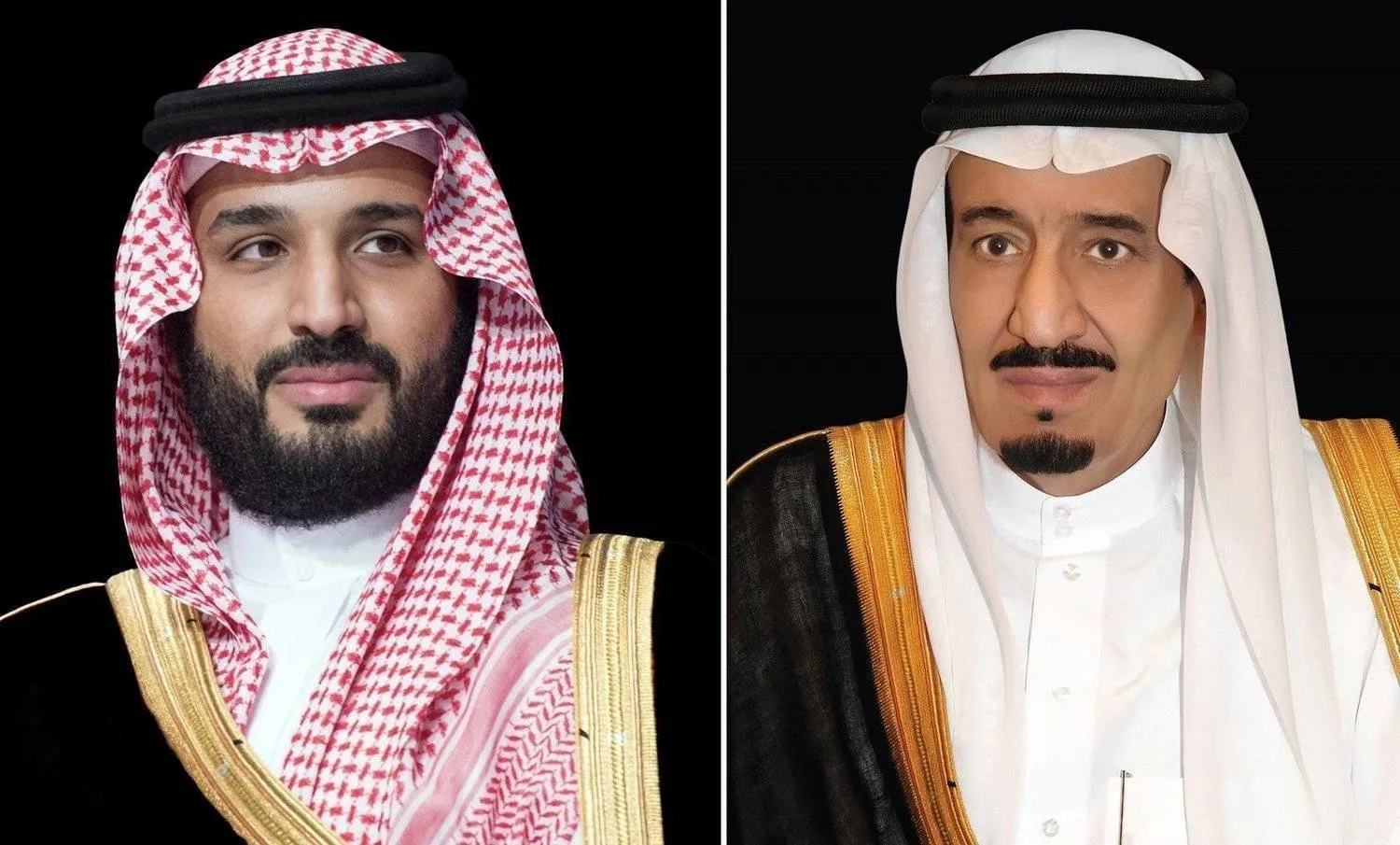
Custodian of the Two Holy Mosques King Salman bin Abdulaziz Al Saud and Prince Mohammed bin Salman bin Abdulaziz Al Saud, Crown Prince and Prime Minister. (SPA)
TT

King Salman, Crown Prince Offer Condolences over Fire Victims at Canadian Forces Base in Alberta

Custodian of the Two Holy Mosques King Salman bin Abdulaziz Al Saud and Prince Mohammed bin Salman bin Abdulaziz Al Saud, Crown Prince and Prime Minister. (SPA)

Custodian of the Two Holy Mosques King Salman bin Abdulaziz Al Saud sent a cable of condolences and sympathy to Governor General of Canada Louise Arbour over the victims of a fire at a Canadian Forces base in Alberta.

The Custodian of the Two Holy Mosques extended his deepest condolences and sincere sympathy to the governor general, the families of the deceased, and the friendly people of Canada, wishing the injured a speedy recovery.

For his part, Prince Mohammed bin Salman bin Abdulaziz Al Saud, Crown Prince and Prime Minister, has also sent a cable of condolences and sympathy to extend his deepest condolences and sincere sympathy to the governor general, the families of the deceased, and the friendly people of Canada, wishing the injured a speedy recovery.

The Crown Prince also sent a cable of condolences to Canadian Prime Minister Mark Carney.


Saudi, Turkish, Egyptian, and Pakistani Foreign Ministers Discuss Regional Issues in Istanbul Meeting

Saudi, Turkish, Egyptian, and Pakistani Foreign Ministers Discuss Regional Issues in Istanbul Meeting
TT

Saudi, Turkish, Egyptian, and Pakistani Foreign Ministers Discuss Regional Issues in Istanbul Meeting

Saudi, Turkish, Egyptian, and Pakistani Foreign Ministers Discuss Regional Issues in Istanbul Meeting

The foreign ministers of the Kingdom of Saudi Arabia, Türkiye, Egypt, and Pakistan (R4 Group) met on Friday in Istanbul to discuss regional issues of mutual concern, united in their commitment to contribute to diplomatic efforts and guided by the mutual interest to promote peace and stability in the region and beyond, in line with the principles and purposes of the UN Charter.

The ministers underscored that the Israeli occupation constitutes the fundamental source of instability in the region and beyond, and that Israeli policies create a deep sense of injustice in global public opinion.

They called for the early implementation of the two-state solution in accordance with the relevant UN resolutions. They reiterated their support for the legitimate rights of the Palestinian people, including their inalienable right to self-determination and to establish an independent, sovereign, viable, and contiguous State of Palestine on the basis of the June 4, 1967 lines, with East Jerusalem as its capital, in accordance with relevant United Nations Security Council resolutions in order to achieve comprehensive peace in the Middle East, SPA reported.

The ministers called for an urgent end to the ongoing Israeli violence, as well as attempts to change the legal and historical status of Jerusalem, and to bring an end to further destruction and humanitarian tragedy in Palestine.

They condemned all the previous and current settlement activities in the West Bank and Jerusalem, as well as the settler violence against Palestinians. They underlined the urgent need for uninterrupted flow of humanitarian aid to and reconstruction in Gaza.

Regarding Yemen, the ministers condemned in the strongest terms the unacceptable escalation by the Houthi militia, which has deepened humanitarian suffering, as well as the continued strikes carried out by the Houthi militia against the Kingdom of Saudi Arabia, particularly those targeting civilians and civilian infrastructure, and the attacks carried out against commercial shipping in the Red Sea and the Bab al-Mandeb.

They expressed their full solidarity with the Government of Yemen and the Kingdom of Saudi Arabia, and called on the Houthi militia to immediately cease all military actions, threats and attacks, and to return to the political process in good faith.

Concerning the military conflict between the US/Israel and Iran as well as around the Strait of Hormuz, the ministers underlined the urgent need to address this conflict only through dialogue and diplomacy as well as to prevent the targeting of civilians and civilian infrastructures, including vessels. They expressed support for the Islamabad MoU and welcomed continued diplomatic efforts to prevent further escalation and reaffirmed their commitment to a lasting negotiated solution.

The ministers underscored the vital importance of freedom of navigation, permanent maritime safety and security, and safeguarding navigational rights and freedoms.

They noted that disruption of sea lanes threatens the security and prosperity of all, through blocking global supply chains, flows of energy, fertilizer and food, impacting vulnerable populations in the region and beyond, and thus, requires collective efforts by the international community to address these challenges.

The ministers also rejected any measures or restrictions that impair lawful navigation and called for the swift and full resumption of safe, secure and unimpeded passage through the Strait of Hormuz.

The ministers agreed to maintain close consultation and coordination on the afore-mentioned matters.