


GCC Countries Welcome Iran-US Negotiations, Call for Addressing Pending Security Issues 

Gulf officials pose for a family photo at the ministerial council meeting in Kuwait. (Saudi Foreign Ministry)
TT

GCC Countries Welcome Iran-US Negotiations, Call for Addressing Pending Security Issues 

Gulf officials pose for a family photo at the ministerial council meeting in Kuwait. (Saudi Foreign Ministry)

The Gulf Cooperation Council (GCC) countries welcomed on Monday the negotiations between Iran and the United States over Tehran’s nuclear program.

Holding its 164th Ministerial Council meeting in Kuwait, the GCC underscored its support for the diplomatic efforts sponsored by Oman in the negotiations, stressing that dialogue was the way forward in peacefully resolving disputes and conflicts.

The GCC hoped that the talks would achieve regional and international security and stability.

The council expressed its support for the United Arab Emirates’ sovereignty over its three islands, Greater Tunb, Lesser Tunb, and Abu Musa, and over their territorial waters, airspace, continental shelf, and exclusive economic zone.

The areas are an integral part of UAE territory, declared the council.

It called on Iraq to respect the sovereignty and territorial integrity of Kuwait and abide by its bilateral and international commitments and agreements, as well as all relevant United Nations resolutions, particularly Security Council Resolution 833 regarding the demarcation of the Kuwaiti-Iraqi land and maritime borders.

The council called for the completion of the demarcation of the maritime border between the two countries beyond Maritime Marker 162 in accordance with the rules and principles of international law and the 1982 UN Convention on the Law of the Sea.

Saudi Foreign Minister Prince Faisal bin Farhan bin Abdullah at the ministerial council meeting in Kuwait. (Saudi Foreign Ministry)

The council also called on the Iraqi government to abide by the Agreement Regulating Maritime Navigation in Khor Abdullah, signed between Kuwait and Iraq on April 29, 2012.

It expressed its “complete rejection of the ruling of the Federal Supreme Court of Iraq in this regard, as well as its rejection of the historical fallacies contained in the ruling's grounds.”

It deemed any unilateral decisions, practices, or actions taken by Iraq related to the Khor Abdullah Agreement null and void.

It also rejected Iraq's unilateral action to cancel the Security Exchange Protocol signed in 2008 and its map adopted in the Joint Plan to Ensure the Safety of Navigation in Khor Abdullah, signed between the two sides on December 28, 2014, which included a clear and specific mechanism for amendment and cancellation.

The council stressed that the entire Durra Field lies within the maritime areas of Kuwait, and that ownership of the natural resources in the submerged divided zone adjacent to the Saudi-Kuwaiti divided zone, including the entire Durra Field, is jointly owned by Saudi Arabia and Kuwait.

“They alone have full rights to exploit the natural resources in that zone in line with international law and based on the agreements concluded and in force between them,” it added.

The council expressed its “absolute rejection of any claims that any other party has rights in this field or the submerged zone adjacent to the divided zone within its designated borders between Saudi Arabia and Kuwait.”

Ties with Iran

Turning to Iran, the council urged the need for Tehran “to respect the fundamental principles based on the United Nations Charter and international law, including the principles of good neighborliness, respect for state sovereignty, non-interference in internal affairs, peaceful resolution of disputes, and the rejection of the use or threat of force, as well as the condemnation of terrorism, extremism, and sectarianism.”

Qatari Prime Minister and Minister of Foreign Affairs Sheikh Mohammed bin Abdulrahman bin Jassim Al Thani at the ministerial council meeting. (Saudi Foreign Ministry)

The council voiced its concern over developments in the Iranian nuclear file. It emphasized the importance “of swiftly reaching constructive agreements to maintain the security and stability of the region.”

“The GCC is prepared to cooperate and engage effectively on this issue and stressed the need to participate in all regional and international negotiations, discussions, and meetings related to it,” said the council.

“These negotiations should address not only the Iranian nuclear program, but also all security concerns of the member states, including ballistic and cruise missiles, drones, the safety of international navigation, and oil facilities.”

“This approach aims to achieve common goals and interests while respecting state sovereignty, principles of good neighborliness, and adherence to UN resolutions to bolster regional and international security and stability,” stated the council.

Moreover, the council underscored the importance of Iran's commitment not to exceed uranium enrichment levels required for peaceful uses. It highlighted the need for Iran to fulfill all its obligations and fully cooperate with the International Atomic Energy Agency.

The council stressed the importance of maintaining maritime security and waterways in the region, and confronting activities that threaten the security and stability of the region and the world, including targeting commercial vessels, threatening maritime shipping lanes, international trade, and oil facilities in the GCC countries.



Makkah Deputy Governor Carries Out Field Inspection of Grand Mosque Readiness for Ramadan 

Deputy Governor of the Makkah Region Prince Saud bin Mishaal bin Abdulaziz is seen during his inspection tour at the Grand Mosque in the holy city of Makkah. (SPA)
TT

Makkah Deputy Governor Carries Out Field Inspection of Grand Mosque Readiness for Ramadan 

Deputy Governor of the Makkah Region Prince Saud bin Mishaal bin Abdulaziz is seen during his inspection tour at the Grand Mosque in the holy city of Makkah. (SPA)

Deputy Governor of the Makkah Region Prince Saud bin Mishaal bin Abdulaziz inspected the readiness of the Grand Mosque and its facilities, conducting a field tour to review operational and service preparations for receiving worshippers and Umrah performers during the holy month of Ramadan, reported the Saudi Press Agency on Tuesday.

Prince Saud was briefed on the operational plans implemented by the relevant authorities, including crowd management mechanisms, service enhancements, and facility preparations aimed at ensuring smooth movement and enhancing comfort and safety levels for visitors to the Grand Mosque, particularly during peak times.

He reviewed developmental initiatives and smart services supporting the operational system, notably electric mobility carts for transporting the elderly, persons with disabilities, and those in need of assistance within the Grand Mosque.

The tour also included an overview of the efforts of guidance teams deployed across the corridors and courtyards of the Grand Mosque, providing multilingual assistance and direction.

Prince Saud reviewed the interactive map and digital mobility platform, which allows visitors to plan their routes in advance and identify service locations, entrances and exits, and less crowded pathways.

He was briefed on crowd management systems, including the visitor density sensor platform that measures human density in real time, and the Tawaf and Sa’i crowd status display service, which allows worshippers to select appropriate times to perform rituals with ease. Models of the modern multilingual guidance system were also reviewed.

Prince Saud also visited the Smart Engineering Command and Control Center, which serves as an advanced central platform linking operational systems and monitoring performance in real time, boosting operational efficiency and raising readiness levels during Ramadan.


Saudi Leadership Provides Two Donations Worth SAR150 Mln Through Jood Eskan Platform

Custodian of the Two Holy Mosques King Salman bin Abdulaziz Al Saud and Prince Mohammed bin Salman bin Abdulaziz Al Saud, Crown Prince and Prime Minister. (SPA)
TT

Saudi Leadership Provides Two Donations Worth SAR150 Mln Through Jood Eskan Platform

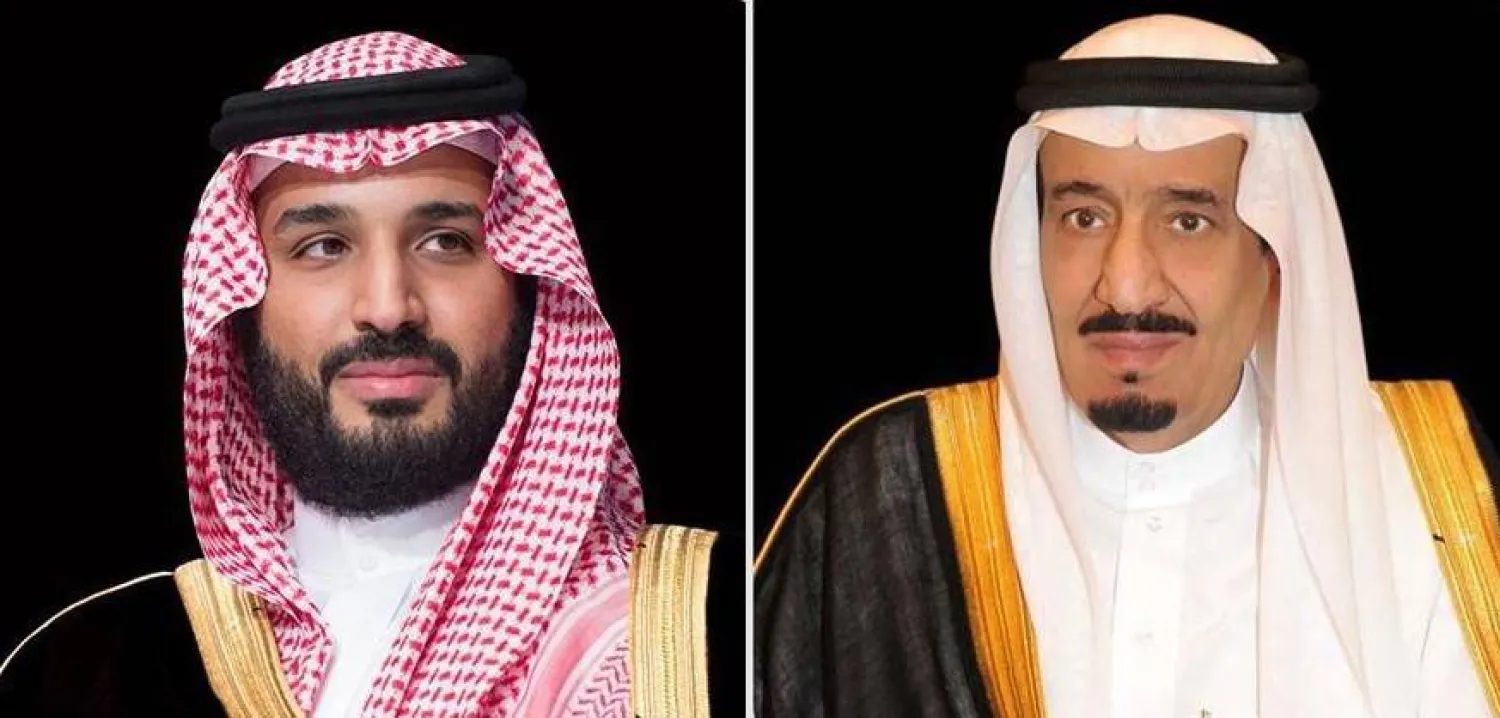
Custodian of the Two Holy Mosques King Salman bin Abdulaziz Al Saud and Prince Mohammed bin Salman bin Abdulaziz Al Saud, Crown Prince and Prime Minister. (SPA)

Custodian of the Two Holy Mosques King Salman bin Abdulaziz Al Saud and Prince Mohammed bin Salman bin Abdulaziz Al Saud, Crown Prince and Prime Minister, have provided two generous donations amounting to SAR150 million through the Jood Eskan platform.

The move aligns with the leadership's commitment to supporting all national efforts and initiatives to provide suitable housing for deserving families.

Minister of Municipalities and Housing and Chairman of the Board of Trustees of the Developmental Housing Foundation (Sakan) Majed Al-Hogail expressed his deep gratitude to the leadership for its unwavering support to all national efforts and initiatives aimed at providing suitable housing for eligible families across the Kingdom.

He noted the effective impact of previous generous donations in achieving the goals of housing development, and motivating individuals and institutions to donate through the Jood Eskan platform that is based on community giving that helps provide decent housing and boosts stability and quality of life for deserving families.


Saudi Crown Prince Receives Message on Bilateral Ties from President of Kazakhstan

Prince Mohammed bin Salman bin Abdulaziz Al Saud, Saudi Crown Prince and Prime Minister. (SPA file)
TT

Saudi Crown Prince Receives Message on Bilateral Ties from President of Kazakhstan

Prince Mohammed bin Salman bin Abdulaziz Al Saud, Saudi Crown Prince and Prime Minister. (SPA file)

Prince Mohammed bin Salman bin Abdulaziz Al Saud, Saudi Crown Prince and Prime Minister, received on Tuesday a written message from President of Kazakhstan Kassym-Jomart Tokayev on bilateral relations between their two countries.

The message was received by Minister of Foreign Affairs Prince Faisal bin Farhan bin Abdullah during a meeting with his Kazakh counterpart Yermek Kosherbayev in Riyadh.