

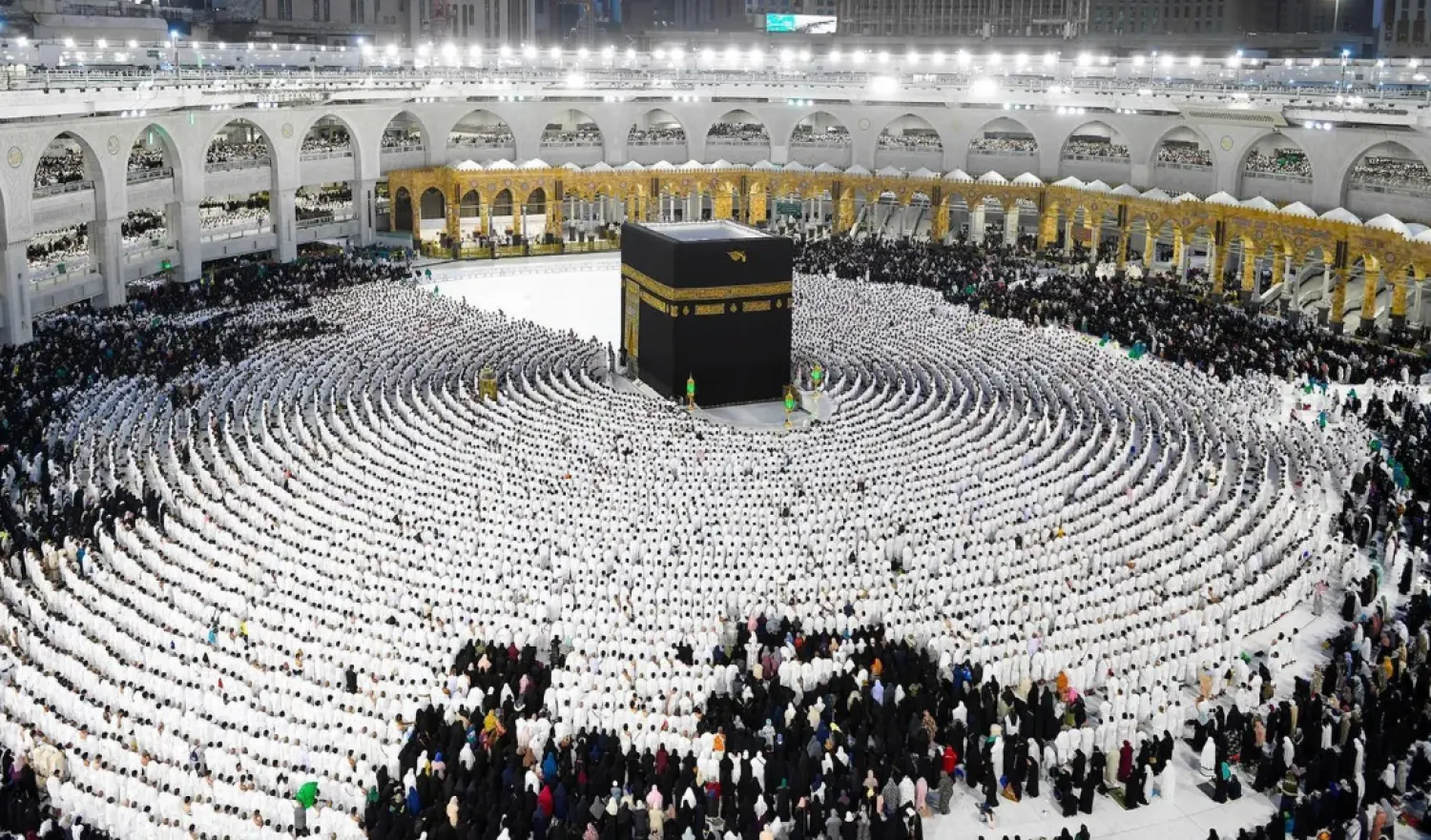

GASTAT Announces 1,673,230 Pilgrims for Hajj

GASTAT announces total of 1,673,230 pilgrims are performing Hajj 1446 AH - SPA
TT

GASTAT Announces 1,673,230 Pilgrims for Hajj

GASTAT announces total of 1,673,230 pilgrims are performing Hajj 1446 AH - SPA

The General Authority for Statistics (GASTAT) announced on Thursday that a total of 1,673,230 pilgrims are performing Hajj.

Of these, 1,506,576 arrived from abroad, while 166,654 are from within the Kingdom, including both citizens and residents.

According to a GASTAT press release, male pilgrims, both internal and external, totaled 877,841, while female pilgrims numbered 795,389. GASTAT also revealed that 1,435,017 pilgrims arrived in the Kingdom via airports, 66,465 through land border crossings, and 5,094 via seaports.

GASTAT's methodology for these statistics relies primarily on administrative records from the Ministry of Interior. This approach, which has been consistently adopted over the past five years, aims to provide high-accuracy and reliable register-based data for Hajj statistics, utilizing a standardized model with several key components.

As the Kingdom's official statistical authority, GASTAT is the exclusive provider of official statistics in Saudi Arabia and is entrusted with overseeing all national statistical activities, including technical supervision, conducting field surveys and research, data analysis, and managing the documentation, preservation, and tabulation of statistical information across all sectors of life in the Kingdom.

On this occasion, GASTAT President Dr. Fahad Aldossari extended his sincere appreciation to Custodian of the Two Holy Mosques King Salman bin Abdulaziz Al Saud and Prince Mohammed bin Salman bin Abdulaziz Al Saud, Crown Prince and Prime Minister, for their unwavering support and comprehensive care provided to the pilgrims.



Saudi Joint Chiefs of Staff Director Inspects Armed Forces Preparations for Hajj

Director of the Joint Chiefs of Staff of the Armed Forces Major General Pilot Hamid Al-Omari and other officials are seen during his inspection tour. (SPA)
TT

Saudi Joint Chiefs of Staff Director Inspects Armed Forces Preparations for Hajj

Director of the Joint Chiefs of Staff of the Armed Forces Major General Pilot Hamid Al-Omari and other officials are seen during his inspection tour. (SPA)

Director of the Joint Chiefs of Staff of the Armed Forces Major General Pilot Hamid Al-Omari, on behalf of Chief of the General Staff Lieutenant-General Fayyad Al-Ruwaili, inspected on Monday the readiness of Armed Forces units involved in this year’s Hajj across the holy sites to ensure support for security and government agencies serving pilgrims.

The tour included the air force detachment at Arafat Airport, Ministry of Defense camps, religious affairs facilities, military police operations at the Grand Mosque, Armed Forces headquarters in Al-Awali, and the Defense Ministry’s field hospital in Mina.

Al-Omari reviewed operational plans, awareness programs, crowd management efforts, and medical preparedness to support pilgrims throughout the Hajj season.

The Military Police of the Royal Saudi Land Forces is participating in the Ministry of Defense's comprehensive Hajj plan, coordinating with internal security forces to manage crowd movement in the Grand Mosque's courtyards, oversee the Grand Mosque's gates, and organize the flow of pilgrims arriving from Mina, ensuring smooth movement during peak times.

The participating force underwent intensive training and exercises simulating various scenarios to boost its capacity for effective response and crowd management in coordination with relevant security entities.


Saudi Arabia Condemns Terrorist Attack on Train in Pakistan’s Balochistan

People inspect the wreckage of vehicles the day after a deadly train blast, in Quetta, Pakistan, 25 May 2026. (EPA)
TT

Saudi Arabia Condemns Terrorist Attack on Train in Pakistan’s Balochistan

People inspect the wreckage of vehicles the day after a deadly train blast, in Quetta, Pakistan, 25 May 2026. (EPA)

Saudi Arabia condemned on Monday the “heinous terrorist” attack targeting a train in Pakistan’s Balochistan province.

In a statement, the Ministry of Foreign Affairs said the Kingdom reiterates its “complete rejection of all forms of terrorism and extremism and strongly condemns attempts to undermine the security and stability of Pakistan and its people.”

It expressed its condolences to the families of the victims, as well as to the government and people of Pakistan.

An explosion targeted a train in Balochistan's provincial capital, Quetta, on Sunday, killing at least 24 people and wounding more than 50 others, according to officials.


Saudi Health Minister Visits Ministry of Interior Field Hospital in Arafat

Saudi Minister of Health Fahad Al-Jalajel visits the Ministry of Interior Field Hospital in Arafat on Monday. (SPA)
TT

Saudi Health Minister Visits Ministry of Interior Field Hospital in Arafat

Saudi Minister of Health Fahad Al-Jalajel visits the Ministry of Interior Field Hospital in Arafat on Monday. (SPA)

Saudi Minister of Health Fahad Al-Jalajel visited on Monday the Ministry of Interior Field Hospital in Arafat, where he reviewed the hospital’s readiness and the healthcare services provided during the Hajj.

He was briefed on the hospital’s operational capacity, service delivery pathways, and procedures for handling urgent and emergency cases, including heat exhaustion and sunstroke.

The briefing also covered resuscitation services, short-term intensive care, medical observation, infection control measures, and preventive medicine services.

The minister reviewed the latest operational developments at the field hospital and its role in supporting the healthcare provider network in Arafat, as well as improving the efficiency of healthcare services provided to pilgrims and security personnel during the Hajj season.

The visit comes within the framework of coordination and integration among health authorities involved in the Hajj and reflects a commitment to boosting field readiness to serve pilgrims and enable them to perform their rituals safely.