


Arab Solidarity with Qatar After Iranian Missile Strike

Interceptor missiles are fired, after Iran's armed forces say they targeted the Al-Udeid base in a missile attack, as seen from Doha, Qatar, June 23, 2025. REUTERS/Stringer
TT

Arab Solidarity with Qatar After Iranian Missile Strike

Interceptor missiles are fired, after Iran's armed forces say they targeted the Al-Udeid base in a missile attack, as seen from Doha, Qatar, June 23, 2025. REUTERS/Stringer

In a unified show of Arab solidarity, several Gulf and regional nations strongly condemned Iran’s missile strike on Al-Udeid Air Base in Qatar, denouncing it as a flagrant violation of international law, regional sovereignty, and the principles of good neighborliness.

Saudi Arabia led the regional response, with the Ministry of Foreign Affairs issuing a sharply worded statement condemning the strike as an “unjustifiable and unacceptable act” that violated international norms. Riyadh reaffirmed its full support for Qatar, pledging to mobilize all available resources to assist its Gulf neighbor in any measures it deems necessary.

Bahrain echoed the Kingdom’s stance, condemning the IRGC’s aggression as a clear breach of Qatari sovereignty and airspace. Manama’s Foreign Ministry emphasized the “bond of brotherhood and blood” that ties Gulf Cooperation Council (GCC) states, urging restraint and peaceful resolution of disputes while affirming its unwavering support for Doha.

The United Arab Emirates condemned the attack in the strongest terms, calling it a blatant violation of Qatari sovereignty and a dangerous escalation. The UAE’s Foreign Ministry expressed full solidarity with Qatar and underscored the importance of protecting civilians and maintaining regional stability. It warned that continued military provocations could lead the region into dangerous and irreversible consequences.

For its part, Kuwait described the strike as a “grave breach” of Qatari airspace and sovereignty. The Foreign Ministry declared its total support for Qatar’s leadership and people, backing their right to respond appropriately to such an attack. Kuwait also offered to mobilize its full capabilities to support its Gulf partner.

Oman, while emphasizing its commitment to de-escalation, also denounced Iran’s strike as a violation of the sovereignty of a fellow GCC member. Muscat pointed to Israel’s earlier unlawful strike on Iranian territory as a trigger for the current escalation and warned that expanding the conflict would only lead to greater instability and humanitarian suffering.

Iraq expressed deep concern about the intensifying regional conflict. Its Foreign Ministry called for immediate restraint, warning that the Iranian strike marked a dangerous turning point that could draw more actors into an already volatile confrontation.

The Secretary-General of the GCC, Jassim Al-Budaiwi, issued a strong statement condemning the Iranian missile attack as a violation of Qatari sovereignty and a threat to the collective security of the Gulf states. He stressed that Qatar’s security is inseparable from that of the entire GCC and called on the international community and the UN Security Council to hold Iran accountable for its destabilizing actions.



Makkah Deputy Governor Carries Out Field Inspection of Grand Mosque Readiness for Ramadan 

Deputy Governor of the Makkah Region Prince Saud bin Mishaal bin Abdulaziz is seen during his inspection tour at the Grand Mosque in the holy city of Makkah. (SPA)
TT

Makkah Deputy Governor Carries Out Field Inspection of Grand Mosque Readiness for Ramadan 

Deputy Governor of the Makkah Region Prince Saud bin Mishaal bin Abdulaziz is seen during his inspection tour at the Grand Mosque in the holy city of Makkah. (SPA)

Deputy Governor of the Makkah Region Prince Saud bin Mishaal bin Abdulaziz inspected the readiness of the Grand Mosque and its facilities, conducting a field tour to review operational and service preparations for receiving worshippers and Umrah performers during the holy month of Ramadan, reported the Saudi Press Agency on Tuesday.

Prince Saud was briefed on the operational plans implemented by the relevant authorities, including crowd management mechanisms, service enhancements, and facility preparations aimed at ensuring smooth movement and enhancing comfort and safety levels for visitors to the Grand Mosque, particularly during peak times.

He reviewed developmental initiatives and smart services supporting the operational system, notably electric mobility carts for transporting the elderly, persons with disabilities, and those in need of assistance within the Grand Mosque.

The tour also included an overview of the efforts of guidance teams deployed across the corridors and courtyards of the Grand Mosque, providing multilingual assistance and direction.

Prince Saud reviewed the interactive map and digital mobility platform, which allows visitors to plan their routes in advance and identify service locations, entrances and exits, and less crowded pathways.

He was briefed on crowd management systems, including the visitor density sensor platform that measures human density in real time, and the Tawaf and Sa’i crowd status display service, which allows worshippers to select appropriate times to perform rituals with ease. Models of the modern multilingual guidance system were also reviewed.

Prince Saud also visited the Smart Engineering Command and Control Center, which serves as an advanced central platform linking operational systems and monitoring performance in real time, boosting operational efficiency and raising readiness levels during Ramadan.


Saudi Leadership Provides Two Donations Worth SAR150 Mln Through Jood Eskan Platform

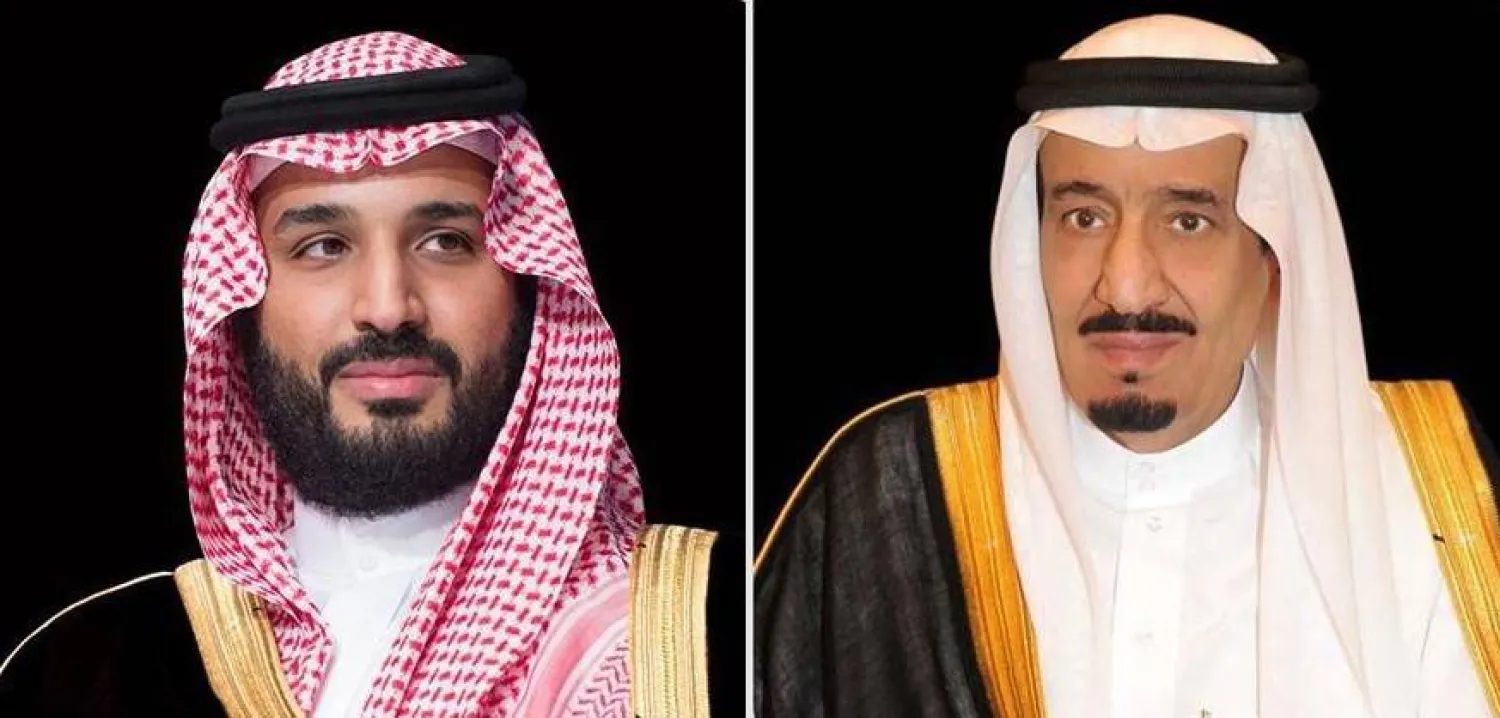
Custodian of the Two Holy Mosques King Salman bin Abdulaziz Al Saud and Prince Mohammed bin Salman bin Abdulaziz Al Saud, Crown Prince and Prime Minister. (SPA)
TT

Saudi Leadership Provides Two Donations Worth SAR150 Mln Through Jood Eskan Platform

Custodian of the Two Holy Mosques King Salman bin Abdulaziz Al Saud and Prince Mohammed bin Salman bin Abdulaziz Al Saud, Crown Prince and Prime Minister. (SPA)

Custodian of the Two Holy Mosques King Salman bin Abdulaziz Al Saud and Prince Mohammed bin Salman bin Abdulaziz Al Saud, Crown Prince and Prime Minister, have provided two generous donations amounting to SAR150 million through the Jood Eskan platform.

The move aligns with the leadership's commitment to supporting all national efforts and initiatives to provide suitable housing for deserving families.

Minister of Municipalities and Housing and Chairman of the Board of Trustees of the Developmental Housing Foundation (Sakan) Majed Al-Hogail expressed his deep gratitude to the leadership for its unwavering support to all national efforts and initiatives aimed at providing suitable housing for eligible families across the Kingdom.

He noted the effective impact of previous generous donations in achieving the goals of housing development, and motivating individuals and institutions to donate through the Jood Eskan platform that is based on community giving that helps provide decent housing and boosts stability and quality of life for deserving families.


Saudi Crown Prince Receives Message on Bilateral Ties from President of Kazakhstan

Prince Mohammed bin Salman bin Abdulaziz Al Saud, Saudi Crown Prince and Prime Minister. (SPA file)
TT

Saudi Crown Prince Receives Message on Bilateral Ties from President of Kazakhstan

Prince Mohammed bin Salman bin Abdulaziz Al Saud, Saudi Crown Prince and Prime Minister. (SPA file)

Prince Mohammed bin Salman bin Abdulaziz Al Saud, Saudi Crown Prince and Prime Minister, received on Tuesday a written message from President of Kazakhstan Kassym-Jomart Tokayev on bilateral relations between their two countries.

The message was received by Minister of Foreign Affairs Prince Faisal bin Farhan bin Abdullah during a meeting with his Kazakh counterpart Yermek Kosherbayev in Riyadh.