


Kuwaiti Emir Begins Official Visit to France to Strengthen Strategic Partnership

The Emir of Kuwait departs the country, heading to Paris on an official visit (KUNA) 
TT

Kuwaiti Emir Begins Official Visit to France to Strengthen Strategic Partnership

The Emir of Kuwait departs the country, heading to Paris on an official visit (KUNA) 

The Emir of Kuwait, Sheikh Meshal Al-Ahmad Al-Jaber Al Sabah, arrived in Paris on Sunday for his first official visit to France since assuming office last December. He is accompanied by a high-level delegation that includes senior Kuwaiti government officials.

The visit comes at a particularly sensitive moment for the region, amid escalating tensions, the ongoing war in Gaza, and the fallout from military strikes between Iran and Israel.

In a statement issued by the Élysée Palace, the French presidency said the visit reflects a shared desire to deepen bilateral cooperation across diplomatic, defense, and economic spheres. The trip also coincides with Kuwait’s current presidency of the Gulf Cooperation Council.

According to the statement, the Emir will meet President Emmanuel Macron for a working lunch on Monday. He will also attend France’s annual Bastille Day military parade on July 14.

Kuwaiti Foreign Minister Abdullah Al-Yahya described the visit as a “strategic milestone” to strengthen partnership in light of rapidly evolving regional and global dynamics. He confirmed that the Emir’s agenda includes signing agreements and memorandums of understanding covering infrastructure, education, defense, and culture.

Historical Relations

Diplomatic ties between Kuwait and France date back to 1961, when Paris formally recognized Kuwaiti independence. In 1967, the two countries exchanged ambassadors. Over the decades, the relationship has seen several high-profile visits, including Emir Sheikh Jaber Al-Ahmad Al Sabah’s trip to Paris in 1989 and Sheikh Sabah Al-Ahmad Al-Jaber Al Sabah’s meeting with President Jacques Chirac in 2006.

Ministerial engagements have also continued, with former Kuwaiti Foreign Minister Sheikh Sabah Al-Khalid attending the Middle East Peace Conference in 2017. More recently, French Minister Jean-Noël Barrot visited Kuwait in April to sign new bilateral agreements.

Economic and Defense Partnership

France is one of Kuwait’s leading economic partners. French companies account for nearly 50% of European investments in the country and employ over 2,100 people in sectors such as energy, transportation, healthcare, and consumer goods.

On defense, Kuwait and France maintain a military cooperation agreement first signed in August 1992 and renewed in 2009, which provides for mutual assistance if Kuwait faces external aggression. France’s participation in the 1991 coalition to liberate Kuwait cemented its standing as a key military ally.

Last month, Kuwait’s embassy in Paris took part in the “Gulf Vision 2025” conference hosted under Macron’s patronage to forge broader economic partnerships between France and the GCC states.



2 Dead, 3 Wounded as Missile Intercepted in Abu Dhabi

People walk along the corniche area in Abu Dhabi on March 20, 2026. (Photo by Ryan Lim / AFP)
TT

2 Dead, 3 Wounded as Missile Intercepted in Abu Dhabi

People walk along the corniche area in Abu Dhabi on March 20, 2026. (Photo by Ryan Lim / AFP)

Two people were killed and three were wounded by falling debris after air defenses intercepted a ballistic missile on the outskirts of Abu Dhabi, the government media office said on Thursday.

"The incident resulted in the deaths of two unidentified individuals, three injuries, and damage to a number of cars," the Abu Dhabi Media Office said in a post on X.


Crown Prince, UK PM Address Global Economic Crisis; Starmer Condemns Iran’s Attacks on Saudi Arabia

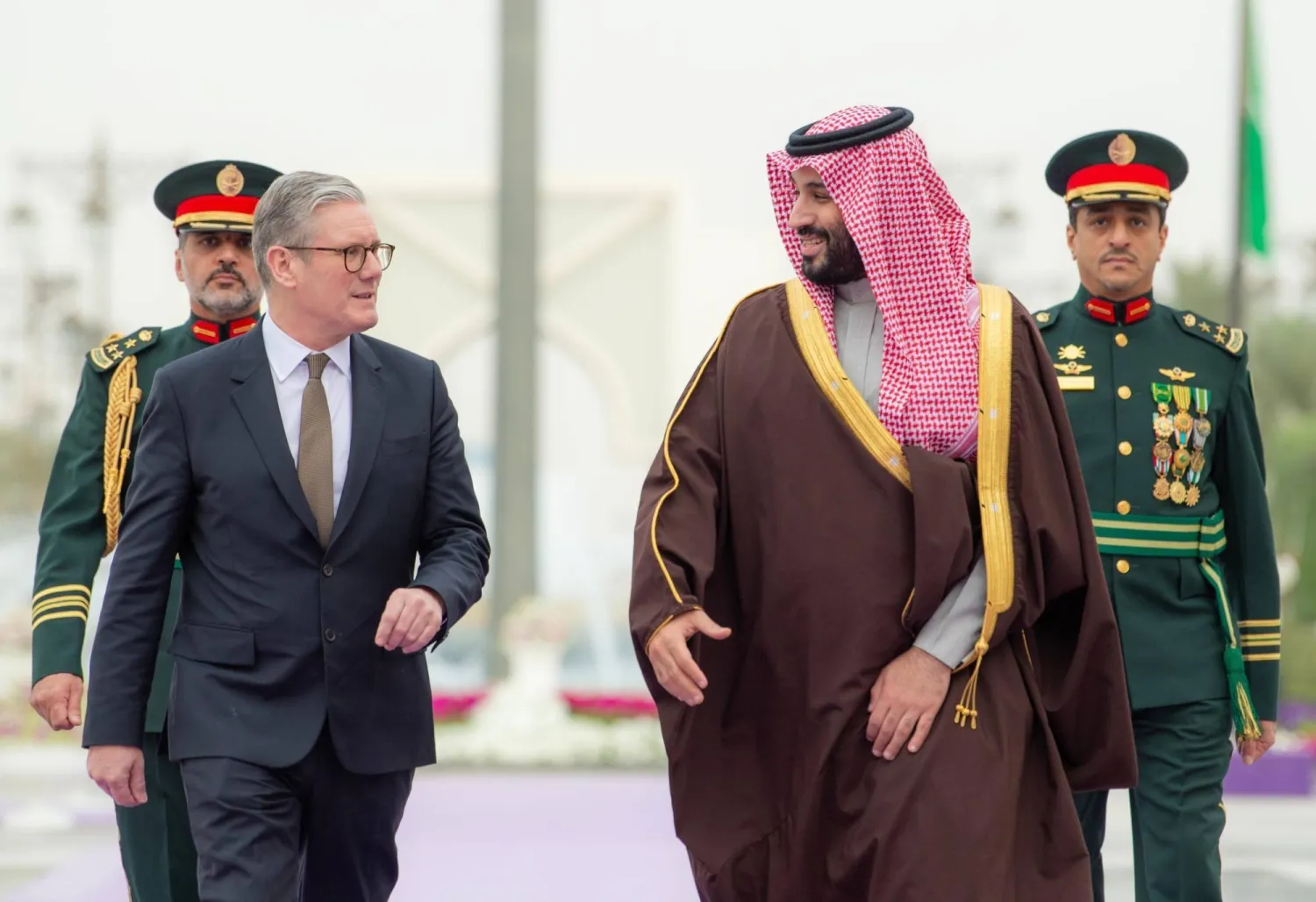
Prince Mohammed bin Salman bin Abdulaziz Al Saud, Saudi Crown Prince and Prime Minister, and British Prime Minister Keir Starmer meet in Riyadh in December 2024. (SPA)
TT

Crown Prince, UK PM Address Global Economic Crisis; Starmer Condemns Iran’s Attacks on Saudi Arabia

Prince Mohammed bin Salman bin Abdulaziz Al Saud, Saudi Crown Prince and Prime Minister, and British Prime Minister Keir Starmer meet in Riyadh in December 2024. (SPA)

Saudi Crown Prince and Prime Minister Prince Mohammed bin Salman bin Abdulaziz Al Saud received a phone call on Wednesday from British Prime Minister Keir Starmer, who condemned Iran’s continued assaults against Saudi Arabia.

Starmer expressed his country’s strong condemnation of Iran’s attacks highlighting their threat to security and stability, during the phone call with the Crown Prince.

The two leaders discussed regional security amid the ongoing military escalation, its impact on regional and global stability, and the associated risks to international maritime security and the global economy.


UN Rights Council Slams ‘Egregious’ Iran Strikes on Gulf, Demands Reparation

Smoke rises from Kuwait international airport after a drone strike on fuel storage in Kuwait City, Kuwait, Friday, Wednesday, March 25, 2026. (AP Photo)
TT

UN Rights Council Slams ‘Egregious’ Iran Strikes on Gulf, Demands Reparation

Smoke rises from Kuwait international airport after a drone strike on fuel storage in Kuwait City, Kuwait, Friday, Wednesday, March 25, 2026. (AP Photo)

The UN Human Rights Council on Wednesday condemned Iran's "egregious attacks" on Gulf countries and demanded full "reparation" for all victims of its strikes.

The 47-member council backed a resolution brought by the six Gulf Cooperation Council (GCC) countries and Jordan demanding Iran immediately "cease all unprovoked attacks.”

The resolution was adopted by consensus.

The resolution "condemns in the strongest terms the egregious attacks" by Iran, condemns Tehran's actions aimed at closing the Strait of Hormuz and voices "grave concerns at the Iranian attacks on energy infrastructure.”

It demands Iran "immediately and unconditionally cease all unprovoked attacks" against the GCC states and Jordan and "provide full, effective and prompt reparation to all victims for the damage and injury caused by its attacks.”

Saudi Arabia welcomed the UN Human Rights Council’s unanimous adoption of the resolution, which reflects the international community’s rejection of Iranian attacks and its condemnation of these brutal acts as grave violations of human rights.

In a statement, the Saudi Foreign Ministry said Iranian attacks on the Kingdom and other countries in the region “constitute a flagrant violation of the sovereignty and territorial integrity of states and a clear breach of international conventions and international law.”

“Targeting countries that are not party to the conflict is a blatant act of aggression that cannot be justified or accepted,” it added.
