


Mohamed bin Zayed, Putin Discuss Bilateral Strategic Partnership, Cooperation on Int’l Affairs

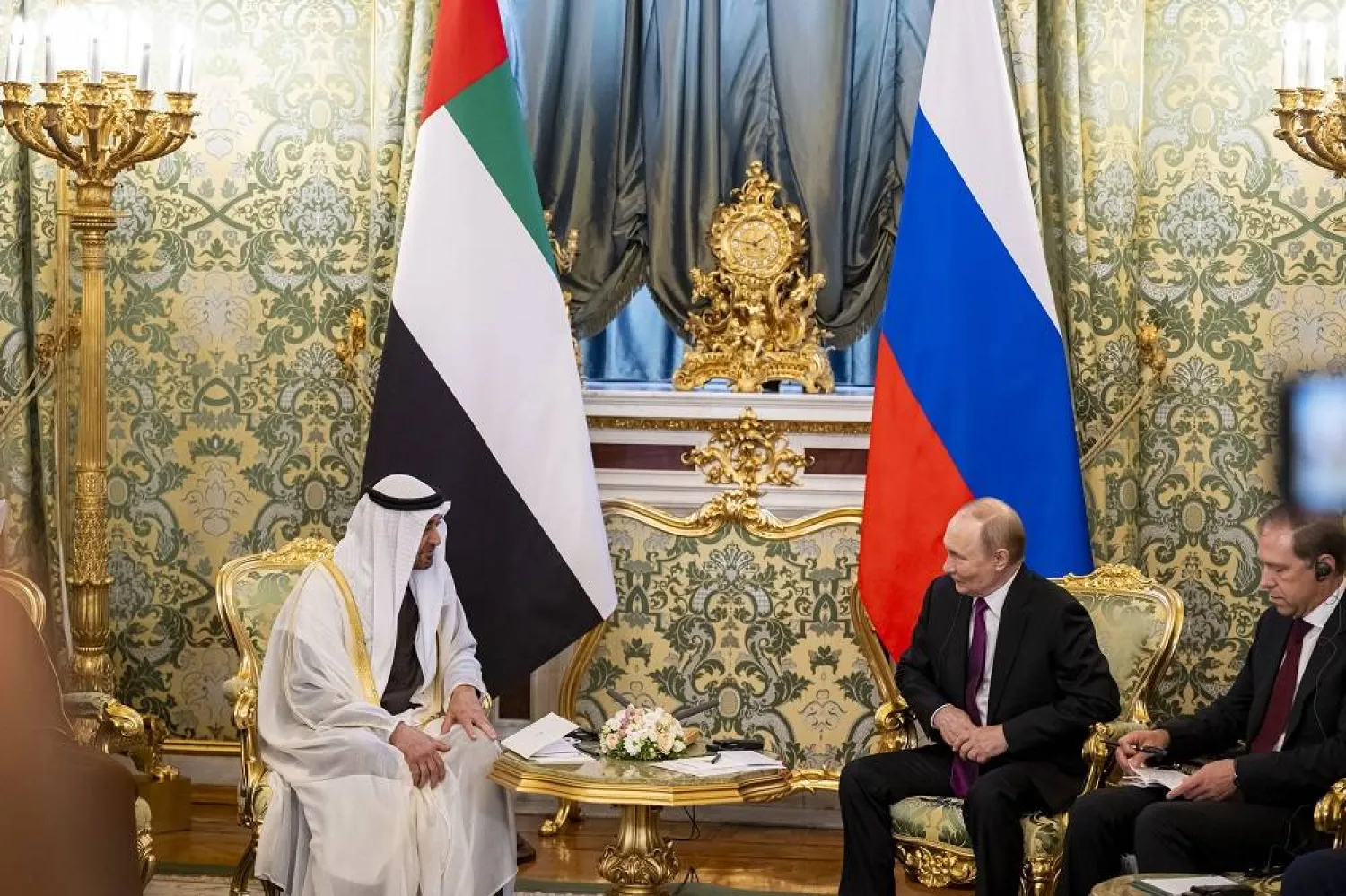
UAE President Sheikh Mohamed bin Zayed Al Nahyan and Russian President Vladimir Putin meet in Moscow on Thursday. (WAM)
TT

Mohamed bin Zayed, Putin Discuss Bilateral Strategic Partnership, Cooperation on Int’l Affairs

UAE President Sheikh Mohamed bin Zayed Al Nahyan and Russian President Vladimir Putin meet in Moscow on Thursday. (WAM)

UAE President Sheikh Mohamed bin Zayed Al Nahyan held talks in Moscow on Thursday with Russian President Vladimir Putin on boosting the strategic partnership between their countries, as well as regional and international issues of common interest.

The two leaders met at the Kremlin as part of Sheikh Mohamed’s official visit to Russia.

They reviewed progress in UAE-Russia cooperation, particularly in the fields of the economy, trade, investment, space, and energy, as well as other areas that serve the development-focused priorities of both countries and reflect their aim to bolster their strategic partnership, reported the UAE state news agency (WAM).

UAE-Russia relations are based on mutual trust and respect and deep-rooted and constructive engagement spanning more than 50 years, said Sheikh Mohamed bin Zayed.

He underlined the UAE's commitment to building effective partnerships with other countries and deepening international cooperation to address shared global challenges and foster prosperity and development for all.

Sheikh Mohamed bin Zayed and Putin also exchanged views on regional and international issues of mutual interest. Sheikh Mohamed bin Zayed stressed the UAE's steadfast commitment to strengthening peace and stability, while advancing diplomatic solutions both regionally and globally.

The leaders discussed the importance of the Russia-Arab summit, scheduled to be held in October at the direction of Putin, in strengthening Russia's relations with the Arab world.

They reviewed developments in the Middle East, underscoring the need to intensify efforts towards achieving a just, comprehensive, and lasting peace based on the two-state solution with the aim of promoting stability and security for all.

Putin said Russia attaches great importance to developing its relations with the UAE, noting that the two countries’ cooperation continues to grow, especially in the economic and investment fields.

Putin hosted a luncheon for Sheikh Mohamed bin Zayed and the accompanying delegation.

On the sidelines of the visit, the two countries signed the Trade in Services and Investment Agreement (TISIA).

The agreement was signed UAE Minister of Foreign Trade Dr. Thani bin Ahmed Al Zeyoudi and Russian Minister of Economic Development Maxim Reshetnikov.

The UAE-Russia TISIA complements the Economic Partnership Agreement signed between the UAE and the Eurasian Economic Union (EAEU), which includes Armenia, Belarus, Kazakhstan, Kyrgyzstan, and Russia.

It provides a special bilateral cooperation framework focusing on services and investment, including the areas of financial technology, healthcare, transportation, logistics, professional services, and others.

UAE Minister of Energy and Infrastructure Suhail MohamMed Al Mazrouei and Russian Minister of Transport Andrey Nikitin also signed a Memorandum of Understanding on cooperation in the field of land transport.



Saudi Arabia Condemns Israeli Violations in the Region

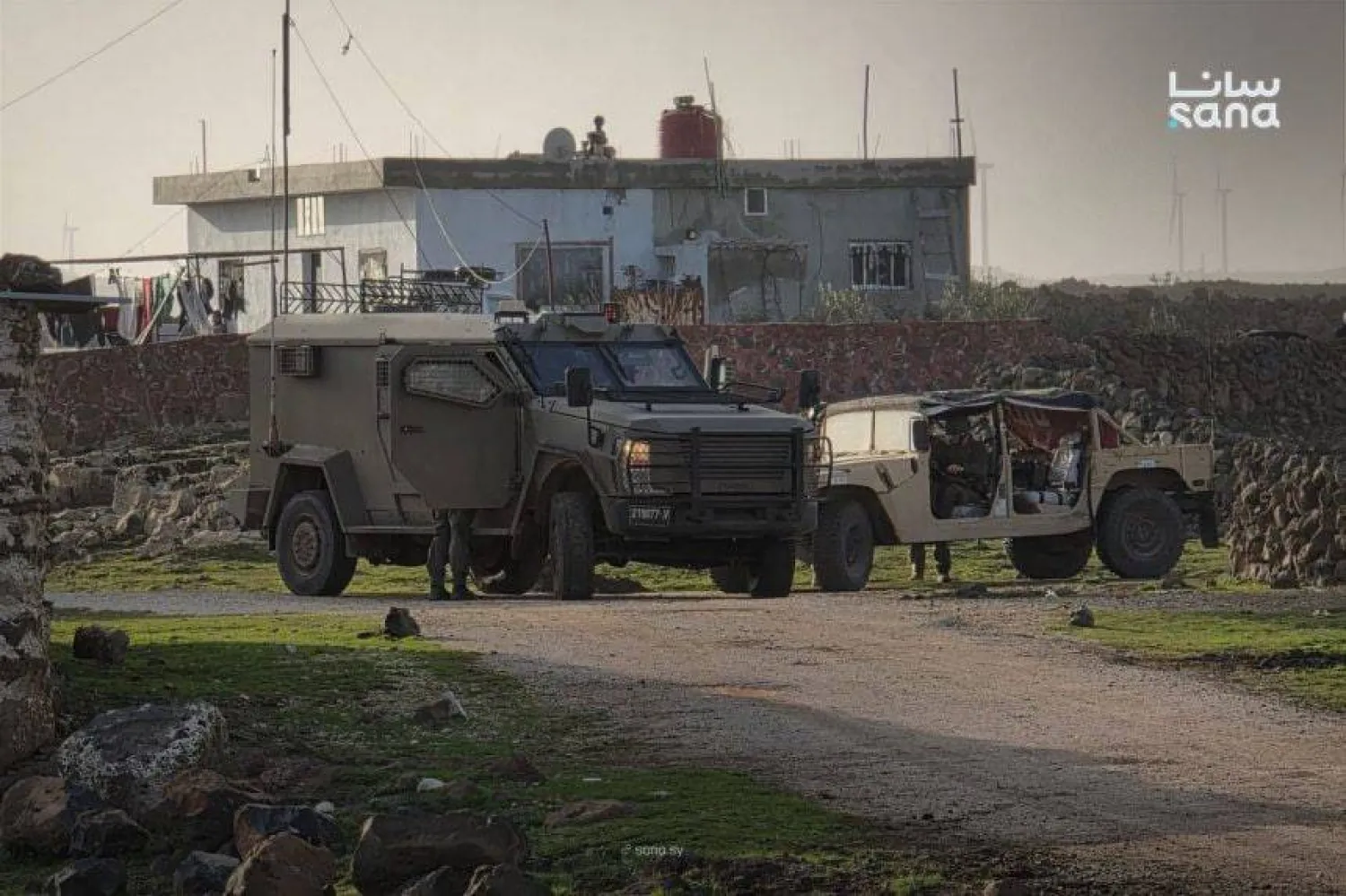
Israeli forces are seen during an incursion in Syria. (SANA file)
TT

Saudi Arabia Condemns Israeli Violations in the Region

Israeli forces are seen during an incursion in Syria. (SANA file)

Saudi Arabia condemned on Wednesday Israel's continued blatant violations in the region, most recently the incursions into the rural areas of Syria's Quneitra and Daraa governorates.

In a statement, the foreign ministry said: "Saudi Arabia expresses its categorical rejection of the Israeli forces' intimidation of peaceful civilians and violations of international laws and norms.”

“It stresses the importance of halting Israeli infringements on the sovereignty of Syrian territory and adhering to the 1974 Disengagement Agreement to preserve security and stability in the region,” it added.

The Kingdom reiterated its support for Syria's sovereignty and territorial integrity.


Saudi Arabia Condemns Iran Attacks on Bahrain, Kuwait, UAE Tanker

Vehicles move on a highway in Kuwait. (AFP)
TT

Saudi Arabia Condemns Iran Attacks on Bahrain, Kuwait, UAE Tanker

Vehicles move on a highway in Kuwait. (AFP)

Saudi Arabia strongly condemned on Wednesday Iran’s attacks on Bahrain, Kuwait and an oil tanker belonging to the United Arab Emirates.

A Foreign Ministry statement underlined Saudi Arabia’s “complete rejection of Iran’s continued aggression against brotherly countries and its threats to freedom of maritime navigation and trade routes.”

It reiterated its call “for an end to such acts of aggression, respect for international law and the principles of good neighborliness, and support for diplomatic efforts aimed at achieving peace and resolving the crisis through negotiations, to safeguard the security and stability of the region and its peoples.”

Secretary-General of the Gulf Cooperation Council (GCC) Jasem Albudaiwi also strongly condemned the attack on Kuwait.

He said Iran’s continuation of its attacks “reflects its persistence in undermining de-escalation efforts, as well as a flagrant disregard for the principles of good neighborliness, the rules of international law, and the United Nations Charter.”

He called on the international community “to assume its responsibilities toward these grave and repeated Iranian assaults and to take effective measures to halt them, ensuring respect for state sovereignty and preserving peace and security in the region.”

Albudaiwi reiterated the GCC states’ “full and steadfast solidarity with Kuwait, standing united by its side and backing all measures it takes to protect its security and stability, safeguard its sovereignty and assets, and ensure the safety of its citizens and residents on its territory.”


UAE State Oil Firm Says One Missing After Ship Hit in Hormuz

Vessels at the Strait of Hormuz, as seen from Musandam, Oman, November 17, 2026. (Reuters)
TT

UAE State Oil Firm Says One Missing After Ship Hit in Hormuz

Vessels at the Strait of Hormuz, as seen from Musandam, Oman, November 17, 2026. (Reuters)

UAE state oil firm ADNOC said Wednesday that a crew member was missing after a ship belonging to the company was struck in the Strait of Hormuz.

"All other crew members have been safely evacuated from the vessel. Eleven sustained injuries and where required are receiving medical care," ADNOC said, adding that search and rescue operations were continuing.

British maritime security agency, UKMTO, said on Wednesday that the tanker had been struck a day earlier by "an unknown projectile" in the Strait of Hormuz, about 13 nautical miles north of Khasab, an Omani town overlooking the strategic waterway.

The agency did not identify the vessel, but confirmed one crew member was missing.

"A fire occurred onboard, which has since been extinguished," UKMTO said, adding that the extent of the damage and any environmental impact remained unknown.

Before the Middle East war triggered by US-Israeli strikes on Iran on February 28, around one-fifth of the world's oil and liquefied natural gas supplies passed through the Strait of Hormuz.

Since the conflict began, Iran has tightened its grip on the Strait of Hormuz, with vessels transiting the strategic chokepoint coming under near-daily attack as Tehran insists they follow routes approved by its authorities.

The US has responded by imposing a blockade on Iranian ports, and its navy escorts tankers through the narrow passage.