

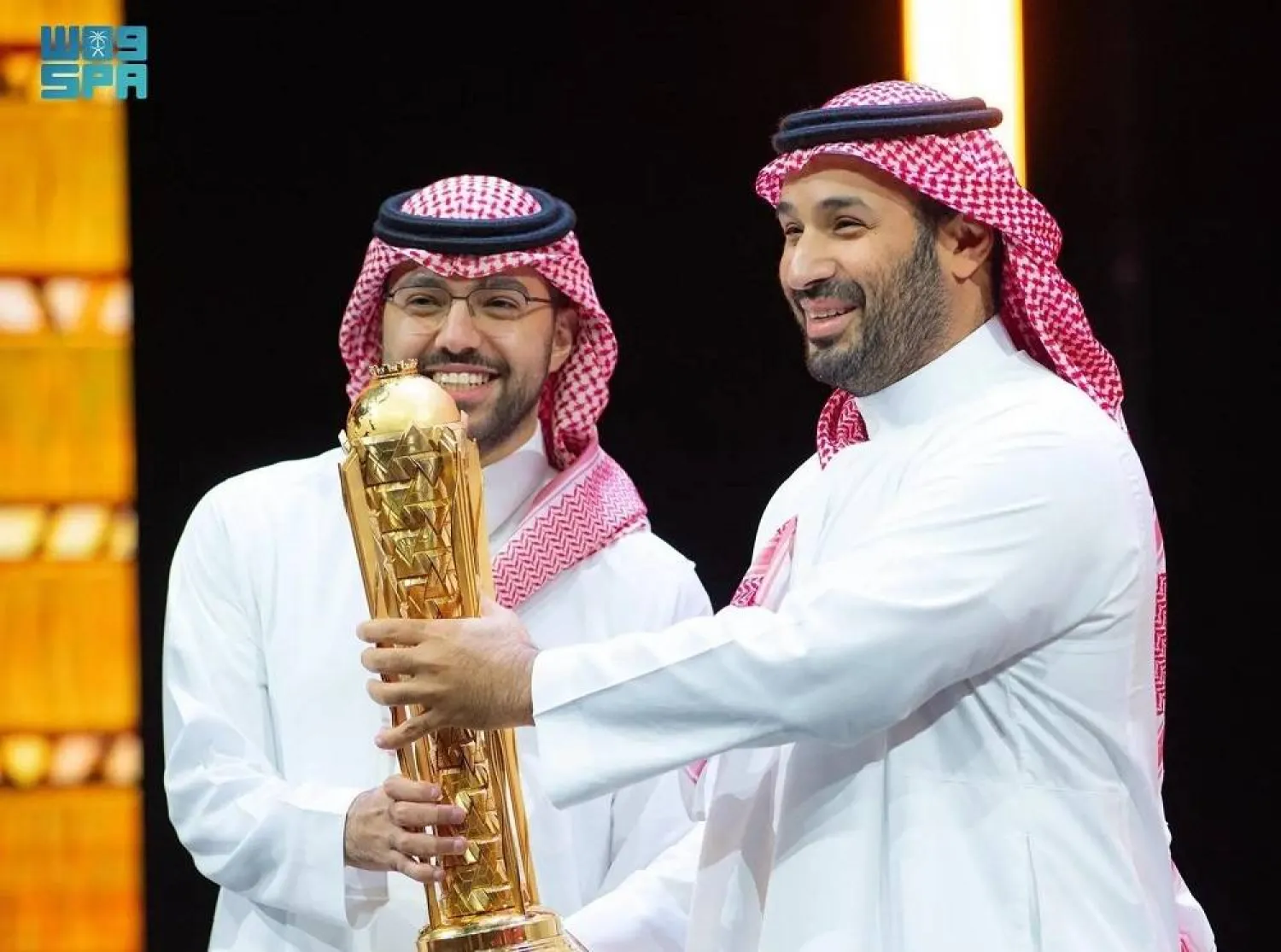

Saudi Crown Prince Crowns Team Falcons as Winners of Esports World Cup 2025 

Crown Prince Mohammed bin Salman presents the Team Falcons leader with the trophy. (SPA)
TT

Saudi Crown Prince Crowns Team Falcons as Winners of Esports World Cup 2025 

Crown Prince Mohammed bin Salman presents the Team Falcons leader with the trophy. (SPA)

Prince Mohammed bin Salman bin Abdulaziz Al Saud, Saudi Crown Prince and Prime Minister, attended on Sunday the closing ceremony of the Esports World Cup 2025 in Riyadh, during which he crowned “Team Falcons” as champion.

Team Falcons topped the tournament standings with 5,200 points, securing the grand prize of $7 million out of a total prize pool exceeding $70 million - the largest in the history of global esports. The prizes were distributed among teams, players, and participants according to their tournament rankings.

The Crown Prince’s presence at the event reflects his continued and substantial support for the gaming and esports sector through a comprehensive framework of regulations and initiatives driven by the National Gaming and Esports Strategy, which he launched in 2022.

The strategy aims to build a globally competitive and sustainable sector and achieve the goals of Saudi Vision 2030. It serves as a key pillar for creating 39,000 jobs, contributing up to SAR50 billion to GDP by 2030, supporting the establishment of startups, and attracting global investment in gaming and esports.
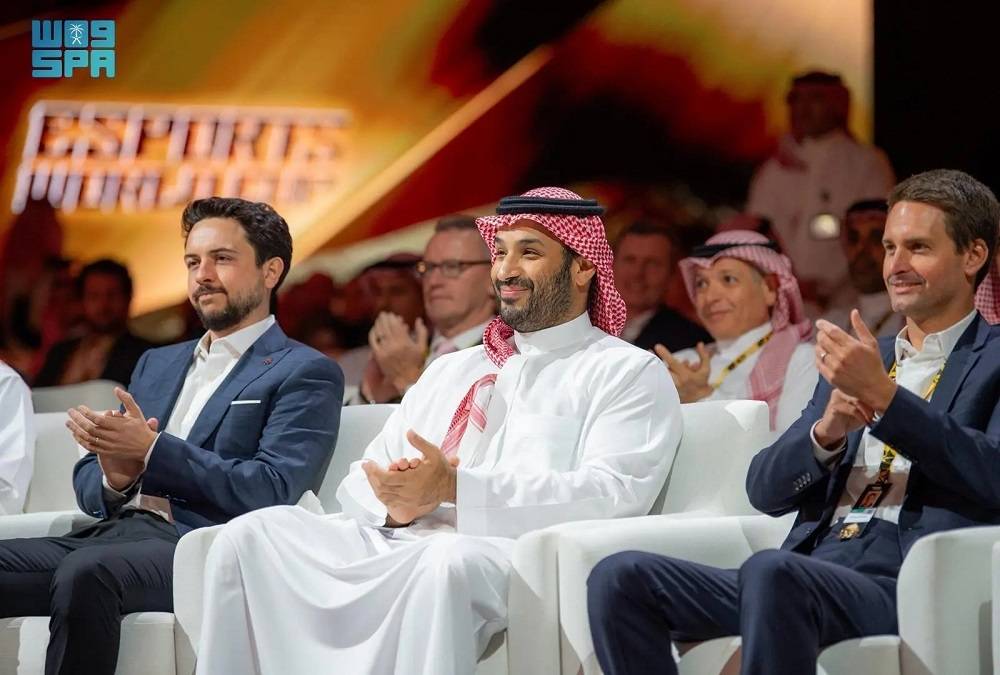
Crown Prince Mohammed bin Salman at the closing ceremony. (SPA)

CEO of the Esports World Cup Foundation Ralf Reichert praised the Crown Prince’s support for the tournament, stressing that the Kingdom succeeded in creating a unique global experience that combined diverse games, strong competitions, attractive entertainment activities, global attendance, and vast online viewership.

The seven-week tournament witnessed broad participation from clubs and players from countries across the globe, alongside unprecedented audience and media attendance. A total of 2,000 professional players competed in 200 clubs from 100 countries across 25 tournaments featuring the world’s most popular esports titles.

The tournament gained a distinctly global character and set records in multiple areas, including the number of tournaments, prize value, and audience engagement.

The Esports World Cup originated from a Saudi initiative announced by Crown Prince Mohammed in 2023, with Riyadh hosting its first edition in 2024 to great international success. This paved the way for the 2025 edition, which was organized at an unprecedented technical and organizational level.

Al-Nassr's Cristiano Ronaldo with the tournament trophy at the closing ceremony. (SPA)

By hosting this exceptional tournament, the Kingdom has strengthened its advanced global position in gaming and esports, delivering a unique experience that combined competition with innovation and boosted performance indicators. The tournament recorded a 53% rise in ticket sales, a 40% increase in average content demand, and a 64% growth in international sales.

Moreover, competitions were broadcast in 35 languages to over 100 countries, in a global media production that reflected the scale of organization and level of participation.

Over the course of the tournament, the Boulevard Riyadh City welcomed more than 3 million visitors. At the same time, over 750 million viewers worldwide followed the competitions through digital platforms, with a total watch time exceeding 350 million hours. The accompanying events featured more than 1,500 community, cultural, and entertainment activities.

With the conclusion of the Esports World Cup 2025, Riyadh continues to cement its position as a global capital of esports, adding another achievement to the Kingdom’s record of international successes. This further supports the development goals of the sports and entertainment sectors and drives digital transformation to broader horizons.


Saudi FM, Russian Counterpart Discuss Regional Developments

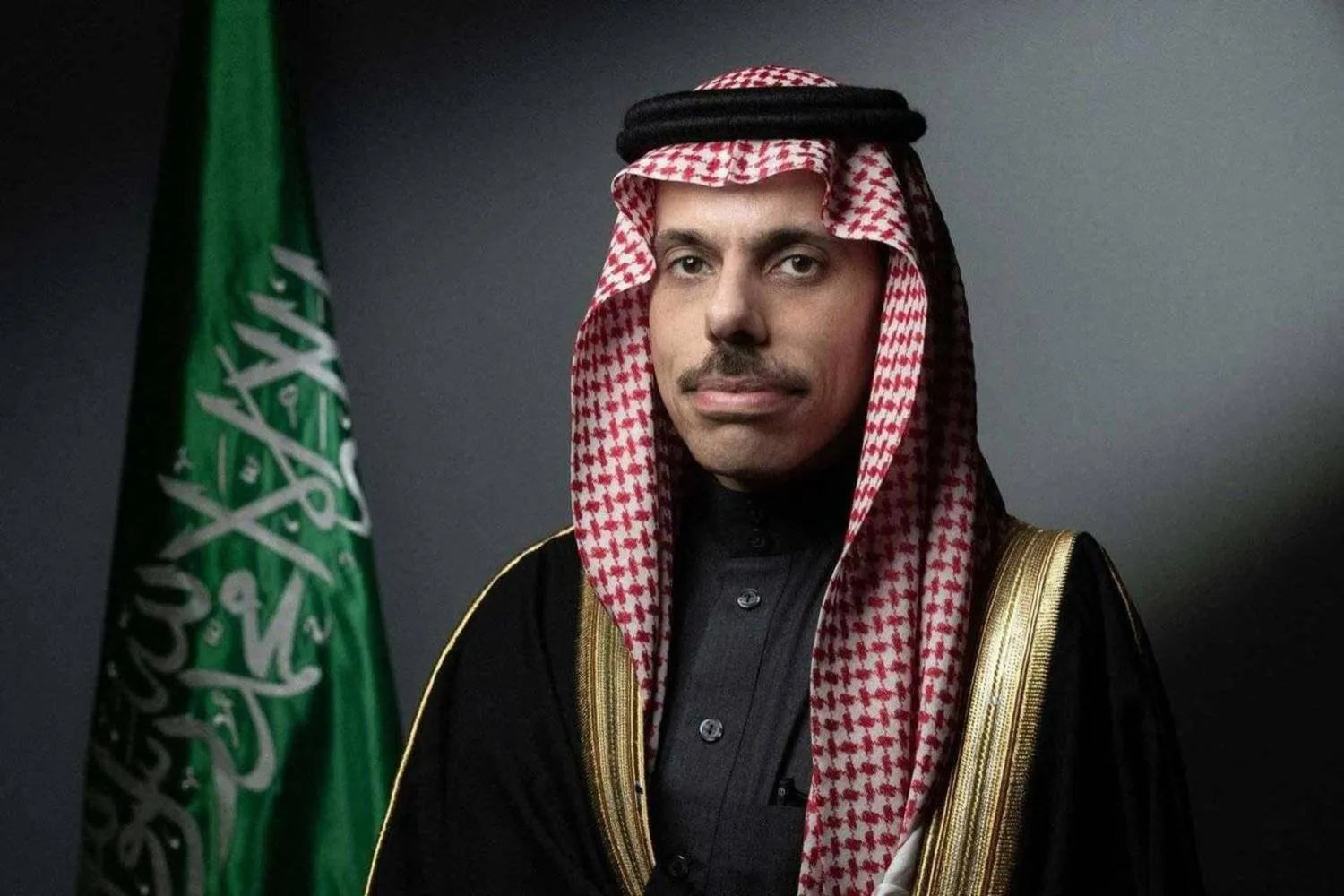
Saudi Minister of Foreign Affairs Prince Faisal bin Farhan bin Abdullah/File Photo
TT

Saudi FM, Russian Counterpart Discuss Regional Developments

Saudi Minister of Foreign Affairs Prince Faisal bin Farhan bin Abdullah/File Photo

Saudi Minister of Foreign Affairs Prince Faisal bin Farhan bin Abdullah held a phone call with Russian Minister of Foreign Affairs Sergei Lavrov, during which they discussed the latest developments in the region, the Saudi Press Agency said on Thursday.

The discussion comes amid heightened tensions in parts of the Middle East, prompting continued diplomatic engagement between major international stakeholders.


Gulf States Pursue IRGC, Hezbollah Cells Amid Ongoing Attacks

 Suspects identified as fugitives abroad (Bahrain’s Interior Ministry) 
Suspects identified as fugitives abroad (Bahrain’s Interior Ministry) 
TT

Gulf States Pursue IRGC, Hezbollah Cells Amid Ongoing Attacks

 Suspects identified as fugitives abroad (Bahrain’s Interior Ministry) 
Suspects identified as fugitives abroad (Bahrain’s Interior Ministry) 

Gulf Cooperation Council states are pursuing hunting down terrorist cells linked to Tehran and Lebanon’s Hezbollah, as they continue to counter Iranian attacks, intercepting more than 6,246 missiles and drones, according to the Gulf Research Center.

Monitoring by Asharq Al-Awsat shows that within 30 days, Gulf security services uncovered nine cells tied to Iran or its allies, particularly Hezbollah, across four countries: Qatar, Bahrain, Kuwait, and the UAE.

The first cell was announced in Qatar on March 3, and the latest on March 30—meaning all nine were dismantled within 27 days, or roughly one Iran-linked cell every three days.

Seventy-four suspects across nine Iranian cells

About 74 individuals were arrested or identified across the nine cells, according to official data. They include nationals of Kuwait, Lebanon, Iran, and Bahrain.

According to official statements and confessions, the suspects were involved in coordinating with operatives abroad in ways that undermine state sovereignty and endanger public safety. Charges include raising funds for attacks, plotting assassinations targeting leaders and public figures, damaging strategic interests, infiltrating national economies, and executing schemes that threaten financial stability.

They also face accusations of espionage, collecting intelligence on military and critical sites, and possessing drones and coordinates of sensitive locations.

“Exporting the revolution”

The activities and charges mirror previously uncovered Iran-linked networks in the Gulf. Gulf security specialist Dhafer Alajmi said Iran has pursued a policy of exporting its 1979 revolution, turning sleeper cells into an existential threat to Gulf states.

Gulf countries began dismantling such networks early in the current conflict. The first announced operation came less than 72 hours after the outbreak of US, Israeli, and Iranian military confrontations, reflecting heightened security vigilance.

In Bahrain, authorities uncovered three cells involving 14 individuals, including 12 detained and two identified as fugitives abroad.

In Kuwait, three cells linked to the banned Hezbollah group involved 45 individuals, some arrested and others identified overseas.

The UAE announced the dismantling of a network linked to Hezbollah and Iran comprising five members.

Qatar, the first to act on March 3, said two cells working for the Revolutionary Guards involved 10 suspects.

A three-dimensional strategy

Alajmi said Tehran relies on a three-dimensional strategy to encircle the region: local terrorist cells, recruitment within Gulf states to carry out bombings and assassinations, and regional armed proxies such as the Houthis and Hezbollah to exert missile and drone pressure.

He also pointed to “nuclear blackmail,” using nuclear facilities as cover for destabilizing activities and as leverage against the international community.

He said Gulf states have demonstrated exceptional efficiency through preemptive operations that foiled dozens of plots and uncovered weapons and explosives linked to the Revolutionary Guard.

He cited strict anti-money laundering and counterterrorism financing laws that have constrained Iran-linked networks financially, alongside defense alliances, enhanced security coordination such as the Peninsula Shield Force, and advanced air defense systems.

He added that public awareness has denied such cells a supportive environment, turning them from pressure tools into losing assets.

“An old, renewed tactic”

Bahraini writer Faisal Al-Sheikh said targeting Bahrain and the wider Gulf through terrorist cells and proxy networks is a long-standing Iranian tactic central to its proxy warfare strategy, aimed at undermining states from within and spreading instability.

He described it as a system built on recruiting agents and exploiting weak loyalties, calling it “organized betrayal.”

Lebanese political analyst Ibrahim Raihan said Tehran uses such cells to destabilize Gulf states and signal that any attack on it would trigger broader regional chaos.

Developments since the start of hostilities show Gulf forces have not only intercepted attacks in the air but are also engaged in a parallel ground campaign to dismantle Iran-linked networks operating within their borders.


Russia Stresses its Support to Saudi Arabia’s Sovereignty, Security

Prince Mohammed bin Salman bin Abdulaziz Al Saud, Crown Prince and Prime Minister, and Russian President Vladimir Putin. (Asharq Al-Awsat)
TT

Russia Stresses its Support to Saudi Arabia’s Sovereignty, Security

Prince Mohammed bin Salman bin Abdulaziz Al Saud, Crown Prince and Prime Minister, and Russian President Vladimir Putin. (Asharq Al-Awsat)

Prince Mohammed bin Salman bin Abdulaziz Al Saud, Crown Prince and Prime Minister, held telephone talks on Thursday with Russian President Vladimir Putin on the rapid developments in the region amid the military escalation.

They tackled the negative repercussions of the escalation and its impact on marine navigation and the global economy.

Putin stressed to Crown Prince Mohammed Russia’s support to Saudi Arabia’s sovereignty and security.

The leaders also exchanged views on several regional and international issues of common interest.