
Secretary General of the Gulf Cooperation Council (GCC) Jasem Mohamed Albudaiwi stressed on Thursday that the Strategic Dialogue between the GCC and Russia is an important platform for strengthening relations between the two sides and exchanging views on regional and international issues of common interest, including threats to regional and global security.
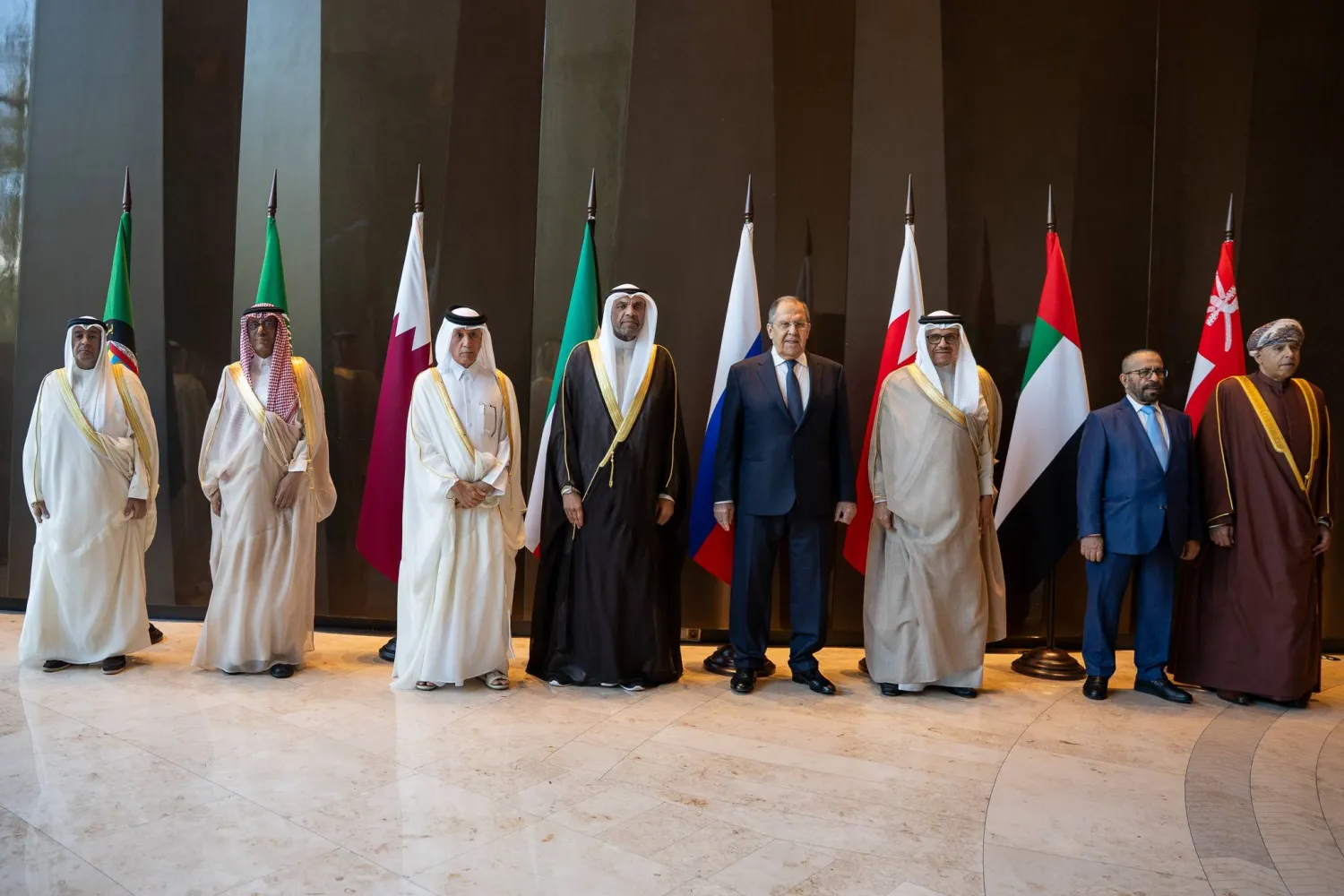
He made his remarks at the 8th Joint Ministerial Meeting of the Strategic Dialogue between the GCC and Russia in the Russian city of Sochi. The meeting was co-chaired by Kuwaiti Foreign Minister and President of the current session of the GCC Ministerial Council Abdullah Ali Al Yahya and Russian Foreign Minister Sergei Lavrov and attended by the foreign ministers of GCC countries.
Albudaiwi kicked off his statement by strongly condemning the “brutal” attack by Israel on Qatar, which he said is a “flagrant violation of its sovereignty and territorial integrity, and contravenes international principles and laws, and the Charter of the United Nations.”
GCC countries stand in full solidarity with Qatar, “will devote all their capabilities to confront this sinful aggression, and demand that the international community condemn it and put an end to the repeated Israeli violations that undermine the region's security and stability,” he went on to say.
Albudaiwi praised the efforts made by Qatar’s security authorities, civil defense, and competent bodies in their immediate handling of the incident, containing its repercussions, and safeguarding the safety of citizens and residents.
The attack, he continued, “undermines the good efforts and endeavors undertaken by Qatar as part of its mediation to secure a ceasefire in the Gaza Strip and release the hostages and detainees.”
“It is a serious obstacle to international and regional efforts aimed at establishing peace in the Middle East region,” he warned. He also praised Qatar's ongoing efforts to reach a ceasefire in Gaza and alleviate the suffering of the Palestinian people.
Moreover, Albudaiwi noted that the meeting was being held amid numerous crises in the region and the world, including political and security challenges that affect security and stability.
“GCC countries stress that the optimal way to resolve all conflicts and disputes is through negotiations, peaceful and diplomatic means, prioritizing dialogue, and respecting the rule of law in line with international laws that ensure the preservation of security and stability and the achievement of greater prosperity and development,” he added.
Israeli violations against Palestinians
He noted the continued of “Israeli violations against the Palestinian people, the crime of genocide being committed against the population of the Gaza Strip, the deliberate policy of siege that has led to famine in the enclave, as well as the continued destruction of residential neighborhoods, hospitals, schools, universities, mosques, and churches, all of which aim to displace the population and settle it.”
“We condemn the continued targeting by Israeli forces of humanitarian and UN organizations working in the Gaza Strip and the obstruction of access for relief and humanitarian aid. We call on the international community to assume its responsibilities to alleviate the suffering of the brotherly Palestinian people, ensure the secure delivery of humanitarian and relief aid and basic necessities to the Strip's population, and enable humanitarian and UN organizations to perform their humanitarian tasks,” he demanded.
Albudaiwi emphasized Security Council Resolution 2730 on the protection of humanitarian personnel and ensuring unhindered access for aid, stressing the GCC's steadfast positions on the centrality of the Palestinian cause.
He underscored the need to end the Israeli occupation and establish an independent Palestinian state on the 1967 borders with East Jerusalem as its capital, in accordance with the Arab Peace Initiative and international resolutions.
Turning to other issues, Albudaiwi underlined the GCC's firm position on Iran's continued occupation of the three islands of Greater Tunb, Lesser Tunb and Abu Musa that belong to the United Arab Emirates (UAE). He reiterated the GCC's support for the UAE's right to sovereignty over its three islands, as well as over the territorial waters, airspace, continental shelf and exclusive economic zone of the three islands, as they are an integral part of the UAE's territory.
He also considered any decisions, practices, or actions carried out by Iran on the three islands null and void and do not change the historical and legal facts that unanimously support the UAE's right to sovereignty over its three islands. He called on Iran to respond to the UAE's efforts to resolve the issue through direct negotiations or by resorting to the International Court of Justice.
Navigation in Khor Abdullah
He underscored the GCC’s position on the importance of regulating navigation in Khor Abdullah, Iraq’s respect for the sovereignty and territorial integrity of Kuwait, and its commitment to all relevant international agreements and resolutions, especially Security Council Resolution 833.
He also urged it to commit to the completion of the demarcation of the maritime borders beyond Marker 162 in accordance with international law, and commit to the signed bilateral agreements, including the 2012 Navigation Agreement and the 2014 Joint Plan.
On Syria, Albudaiwi reiterated the GCC's rejection of the ongoing Israeli attacks on its territory and foreign interference in its internal affairs.
He stressed the GCC's support for Syria's sovereignty, independence, and territorial integrity, considering its security and stability a fundamental pillar of regional security.
He emphasized the need to confront terrorism, extremism and all acts of violence aimed at destabilizing Syria, regardless of their motives and justifications.
Russian-Ukrainian war
Albudaiwi said that since the outbreak of the war in Ukraine, the GCC has adopted a position based on the principles of international law and the United Nations Charter, preserving the international order based on respect for the sovereignty and territorial integrity of states, non-interference in their internal affairs, and the non-use or threat of force.
“The GCC stresses that a peaceful settlement through dialogue, negotiations, and non-military escalation is the only way to resolve the crisis,” he declared. “The GCC states have also consistently supported diplomatic efforts and international initiatives aimed at ending the war, within the framework of their keen interest in ensuring that this leads to a political solution to the crisis.”
“This is in addition to the success of the mediation efforts achieved by the GCC states regarding the exchange of prisoners, the release of detainees, and the reunification of families from both sides, and the humanitarian and relief aid they have provided, in addition to their support for efforts to facilitate the export of grains and food and humanitarian supplies to protect the global food security system.”
He hoped the recent high-level talks held in the United States, along with the previous Russian-American talks in Riyadh, would help in achieving a comprehensive and sustainable peaceful political solution.
Albudaiwi hoped for continued strengthening of joint cooperation between the GCC and Russia in the political, commercial, cultural, educational, agricultural, health and energy sectors, within the framework of the Joint Action Plan between the Cooperation Council and the Russian Federation (2023-2028).
The General Secretariat is fully prepared to discuss with the Russian side all possible aspects of cooperation, especially since the General Secretariat will present proposals for cooperation in the fields of tourism and cybersecurity in the coming period, he added.
The gatherers issued a joint statement to condemn the Israeli attack on Qatar on Tuesday that targeted Hamas leaders in Doha.
The attack is a flagrant violation of international laws and norms and Qatar’s sovereignty and a deliberate undermining of diplomatic efforts aimed at achieving security and stability in the region, they said.
They stressed that “such actions demand a clear and firm international stance - one that holds the international community accountable for its moral, political, and legal responsibilities, and leads to effective measures to deter Israel and put an end to its repeated violations of international peace and security principles.”
The ministers called on the international community and the Security Council to assume their responsibilities in halting these attacks and preventing their recurrence, emphasizing that the continuation of this approach will exacerbate tensions in the region and undermine opportunities for achieving security and stability. They warned that the absence of a serious and decisive international stance will have grave repercussions on regional and international peace and security.