



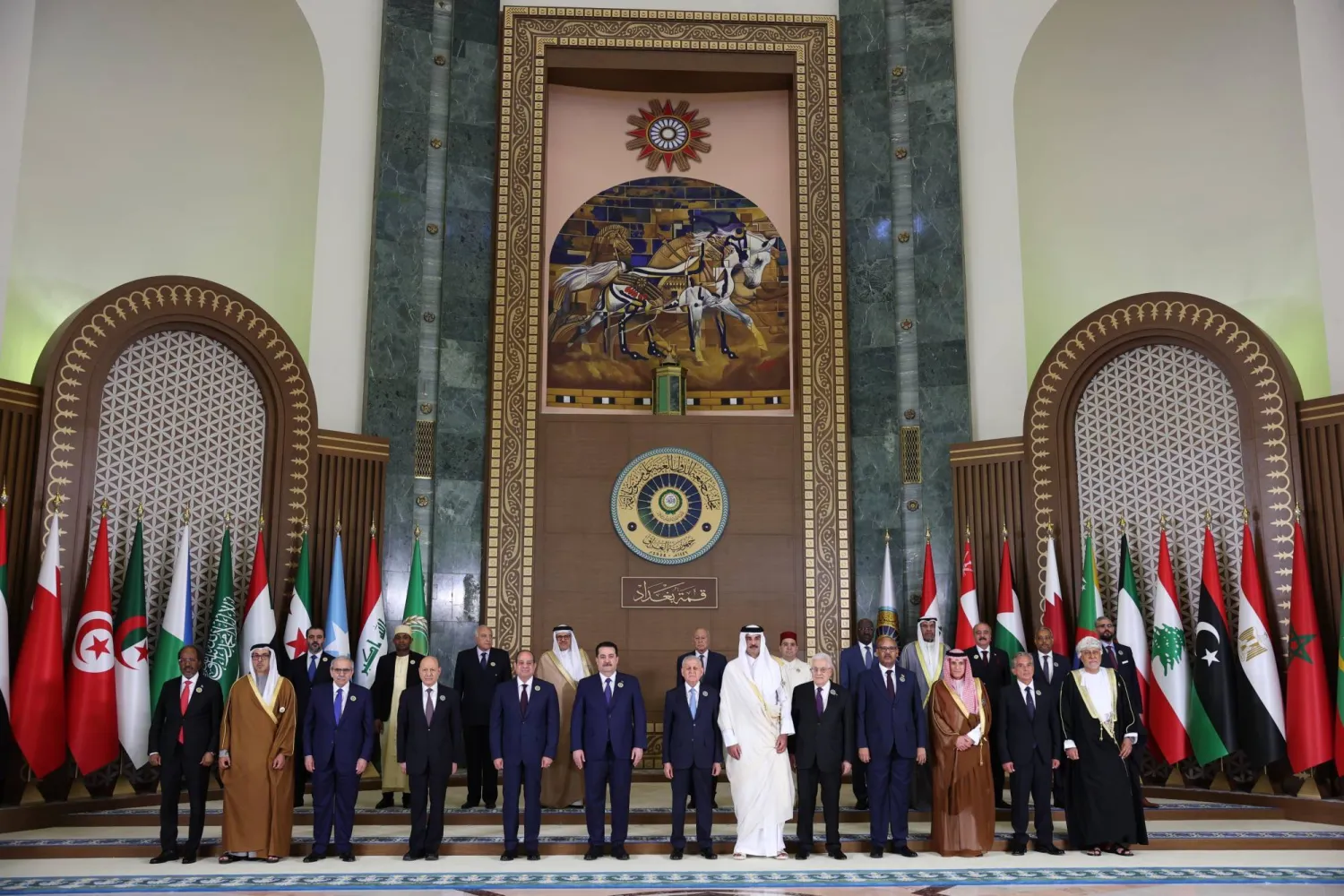

Arab and Islamic foreign ministers are gathering in Doha on Sunday to finalize a draft resolution on Israel’s recent strike against the Qatari capital, ahead of an emergency Arab–Islamic summit hosted by Qatar on Monday.
The meetings follow days of intensive consultations among regional and international diplomats, aimed at coordinating positions on the fast-moving crisis.
Arab League Secretary-General Ahmed Aboul Gheit told Asharq Al-Awsat that the summit itself sends a powerful message: “Qatar is not alone. The Arab and Islamic worlds stand beside it.”
He warned that Israel’s actions are “the direct outcome of two years of international silence on the genocide in Gaza, which has emboldened the occupiers to act without consequence.”
Qatar’s Foreign Ministry spokesman Majed bin Mohammed Al-Ansari said the emergency summit would deliberate on a draft resolution presented by foreign ministers.
He described the gathering as proof of “broad Arab and Islamic solidarity with Qatar in the face of cowardly Israeli aggression targeting the homes of Hamas leaders,” adding that participants would collectively reject Israel’s “state terrorism.”
The Israeli strike last Tuesday, strongly condemned by the Arab world and international community, triggered Qatar’s call for the emergency summit. The conference is expected to address not only the immediate repercussions of the attack but also measures to prevent a wider escalation in the region.
Iran has confirmed that President Masoud Pezeshkian will attend, while Iraq’s Prime Minister Mohammed Shia al-Sudani and Turkish President Recep Tayyip Erdoğan are also due in Doha.
Ahead of the summit, Egyptian Foreign Minister Badr Abdelatty held phone consultations with his counterparts in Saudi Arabia, Türkiye, and Pakistan.
Egypt’s Foreign Ministry said the talks focused on assessing the crisis and “exploring ways to confront the severe political and security challenges facing the region.”
The ministers emphasized the need for Arab-Islamic unity and for sustained coordination across political, diplomatic, and economic fields to safeguard common interests and stabilize the region.
Mohamed Higazy, a former Egyptian ambassador and member of the Egyptian Council for Foreign Affairs, described the summit as “coming at a moment of grave danger” following an attack widely condemned, including by the UN Security Council.
Though its statement did not explicitly name Israel, the Council denounced the strikes on Doha, calling Qatar “a key mediator.”
Doha and Cairo have been major mediators in helping reach a ceasefire to the Israeli war on Gaza.
Higazy said the summit’s agenda would go beyond the assault on Qatar. Leaders are expected to reaffirm commitment to a two-state solution, reject any forced displacement of Palestinians, and stress that Israel’s “systematic expulsion policies” threaten regional stability.
The summit, he argued, would send “a clear message to the international community that such practices are unacceptable.”
Participants are also expected to push for early recovery and reconstruction as the only viable alternative to displacement. In addition, they will revisit a Saudi-Egyptian initiative recently adopted by Arab foreign ministers in Cairo, which outlines a common vision for regional security and cooperation.
The summit is likely to issue a political declaration setting out principles for security and cooperation, to be followed by more limited meetings at the executive level aimed at implementation.
Diplomatic momentum has been bolstered by Qatari Prime Minister Sheikh Mohammed bin Abdulrahman Al Thani’s visit to the United States, where he met with President Donald Trump in New York on Friday.
Arab diplomats said American and broader international condemnation of the Israeli strike would strengthen the Arab-Islamic stance at the summit, transforming it into a unified bloc capable of applying real pressure to curb Israel’s actions.
