


Arab, Islamic Leaders Call for Holding Israel Accountable for its Crimes

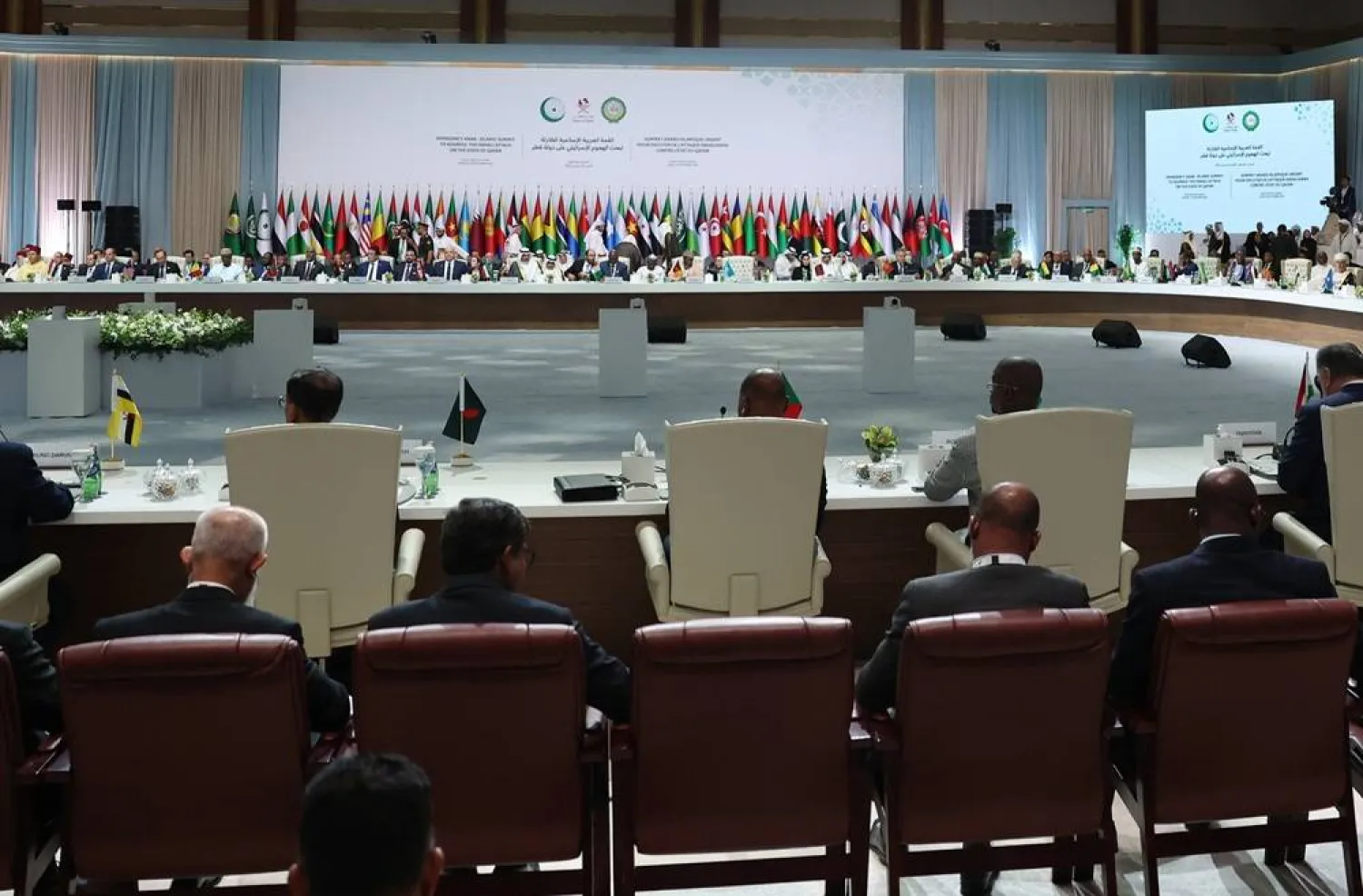
A handout photo made available by the Turkish Presidential Press Office shows leaders attending the opening of the emergency Arab-Islamic summit to discuss the Israeli attack on Qatar in Doha, Qatar, 15 September 2025. (EPA/ Turkish Presidential Press Office Handout)
TT

Arab, Islamic Leaders Call for Holding Israel Accountable for its Crimes

A handout photo made available by the Turkish Presidential Press Office shows leaders attending the opening of the emergency Arab-Islamic summit to discuss the Israeli attack on Qatar in Doha, Qatar, 15 September 2025. (EPA/ Turkish Presidential Press Office Handout)

The emergency Arab-Islamic summit kicked off in Doha on Monday in wake of Israel’s attack on the Qatar capital last week where it targeted Hamas leaders.

Sheikh Tamim bin Hamad Al-Thani opened the summit, slamming Israeli government and Prime Minister Benjamin Netanyahu and accusing them of rejecting peace with the region and wanting to impose its will on it.

Jordan’s King Abdullah II stressed the need for the summit to come up with urgent practical resolutions that would end this danger and the war on Gaza and prevent the displacement of the Palestinian people.

He expressed Jordan’s “absolute” support for Qatar, saying its security was indivisible to the kingdom’s.

Egyptian President Abdel Fattah al-Sisi said: “Israel’s ever-growing arrogance demands work that reflects our common vision. Now is the time to seriously deal with and resolve the Palestinian cause.”

He reiterated Egypt’s rejection of any proposals that would lead to the displacement of Palestinians from their land.

He strongly condemned the Israeli attack on Doha, saying Israel’s brazenness will only inflame the conflict and destabilize the region.

“It is time for Israel to realize that its security and sovereignty will not be achieved by force, but through respecting laws and the sovereignty of others,” he declared.

Iranian President Masoud Pezeshkian said Israel is carrying out its attacks under the pretext of self-defense.

“The double standards of international law have allowed it to continue its aggression,” he noted, accusing Israel of ethnic cleansing.

“Arab and Islamic countries must stand united against Israel,” he demanded.

Turkish President Recep Tayyip Erdogan urged intensified diplomatic efforts to hold Israel to account and put its officials on trial.

He warned that Israel’s growing aggression is a threat to the entire region and that even the Israeli government’s closest allies have spoken out against its extremism.

Moreover, he said Israel’s expansionist policy and aggression can only be stopped through “strong deterrence,” calling on Arab and Islamic countries to bolster their military defense industries.

Iraqi Prime Minister Mohammed Shia al-Sudani said the attack on Qatar sends a negative message that deliberately kills opportunities to achieve peaceful solutions.

“The security and stability of any Arab or Islamic country is indivisible from our collective security,” he declared.

He proposed the drafting of a comprehensive roadmap for a ceasefire in Gaza and the formation of a joint Arab-Islamic committee that can deliver their message to the Security Council and other international bodies.

Secretary-General of the Organization of Islamic Cooperation Hissein Brahim Taha demanded that the United Nations Security Council hold Israel accountable for its crimes.

The summit is an opportunity to take a “united and firm stance against the heinous Israeli attack,” he added.

Arab League Secretary-General Ahmed Aboul Gheit said that “silence over criminality is the real crime.”

“Silence over the violation of the law undermines the entire global system,” he warned, saying this silence had led to the “crimes and barbarism in Gaza over the past two years.”

Israeli leaders now believed that they can do whatever they want with impunity, he lamented.

“It is a duty of every Arab and Muslim to rise up against this cowardly and lowly act,” he added, referring to the attack on Doha.

“We are sending a message to the international community: Enough silence over the practices of his state that has inflamed the region,” he said.

Moreover, he stated that the Israeli attack on Qatar has crossed all red lines and all humanitarian principles. “There is nothing noble or honorable about attacking a negotiator state.”


Bahrain to Host Gulf Ministerial Meeting to Discuss Regional Developments

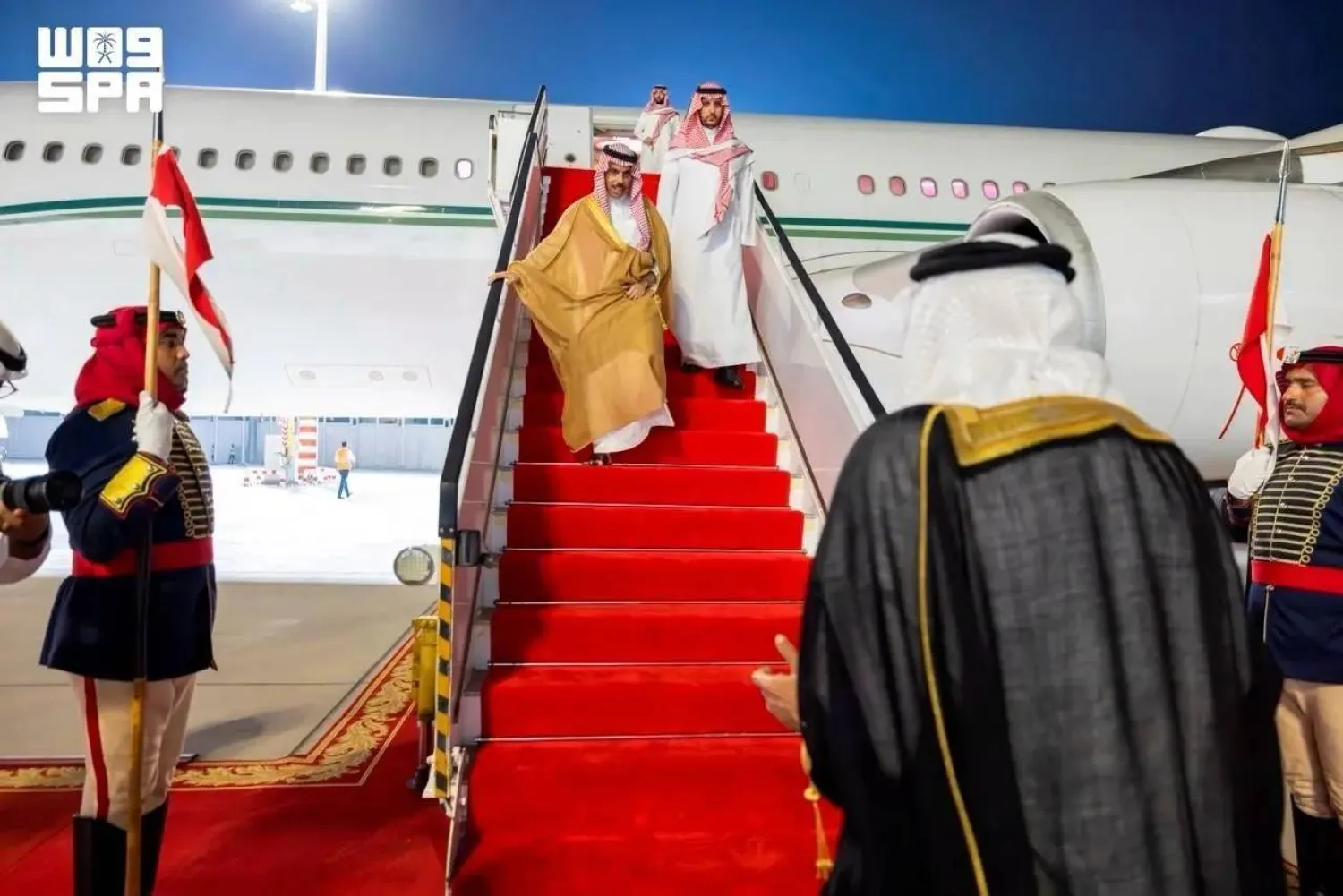
The 167th Ministerial Council meeting of the Gulf Cooperation Council (GCC) will be held in Bahrain on Wednesday. (AFP)
TT

Bahrain to Host Gulf Ministerial Meeting to Discuss Regional Developments

The 167th Ministerial Council meeting of the Gulf Cooperation Council (GCC) will be held in Bahrain on Wednesday. (AFP)

Bahrain is hosting on Wednesday the 167th Ministerial Council meeting of the Gulf Cooperation Council (GCC) to discuss regional and international developments.

It will be held under the chairmanship of Bahrain’s Minister of Foreign Affairs and current President of the Ministerial Council Dr. Abdullatif bin Rashid Al Zayani, with the participation of GCC foreign ministers.

The third joint ministerial meeting of the GCC-Canada Strategic Dialogue will also be held on the sidelines. Canadian Minister of Foreign Affairs Anita Anand is expected to attend.

GCC Secretary-General Jasem Albudaiwi said the ministerial council will review reports on the implementation of decisions issued by the GCC Supreme Council's 46th summit, held in Manama in December 2025.

The council will discuss memoranda and reports submitted by ministerial and technical committees and the General Secretariat, as well as matters related to strategic dialogues and relations between GCC member states and international countries and blocs.

Albudaiwi said the third joint GCC-Canada Strategic Dialogue Ministerial Meeting will tackle several issues, including ways to deepen cooperation between the GCC and Canada through the Joint Action Plan for 2025-2029.

The plan outlines priorities and mechanisms to strengthen cooperation in political and security affairs, trade and investment, energy, education, health, and other vital fields.


Saudi Arabia, Yemen Sign $150 Mn Petroleum Supply Deal to Support Energy Sector, Power Plants

Tuesday's agreement was signed by Minister of Electricity and Energy Eng. Adnan Al-Kaf and Saudi Ambassador to Yemen and SDRPY General Supervisor Mohammed bin Saeed Al Jaber. (SPA)
TT

Saudi Arabia, Yemen Sign $150 Mn Petroleum Supply Deal to Support Energy Sector, Power Plants

Tuesday's agreement was signed by Minister of Electricity and Energy Eng. Adnan Al-Kaf and Saudi Ambassador to Yemen and SDRPY General Supervisor Mohammed bin Saeed Al Jaber. (SPA)

Saudi Arabia and Yemen signed on Tuesday an agreement worth $150 million to supply petroleum derivatives for power plants across various Yemeni governorates.

The agreement was signed under the patronage of Yemeni Prime Minister Dr. Shaya Mohsin Zindani and is part of Saudi Arabia’s support through the Saudi Development and Reconstruction Program for Yemen (SDRPY) to the Yemeni Ministry of Electricity and Energy, reported the Saudi Press Agency.

It was signed by Minister of Electricity and Energy Eng. Adnan Al-Kaf and Saudi Ambassador to Yemen and SDRPY General Supervisor Mohammed bin Saeed Al Jaber.

The petroleum derivatives support, consisting of diesel and mazut, will fuel more than 70 electricity generation plants across various Yemeni governorates, helping boost the stability and continuity of electricity services and support vital sectors linked to electrical energy.

The support reflects Saudi Arabia’s longstanding commitment to supporting the Yemeni people and alleviating their humanitarian suffering, particularly amid rising temperatures.

It is expected to contribute to stimulating commercial activity, creating job opportunities, and promoting economic growth in Yemen.

An additional agreement was also signed between the Yemeni oil company PetroMasila, the Yemeni Ministry of Electricity and Energy, and SDRPY to support the sustainability of PetroMasila’s operations as a state-owned company, strengthening its capabilities, improving operational efficiency, and ensuring continuity of services in support of the Yemeni government.

The initiative will be implemented under a comprehensive governance framework to ensure that assistance reaches the final beneficiaries, through a supreme committee linked to the prime minister and comprising several Yemeni entities responsible for overseeing and monitoring the distribution of petroleum derivatives to power plants based on the identified needs of electricity generation facilities across Yemen.

SDRPY provided petroleum derivatives grants in 2018 valued at $180 million, one in 2021 worth $422 million, another in 2022 amounting to $200 million, and one in 2026 valued at $81.2 million.

The current $150 million grant comes as searing summer temperatures approach and amid an urgent need to improve electricity service quality to better daily life and living standards for the Yemeni people.


OIC Condemns Israel’s Withholding of Palestinian Tax Revenues

 Israeli military excavators demolish a Palestinian building in the town of Jabaa in the Israeli-occupied West Bank, near Jerusalem June 3, 2026. (Reuters)
Israeli military excavators demolish a Palestinian building in the town of Jabaa in the Israeli-occupied West Bank, near Jerusalem June 3, 2026. (Reuters)
TT

OIC Condemns Israel’s Withholding of Palestinian Tax Revenues

 Israeli military excavators demolish a Palestinian building in the town of Jabaa in the Israeli-occupied West Bank, near Jerusalem June 3, 2026. (Reuters)
Israeli military excavators demolish a Palestinian building in the town of Jabaa in the Israeli-occupied West Bank, near Jerusalem June 3, 2026. (Reuters)

The General Secretariat of the Organization of Islamic Cooperation (OIC) strongly condemned on Tuesday the Israeli Knesset’s approval of a “racist” bill to expand mechanisms for confiscating Palestinian tax revenues, in “flagrant violation of international law and existing bilateral agreements”.

It warned of the “gravity of this illegal measure, which constitutes an assault on the rights of the Palestinian people and their financial resources.”

The move will “exacerbate the deteriorating humanitarian and economic conditions in the Palestinian Territories,” it added.

The General Secretariat renewed its call on the international community “to shoulder its responsibilities by pressuring the Israeli authorities to stop this official piracy and to immediately and unconditionally release all Palestinian tax revenues being illegally withheld.”
