


Arab, Muslim States Alarmed by Israeli Plan to Move Gazans to Egypt

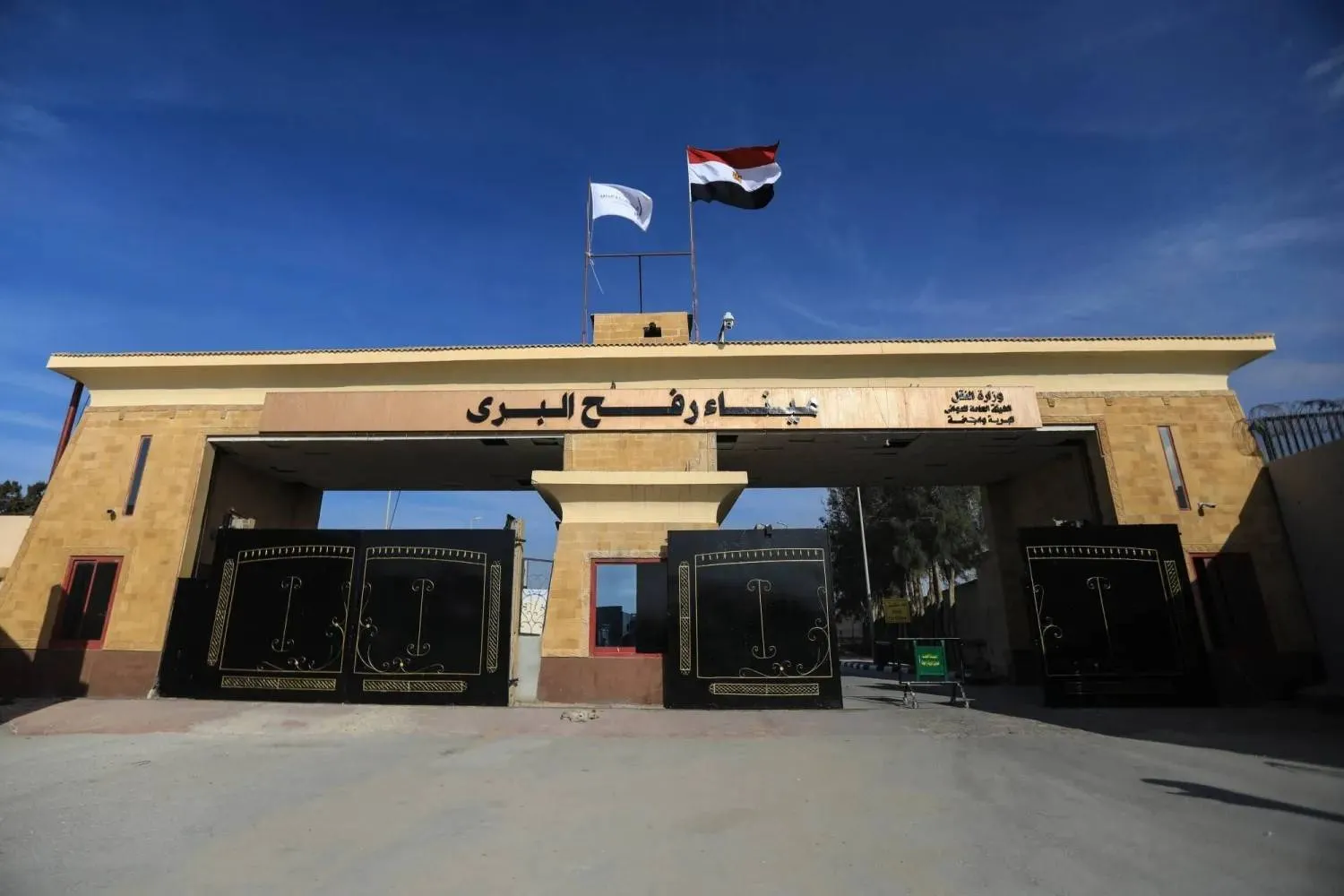
Rafah border crossing (Reuters file photo)
TT

Arab, Muslim States Alarmed by Israeli Plan to Move Gazans to Egypt

Rafah border crossing (Reuters file photo)

Saudi Arabia, Egypt, Jordan, the United Arab Emirates, Indonesia, Pakistan, Türkiye and Qatar said on Friday they were deeply concerned over Israeli statements about opening the Rafah crossing in one direction to push Gaza residents into Egypt.

In a joint statement, the foreign ministers of the eight countries underlined their total rejection of any attempt to displace the Palestinian people from their land.

They said full adherence was needed to US President Donald Trump’s plan, which called for opening the Rafah crossing in both directions, safeguarding freedom of movement and preventing any resident of the enclave from being forced to leave.

The ministers said conditions must be created for Palestinians to remain on their land and to take part in rebuilding their homeland within an integrated vision to restore stability and improve humanitarian conditions.

The ministers reiterated their appreciation for Trump’s commitment to establishing peace in the region, saying it was important to move forward with the plan and carry out all its requirements without delay or obstruction in order to achieve security and peace and to strengthen the foundations of regional stability.

They called for a full and lasting ceasefire, an end to civilian suffering, and unrestricted humanitarian access into Gaza. They also urged the start of early recovery and reconstruction efforts and the creation of conditions that would allow the Palestinian Authority to resume its responsibilities in the territory, paving the way for a new phase of security and stability in the region.

The ministers affirmed their countries’ readiness to continue working and coordinating with the United States and all relevant regional and international parties to ensure full implementation of Security Council Resolution 2803 and all related resolutions.

They said the objective was to provide an environment conducive to achieving a just, comprehensive and sustainable peace in line with international legitimacy and the two state solution, leading to the establishment of an independent Palestinian state on the June 4, 1967 borders, including the occupied territories in Gaza and the West Bank, with East Jerusalem as its capital.



UN Rights Council Slams ‘Egregious’ Iran Strikes on Gulf, Demands Reparation

Smoke rises from Kuwait international airport after a drone strike on fuel storage in Kuwait City, Kuwait, Friday, Wednesday, March 25, 2026. (AP Photo)
TT

UN Rights Council Slams ‘Egregious’ Iran Strikes on Gulf, Demands Reparation

Smoke rises from Kuwait international airport after a drone strike on fuel storage in Kuwait City, Kuwait, Friday, Wednesday, March 25, 2026. (AP Photo)

The UN Human Rights Council on Wednesday condemned Iran's "egregious attacks" on Gulf countries and demanded full "reparation" for all victims of its strikes.

The 47-member council backed a resolution brought by the six Gulf Cooperation Council (GCC) countries and Jordan demanding Iran immediately "cease all unprovoked attacks.”

The resolution was adopted by consensus.

The resolution "condemns in the strongest terms the egregious attacks" by Iran, condemns Tehran's actions aimed at closing the Strait of Hormuz and voices "grave concerns at the Iranian attacks on energy infrastructure.”

It demands Iran "immediately and unconditionally cease all unprovoked attacks" against the GCC states and Jordan and "provide full, effective and prompt reparation to all victims for the damage and injury caused by its attacks.”

Saudi Arabia welcomed the UN Human Rights Council’s unanimous adoption of the resolution, which reflects the international community’s rejection of Iranian attacks and its condemnation of these brutal acts as grave violations of human rights.

In a statement, the Saudi Foreign Ministry said Iranian attacks on the Kingdom and other countries in the region “constitute a flagrant violation of the sovereignty and territorial integrity of states and a clear breach of international conventions and international law.”

“Targeting countries that are not party to the conflict is a blatant act of aggression that cannot be justified or accepted,” it added.


Iran Launched 83% of Missiles and Drones at the Gulf Compared to 17% at Israel

Smoke rises from a high-rise building following a drone attack in Kuwait City on March 8, 2026. (AFP/file photo)
TT

Iran Launched 83% of Missiles and Drones at the Gulf Compared to 17% at Israel

Smoke rises from a high-rise building following a drone attack in Kuwait City on March 8, 2026. (AFP/file photo)

Since the start of the war on February 28, about 83% of missiles and drones launched by Iran have targeted Gulf Cooperation Council (GCC) states, compared to 17% launched at Israel, reports indicate.

Official data shows that by Wednesday night, Iran had launched 4,391 missiles and drones at GCC vital infrastructure and civilian facilities, constituting a dangerous escalation that threatens regional security and stability.

As for Israel, which has initiated the war, it was hit by 930 Iranian missiles and drones or just 17% of the total attacks in the region.

Data shows that Iran has launched a total of 723 missile and drone attacks at Saudi Arabia since the beginning of the conflict.

The United Arab Emirates bore the brunt of Iranian attacks with 2,156 missiles and drones, followed by Kuwait with 791 attacks, Bahrain (429), Qatar (270) and Oman with 22 drone attacks.

Gulf air defense systems have demonstrated exceptional efficiency and professionalism in neutralizing these threats, proving to be an impenetrable shield safeguarding the region’s security and stability.

Arab and Muslim nations condemned the Iranian attacks, urging Tehran to cease aggression and respect international law for regional stability.

But Iran has escalated military operations against GCC countries, directly threatening the global economy and international energy security.


Saudi Defense Minister Receives Phone Call from Hungarian Counterpart

Saudi Defense Minister Prince Khalid bin Salman bin Abdulaziz. (SPA)
TT

Saudi Defense Minister Receives Phone Call from Hungarian Counterpart

Saudi Defense Minister Prince Khalid bin Salman bin Abdulaziz. (SPA)

Saudi Minister of Defense Prince Khalid bin Salman bin Abdulaziz received a phone call on Wednesday from his Hungarian counterpart Kristóf Szalay-Bobrovniczky, the Saudi Press Agency reported.

During the call, the two sides discussed regional developments, including Iran's attacks on the Kingdom and several countries in the region, and their implications for regional and international security and stability.