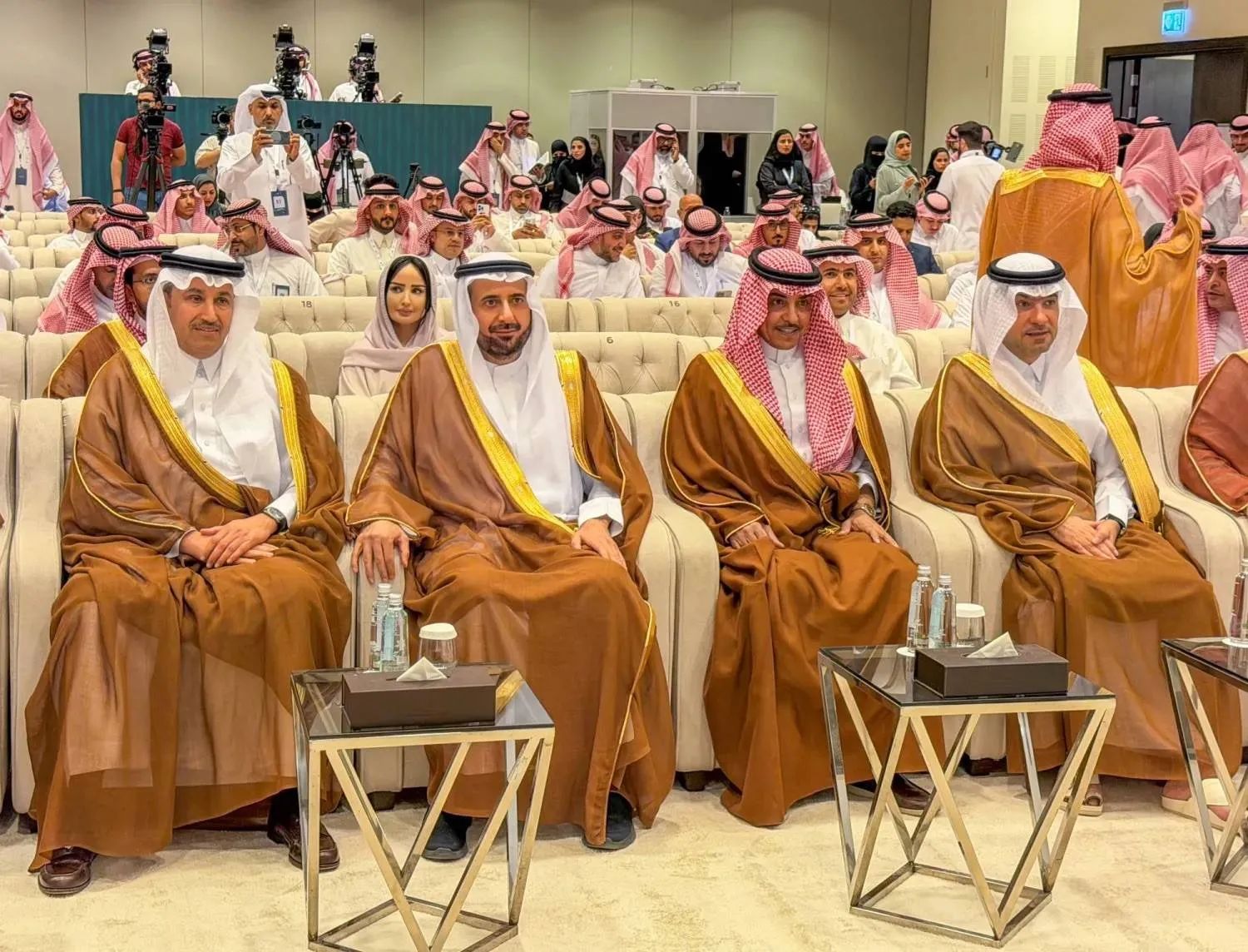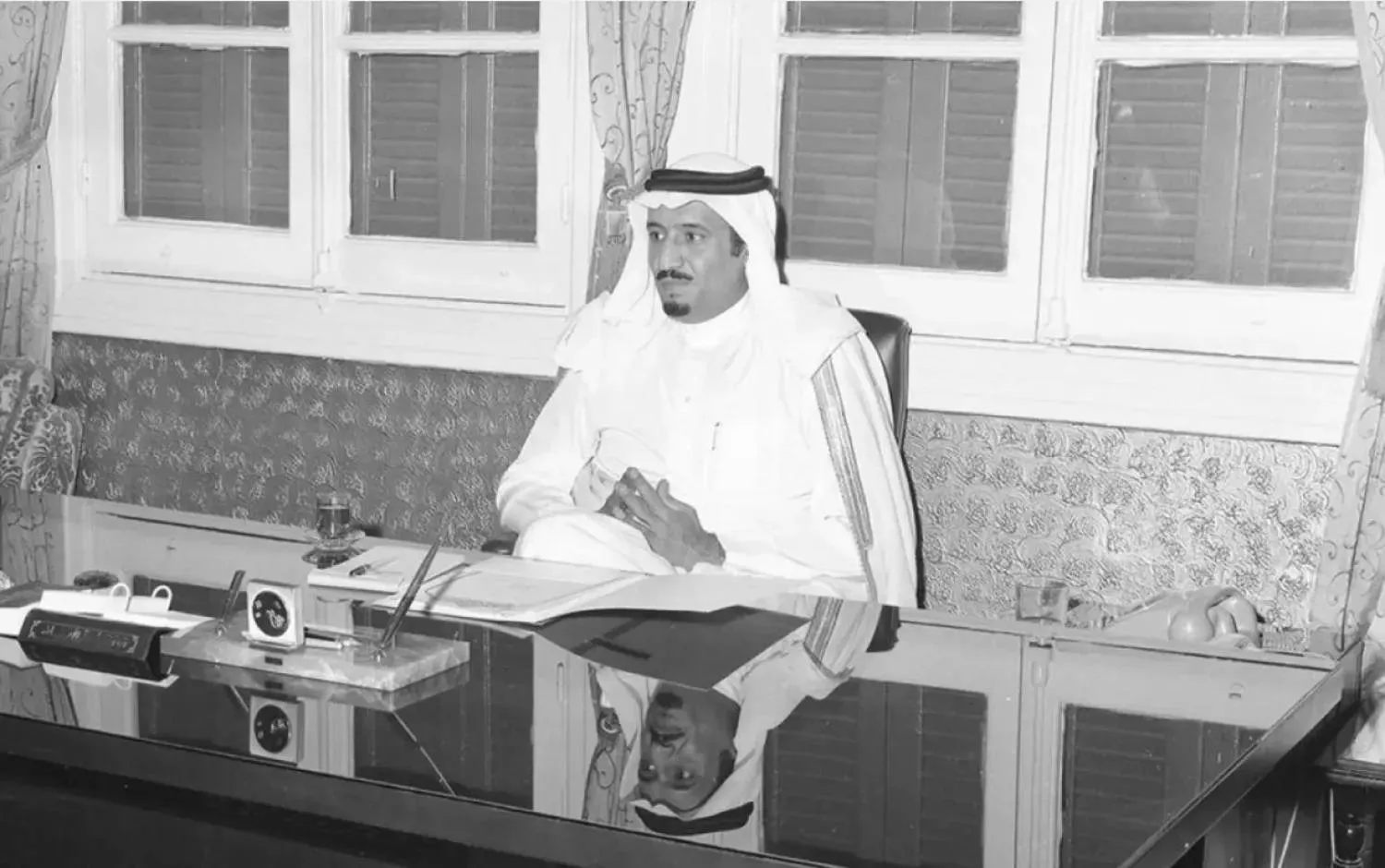

Friday marks the 11th anniversary of King Salman bin Abdulaziz ascending to the throne. This milestone comes as Saudi Arabia points to sweeping transformations across politics, the economy, culture, technology, and society, alongside an expanding domestic, regional, and global footprint.
Over the past 11 years, the kingdom has undergone a far-reaching shift, evolving into what officials describe as a nationwide workshop, as reform agendas accelerated, national vision targets advanced, and policies of modernization and economic diversification reshaped nearly every sector.
King Salman has long been described as the “Governor of Riyadh,” a title not used for other regional princes, reflecting his early grooming for leadership. He was widely regarded as the custodian of the ruling family’s institutional memory, a trusted envoy of Saudi kings and their personal adviser.
Throughout his career, he was tasked with sensitive political missions abroad, received by world leaders as a statesman, authorized to sign agreements and memoranda of understanding with foreign capitals, and appointed to lead Saudi delegations to numerous regional and international forums.
His long tenure as governor of Riyadh expanded his network among heads of state, government leaders, and political and cultural figures.
During that period, the Saudi capital emerged as a hub for high-level visits, summits, and conferences, shaping international engagement with Saudi decision-making.
When he was sworn in as king on Jan. 23, 2015, he assumed the title Custodian of the Two Holy Mosques and embarked on sweeping reforms that drew international recognition.
Riyadh as a global destination
The late King Abdulaziz envisioned Riyadh as a modern capital befitting the emerging Saudi state. In 1946, he appointed his son, Prince Sultan, as governor of Riyadh, prioritizing projects such as the kingdom’s first official population census and the city's administrative division.
By 1952, Riyadh had been divided into 10 districts. Governance of the region later passed through Princes Nasser bin Abdulaziz, Sultan bin Abdulaziz, and Nayef bin Abdulaziz.
On Tuesday, 11 Rajab 1373 AH, corresponding to March 16, 1954, a royal decree appointed Prince Salman bin Abdulaziz as acting governor of Riyadh, followed by another decree on 25 Shaaban 1374 AH, corresponding to April 18, 1955, confirming him in the post.
During nearly six decades as governor, King Salman oversaw Riyadh’s transformation from a small walled town into a modern metropolis.
Today, the city is among the world’s fastest-growing capitals and a center of social, political, and economic influence at the local, regional, and international levels.
Under King Salman’s reign, Saudi Arabia achieved two unprecedented global milestones within four years. Riyadh was selected to host World Expo 2030 and later awarded the FIFA World Cup 2034.
The Expo is expected to serve as a global platform showcasing innovation and advanced technologies addressing global challenges, coinciding with the target year of Vision 2030.
Saudi Arabia’s World Cup bid received a score of 419.8 out of 500, the highest technical evaluation ever awarded by FIFA, according to its announcement on Dec. 11 last year.
Over the past decade, the Salman era has delivered wide-ranging political, economic, social, and cultural achievements, turning Saudi Arabia into what officials describe as a future-oriented development workshop.
To support these ambitions, the kingdom established several entities focused on advanced and precision technologies, including specialized technology companies and government bodies to strengthen Saudi Arabia’s position in emerging fields.
Among them is the Saudi Data and Artificial Intelligence Authority, established in 2019, which has developed advanced platforms and trained national talent in data and artificial intelligence.
The National Cybersecurity Authority, founded in 2017, helped the kingdom rank 13th globally and first in the Arab world in the Global Cybersecurity Index in 2019.
Additional bodies include the General Authority for Defense Development, the General Authority for Military Industries, and the Research, Development, and Innovation Authority.
Economies of the future
During King Salman’s reign, Saudi Arabia launched several companies specializing in future economy technologies.
In February 2014, the Saudi Electronics Company (ALAT), wholly owned by the Public Investment Fund, was established to develop advanced electronics, including semiconductors, smart devices, advanced manufacturing, and artificial intelligence infrastructure.
The kingdom has also hosted and launched major global technology conferences. In March last year, Saudi Arabia launched the third edition of the LEAP conference, one of the world’s most significant technology events, following its inaugural edition in 2022 and a second in 2023.
In September, Riyadh hosted the third Global AI Summit, drawing strong international participation and announcing multiple partnerships, memoranda of understanding, and initiatives aimed at shaping the future of artificial intelligence.
Saudi Arabia has expanded its role in leading global artificial intelligence efforts, with summit discussions focusing on AI applications, societal and economic impacts, and solutions for sectors including smart cities, human capability development, healthcare, transportation, energy, culture, heritage, the environment, and economic mobility.
In this context, the Saudi Ministry of Energy announced plans to establish a dedicated AI and business development department to boost energy efficiency and reduce consumption.
Meanwhile, Aramco Digital revealed cooperation with Groq, an integrated hardware and software platform, to establish the world’s largest AI inference data center in Saudi Arabia.
The AI summit organized by SDAIA featured interactive demonstrations. It attracted more than 32,000 visitors from inside and outside the kingdom, alongside global experts and leaders in artificial intelligence, to discuss the technology’s future and propose solutions that benefit humanity.