


Saudi FM Says Palestinians Have Right to Self-Determination

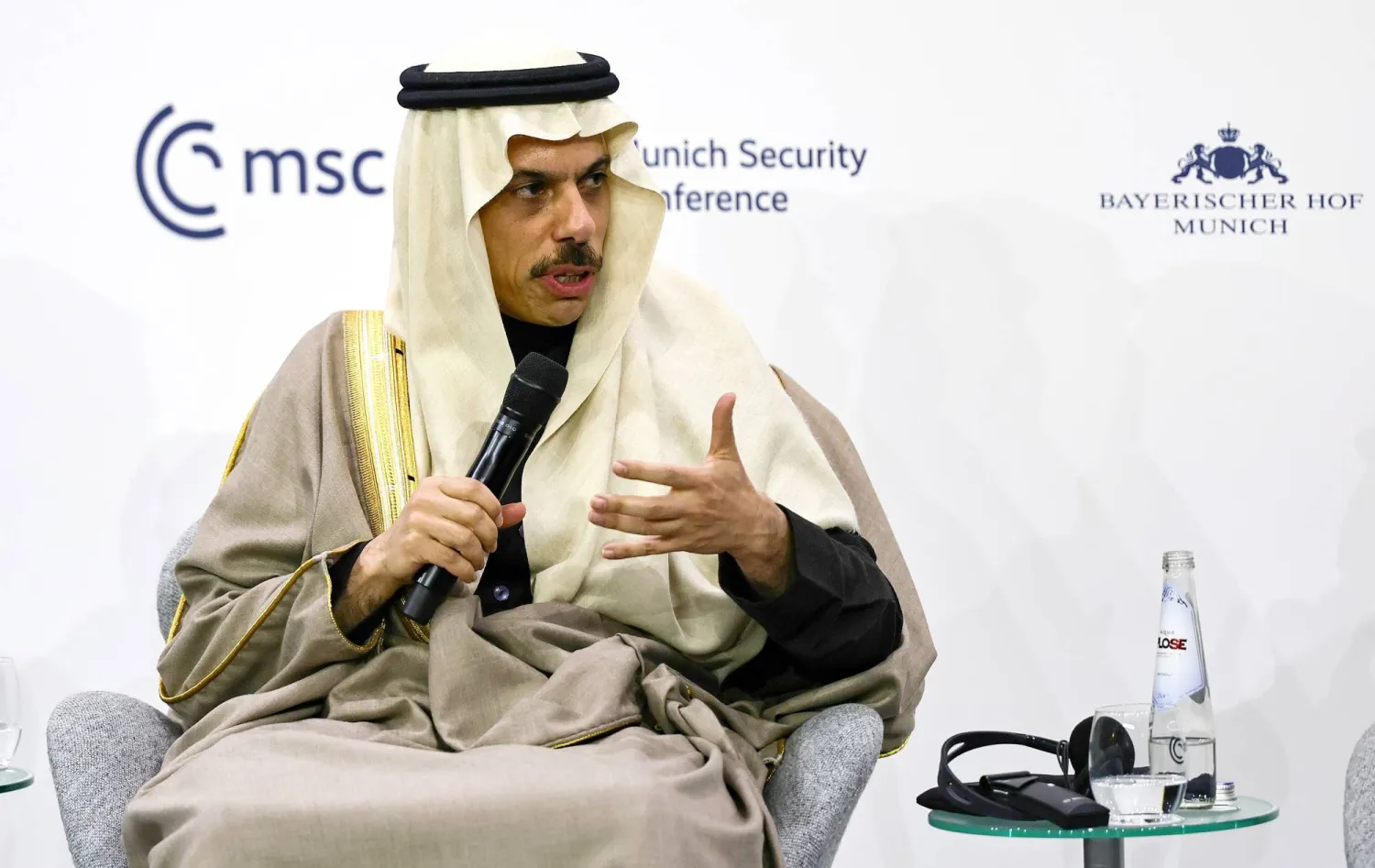
Saudi Arabia's Foreign Minister Prince Faisal bin Farhan Al Saud attends the 62nd Munich Security Conference (MSC) at the hotel 'Bayerischer Hof', in Munich, Germany, 13 February 2026. EPA/RONALD WITTEK
TT

Saudi FM Says Palestinians Have Right to Self-Determination

Saudi Arabia's Foreign Minister Prince Faisal bin Farhan Al Saud attends the 62nd Munich Security Conference (MSC) at the hotel 'Bayerischer Hof', in Munich, Germany, 13 February 2026. EPA/RONALD WITTEK

Saudi Foreign Minister Prince Faisal bin Farhan has stressed the unity of the Gaza Strip and the West Bank during a panel discussion at the Munich Security Conference, saying such unity would not be achieved without “stability in Gaza.”

Prince Faisal said on Friday Israeli violations of the Gaza ceasefire agreement were “ongoing,” noting that the greater concern is not only the continuation of fighting, but that death has not stopped even during periods when gunfire has subsided.

He added that the delivery of humanitarian aid remains a major challenge.

The minister pointed to a gap between political commitments and realities on the ground, saying that understandings are not always translated into action.

Nevertheless, he said engagement was continuing to address outstanding issues, whether related to ceasefire violations or to opening channels for humanitarian access.

His remarks came during a session titled Breaking Point: The International Order Between Reform and Destruction.

Alongside Prince Faisal, the panel also included Colombia’s Minister of Defense Pedro Arnulfo Sanchez Suarez, US Permanent Representative to the UN Michael Waltz, and the EU’s foreign affairs chief and vice president of the European Commission, Kaja Kallas.

Right to self-determination

Prince Faisal said that when the UN resolution establishing the “Board of Peace” was adopted, it was clear that it included explicit language affirming the right of the Palestinians to self-determination.

He said the Kingdom, alongside the countries that signed the resolution and those that agreed to join the council, viewed the step as a milestone on the path toward Palestinian self-determination.

He stressed that the immediate priority must be to stop the loss of life in Gaza, stabilize the situation, begin reconstruction, and build confidence that the enclave no longer poses a threat to its neighbors, paving the way to address Palestinian rights.

Any genuine approach to Palestinian rights must be comprehensive, including Palestinians in the West Bank, he said, describing the preservation of “the unity of Gaza and the West Bank” as essential.

That unity cannot be maintained without stability in Gaza, he added, noting that it is difficult to connect or build on a political track amid chaos.

Prince Faisal said efforts were ongoing, with upcoming meetings to follow up on progress, stressing that achieving stability is a continuous, daily endeavor.

Clear political messaging now requires focusing on tangibly improving the lives of Palestinians in Gaza, he said, opening the door to a path that would allow Palestinians and Israelis to live side by side in peace and harmony.

Shifts in the global order

Beyond the Palestinian issue, the session addressed shifts in the international system and the effectiveness of multilateral institutions amid rising tensions, mounting security challenges, and global economic crises.

Prince Faisal said the current system was originally shaped in the context of European crises, beginning with World War I and later World War II, which led to the creation of the United Nations and laid the foundations of the present global order.

That history explains the European or transatlantic focus embedded in the system’s structure, he said.

Despite the suffering caused by multiple wars, Prince Faisal said there were grounds for cautious optimism, pointing to the prominence of debate over the failure of the international system to deliver on its intended aims.

He said the US was leading some efforts to address shortcomings in the international system, but the more significant shift lay in discussions within Europe itself.

For a long time, he said, there had been greater attachment to symbolism than to facts on the ground, an approach that, at earlier stages, hindered substantive debate about the drivers of conflicts in various regions and how to mitigate them to allow those conflicts to end.

The change in tone makes him more optimistic than last year, Prince Faisal said, as discussions are now taking place with greater candor and transparency, including with European parties that were among the strongest supporters of the old order and least willing to acknowledge that it was no longer functioning.



Saudi Crown Prince Receives Message on Bilateral Ties from President of Kazakhstan

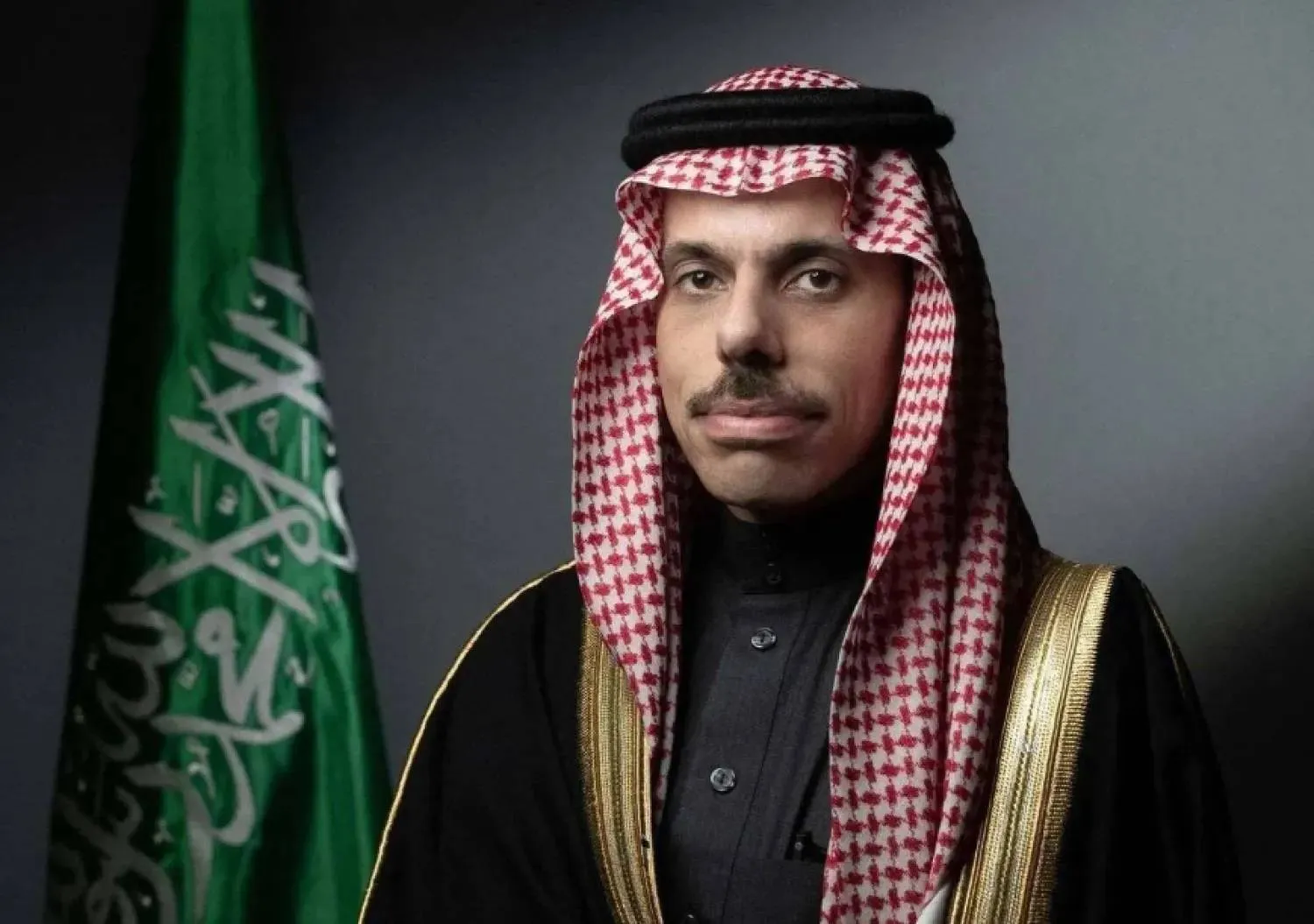
Prince Mohammed bin Salman bin Abdulaziz Al Saud, Saudi Crown Prince and Prime Minister. (SPA file)
TT

Saudi Crown Prince Receives Message on Bilateral Ties from President of Kazakhstan

Prince Mohammed bin Salman bin Abdulaziz Al Saud, Saudi Crown Prince and Prime Minister. (SPA file)

Prince Mohammed bin Salman bin Abdulaziz Al Saud, Saudi Crown Prince and Prime Minister, received on Tuesday a written message from President of Kazakhstan Kassym-Jomart Tokayev on bilateral relations between their two countries.

The message was received by Minister of Foreign Affairs Prince Faisal bin Farhan bin Abdullah during a meeting with his Kazakh counterpart Yermek Kosherbayev in Riyadh.


Princes and Officials Take Oath Before Custodian of the Two Holy Mosques

Custodian of the Two Holy Mosques King Salman bin Abdulaziz Al Saud and other officials are seen during the ceremony in Riyadh on Tuesday. (SPA)
TT

Princes and Officials Take Oath Before Custodian of the Two Holy Mosques

Custodian of the Two Holy Mosques King Salman bin Abdulaziz Al Saud and other officials are seen during the ceremony in Riyadh on Tuesday. (SPA)

Princes and officials appointed by royal orders to their new positions took the oath of office before Custodian of the Two Holy Mosques King Salman bin Abdulaziz Al Saud in Riyadh on Tuesday.

They included Deputy Governor of Al-Baha Region Prince Fahd bin Saad bin Abdullah bin Abdulaziz bin Turki; Member of the Shura Council Prince Dr. Saad bin Saud bin Mohammed bin Abdulaziz; Deputy Governor of Madinah Region Prince Saud bin Nahar bin Saud; Deputy Governor of Northern Borders Region Prince Mohammed bin Abdullah bin Abdulaziz; and Minister of Investment Fahd Al-Saif.

They swore to be faithful to their religion, then their King and country, not to reveal any of the state’s secrets, to preserve its interests and regulations, and to perform their duties with honesty, trustworthiness, and sincerity.


Saudi Arabia Reiterates Its Categorical Rejection of Israel’s ‘State Land’ Decision in West Bank

Custodian of the Two Holy Mosques King Salman bin Abdulaziz Al Saud chairs the Cabinet meeting in Riyadh. (SPA)
TT

Saudi Arabia Reiterates Its Categorical Rejection of Israel’s ‘State Land’ Decision in West Bank

Custodian of the Two Holy Mosques King Salman bin Abdulaziz Al Saud chairs the Cabinet meeting in Riyadh. (SPA)

The Saudi government condemned on Tuesday Israel’s decision to West Bank lands as "state lands."

Reiterating its absolute rejection of these illegal measures, the Cabinet warned that they undermine peace efforts and violate the Palestinian people's inherent right to establish an independent, sovereign state within the 1967 borders, with East Jerusalem as its capital.

Custodian of the Two Holy Mosques King Salman bin Abdulaziz Al Saud chaired the Cabinet session that was held in Riyadh.

The Cabinet congratulated citizens and Muslims on the advent of the holy month of Ramadan, expressing gratitude for the Kingdom's honor in caring for the two holy mosques and their visitors.

The Cabinet highlighted the success of the Hajj and Umrah seasons, noting that the Kingdom welcomed 19.5 million international pilgrims and Umrah performers in 2025, setting new records that reflect rapid progress toward the goals of Vision 2030 and the Pilgrim Experience Program.

The Cabinet described the Kingdom's Founding Day celebration on February 22 as an expression of pride in the Saudi state's nearly three-century history, underscoring the foundations of justice, unity, and development established by leaders and citizens throughout history to ensure the nation remains a global leader in all fields.

The Cabinet was briefed on recent talks between Saudi Arabia and various nations, which focused on strengthening bilateral and multilateral cooperation and boosting coordination to foster regional and international security, stability, and prosperity.

The session further reviewed the Kingdom's economic, cultural, and social activities, stressing the state's commitment to social solidarity and giving. This includes continued support for the sixth National Campaign for Charitable Work, set to begin on Friday.

The Cabinet commended the success of the third World Defense Show held in Riyadh under the Custodian of the Two Holy Mosques' patronage, during which strategic partnerships, agreements, and memoranda of understanding were signed to localize military technologies and strengthen local supply chains in alignment with Vision 2030 objectives.