


Saudi Arabia, Arab and Islamic Countries Condemn Israel’s 'State Land' Decision in West Bank 

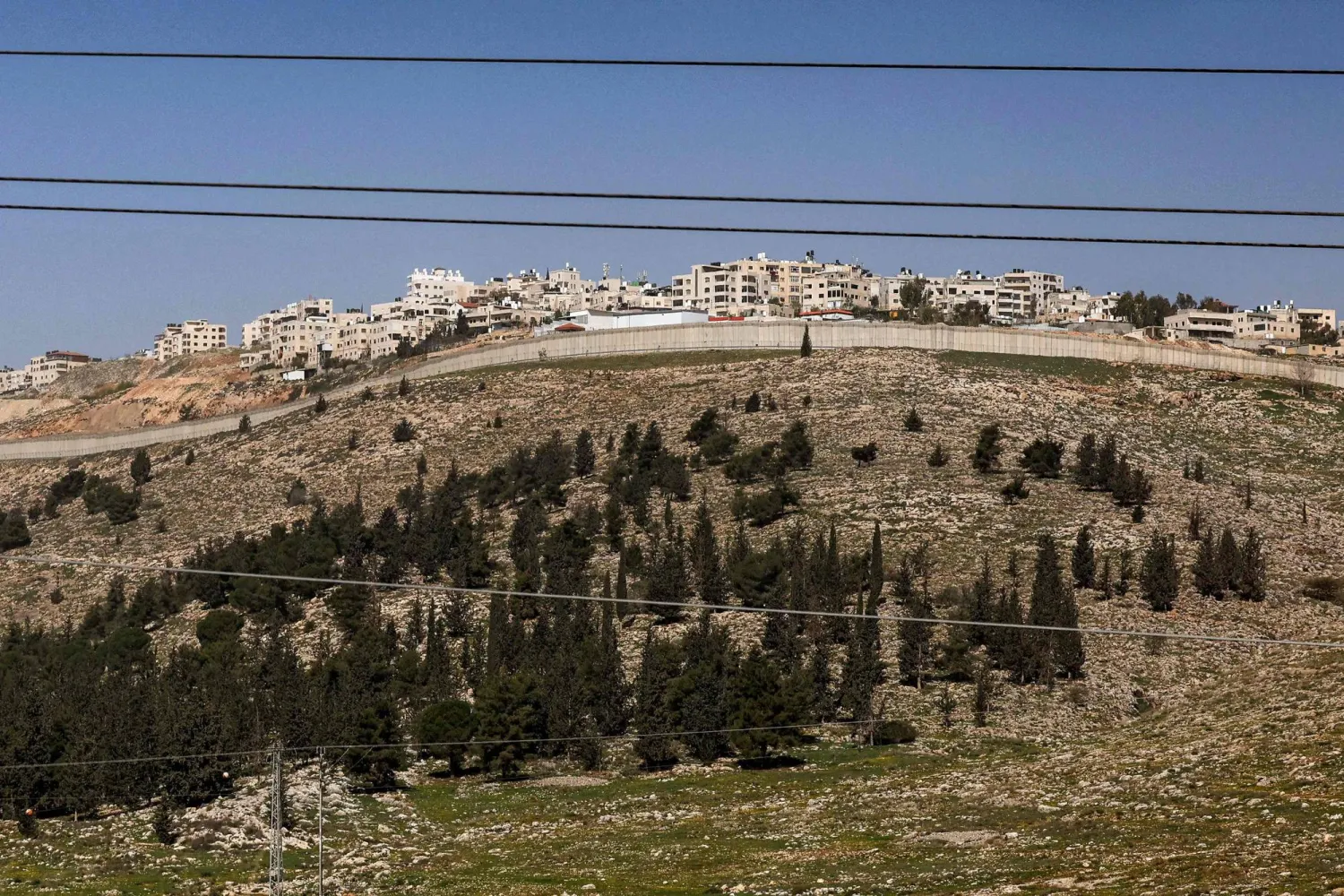
The West Bank village of al-Ram is pictured behind Israel's controversial separation barrier from the outskirts of Jerusalem on February 16, 2026. (AFP)
TT

Saudi Arabia, Arab and Islamic Countries Condemn Israel’s 'State Land' Decision in West Bank 

The West Bank village of al-Ram is pictured behind Israel's controversial separation barrier from the outskirts of Jerusalem on February 16, 2026. (AFP)

The foreign ministers of Saudi Arabia, Jordan, the United Arab Emirates, Qatar, Indonesia, Pakistan, Egypt, and Türkiye strongly condemned on Tuesday Israel's decision to designate lands in the occupied West Bank as so-called "state land".

They also slammed it for approving procedures for the registration and settlement of land ownership across extensive areas of the occupied West Bank for the first time since 1967.

They condemned the moves as “a grave escalation aimed at accelerating illegal settlement activity, land confiscation, entrenching Israeli control, and applying unlawful Israeli sovereignty over the Occupied Palestinian Territory and undermining the legitimate rights of the Palestinian people.”

These measures are “a flagrant violation of international law and international humanitarian law, particularly the Fourth Geneva Convention, as well as a violation of relevant United Nations Security Council resolutions, foremost among them Resolution 2334,” the FMs said in a statement.

“The decision also contradicts the advisory opinion issued by the International Court of Justice concerning the legal consequences arising from Israeli policies and practices in the Occupied Palestinian Territory, which underscored the illegality of measures intended to alter the legal, historical, and demographic status of the Occupied Palestinian Territory, the obligation to end the occupation, and the prohibition of the acquisition of territory by force,” they added.

“This step reflects an attempt to impose a new legal and administrative reality designed to consolidate control over the occupied land, thereby undermining the two-state solution, eroding the prospects for the establishment of an independent and viable Palestinian State, and jeopardizing the attainment of a just and comprehensive peace in the region,” they warned.

The foreign ministers reiterated their “categorical rejection of all unilateral measures aimed at altering the legal, demographic, and historical status of the Occupied Palestinian Territory.”

They stressed that such policies are “a dangerous escalation that will further heighten tensions and instability in the Occupied Palestinian Territory and the region as a whole.”

They called on the international community “to assume its responsibilities and take clear and decisive steps to halt these violations, ensure respect for international law, and safeguard the inalienable rights of the Palestinian people, foremost among them their right to self-determination, ending the occupation, and establishing their independent and sovereign State based on 1967 borders with East Jerusalem as its capital.”



Faisal bin Farhan, Shaibani Discuss Developments in Syria 

Saudi Minister of Foreign Affairs Prince Faisal bin Farhan bin Abdullah and Syrian FM Asaad al-Shaibani meet in Riyadh earlier in February. (Saudi Foreign Ministry) 
TT

Faisal bin Farhan, Shaibani Discuss Developments in Syria 

Saudi Minister of Foreign Affairs Prince Faisal bin Farhan bin Abdullah and Syrian FM Asaad al-Shaibani meet in Riyadh earlier in February. (Saudi Foreign Ministry) 

Saudi Minister of Foreign Affairs Prince Faisal bin Farhan bin Abdullah received on Monday a telephone call from his Syrian counterpart Asaad al-Shaibani to discuss regional developments.

They reviewed bilateral relations between their countries, as well as the latest developments in Syria and efforts exerted towards them.


GCC Calls on Iraq to Withdraw Contentious Coordinates, Map Lodged with UN 

Secretary-General of the Gulf Cooperation Council (GCC) Jasem Albudaiwi. (GCC)
TT

GCC Calls on Iraq to Withdraw Contentious Coordinates, Map Lodged with UN 

Secretary-General of the Gulf Cooperation Council (GCC) Jasem Albudaiwi. (GCC)

Secretary-General of the Gulf Cooperation Council (GCC) Jasem Albudaiwi called on Monday Iraq to withdraw the list of coordinates and the map lodged with the United Nations, which includes claims regarding Iraqi maritime zones.

In a statement, Albudaiwi said the coordinates and map infringe on Kuwait’s sovereignty over its maritime areas and shoals, including Fasht Al-Qaid and Fasht Al-Aij.

He underscored the importance of resorting to international law and the 1982 United Nations Convention on the Law of the Sea (UNCLOS), in a manner consistent with the understandings, agreements, and bilateral memoranda of understanding concluded between the two countries.

Albudaiwi reiterated the GCC’s steadfast positions and previous resolutions on Iraq's respect for Kuwait's sovereignty and territorial integrity and its categorical rejection of any violation of Kuwait's sovereignty.

"The GCC and Iraq are bound by deep-rooted historical relations and close ties based on mutual respect and good neighborliness," he stressed, noting that such claims undermine efforts to boost cooperation and bilateral relations between Iraq and Kuwait.

He hoped Baghdad would withdraw the list of coordinates and the map in order to bolster mutual trust, support the stability of relations, and enshrine commitment to relevant legal and international principles.


Saudi Arabia, Various Foreign Ministers Condemn Israel over West Bank Moves

FILE - This photo shows a construction site of new housing projects in the West Bank Israeli settlement of Givat Ze'ev, Monday, June 18, 2023. (AP Photo/Ohad Zwigenberg, File)
TT

Saudi Arabia, Various Foreign Ministers Condemn Israel over West Bank Moves

FILE - This photo shows a construction site of new housing projects in the West Bank Israeli settlement of Givat Ze'ev, Monday, June 18, 2023. (AP Photo/Ohad Zwigenberg, File)

The ‌foreign ministers of Saudi Arabia, Brazil, France, Spain, Türkiye and various other states condemned Israeli decisions that they said introduce sweeping extensions to unlawful Israeli control over the West Bank.

"Changes are wide-ranging, reclassifying Palestinian land as so-called Israeli ‘state land’, accelerating illegal settlement activity, and further entrenching Israeli administration," said the joint statement, ‌issued late ‌on Monday by the ‌Turkish Foreign ⁠Ministry.

Other countries to ⁠sign the statement included Egypt and Qatar, as well as the heads of the Arab League and Organization of Islamic Cooperation, Reuters said.

Israel's cabinet on February 15 approved further ⁠measures to tighten Israel's control ‌over the occupied ‌West Bank and make it easier for ‌settlers to buy land, a move ‌Palestinians called a "de-facto annexation".

The West Bank is among the territories that Palestinians seek for a future independent state. Much ‌of it is under Israeli military control, with limited Palestinian self-rule ⁠in ⁠some areas run by the Western-backed Palestinian Authority.

The joint statement said the settlements, and decisions designed to further them, are "a flagrant violation of international law" and a step towards "unacceptable de facto annexation".

It said they also undermine the ongoing efforts for peace and stability in the region and threaten any meaningful prospect of regional integration.