Germany, France Call on Iran to Cease Attacks on Gulf

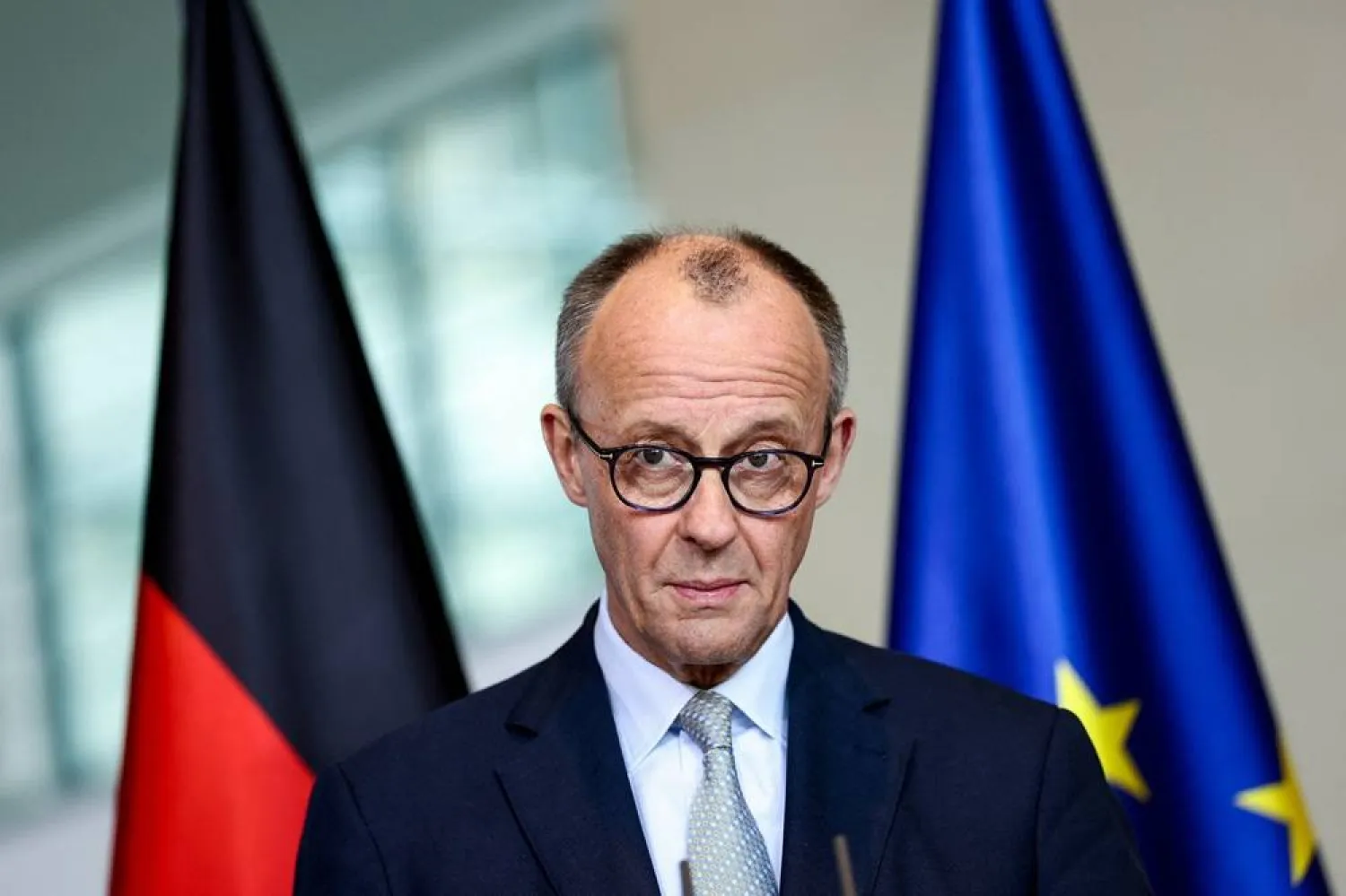
 German Chancellor Friedrich Merz makes a statement on the situation in the Middle East, after Israel and the US launched strikes on Iran, at the chancellery in Berlin, Germany, March 1, 2026. (Reuters)
German Chancellor Friedrich Merz makes a statement on the situation in the Middle East, after Israel and the US launched strikes on Iran, at the chancellery in Berlin, Germany, March 1, 2026. (Reuters)
TT

Germany, France Call on Iran to Cease Attacks on Gulf

 German Chancellor Friedrich Merz makes a statement on the situation in the Middle East, after Israel and the US launched strikes on Iran, at the chancellery in Berlin, Germany, March 1, 2026. (Reuters)
German Chancellor Friedrich Merz makes a statement on the situation in the Middle East, after Israel and the US launched strikes on Iran, at the chancellery in Berlin, Germany, March 1, 2026. (Reuters)

German Chancellor Friedrich Merz on Sunday called on Iran to "immediately stop" its "indiscriminate attacks", while predicting that the country's rule by clerics was coming to an end with the death of supreme leader Ali Khamenei.

Germany shares Iranians' "relief" to see the "mullah regime come to an end", Merz said, though he cautioned that the killing of Khamenei in US and Israeli strikes on Tehran had set Iran on a path to an "uncertain future".

France slammed Iran's "massive and unjustifiable" attacks on the Gulf states and Jordan Sunday, with Foreign Minister Jean-Noel Barrot saying they were being "drawn into a war they did not choose".

"I have expressed to each of them France's unequivocal condemnation, full solidarity and complete support," he added in a post on X.

- 'Day after' in Iran - 

Merz also called on US and European partners to start planning for the future of Iran and the region, saying the people of Iran deserved a better future after US and Israeli strikes killed its supreme leader. 

Merz said his government agreed with ‌US goals ‌to end Tehran's nuclear armament ‌and ⁠finish a "destructive game" ⁠being played by Iran, but he warned of possible dangers ahead. 

"This is not without risk. We do not know how far the region will be drawn into escalation by ⁠Iran's harsh counterstrikes," Merz told ‌reporters. 

Pointing to some ‌reservations over the US and Israeli actions, ‌Merz said now was not the ‌time to lecture partners and allies, despite doubts. 

"We want to work with our partners in the US, Israel, the region, ‌and Europe to develop an agenda for the day after," ⁠said Merz. 

His ⁠four aims were to ensure peace and stability in the region, to get Iran to end its nuclear and ballistic missile program, to contribute to a stable future for Iran and to help Iranians decide their own fate. 

Merz also said Germany would not tolerate attacks on US or Israeli institutions in the country. 


Iran Attacks on Gulf States Surpass 7,000

Smoke rises from a building in Kuwait following an Iranian attack. (AFP file)
TT

Iran Attacks on Gulf States Surpass 7,000

Smoke rises from a building in Kuwait following an Iranian attack. (AFP file)

Iranian attacks on Gulf states have reached new levels since the war began, with Kuwait emerging as one of the countries most heavily targeted in recent weeks.

The attacks have continued despite a ceasefire between Iran and the United States, mediated by Pakistan, that has been in place since last April.

According to a tally by Asharq Al-Awsat following the two latest attacks on Kuwait, on May 28 and again on Monday, and based on official data and statements issued by Gulf Cooperation Council states, Iranian attacks on Gulf countries from the start of the war in February through early June 2026 totaled about 7,028. They included around 1,716 missiles and 5,311 drones.

The figures show that drones accounted for the bulk of Iran’s attacks with more than 5,000 launched, compared with over 1,700 missiles. The pattern points to Tehran’s growing reliance in recent months on low-cost, high-volume attacks.

The attacks have persisted despite the truce. More than 215 Iranian attacks have been recorded since the ceasefire was announced on April 8, underscoring continued security tensions in the region. Gulf air defenses have intercepted and destroyed most of the attacks.

According to the tally, the United Arab Emirates recorded the highest number of attacks, with 2,846, followed by Saudi Arabia with 1,234. Kuwait was third with 1,194 attacks, reflecting the recent surge in strikes targeting the country.

Qatar was fourth with 737 attacks, followed by Bahrain with 700, while Oman recorded the fewest with 26.

The figures come after Kuwait was hit by fresh attacks in recent days, prompting several Gulf states to condemn the strikes and declare their solidarity with Kuwait.

The continued attacks have also raised warnings that they threaten regional stability and undermine efforts to consolidate the ceasefire.

Kuwait said on Monday that its air defenses had repelled missile and drone attacks targeting the country, activated emergency procedures, and sounded sirens in several areas.

The Kuwaiti Foreign Ministry held Iran fully responsible and said Kuwait reserved the right to take all necessary measures to defend its security and sovereignty.

The Kuwait News Agency, KUNA, said Kuwaiti air defenses had intercepted hostile missiles and drones, as sirens sounded across the country. It did not immediately provide further details on the targets or the extent of any possible damage.

After the attacks, the Kuwaiti Foreign Ministry issued a strongly worded statement condemning what it called “sinful and repeated Iranian attacks.”

It said the attacks represented “a dangerous escalation and a direct assault on the security and stability of the State of Kuwait,” as well as a direct threat to civilians and vital facilities.

The ministry said the attacks violated international law, the United Nations Charter, and UN Security Council resolutions, adding that their continuation undermined efforts to reduce tensions and contain the fallout from the escalating regional crisis.

Saudi Arabia also strongly condemned the repeated Iranian attacks on Kuwait. In a statement, it said, “the Kingdom stresses its categorical rejection of these attacks, which violate the sovereignty of Kuwait in a clear breach of international law and the United Nations Charter.”

It said the violations undermined international efforts to restore security and stability in the region. Saudi Arabia expressed solidarity with Kuwait’s government and people and renewed its full support for all measures Kuwait takes to preserve its sovereignty, security, and stability.

GCC Secretary-General Jassem Albudaiwi condemned the continued “hostile Iranian attacks” targeting Kuwait, describing them as a dangerous and irresponsible escalation, a blatant violation of Kuwait’s sovereignty and international laws and norms, and a direct threat to regional security and stability.

Albudaiwi said the continued attacks reflected an unacceptable Iranian approach that undermined efforts to preserve security and stability.

He called on the international community and the UN Security Council to assume their responsibilities and take a firm, deterrent stance against violations that threaten regional and international peace and security.

The GCC secretary-general stressed that Kuwait’s security was an integral part of the security of all GCC states.

The United Arab Emirates strongly condemned the Iranian “terrorist attacks” that targeted Kuwait with missiles and drones. In a statement, the UAE Foreign Ministry said the attacks were a flagrant violation of its sovereignty and a threat to its security and stability.

Abu Dhabi expressed its full solidarity with Kuwait and its support for all measures aimed at preserving Kuwait’s security and stability.


Saudi, Qatari FMs Discuss Regional Developments

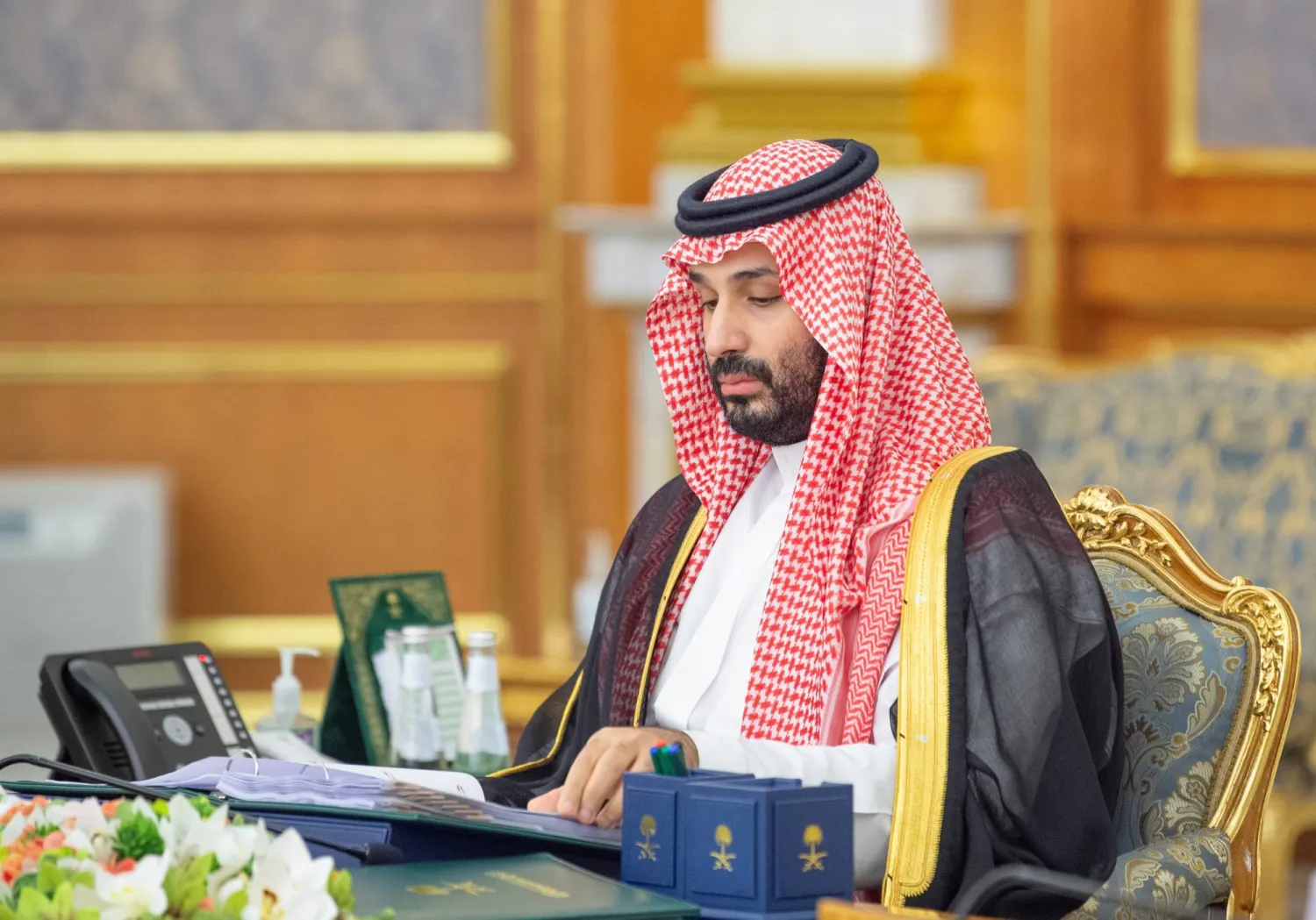
Saudi Minister of Foreign Affairs Prince Faisal bin Farhan bin Abdullah and his Qatari counterpart Sheikh Mohammed bin Abdulrahman Al Thani (Asharq Al-Awsat)
TT

Saudi, Qatari FMs Discuss Regional Developments

Saudi Minister of Foreign Affairs Prince Faisal bin Farhan bin Abdullah and his Qatari counterpart Sheikh Mohammed bin Abdulrahman Al Thani (Asharq Al-Awsat)

Saudi Minister of Foreign Affairs Prince Faisal bin Farhan bin Abdullah received a phone call from Qatari Prime Minister and Minister of Foreign Affairs Sheikh Mohammed bin Abdulrahman Al Thani, the Saudi Press Agency (SPA) reported Wednesday.

During the call, they reviewed the latest developments and current situation in the region, in light of the ongoing coordination and consultation between the two countries, SPA said.


One Killed in ‘Criminal’ Iranian Attack on Kuwait, Airport Partially Resumes Flights

Planes are seen at Kuwait International Airport. (KUNA)
TT

One Killed in ‘Criminal’ Iranian Attack on Kuwait, Airport Partially Resumes Flights

Planes are seen at Kuwait International Airport. (KUNA)

One person was killed in an Iranian attack targeting civilian facilities in Kuwait, including the international airport and diplomatic missions, the foreign ministry said on Wednesday. 

The statement did not specify which diplomatic missions were damaged. 

Ministry of defense spokesman Brigadier General Saud Abdulaziz Al-Atwan described the attack as "criminal Iranian aggression which resulted in significant material damage to the building and injuries." 

The strike marks an escalation for the country, which had seen relative calm since a ‌ceasefire in ‌the Iran war was announced on ‌April ⁠8. Iran had ⁠launched a salvo of missiles and drones at Kuwait as well as at other Gulf states. 

The early morning attack on Kuwait International Airport injured several people and forced authorities to divert flights, the state news ⁠agency reported. The attack caused "severe damage" to ‌the airport's Terminal ‌1 building, it said, citing the General Civil Aviation ‌Authority. 

Kuwait Airways said it would reschedule its ‌Wednesday flights. Shortly afterwards, the civil aviation authority said the country's flagship carrier had resumed flights from Terminal 4, after evaluating damage and taking safety measures. 

Earlier, ‌the US military said two Iranian missiles fired at Kuwait fell short or ⁠broke ⁠apart mid-flight, while three missiles launched at Bahrain were intercepted by US and Bahraini forces. 

A further wave of Iranian drones targeting US forces in Kuwait failed to hit their intended targets, Central Command said in a post on X, adding that Iranian ballistic missiles fired toward regional neighbors did not strike their targets. 

In response, US forces carried out strikes on Qeshm Island and intercepted multiple Iranian ballistic missiles and drones.