Saudi Arabia, Kuwait Stress Importance of Security Coordination, Integration

Saudi Minister of Interior Prince Abdulaziz bin Saud bin Naif bin Abdulaziz and Kuwaiti First Deputy Prime Minister and Interior Minister Sheikh Fahad Yusuf Saud Al Sabah. (Saudi Interior Ministry)
TT

Saudi Arabia, Kuwait Stress Importance of Security Coordination, Integration

Saudi Minister of Interior Prince Abdulaziz bin Saud bin Naif bin Abdulaziz and Kuwaiti First Deputy Prime Minister and Interior Minister Sheikh Fahad Yusuf Saud Al Sabah. (Saudi Interior Ministry)

Saudi Minister of Interior Prince Abdulaziz bin Saud bin Naif bin Abdulaziz held telephone talks on Tuesday with Kuwaiti First Deputy Prime Minister and Interior Minister Sheikh Fahad Yusuf Saud Al Sabah on the importance of continued coordination, cooperation and integration between their countries to bolster security and stability.

They reviewed the current regional developments and their security implications amid Iran’s malicious attacks against Gulf countries and the region.

Prince Abdulaziz stressed Saudi Arabia’s solidarity with Kuwait and support for all the measures it takes to preserve its security and stability.


Arab League, GCC Condemn Attack on Qatari LNG Tanker

Arab League
Arab League
TT

Arab League, GCC Condemn Attack on Qatari LNG Tanker

Arab League
Arab League

The Arab League condemned the attack on the liquefied natural gas (LNG) tanker Al Mayeda, owned by Qatar’s Nakilat, while sailing in the Arabian Gulf, the Saudi Press Agency reported Sunday.

In a statement, the Arab League stressed that targeting commercial vessels endangers maritime navigation and the safety of crews and violates international law. It expressed solidarity with the State of Qatar and support for efforts to investigate the circumstances of the incident and identify those responsible.

The Arab League emphasized the need to respect freedom of navigation, ensure vessel safety, and protect international trade. It warned of the repercussions of repeated attacks on the security of energy supplies and market stability, as well as the potential environmental risks of targeting energy tankers.

Moreover, Secretary General of the Gulf Cooperation Council (GCC) Jasem Mohamed Albudaiwi condemned in the strongest terms the attack on the tanker. He stressed that targeting energy tankers represents a dangerous escalation that undermines the security of the region and endangers lives and property and disrupts global economic activity.

The secretary general underlined that maritime corridors must remain safe for navigation and trade. He warned of the repercussions that could arise from targeting gas tankers, whether on the marine environment or the regularity of energy flows and market stability, underscoring the necessity of holding the perpetrators of this heinous attack accountable.

Furthermore, Albudaiwi emphasized the GCC's support for the measures and actions undertaken by the State of Qatar to safeguard its national capabilities, protect its properties, and confront all threats to its security and interests.


Saudi Defense Minister Discusses Cooperation with Japanese, Australian Counterparts, Who Condemn Houthi Attacks

Saudi Minister of Defense Prince Khalid bin Salman bin Abdulaziz
TT

Saudi Defense Minister Discusses Cooperation with Japanese, Australian Counterparts, Who Condemn Houthi Attacks

Saudi Minister of Defense Prince Khalid bin Salman bin Abdulaziz

Saudi Minister of Defense Prince Khalid bin Salman bin Abdulaziz held separate phone talks with Japanese Minister of Defense Shinjiro Koizumi, and Australian Deputy Prime Minister and Minister for Defense Richard Marles, the Saudi Press agency reported Monday.

During his call with the Japanese minister, discussions focused on military and defense cooperation between the two friendly countries, and ways to strengthen it.

The call also emphasized the importance of supporting efforts to achieve security and stability in the region and included condemnation of the terrorist attacks the Houthi militia is carrying out against Saudi Arabia.

In his call with his Australian counterpart, the Saudi minister discussed strengthening defense cooperation and coordination, reaffirmed their commitment to addressing regional challenges to promote security and stability. The Australian minister condemned Houthi attacks on Saudi Arabia.


Saudi Arabia Calls for Effective Collective Response to Protect Vital Shipping Routes

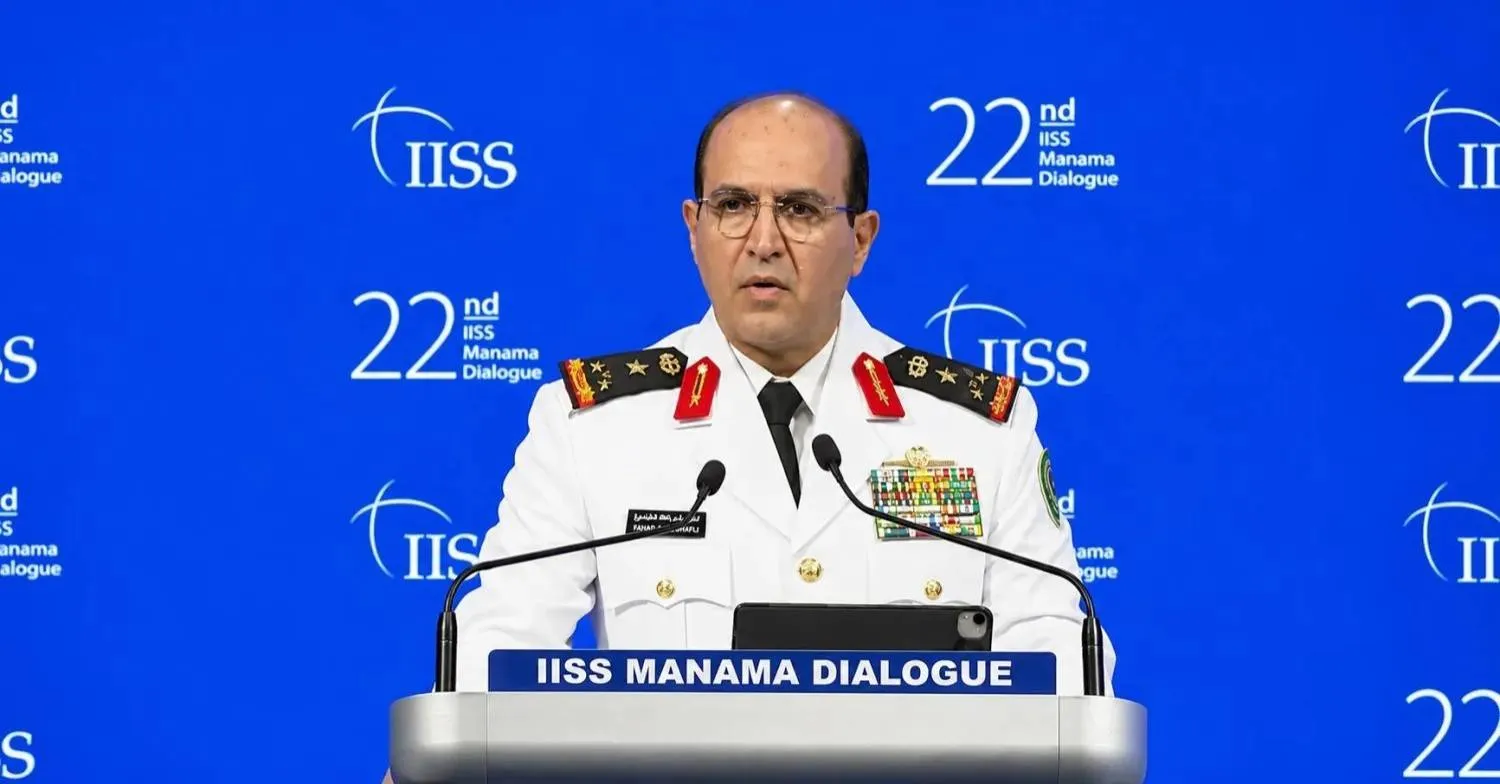
Saudi Deputy Chief of the General Staff Lieutenant General Fahd Al-Ghufaili during his participation in the 22nd Regional Security Summit in Manama (Asharq Al-Awsat)
TT

Saudi Arabia Calls for Effective Collective Response to Protect Vital Shipping Routes

Saudi Deputy Chief of the General Staff Lieutenant General Fahd Al-Ghufaili during his participation in the 22nd Regional Security Summit in Manama (Asharq Al-Awsat)

Saudi Deputy Chief of the General Staff Lieutenant General Fahd Al-Ghufaili emphasized on Sunday the importance of strengthening international cooperation to protect vital maritime corridors.

He stressed the need to ensure freedom of navigation and the safety of international trade, noting that maritime security is a shared responsibility requiring concerted international efforts.

Al-Ghufaili headed the Saudi Ministry of Defense delegation at the opening of the 22nd Regional Security Summit (IISS Manama Dialogue 2026). The summit brought together high-level international delegations comprising ministers, security officials, and military commanders.

Addressing the forum, Al-Ghufaili explained that seas and waterways are vital arteries for the global economy, energy security, and supply chains. He warned that any disruption in the Arabian Gulf, Strait of Hormuz, Red Sea, Bab al-Mandab Strait, or Gulf of Aden would affect international trade, energy markets, and food security.

Al-Ghufaili noted that Houthi attacks on commercial vessels and oil tankers since 2023, alongside disruptions to maritime traffic through the Strait of Hormuz, underscore the seriousness of maritime threats.

He stressed the need for an effective collective response to protect vital shipping routes and strengthen regional and international security and stability.

He stated that Saudi Arabia launched an international initiative on July 30, resulting in the establishment of the Multinational Maritime Defense Coalition.

The coalition has been joined by 14 countries, while others have expressed their willingness to join upon completing their relevant national procedures.

Al-Ghufaili emphasized that protecting vessels, maritime facilities, ports, and shipping lanes requires cooperation, coordination, and information sharing. He also highlighted the importance of joint capacity building and preventive measures to avert crises before they occur.

He stressed that force cannot replace the rule of law and that disputes must not threaten freedom of navigation or the safety of international trade.

He explained that Saudi Arabia's vision for maritime security is based on respecting the sovereignty and legitimate rights of states and ensuring freedom of navigation and passage in accordance with international law.

It also calls for preventing the use of maritime corridors as instruments of pressure or escalation and categorically rejects attacks on commercial vessels and civilian facilities. The vision further emphasizes strengthening regional and international cooperation to address maritime threats in all their forms.

Al-Ghufaili stated that maritime security cannot be achieved through military capabilities alone. It also requires trust, transparency, common rules, and mechanisms to prevent escalation. He called for establishing a sustainable regional maritime security framework based on prevention, early warning, information sharing, and operational coordination. Such a framework would support collective action to address risks before they develop into crises.

He stressed that seas must remain bridges of communication and prosperity rather than arenas of conflict. International straits must remain safe passages for navigation rather than instruments of political or military pressure, while international law must remain the reference framework for resolving disputes between states.

Al-Ghufaili reaffirmed that maritime security, freedom of navigation, and the stability of international straits are shared international responsibilities. He emphasized the need for partnership, adherence to international law, and prioritizing dialogue and wisdom over escalation and confrontation.

These principles serve the security of regional countries and safeguard the interests of the international community.