
Pakistani Official: Saudi Response Sets Model in Managing Umrah Travel Crisis

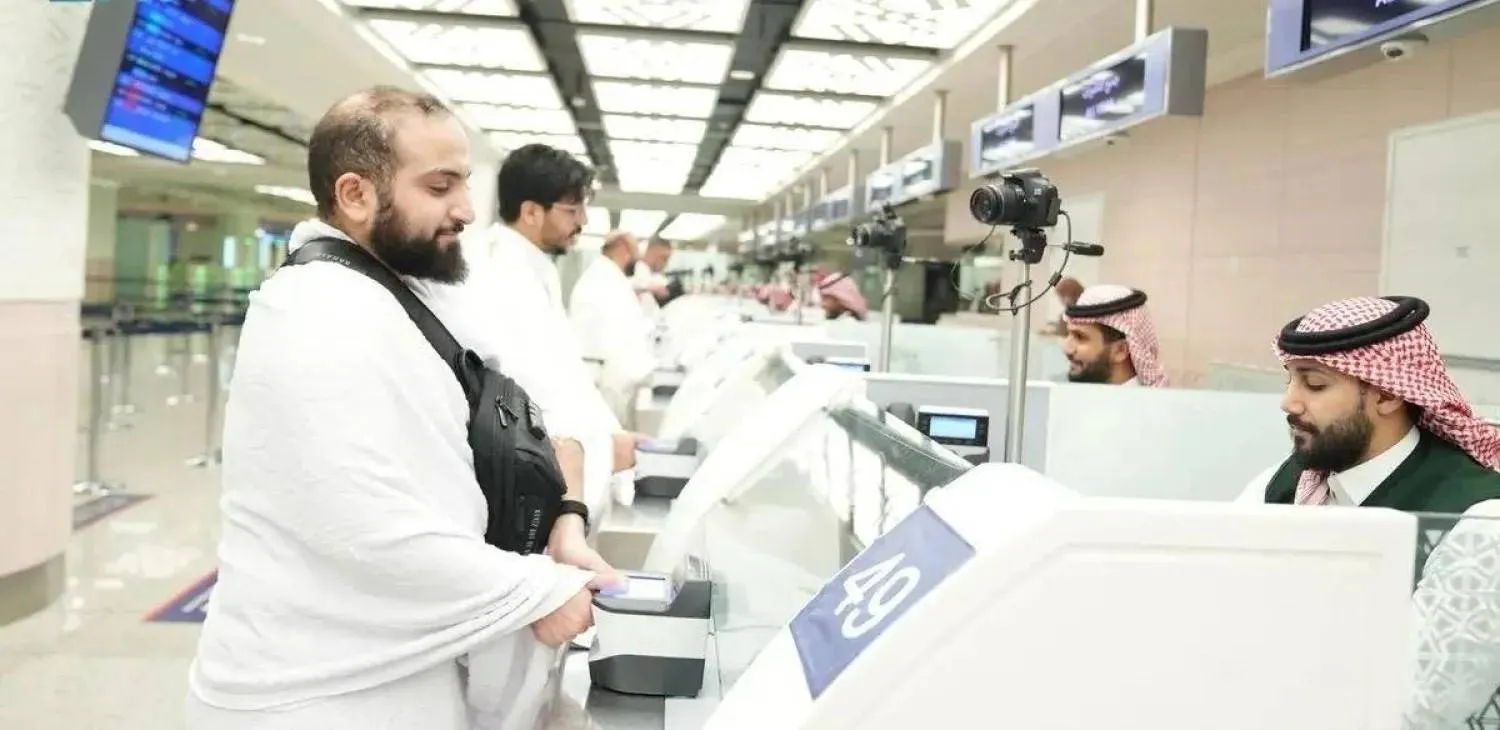
Saudi airports sustain a central regional role in handling neighboring and global flights (SPA)
TT

Pakistani Official: Saudi Response Sets Model in Managing Umrah Travel Crisis

Saudi airports sustain a central regional role in handling neighboring and global flights (SPA)

A Pakistani official described Saudi Arabia’s efforts to facilitate the return of Umrah pilgrims to their home countries as “exceptional,” particularly in repatriating Pakistani pilgrims.

He noted that on-the-ground results reflect high efficiency in managing travel flows and strong coordination with Saudi authorities.

Syed Mustafa Rabbani, Consul General of Pakistan in Jeddah, told Asharq Al-Awsat that, following the recent regional suspension of some flight operations, the consulate took immediate measures to ensure the welfare and safety of Pakistani Hajj and Umrah pilgrims.

It coordinated closely with Saudi authorities overseeing Hajj and Umrah, the Nusuk platform, and affected airlines to provide extended accommodation, transport services and medical care when needed.

Special flights and alternative travel options were also arranged to ensure all pilgrims returned safely and on time.

Rabbani said that during the current Umrah season, large numbers of Pakistani pilgrims arrived in Saudi Arabia, with many still in the holy cities of Makkah and Madinah performing rituals, while others have already returned to Pakistan after completing Umrah.

He added that the consulate, in coordination with Saudi authorities and licensed Umrah operators, assisted more than 3,500 stranded Pakistanis.

Efforts are ongoing to organize return flights through operational airports, primarily Jeddah and Madinah, he said, adding that when direct routes are unavailable, alternative flight paths and transit options are arranged in coordination with airlines and Saudi authorities.

Rabbani said Saudi authorities had shown full cooperation and support for Pakistani pilgrims, including flexibility in accommodation arrangements, extensions of stay when needed, efficient transport services and access to healthcare.

He expressed the consulate’s appreciation for the continued support provided to stranded Pakistani pilgrims and travelers in the western region of the Kingdom.

The Pakistani consulate in Jeddah continues intensive coordination with airlines and licensed Umrah operators to address delays and logistical challenges, he said, adding that efforts are underway to arrange additional flights, facilitate rescheduling and provide timely updates to pilgrims.

Field teams, under the direct supervision of the consul general, have been deployed at King Abdulaziz International Airport in Jeddah and Prince Mohammad bin Abdulaziz International Airport in Madinah.

These efforts, in coordination with Saudi authorities, Umrah operators, travel agents and airlines, have helped return a number of travelers to Pakistan and provide accommodation for those still awaiting departure.

Rabbani added that the consulate has set up a 24-hour hotline to guide Pakistani travelers and provide reliable updates on travel developments.

Saudi airports continue to play a central regional role in receiving flights from neighboring countries’ carriers and international airlines, operating with high readiness.

All necessary procedures have been facilitated, reflecting strong coordination and integration, and reinforcing the Kingdom’s regional position.

Saudi airports handled more than 120 flights from neighboring carriers between Feb. 28 and March 16, including requests from Qatar Airways, Kuwait Airways, Iraqi Airways, Gulf Air and Jazeera Airways.

Saudi Arabia’s General Authority of Civil Aviation said it had mobilized all its capabilities to maintain air traffic across the Kingdom’s airports and ensure efficient services for travelers amid the exceptional circumstances facing the Middle East.

In a statement issued the day before yesterday, it said these efforts aim to maintain smooth air navigation and ensure continued services for passengers and national and foreign airlines, alongside coordination with carriers to operate commercial, private and charter flights to return travelers to their destinations.


Six Arab Nations Issue Statement Condemning Attacks by Iran-aligned Iraqi Factions

Smoke rises from the area of Kuwait International Airport after a drone strike targeted a fuel depot (AP)
TT

Six Arab Nations Issue Statement Condemning Attacks by Iran-aligned Iraqi Factions

Smoke rises from the area of Kuwait International Airport after a drone strike targeted a fuel depot (AP)

Saudi Arabia, the United Arab Emirates, Kuwait, Bahrain, Qatar, and Jordan issued a joint statement on Wednesday condemning the attacks carried out by Iran-affiliated armed groups in Iraq against countries in the region and their facilities and infrastructure.

They said these assaults constitute a violation of international laws and conventions, and a flagrant breach of UN Security Council Resolution 2817 (2026), which clearly demands that Iran immediately and unconditionally cease any attacks or threats against neighboring states, including those carried out through proxy groups.

In the statement, the six countries strongly condemned what they dubbed Iranian aggression, whether carried out directly or through proxy armed groups, saying it violates their sovereignty and breaches international law, international humanitarian law, and the Charter of the United Nations.

They urged Iraq to immediately stop attacks from armed groups within its territory to maintain relations and prevent escalation.

The statement affirmed the six countries’ inherent right to self-defense and to take necessary measures to protect their sovereignty and security under the UN Charter.

The statement also condemned the destabilizing activities carried out by Iran-aligned sleeper cells and terrorist groups linked to Hezbollah. It praised the armed forces and security agencies for confronting these threats, protecting national security, and successfully uncovering and dismantling hostile networks.


Saudi Crown Prince, Pakistani PM Discuss Implications of Regional Escalation

Prince Mohammed bin Salman, Saudi Crown Prince and Prime Minister, and Pakistani Prime Minister Muhammad Shehbaz Sharif meet in Riyadh last year. (SPA)
TT

Saudi Crown Prince, Pakistani PM Discuss Implications of Regional Escalation

Prince Mohammed bin Salman, Saudi Crown Prince and Prime Minister, and Pakistani Prime Minister Muhammad Shehbaz Sharif meet in Riyadh last year. (SPA)

Prince Mohammed bin Salman, Saudi Crown Prince and Prime Minister, and Pakistani Prime Minister Muhammad Shehbaz Sharif held telephone talks on Wednesday on regional developments and the implications of the ongoing military escalation on regional and global security and stability.

Shehbaz Sharif stresses his country’s full support to Saudi Arabia, saying it will always firmly stand by its side amid the Iranian attacks against its security and sovereignty.

In a post on X, he said Pakistan will continue to stand in solidarity with the Kingdom, saying it enjoys its absolute support.

He underscored his country’s firm commitment to Saudi Arabia’s security and sovereignty, especially amid the current regional escalation.

He also condemned any attacks that target the Kingdom, hailing its restraint and urging de-escalation and an end to the hostilities.

He said he agreed with Crown Prince Mohammed to continue close coordination.


Fire at Kuwait Airport After Drones Hit Fuel Tank

Vehicles drive along the highway leading to and from Kuwait City on March 2, 2026. (AFP)
TT

Fire at Kuwait Airport After Drones Hit Fuel Tank

Vehicles drive along the highway leading to and from Kuwait City on March 2, 2026. (AFP)

Drones hit a fuel tank and sparked a fire at Kuwait International Airport, the Gulf state's civil aviation authority said on Wednesday, as Iran presses on with its attacks in the nearly four-week regional war.

Citing preliminary information, the Directorate General of Civil Aviation said in a statement posted online that the attack had caused only "limited" damage and no casualties.

Firefighters were working to bring the blaze under control, said agency spokesman Abdullah Al-Rajhi.

Iran's Revolutionary Guards said in a statement carried by state broadcaster IRIB that they had launched missiles and drones at military bases hosting US forces in Kuwait, Jordan and Bahrain as well as targets in Israel.

The Kuwait National Guard said in a statement that its forces intercepted six drones early Wednesday, and the army said air defenses were "responding to hostile missile and drone attacks".

In Bahrain, the interior ministry said air raid sirens were activated, while Jordan's public security directorate reported shrapnel fell near the capital Amman, resulting in no casualties or damage.

In Israel, the military said air defenses responded to Iranian missiles that triggered warning sirens across much of the country's central region.

The Kuwait airport is largely closed to commercial flights and has come under attack several times since the regional war began on February 28, when Israel and the United States launched strikes on Iran.

On March 14, the civil aviation authority said an attack with "several drones" targeted the airport and "struck its radar system". No casualties were reported.

Major airlines have suspended flights to the Gulf, or cut back due to fuel shortages linked to the war.