


Six Arab Nations Issue Statement Condemning Attacks by Iran-aligned Iraqi Factions

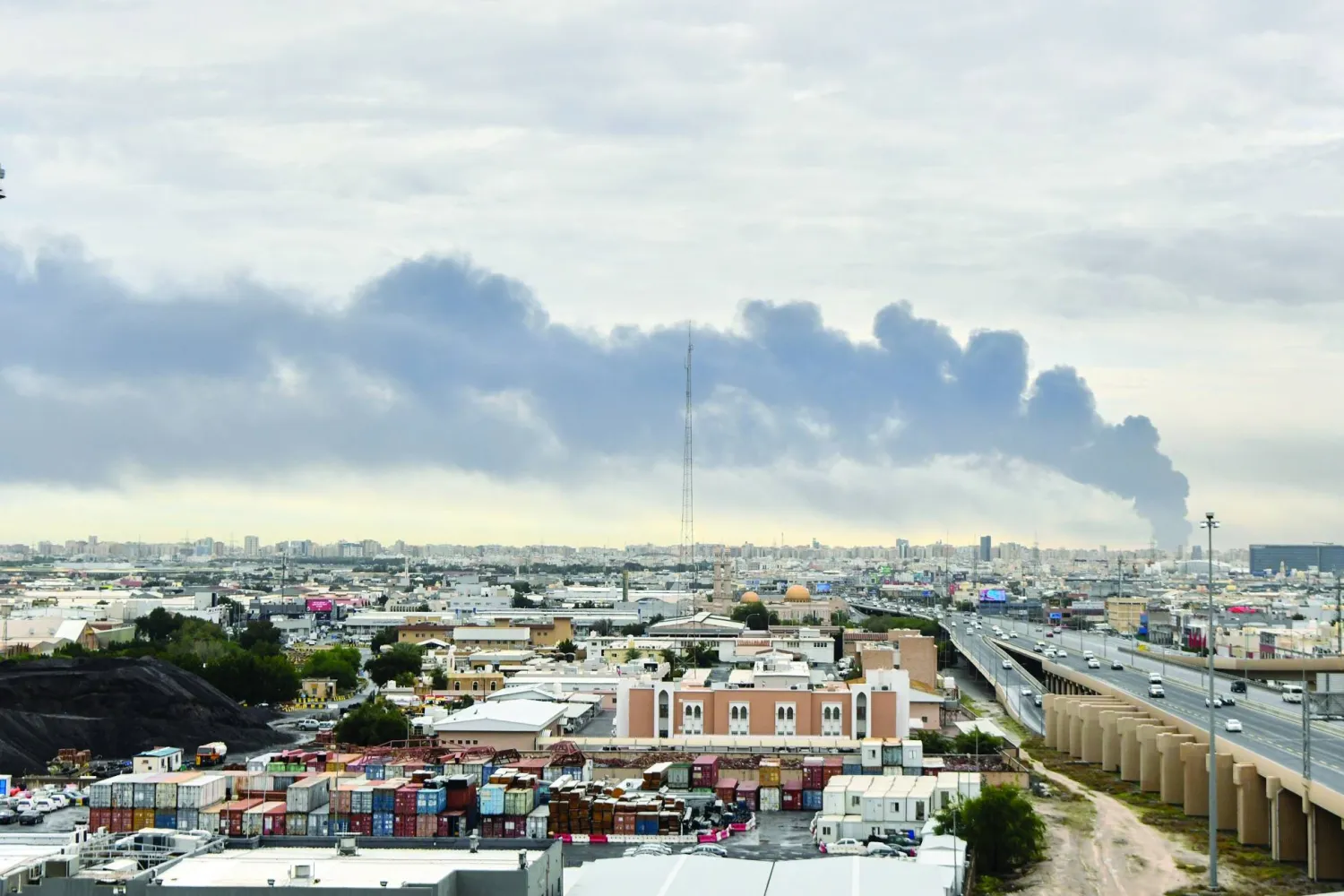
Smoke rises from the area of Kuwait International Airport after a drone strike targeted a fuel depot (AP)
TT

Six Arab Nations Issue Statement Condemning Attacks by Iran-aligned Iraqi Factions

Smoke rises from the area of Kuwait International Airport after a drone strike targeted a fuel depot (AP)

Saudi Arabia, the United Arab Emirates, Kuwait, Bahrain, Qatar, and Jordan issued a joint statement on Wednesday condemning the attacks carried out by Iran-affiliated armed groups in Iraq against countries in the region and their facilities and infrastructure.

They said these assaults constitute a violation of international laws and conventions, and a flagrant breach of UN Security Council Resolution 2817 (2026), which clearly demands that Iran immediately and unconditionally cease any attacks or threats against neighboring states, including those carried out through proxy groups.

In the statement, the six countries strongly condemned what they dubbed Iranian aggression, whether carried out directly or through proxy armed groups, saying it violates their sovereignty and breaches international law, international humanitarian law, and the Charter of the United Nations.

They urged Iraq to immediately stop attacks from armed groups within its territory to maintain relations and prevent escalation.

The statement affirmed the six countries’ inherent right to self-defense and to take necessary measures to protect their sovereignty and security under the UN Charter.

The statement also condemned the destabilizing activities carried out by Iran-aligned sleeper cells and terrorist groups linked to Hezbollah. It praised the armed forces and security agencies for confronting these threats, protecting national security, and successfully uncovering and dismantling hostile networks.



Iran Launched 83% of Missiles and Drones at the Gulf Compared to 17% at Israel

Smoke rises from a high-rise building following a drone attack in Kuwait City on March 8, 2026. (AFP/file photo)
TT

Iran Launched 83% of Missiles and Drones at the Gulf Compared to 17% at Israel

Smoke rises from a high-rise building following a drone attack in Kuwait City on March 8, 2026. (AFP/file photo)

Since the start of the war on February 28, about 83% of missiles and drones launched by Iran have targeted Gulf Cooperation Council (GCC) states, compared to 17% launched at Israel, reports indicate.

Official data shows that by Wednesday night, Iran had launched 4,391 missiles and drones at GCC vital infrastructure and civilian facilities, constituting a dangerous escalation that threatens regional security and stability.

As for Israel, which has initiated the war, it was hit by 930 Iranian missiles and drones or just 17% of the total attacks in the region.

Data shows that Iran has launched a total of 723 missile and drone attacks at Saudi Arabia since the beginning of the conflict.

The United Arab Emirates bore the brunt of Iranian attacks with 2,156 missiles and drones, followed by Kuwait with 791 attacks, Bahrain (429), Qatar (270) and Oman with 22 drone attacks.

Gulf air defense systems have demonstrated exceptional efficiency and professionalism in neutralizing these threats, proving to be an impenetrable shield safeguarding the region’s security and stability.

Arab and Muslim nations condemned the Iranian attacks, urging Tehran to cease aggression and respect international law for regional stability.

But Iran has escalated military operations against GCC countries, directly threatening the global economy and international energy security.


Saudi Defense Minister Receives Phone Call from Hungarian Counterpart

Saudi Defense Minister Prince Khalid bin Salman bin Abdulaziz. (SPA)
TT

Saudi Defense Minister Receives Phone Call from Hungarian Counterpart

Saudi Defense Minister Prince Khalid bin Salman bin Abdulaziz. (SPA)

Saudi Minister of Defense Prince Khalid bin Salman bin Abdulaziz received a phone call on Wednesday from his Hungarian counterpart Kristóf Szalay-Bobrovniczky, the Saudi Press Agency reported.

During the call, the two sides discussed regional developments, including Iran's attacks on the Kingdom and several countries in the region, and their implications for regional and international security and stability.


Saudi Foreign Minister Travels to France for G7 Meeting

Saudi Foreign Minister Prince Faisal bin Farhan (Asharq Al-Awsat)
TT

Saudi Foreign Minister Travels to France for G7 Meeting

Saudi Foreign Minister Prince Faisal bin Farhan (Asharq Al-Awsat)

Saudi Minister of Foreign Affairs Prince Faisal bin Farhan bin Abdullah traveled to France on Wednesday to attend the Group of Seven (G7) ministerial meeting, taking place at the Vaux-de-Cernay Abbey in the countryside outside Paris.

The meeting will address international issues and topics, including global governance reform, reconstruction challenges, maritime security, supply chains, and threats to peace and stability around the world, the Saudi Press Agency reported Thursday.