

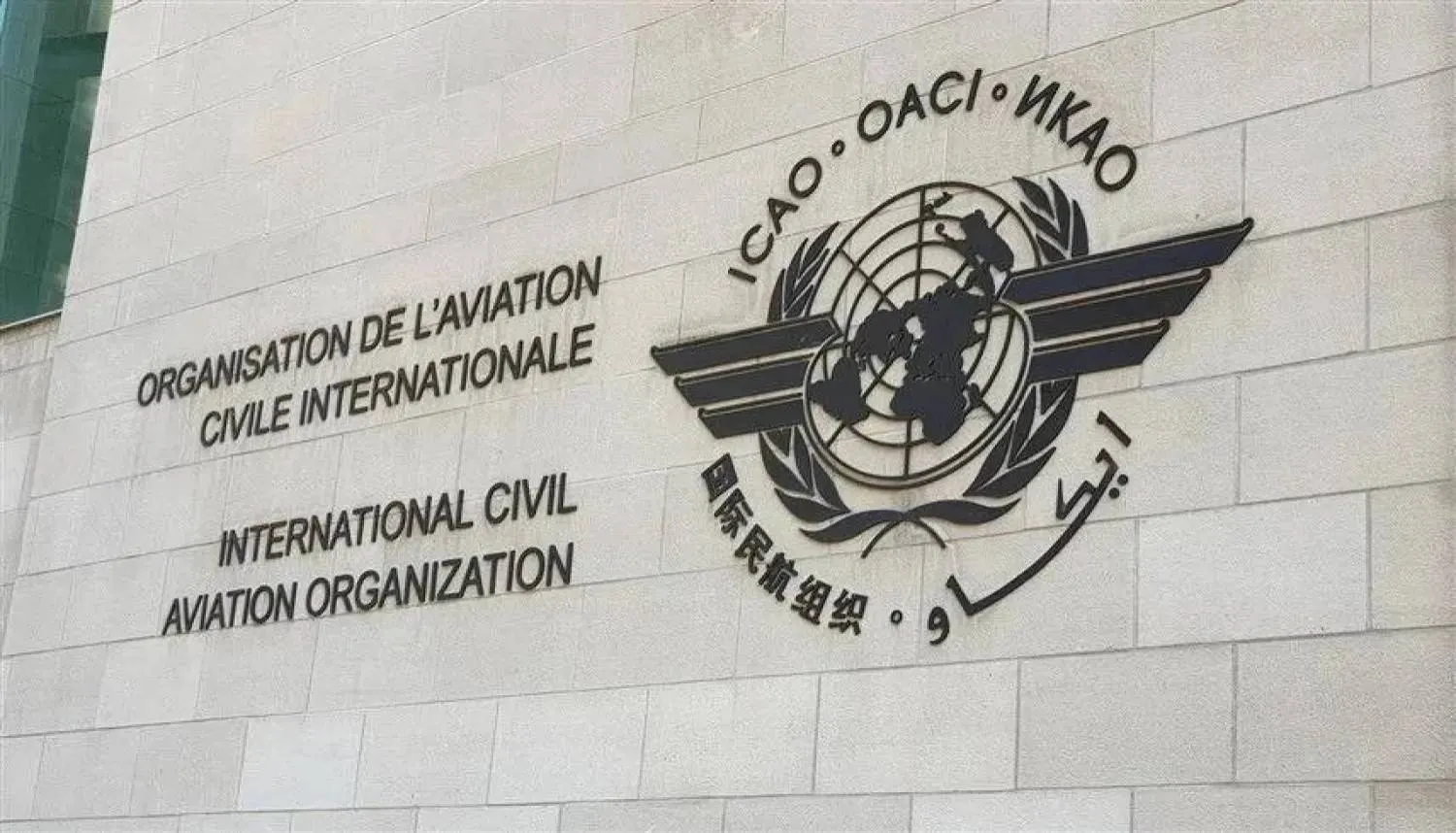

ICAO Condemns Iranian Attacks on Civil Aviation

The Council of the International Civil Aviation Organization (X) 
TT

ICAO Condemns Iranian Attacks on Civil Aviation

The Council of the International Civil Aviation Organization (X) 

The Council of the International Civil Aviation Organization (ICAO) on Sunday adopted at its 237th session a resolution condemning Iranian attacks targeting several countries in the region.

The resolution backs a paper presented on March 19 by Saudi Arabia, the United Arab Emirates, Jordan, Bahrain, Kuwait, Qatar, Oman, Egypt, and Morocco.

The decision came as a step reflecting a firm international opposition to threats against the safety and security of civil aviation. It included a range of measures, most notably condemning the attacks, calling for their immediate cessation, referring the text of the resolution to the relevant UN bodies, notifying member states, and closely monitoring developments to ensure the continued safety of civil aviation.

During the meeting, Permanent Representative of Saudi Arabia to the ICAO Council Mohammed Sami Habib reaffirmed the Kingdom’s full commitment to the Chicago Convention and its continued support for the smooth operation of air traffic in coordination with brotherly states and ICAO.

Habib emphasized that Saudi airspace and airports remain fully prepared to assist commercial carriers and facilitate evacuation flights in accordance with the highest safety standards.

He underscored the importance of all states adhering to the provisions of the Chicago Convention and refraining from using civil aviation for purposes other than those for which it is intended.

The Permanent Representative then stressed that the Kingdom is not a party to the ongoing conflict and has, since its outset, called for deescalation, restraint, and the prioritization of diplomatic solutions.

He highlighted UN Security Council Resolution 2817, issued on March 11, which condemned Iranian attacks on Gulf Cooperation Council countries and Jordan, underscoring growing international recognition of the threats facing regional security and stability.

Habib reiterated the Kingdom’s strongest condemnation of attacks targeting airspace and civil aviation infrastructure.

He said such actions constitute a flagrant violation of the UN Charter and the Convention on International Civil Aviation (Chicago Convention, 1944) and pose a direct threat to air navigation safety.

He also called on Iran to immediately and unconditionally cease such actions.

The ICAO council’s resolution noted that Iranian attacks since February 28, using missiles and drones, constitute a clear violation of the Chicago Convention and the principle of full state sovereignty over national airspace. It also referenced UN Security Council Resolution 2817.

The council’s resolution highlighted that these attacks have created serious risks for civil aviation, as projectile paths intersected flight corridors without the issuance of required navigational warnings.

This forced affected states to take precautionary measures, including closing parts of their airspace and rerouting flights, disrupting international air traffic operations.

The council also condemned attacks on civilian infrastructure and airports, emphasizing that such actions represent a breach of international law and a threat to international peace and security.



Saudi Joint Chiefs of Staff Director Inspects Armed Forces Preparations for Hajj

Director of the Joint Chiefs of Staff of the Armed Forces Major General Pilot Hamid Al-Omari and other officials are seen during his inspection tour. (SPA)
TT

Saudi Joint Chiefs of Staff Director Inspects Armed Forces Preparations for Hajj

Director of the Joint Chiefs of Staff of the Armed Forces Major General Pilot Hamid Al-Omari and other officials are seen during his inspection tour. (SPA)

Director of the Joint Chiefs of Staff of the Armed Forces Major General Pilot Hamid Al-Omari, on behalf of Chief of the General Staff Lieutenant-General Fayyad Al-Ruwaili, inspected on Monday the readiness of Armed Forces units involved in this year’s Hajj across the holy sites to ensure support for security and government agencies serving pilgrims.

The tour included the air force detachment at Arafat Airport, Ministry of Defense camps, religious affairs facilities, military police operations at the Grand Mosque, Armed Forces headquarters in Al-Awali, and the Defense Ministry’s field hospital in Mina.

Al-Omari reviewed operational plans, awareness programs, crowd management efforts, and medical preparedness to support pilgrims throughout the Hajj season.

The Military Police of the Royal Saudi Land Forces is participating in the Ministry of Defense's comprehensive Hajj plan, coordinating with internal security forces to manage crowd movement in the Grand Mosque's courtyards, oversee the Grand Mosque's gates, and organize the flow of pilgrims arriving from Mina, ensuring smooth movement during peak times.

The participating force underwent intensive training and exercises simulating various scenarios to boost its capacity for effective response and crowd management in coordination with relevant security entities.


Saudi Arabia Condemns Terrorist Attack on Train in Pakistan’s Balochistan

People inspect the wreckage of vehicles the day after a deadly train blast, in Quetta, Pakistan, 25 May 2026. (EPA)
TT

Saudi Arabia Condemns Terrorist Attack on Train in Pakistan’s Balochistan

People inspect the wreckage of vehicles the day after a deadly train blast, in Quetta, Pakistan, 25 May 2026. (EPA)

Saudi Arabia condemned on Monday the “heinous terrorist” attack targeting a train in Pakistan’s Balochistan province.

In a statement, the Ministry of Foreign Affairs said the Kingdom reiterates its “complete rejection of all forms of terrorism and extremism and strongly condemns attempts to undermine the security and stability of Pakistan and its people.”

It expressed its condolences to the families of the victims, as well as to the government and people of Pakistan.

An explosion targeted a train in Balochistan's provincial capital, Quetta, on Sunday, killing at least 24 people and wounding more than 50 others, according to officials.


Saudi Health Minister Visits Ministry of Interior Field Hospital in Arafat

Saudi Minister of Health Fahad Al-Jalajel visits the Ministry of Interior Field Hospital in Arafat on Monday. (SPA)
TT

Saudi Health Minister Visits Ministry of Interior Field Hospital in Arafat

Saudi Minister of Health Fahad Al-Jalajel visits the Ministry of Interior Field Hospital in Arafat on Monday. (SPA)

Saudi Minister of Health Fahad Al-Jalajel visited on Monday the Ministry of Interior Field Hospital in Arafat, where he reviewed the hospital’s readiness and the healthcare services provided during the Hajj.

He was briefed on the hospital’s operational capacity, service delivery pathways, and procedures for handling urgent and emergency cases, including heat exhaustion and sunstroke.

The briefing also covered resuscitation services, short-term intensive care, medical observation, infection control measures, and preventive medicine services.

The minister reviewed the latest operational developments at the field hospital and its role in supporting the healthcare provider network in Arafat, as well as improving the efficiency of healthcare services provided to pilgrims and security personnel during the Hajj season.

The visit comes within the framework of coordination and integration among health authorities involved in the Hajj and reflects a commitment to boosting field readiness to serve pilgrims and enable them to perform their rituals safely.