Bahrain Busts Cell for Collaborating with Iran

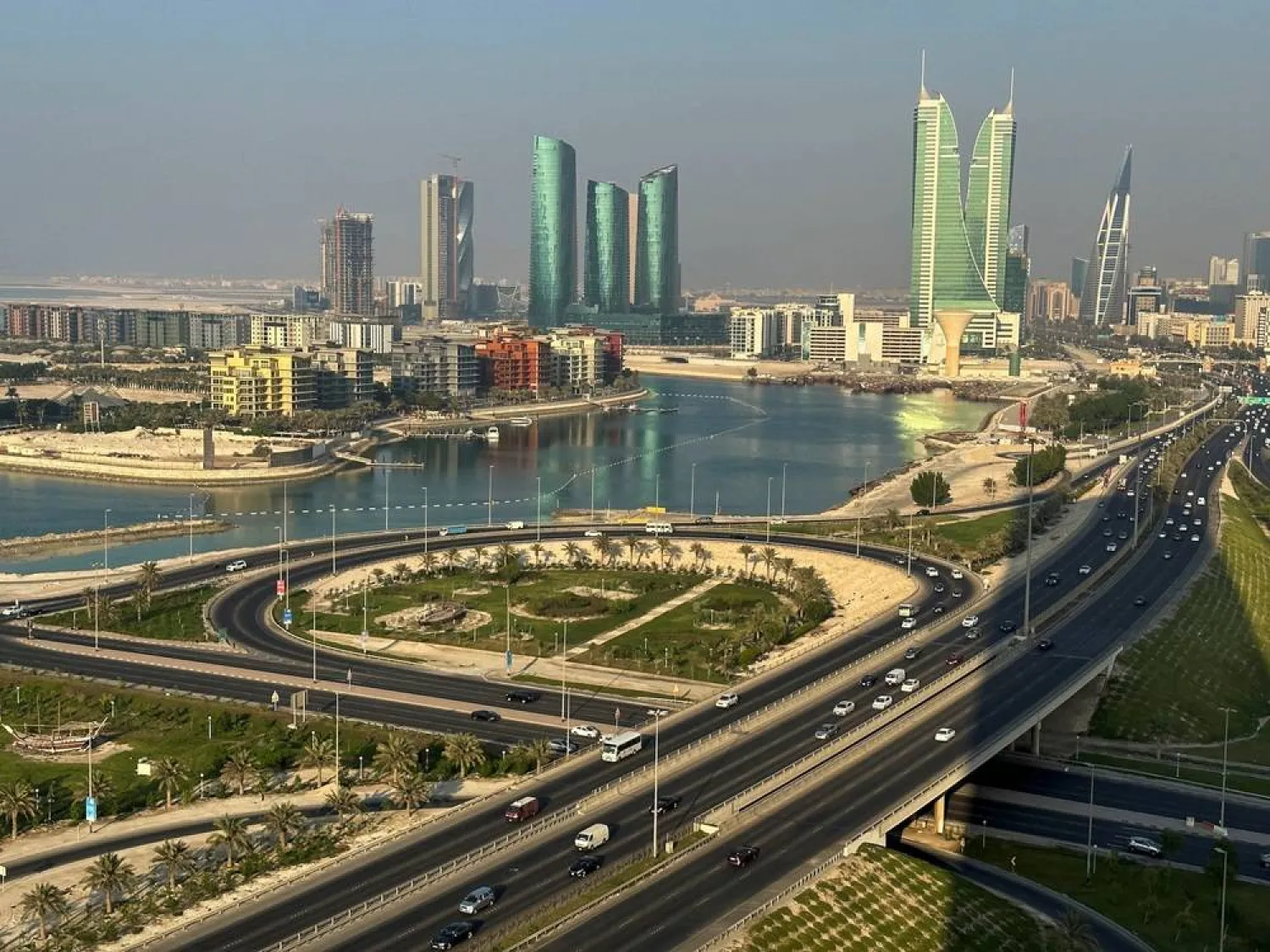
General view of capital Manama, Bahrain, October 30, 2022. (Reuters)
TT

Bahrain Busts Cell for Collaborating with Iran

General view of capital Manama, Bahrain, October 30, 2022. (Reuters)

Bahrain announced on Monday the arrest of a several individuals for collaborating with Iran’s Revolutionary Guards Corps.

The Public Prosecution said they were found to have been involved with Iranian intelligence and the IRGC.

They were tasked by foreign parties to monitor vital installations inside the kingdom and collecting detailed information about them that they relayed to the parties so that they can be targeted in attacks.

They were also tasked with taking photos of the site of the attacks.

The detainees indeed carried out these tasks, said the Public Prosecution following their interrogation.

On the ground, Bahrain’s defenses intercepted and downed two drones in the past 24 hours.

Bahrain has destroyed 188 rockets and 468 drones since the eruption of the US-Israel war on Iran.


Erdogan to Asharq Al-Awsat: Makkah Agreement Boosts Deterrence, Targets No Country

Turkish President Recep Tayyip Erdogan, Prince Mohammed bin Salman, Saudi Crown Prince and Prime Minister, and Pakistani Prime Minister Shehbaz Sharif pose after signing the joint defense agreement in Makkah, Saudi Arabia, August 7, 2026. (SPA)
TT

Erdogan to Asharq Al-Awsat: Makkah Agreement Boosts Deterrence, Targets No Country

Turkish President Recep Tayyip Erdogan, Prince Mohammed bin Salman, Saudi Crown Prince and Prime Minister, and Pakistani Prime Minister Shehbaz Sharif pose after signing the joint defense agreement in Makkah, Saudi Arabia, August 7, 2026. (SPA)

Turkish President Recep Tayyip Erdogan stressed that his country's relations with the Kingdom of Saudi Arabia are a "strategic relationship," revealing that the coming phase will witness steps that would "elevate relations between the two countries to much higher levels."

He stated that the Strait of Hormuz is one of the vital arteries of the global economy, adding: "Our hope and expectation is that the current tension will end as soon as possible, and that the Strait of Hormuz will return to performing its role in serving international trade in a safe, stable, and uninterrupted manner."

Erdogan was responding to written questions submitted to him by Asharq Al-Awsat following his signing of the "Makkah Joint Defense Agreement" with Prince Mohammed bin Salman, Saudi Crown Prince and Prime Minister, and Pakistani Prime Minister Shehbaz Sharif in Makkah last week. In his responses, the Turkish President stated that "it is a mistake to reduce the Makkah Joint Defense Agreement to being viewed as a mere situational reflection" of the escalation between the US and Iran.

He explained that "the matter should not be viewed solely through a military lens; rather, the primary goal of this agreement is to enhance its deterrent dimension, fortify the security incentive of the parties by strengthening the spirit of solidarity among them, and protect regional stability."

He pointed out that the agreement "came to reaffirm the right to defense stipulated in Article 51 of the United Nations Charter," stressing that it "does not target any country," but is rather "open to all sisterly nations wishing to join it."

Erdogan demanded that "Israeli attacks on Lebanon must stop immediately," noting that Syria has entered "a new phase" and stating that "our most important aspiration is for this phase to pave the way for a lasting peace, stability, and the reconstruction of Syria."

He pledged that his country "will not allow the presence of any organizations or entities in northern Syria, or any other part of it, that would threaten the security of Türkiye."

Following is the text of the Turkish President's responses:

Makkah agreement

* How did the idea for the tripartite Makkah agreement come about, and what were the most prominent developments that led to it?

The idea for the Makkah Joint Defense Agreement arose from the new circumstances imposed by the developments in our region, and stemmed from the three nations' awareness of their shared responsibilities. We have always believed that regional issues must be resolved by the region's own countries. We have consistently supported efforts to find solutions to them; this has always been the foundation upon which our approach to the situation is built. Regional issues should be resolved by regional actors, and we consider that with this action, we have taken a first step toward achieving that goal.

Recent events have proven the paramount importance of synergy and solidarity efforts among sisterly and friendly nations. We in Türkiye have always called, and continue to call, for dialogue and the strengthening of consultation channels rather than deepening differences. This is because we know that lasting peace is achieved not only by putting an end to conflicts, but by building bridges of mutual trust, strong political will, and a shared future vision.

Consequently, the Makkah Joint Defense Agreement is the fruit of this understanding; it goes beyond being a mere consensus among the three countries to become an initiative for us to assume a grave historical responsibility in achieving stability for the region and providing security and safety for its sisterly and friendly peoples. Here, I want to underline something of utmost importance: this agreement is open to all sisterly nations that desire peace and stability.

Today, just as in the past and as we always will be, we in Türkiye support peace, stability, and the strengthening of brotherhood with our siblings. We consider the Makkah agreement to be a practical embodiment of this strong will, and we have no objection to other countries joining this agreement. God willing, we - Türkiye, Saudi Arabia, and Pakistan - will have opened the door to a new phase of cooperation and joint action in our region. Our country possesses the strong will to keep this door wide open at all times and to contribute with all its strength to efforts aimed at boosting peace and stability in the region.

Turkish President Recep Tayyip Erdogan signs the Makkah Joint Defense Agreement in Makkah, Saudi Arabia, August 7, 2026. (SPA)

* Does this agreement have a connection to the intense tension between the US and Iran, or was the idea of trilateral coordination previously proposed?

There is no doubt that the rising tension between the US and Iran poses a danger to developments in the region. However, it is a mistake to reduce the Makkah agreement to being viewed as a mere situational reflection of this escalation, as that would lead to an incorrect understanding of the policies and intentions adopted by our country. This agreement came to reaffirm the right to defense stipulated in Article 51 of the UN Charter, and it does not target any state. It was established to work toward enhancing security, prosperity, and stability in the region, and it remains open to all sisterly nations wishing to join it.

Our vision for it is not limited to the three countries; rather, we aspire for it to grow, and perhaps appropriate conditions will emerge one day for all countries of the region to gather under its umbrella, which would be the optimal step toward achieving lasting stability throughout the region. This step we have taken today was not born of the moment; instead, the agreement had been proposed a while ago during our repeated discussions and meetings with the partners with whom we signed the accord, as well as with other countries in the region.

For many years, we have always stressed that enhancing peace and security in our region requires regular consultations among the concerned nations, and our efforts have been focused on serving that purpose. This is because resolving regional issues must be carried out away from formulas imposed from the outside. We know very well that solutions imported from abroad only bring disasters. For this reason, we in Türkiye have continuously worked with a commitment to proceed in light of policies that rely on the self-determination and collective wisdom of the region's countries.

Consequently, we do not view the trilateral mechanism arising from the Makkah agreement as an instantaneous reaction to a specific international situation, but rather as a momentous step we have taken based on a strategic will to confront the new developments unfolding in the region.

We in Türkiye always stand with diplomatic solutions rather than escalation, with dialogue rather than conflict, and with regional cooperation and strengthening the bonds of joint action rather than division. We are a country capable of speaking with all parties and assuming responsibility in difficult issues, and we will continue our role to achieve lasting peace and stability throughout the entire region.

Turkish President Recep Tayyip Erdogan, Prince Mohammed bin Salman, Saudi Crown Prince and Prime Minister, and Pakistani Prime Minister Shehbaz Sharif and other officials at the signing ceremony of the Makkah Joint Defense Agreement in Makkah, Saudi Arabia, August 7, 2026. (Turkish Presidency)

Collective deterrence

* While the agreement carries a defensive character, its text presents us with a clause stating that any aggression against any party is considered an aggression against all three parties. Is this correct?

Yes, as understood from its name, it is the "Makkah Joint Defense Agreement," and it is based on collective defense. Furthermore, its signing in Makkah between sisterly nations imparts a special symbolism to it, which is a source of immense happiness for us. Above all, the "Makkah Joint Defense Agreement" is founded on collective deterrence. It is an agreement that seeks to bolster cooperation in the fields of security and defense, and opens the door to developing joint projects in the defense industries, as well as supporting efforts to combat terrorism. This agreement does not target any party; rather, its objective is to achieve peace, stability, and prosperity for our peoples.

The articles in its text are clear and completely unambiguous. The core principle it adopts is that any threat to the security of one party is viewed as a security threat to the rest of the signatory parties. However, the matter should not be viewed solely through a military lens. The primary goal of this agreement is to enhance its deterrent dimension, fortify the security incentive of the parties by strengthening the spirit of solidarity among them, and protect regional stability.

Türkiye has achieved great accomplishments in the field of defense and security, earning the appreciation and admiration of everyone in this regard. Through these agreements with sisterly and friendly countries, we grant these achievements a regional dimension that supports peace. At the same time, the signatories to the agreement reaffirm their commitment not to become a source of threat to one another; on the contrary, they will strive to do everything that strengthens solidarity among them.

The message that the signatories to the Makkah Joint Defense Agreement wish to convey is clear and unequivocal: our security is achieved through what guarantees security for all of us, and we are fully confident that if we apply this comprehensive approach, we will achieve peace, stability, and prosperity for us all.

* Can it be said that regional powers in the Middle East have decided to assume responsibility for security and stability - something that was previously considered the exclusive domain of major global powers?

Today, the countries of the region are compelled more than ever to assume responsibility for their own security, stability, and future. This is the principle we have always defended: no one knows the issues of the region better than its own nations and peoples. It is true that regional developments may have international repercussions, but strengthening regional sovereignty, mutual solidarity, and collective will will contribute to boosting global stability.

We in Türkiye believe that building more robust mechanisms in a concerted manner among the countries of the region to secure safety and stability is of paramount importance. This is because we have continuously maintained good relations with most countries in the region, and we recognize that transforming these ties into permanent institutional cooperation is highly beneficial. Therefore, we believe in the need for regional countries to guarantee their security and economic stability through institutional relations among themselves.

The current situation confirms that the future of the region cannot be shaped in isolation from the will of its countries. Our goal should not be to form exclusionary blocs, but rather to build a system of regional cooperation based on respect for sovereignty, territorial integrity, mutual trust, and shared interests. Türkiye will continue to work according to this approach, will assume its responsibilities whenever necessary, and will persist in its diplomatic efforts to bolster peace, security, and stability in the region.

Energy supply security

* Do you believe that the Makkah agreement will contribute to boosting security in the Gulf region, which holds great importance for the global economy?

Certainly, I see that, and we see that. As I stressed from the beginning, we have signed an agreement that will serve the region's prosperity, welfare, safety, and security. The security of the Gulf region is not only of great importance to the countries of the region, but also holds vital significance for the global economy and international trade.

Many issues are directly linked to the security and peace of this region, ranging from the security of energy supplies to the safety of maritime corridors, and from the continuity of trade movement to global economic stability. This is not merely a theoretical proposition. The developments of the past few months have clearly demonstrated this to us.

Therefore, we believe that every step aimed at boosting security and stability in the Gulf region acquires value and importance not only on the regional level, but also from the perspective of global peace and prosperity. We see that the Makkah agreement will contribute significantly to consolidating the concept of shared security and solidarity in the region, and will bring about a change in the prevailing approach there.

Security and economic development cannot be viewed in isolation from one another. I have repeatedly stressed that political stability and economic development go hand in hand. After Europe went through major wars, it first achieved stability and security through joint action, and then moved toward economic integration and prosperity. Together, we can reach this stage without going through all this pain and suffering. Trade, investments, and prosperity cannot be sustainable in the absence of peace and stability.

Furthermore, the stability of the Gulf region represents, at the same time, a strategic matter regarding the security of economic links between Asia, Europe, and Africa. We do not view peace and stability in the Gulf in isolation from our vision for our own security and regional peace. Therefore, we will continue to undertake all responsibilities placed upon our shoulders, and we will persist with our constructive diplomatic efforts.

Vessels transit the Strait of Hormuz off Bandar Abbas in southern Iran on August 10, 2026. (AFP)

Strait of Hormuz

* Do you expect conditions in the Strait of Hormuz to return to the way they were before the eruption of the current conflict?

The Strait of Hormuz is considered an area whose importance is not confined to the regional level, but rather extends to the global sphere. It is deemed a highly critical strategic corridor for global energy supplies and international trade. Therefore, the repercussions of any tension that may occur in this region are not limited to the countries of the region alone; the entire world has witnessed and felt its impact through oil prices.

The Strait of Hormuz has proven to be one of the vital arteries of the global economy. Our hope and expectation is that the current tension will end as soon as possible, and that the strait will return to performing its role in serving international trade in a safe, stable, and uninterrupted manner. This, in turn, is contingent upon all parties exercising restraint and keeping diplomatic channels open.

We have never supported the escalation of tension; on the contrary, we have advocated for resolving problems through negotiation, by establishing a dialogue with all parties. We have sought to bring the parties together to a single table because we know that reaching a lasting solution, whether in the Strait of Hormuz, Ukraine, or Palestine, is achieved not through conflict, but through diplomacy.

The countries of the region bear a great responsibility regarding the security of a waterway of such importance and sensitivity. We believe that strengthening regional ownership and the concept of shared security will contribute significantly to the stability of the Strait of Hormuz. The objective should be the return of the strait to its normal, safe, and stable state, and for this status to become sustainable and permanent.

Strategic relationship

* How do you assess current relations with Saudi Arabia?

We view our relations with the Kingdom as a strategic relationship, shaped by our shared history, the bonds of brotherhood that unite us, and mutual interests. Türkiye and Saudi Arabia are not only friendly and sisterly nations, but they are also two states that assume important responsibilities toward peace, stability, and prosperity in the region. We are pleased with the momentum our relations have gained recently.

While we work to strengthen our political dialogue, we are also developing our cooperation across many fields, foremost among which are the economy, trade, investment, defense industries, energy, and tourism. We approach our relations with Saudi Arabia from a perspective that transcends immediate developments and circumstances, grounding it instead in long-term mutual interests and mutual respect.

At a time when our region is passing through a phase witnessing extremely critical challenges, continuous consultation and cooperation between Türkiye and Saudi Arabia acquire greater importance than ever before. We believe that the Makkah agreement will contribute to boosting our relations across many fields, led by defense cooperation.

We are aware of our shared responsibilities toward the peace and stability of our region, and we act on this basis. We in Türkiye attach great importance to the stability and security of Saudi Arabia and all other countries in the region. This is because any crisis in our region, no matter how limited, affects all regional nations, particularly regarding migration and terrorism. I believe that during the coming phase, we will take steps that will elevate relations between the two countries to much higher levels.

A photograph taken from the southern Lebanese village of of Zawtar al-Gharbiyeh shows Israeli troops stationed in the nearby village of Zawtar al-Sharkiyeh on August 11, 2026. (AFP)

Lebanon’s stability

* How does Türkiye assess the recent developments unfolding in Lebanon, given that it also closely follows the situation there?

For us, Lebanon is not merely a geographically close country, but a friendly and sisterly nation with which we also share deep historical ties. The security, peace, and stability of Lebanon hold great significance for the stability of our entire region. Lebanon's sovereignty, political unity, and territorial integrity must be preserved, just as is the case for all other countries in the region.

We also oppose complicating Lebanon's internal issues further through foreign interventions or military means, and turning the country into an arena for competition among external powers. We believe that Lebanese citizens have the right to make decisions about the future of their country on their own and of their own free will.

Israeli attacks on Lebanon must stop immediately, in light of the aggressive and expansionist policies pursued by Tel Aviv, which are the core problem in the region. We view the ongoing talks to reach a ceasefire in Lebanon as a positive step.

The security and stability of Lebanon cannot be viewed in isolation from regional peace. The history of the Middle East should not be continually written with conflicts, destruction, and suffering. This region also deserves to enjoy peace, tranquility, and prosperity. This is the approach upon which all of our diplomatic efforts in Türkiye are based. Our region's name has been associated with war and tears for many long years, and we must do our utmost to change this reality.

Naturally, we look forward to Lebanon restoring its stability, its institutions being strengthened, and its people being able to look toward their future with safety and reassurance. We therefore stand ready to provide all forms of technical support and establish cooperation. We expressed our will and commitment in this regard to both President Joseph Aoun and Prime Minister Nawaf Salam, whom we hosted in our country recently.

New phase in Syria

* How do you assess the course of change in Syria so far?

We assess the change taking place in Syria as a historical turning point, in terms of the Syrian people's will to determine their own future. From the beginning, Türkiye has defended Syria's territorial integrity, political unity, and sovereignty. The war, terrorism, and instability suffered by Syria have exacted a heavy toll on the entire region. Now, we are facing a new phase. Our most important aspiration is for this phase to pave the way for a lasting peace, stability, and the reconstruction of Syria.

We will not allow the presence of any organizations or entities in northern Syria or in any other part of it that would threaten the security of Türkiye. Just as Syria's territorial integrity holds immense importance for us, Turkish national security carries the exact same level of importance.

Since the beginning of this phase, our aspiration has been for our Syrian brothers to be able to live in their country in peace and security. Since December 2024, Syria has made significant strides in improving security conditions in the country, preparing the necessary ground for economic development, and establishing societal consensus.

Naturally, regional ownership and regional support for the Syrian government have played an important role in achieving these results. The Syrian government, which has succeeded in developing good relations with the countries of the region and the international community, has demonstrated an ability to avoid involvement in more conflicts by focusing on an agenda of sustainable stability and security. Today, the normalization of conditions in Syria has, in fact, become an issue of strategic importance for the entire region. Instead of Syria's name being associated with a source of instability, it is now beginning to be linked with connectivity and development projects.

Türkiye will continue, as it has done to this day, to fulfill its responsibilities and do its part for the stability of Syria, helping it rise again, and strengthening regional peace. Furthermore, Türkiye is determined to work in cooperation with its regional and international partners in this direction. At a time when a new page has turned in Syria, this page should be written not with fresh suffering, but in a spirit of peace, brotherhood, and sovereignty, and with a vision based on a shared future.


Saudi Govt: Makkah Defense Agreement Strengthens Islamic Solidarity, Advances Common Interests

Custodian of the Two Holy Mosques King Salman bin Abdulaziz Al Saud chairs the Cabinet meeting in Jeddah on Tuesday. (SPA)
TT

Saudi Govt: Makkah Defense Agreement Strengthens Islamic Solidarity, Advances Common Interests

Custodian of the Two Holy Mosques King Salman bin Abdulaziz Al Saud chairs the Cabinet meeting in Jeddah on Tuesday. (SPA)

The Saudi government hailed on Tuesday the Makkah Joint Defense Agreement for reaffirming “the deep-rooted historical ties” between the Kingdom, Türkiye and Pakistan.

It also underscored their “shared commitment to strengthening the bonds of brotherhood and Islamic solidarity while advancing their common strategic interests.”

Custodian of the Two Holy Mosques King Salman bin Abdulaziz Al Saud chaired the Cabinet session that was held in Jeddah.

King Salman expressed his gratitude to Prince Mohammed bin Salman bin Abdulaziz Al Saud, Crown Prince and Prime Minister, Turkish President Recep Tayyip Erdogan; and Pakistan’s Prime Minister Muhammad Shehbaz Sharif for their successful and blessed efforts in convening the summit last week.

King Salman praised the outcomes of the tripartite summit in establishing a framework for a long-term defense partnership that will contribute to strengthening joint cooperation, coordination, and integration between the Kingdom, Türkiye, and Pakistan.

It will help in continuing efforts to address regional challenges and preserve international security and stability in a manner that supports the aspirations of the peoples of the region and the wider international community for a more prosperous and flourishing future.

The Cabinet was then briefed on the message received by King Salman from President of Zimbabwe Emmerson Mnangagwa, as well as the phone calls between Crown Prince Mohammed and French President Emmanuel Macron and Ukraine’s President Volodymyr Zelenskyy.

The Cabinet reviewed regional and international developments and Saudi Arabia’s efforts, through communication and coordination with brotherly and friendly countries, to support de-escalation in the region, advance diplomatic solutions, and strengthen all initiatives that respect the sovereignty and territorial integrity of states and ensure the security of waterways in the straits of Hormuz and Bab al-Mandeb as they are fundamental pillars of global economic stability.

The Cabinet welcomed the United Nations Security Council statement condemning the attacks and criminal acts committed by the terrorist Houthi militias in Yemen that threaten regional security and freedom of maritime navigation.

It reiterated Saudi Arabia's right to defend its security and resources and its unwavering support for the legitimate Yemeni government and UN-led efforts to achieve peace and stability in Yemen.

The Cabinet commended the steps taken at the Ministerial Meeting in Support of Jerusalem and its Holy Sites in Amman, reaffirming its categorical rejection of all attempts to alter the legal and historical status of Jerusalem or undermine its identity.

It called on the international community to halt Israeli violations in Gaza and the West Bank, protect holy sites, and support the Palestinian people.

The Cabinet noted Riyadh's hosting of the fourth UNESCO Global Forum on the Ethics of Artificial Intelligence in September, saying it reflects the Kingdom's commitment to multi-party global dialogue on emerging technologies and responsible AI use, contributing to a more inclusive and sustainable digital future.

The Cabinet also viewed the Kingdom's successful hosting of the International Nuclear Science Olympiad and Saudi students' top results in the competition as confirmation of its global leadership in scientific events and its commitment to empowering talented individuals in line with Saudi Vision 2030.


Saudi Arabia Condemns Colombia’s Recognition of Israel’s Sovereignty over Syrian Golan Heights

The Kingdom stressed that this recognition explicitly violates relevant United Nations resolutions. (SPA)
TT

Saudi Arabia Condemns Colombia’s Recognition of Israel’s Sovereignty over Syrian Golan Heights

The Kingdom stressed that this recognition explicitly violates relevant United Nations resolutions. (SPA)

Saudi Arabia condemned on Tuesday Colombia’s recognition of Israel’s sovereignty over the occupied Syrian Golan Heights, describing the move as contrary to international law and relevant resolutions of international legitimacy.

In a statement, the Ministry of Foreign Affairs said the Kingdom stressed that this recognition explicitly violates relevant United Nations resolutions, particularly the 1981 UN Security Council Resolution 497, which deemed Israel’s imposition of its laws, jurisdiction, and administration over the Golan Heights null and void, with no legal effect.

The Kingdom said that such positions do not contribute to achieving peace; rather, they diverge from the long-standing international stance on the occupied Golan Heights, reinforce the logic of imposing faits accomplis, and undermine efforts aimed at achieving peace in the region.

The Kingdom reiterated “its steadfast position that the Golan Heights are occupied Arab Syrian territory, and that any measures or decisions seeking to alter its legal status do not establish any rights or confer legitimacy upon such actions.”

It called on the Colombian government to reconsider its position, adhere to international law and relevant resolutions of international legitimacy, and continue contributing to efforts aimed at achieving security, stability, and a just and lasting peace in the region.