

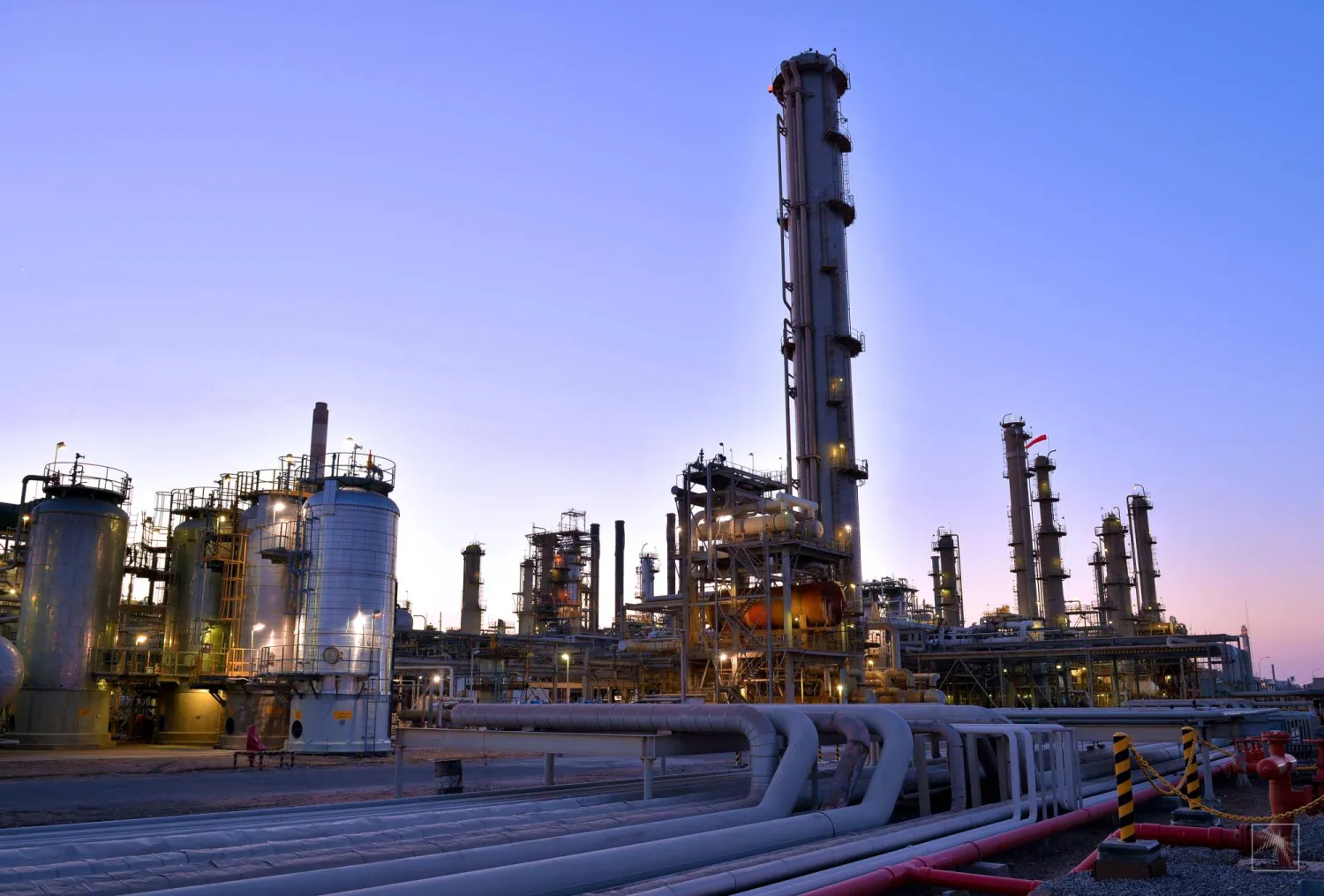

Saudi Arabia: Operational Activities Halted at Several Energy Facilities Due to Recent Attacks

The continuation of such attacks leads to reduced supply and slows recovery, the official source at the Ministry of Energy said. (Saudi Aramco)
TT

Saudi Arabia: Operational Activities Halted at Several Energy Facilities Due to Recent Attacks

The continuation of such attacks leads to reduced supply and slows recovery, the official source at the Ministry of Energy said. (Saudi Aramco)

An official source at the Ministry of Energy stated that important energy facilities in the Kingdom have recently been subjected to multiple attacks, including oil and gas production, transportation, and refining facilities, as well as petrochemical facilities and the electricity sector in Riyadh, the Eastern Province, and Yanbu Industrial City.

The attacks resulted in the death of one Saudi national from the industrial security personnel of the Saudi energy company, and the injury of seven other Saudis from the company’s personnel, in addition to the disruption of a number of operational activities at key facilities within the energy sector.

The attacks included one of the pumping stations on the East-West Pipeline, leading to a loss of approximately 700,000 barrels per day in throughput. The pipeline is considered the main route for supplying global markets at this stage.

The Manifa production facility was also targeted, resulting in a reduction of approximately 300,000 barrels per day from its production capacity.

Additionally, the Khurais facility had previously been targeted, leading to a reduction of 300,000 barrels per day from its production capacity, bringing the total reduction in the Kingdom’s production capacity to approximately 600,000 barrels per day.

The attacks also extended to major refining facilities, including SATORP in Jubail, Ras Tanura refinery, SAMREF refinery in Yanbu, and Riyadh refinery, directly affecting exports of refined products to global markets.

Processing facilities in Ju’aymah were also affected by fires, impacting exports of liquefied petroleum gas (LPG) and natural gas liquids.

The continuation of such attacks leads to reduced supply and slows recovery, affecting the security of supply for consuming countries and contributing to increased volatility in oil markets, the source said.

This has already negatively impacted the global economy, particularly with the depletion of a significant portion of operational and emergency inventories, which has affected the availability of supplies and limited the ability to respond to this supply shortfall, the source added.

860,000 Pilgrims Arrive as Saudi Arabia Declares Full Readiness for Hajj

The ministers affirmed the Kingdom’s full readiness to serve pilgrims. (Photo by Saleh Al-Ghannam) 
TT

860,000 Pilgrims Arrive as Saudi Arabia Declares Full Readiness for Hajj

The ministers affirmed the Kingdom’s full readiness to serve pilgrims. (Photo by Saleh Al-Ghannam) 

Saudi Arabia said on Wednesday it was fully prepared to receive and serve pilgrims during this year’s Hajj season through an integrated system of security, health, transport and logistical services from arrival through departure.

Speaking at a government press conference on Wednesday, five Saudi ministers stressed the Kingdom’s readiness to ensure the safety of pilgrims, facilitate their movement and improve services at the holy sites in Makkah and Medina.

Saudi Information Minister Salman Al-Dossary said the Kingdom’s Hajj security system was operating through detailed plans based on crowd movement analysis and forecasting using artificial intelligence and modern technologies to improve response times and safety.

Al-Dossary stressed that the Interior Ministry continued to implement the “Makkah Route” initiative for an eighth year in 10 countries through 17 entry points. Since its launch, more than 1.2 million pilgrims have benefited from the program, he said. He added that fifth-generation mobile network coverage at the holy sites had reached 100%, supported by more than 4,200 technical personnel working on the ground.

More than 150 media organizations and over 3,000 local and international journalists are covering this year’s Hajj season, according to Al-Dossary.

Meanwhile, Hajj and Umrah Minister Tawfiq Al-Rabiah said more than 860,000 pilgrims had arrived so far through air, land and sea ports.

“The opportunity has been made available for more than 30 Saudi companies to provide services for foreign pilgrims and enable direct booking without intermediaries from more than 126 non-Muslim countries,” Al-Rabiah stated.

He added that accommodation capacity at Mina had been expanded through the construction of the Kedana Al-Khaif camps near the Jamarat complex over an area of 24,000 square meters.

Al-Rabiah revealed that the “Pilgrim Without a Bag” initiative had been expanded to all foreign pilgrims this year, allowing them to ship luggage directly from their home countries to their accommodation and have it returned after the pilgrimage. He said processing times had been cut from 120 minutes to 15 minutes.

He added that services for pilgrims were being coordinated among more than 60 government and operational entities through over 600 work plans. The Nusuk application now serves more than 51 million users worldwide and offers more than 130 digital services during this year’s Hajj season, he underlined.

For his part, Transport and Logistics Minister Saleh Al-Jasser noted that the aviation sector had mobilized its operational capacity across Saudi airports to ensure a smooth travel experience for pilgrims.

More than 3 million seats have been allocated through six airports linking the Kingdom to more than 300 airports worldwide via 104 airlines, he said, adding that airports were equipped to receive more than 1.5 million pilgrims arriving from abroad. Early transport packages introduced for pilgrims would help shield them from rising transportation costs, he remarked.

The minister further pointed that authorities had carried out extensive road maintenance and bridge repairs and expanded the use of road-cooling technology at the holy sites.

He explained that more than 3,000 buses have been allocated to transport pilgrims between accommodations and the Grand Mosque, while another 5,000 buses will provide shuttle services. More than 46,000 personnel have also been deployed to serve pilgrims during the Hajj season.

Municipalities and Housing Minister Majed Al-Hogail said services provided to pilgrims had evolved significantly in recent years through greater coordination among government agencies.

He told the press conference that municipal authorities across the Kingdom were working together to support pilgrims arriving through ports and regional roads, while advanced infrastructure networks covering 4.6 million square meters had been completed between the holy sites.

More than 88,000 sanitation workers are operating around the clock, while authorities are conducting 2,800 daily inspections covering food, water and public facilities, according to Al-Hogail.

Health Minister Fahad Al-Jalajel said Saudi Arabia had continued developing its Hajj system year after year until it became a global model for managing mass gatherings.

Responding to concerns over epidemics, including hantavirus, Al-Jalajel stated that there was “no concern over any epidemic” affecting pilgrims and that Saudi authorities were closely coordinating with international organizations.

He noted that more than 52,000 healthcare workers had been deployed for this year’s Hajj season, supported by over 20,000 hospital beds, including 3,800 beds at the holy sites — triple last year’s capacity.

Authorities have also allocated 3,000 ambulances, 11 medical evacuation aircraft and 7,700 paramedics, in addition to 25 healthcare centers supporting hospitals at the holy sites, he added.


Saudi Defense Minister Meets with UK’s National Security Adviser

Saudi Minister of Defense Prince Khalid bin Salman bin Abdulaziz
TT

Saudi Defense Minister Meets with UK’s National Security Adviser

Saudi Minister of Defense Prince Khalid bin Salman bin Abdulaziz

Saudi Minister of Defense Prince Khalid bin Salman bin Abdulaziz has met in Jeddah with National Security Adviser for the United Kingdom Jonathan Powell.

During the meeting, the two sides reviewed aspects of Saudi-British relations and cooperation and discussed coordination to address the challenges facing the region amid its current developments, as well as efforts to de-escalate the situation in a manner that preserves security and stability.

The meeting was attended by Adviser to the Minister of Defense for Intelligence Affairs Hisham bin Saif.

On the British side, the meeting was attended by Prime Minister's Special Adviser for Business and Investment Varun Chandra, British Ambassador to the Kingdom Stephen Hitchen, and a number of officials.


GCC Interior Ministers Hold Emergency Meeting in Riyadh

The meeting reviewed several security topics, including rapid developments and changes in the region - SPA
TT

GCC Interior Ministers Hold Emergency Meeting in Riyadh

The meeting reviewed several security topics, including rapid developments and changes in the region - SPA

Interior ministers of the Gulf Cooperation Council (GCC) member states held an emergency ministerial meeting Wednesday in Riyadh, chaired by the Kingdom of Bahrain.

Minister of Interior Prince Abdulaziz bin Saud bin Naif bin Abdulaziz headed the Saudi delegation at the meeting, SPA reported.

He welcomed the ministers and conveyed the greetings of Custodian of the Two Holy Mosques King Salman bin Abdulaziz Al Saud and Prince Mohammed bin Salman bin Abdulaziz Al Saud, Crown Prince and Prime Minister.

The meeting reviewed several security topics, including rapid developments and changes in the region, as well as ways to enhance joint security coordination and cooperation among member states in support of the security and stability of GCC countries.

The meeting was attended by GCC Secretary-General Jasem Albudaiwi and several senior officials from the interior ministries of GCC member states.
