Saudi Arabia Holds 9 Rounds of Regional Political Cosultations in 48 Hours

Saudi regional consultations focus on developments in the region. (SPA)
TT

Saudi Arabia Holds 9 Rounds of Regional Political Cosultations in 48 Hours

Saudi regional consultations focus on developments in the region. (SPA)

Over the past 48 hours, Saudi Arabia has intensified diplomatic activity, holding a series of consultations aimed at easing regional tensions and coordinating positions.

Saudi Foreign Minister Prince Faisal bin Farhan bin Abdullah conducted a round of intensive political consultations following the talks between the United States and Iran in Islamabad. According to the Saudi Foreign Ministry, nine rounds have been publicly disclosed so far.

The effort began with a phone call the minister received early on Monday from his Pakistani counterpart, Ishaq Dar, who attended the US-Iran talks.

The FMs reviewed the latest developments and stressed the need to sustain diplomatic efforts to restore regional stability. It was their third call in four days, underscoring a rise in coordination between the two countries amid fast-moving developments.

Backing the Pakistani mediation

In a statement, the Saudi Foreign Ministry voiced support for Pakistan’s mediation efforts to reach a lasting agreement that ensures security and stability and addresses the issues that have destabilized the region for decades.

Saudi Arabia had also held consultations in the days and hours leading up to the talks.

Earlier, Prince Faisal met Kang Hoon-sik, chief of staff to the South Korean president and special envoy, to discuss regional developments and their impact on regional security and the global economy, the Saudi Press Agency reported.

The Saudi minister also received a second call within 96 hours from Iranian Foreign Minister Abbas Araqchi. They discussed post-talk developments and exchanged views.

Saudi-Arab coordination intensifies

Prince Faisal also held five calls with Gulf and Arab counterparts, including those of Jordan, Egypt, Kuwait, Qatar, and the United Arab Emirates.

The discussions focused on the fallout from regional developments, ongoing efforts to address them, and ways to strengthen regional and international security and stability while reducing tensions.

The consultations included a Monday call with Kyrgyz Foreign Minister Jeenbek Kulubayev. The officials reviewed bilateral relations and discussed the latest developments in the region and the efforts being made in response.

Amid these developments, the Saudi Foreign Ministry summoned Iraq’s ambassador to the Kingdom, Safia Taleb al-Suhail, over what it described as “continued blatant attacks and threats” targeting Saudi Arabia and Gulf states through drones launched from Iraqi territory.

A Saudi deputy foreign minister, while delivering a protest note, condemned the attacks and stressed the need for Iraq to act responsibly in addressing such threats.

He reiterated the Kingdom’s firm rejection of violations of sovereignty and attempts to undermine regional security and stability, and said Saudi Arabia would take all necessary measures to defend its security and protect its territory.

The ministry also received Djibouti’s ambassador to the Kingdom, Dya-Eddine Bamakhrama, dean of the diplomatic corps in Saudi Arabia, where both sides reviewed issues of mutual interest.


Saudi Arabia Condemns Iranian Attacks on Bahrain

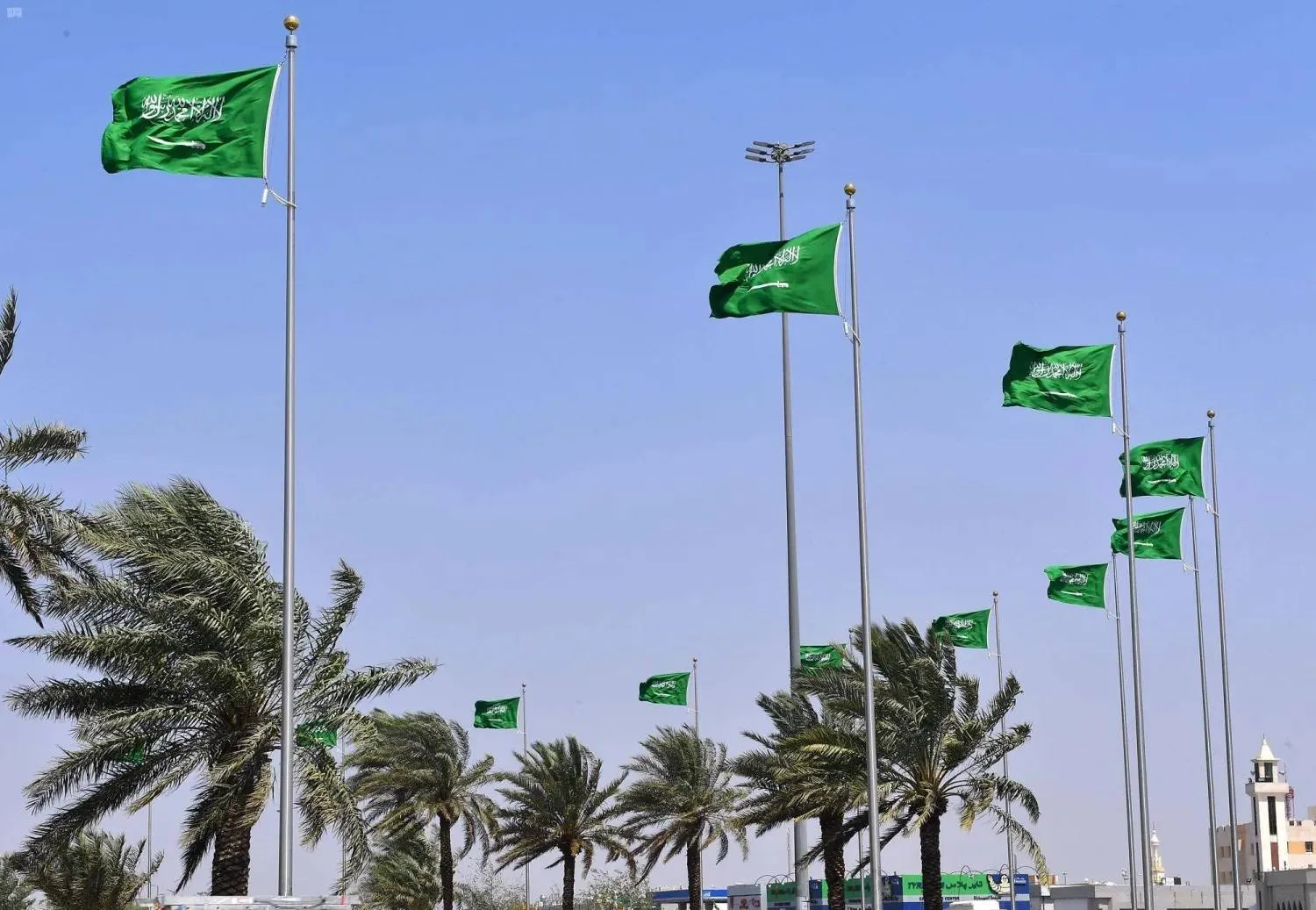
Saudi Arabia's flag (Asharq Al-Awsat)
TT

Saudi Arabia Condemns Iranian Attacks on Bahrain

Saudi Arabia's flag (Asharq Al-Awsat)

Saudi Arabia strongly condemned Iranian attacks on a civilian industrial facility in Bahrain, expressing full solidarity with Manama and support for all measures it takes to safeguard its security and stability.

In a statement issued on Sunday, the Saudi Foreign Ministry denounced the attacks and reiterated the Kingdom's categorical rejection of what it described as Iran's continued efforts to destabilize the region, including attacks on regional countries and civilian infrastructure.

The ministry said the attacks constituted violations of international law, the UN Charter, the Charter of the Organization of Islamic Cooperation and the principles of good neighborliness, holding Iran responsible for the consequences of its continued attacks.

Earlier on Saturday, Bahrain's Interior Ministry said that a civilian industrial facility had been targeted in what it called a “heinous Iranian aggression”, triggering a fire at the site. Civil Defense teams were working to extinguish the blaze. Initial reports indicated material damage, with no casualties reported.

Separately, the General Command of the Bahrain Defense Force said air defense systems had intercepted several Iranian aerial attacks, with falling debris causing minor material damage but no injuries.


Qatar, Germany Stress Importance of Protecting Int’l Waterways, Demand Iran Stop Arming Houthis

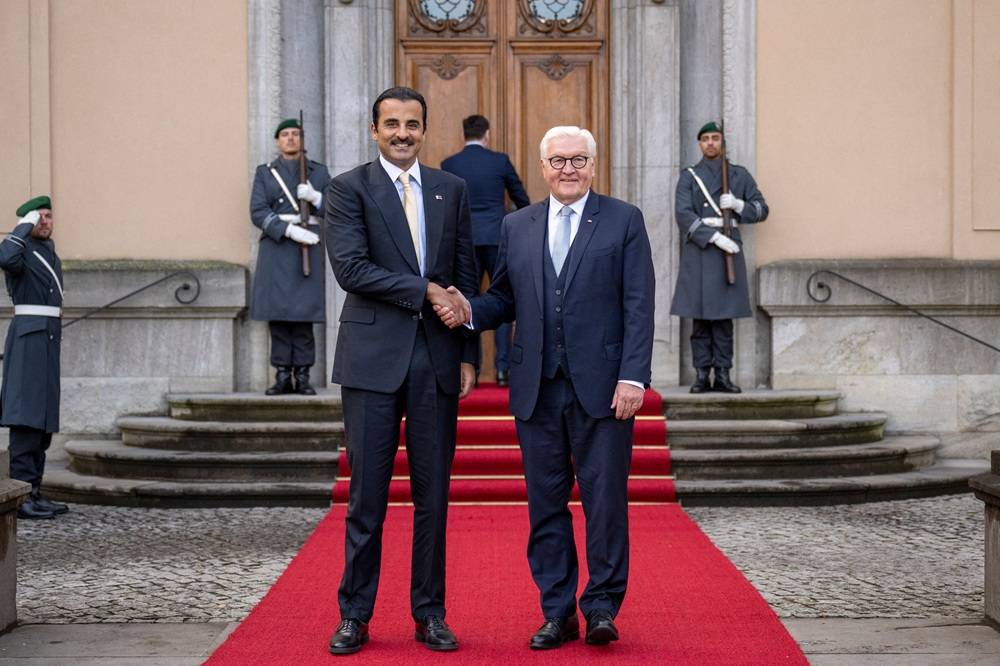
 20 November 2026, Berlin: German Chancellor Friedrich Merz (R) and Qatari Emir Tamim bin Hamad Al Thani shake hands after a press conference following their meeting at the German Chancellery. (dpa)
20 November 2026, Berlin: German Chancellor Friedrich Merz (R) and Qatari Emir Tamim bin Hamad Al Thani shake hands after a press conference following their meeting at the German Chancellery. (dpa)
TT

Qatar, Germany Stress Importance of Protecting Int’l Waterways, Demand Iran Stop Arming Houthis

 20 November 2026, Berlin: German Chancellor Friedrich Merz (R) and Qatari Emir Tamim bin Hamad Al Thani shake hands after a press conference following their meeting at the German Chancellery. (dpa)
20 November 2026, Berlin: German Chancellor Friedrich Merz (R) and Qatari Emir Tamim bin Hamad Al Thani shake hands after a press conference following their meeting at the German Chancellery. (dpa)

Qatar and Germany stressed on Saturday their “categorical rejection of any actions aimed at closing the Strait of Hormuz or impeding freedom of navigation there”, adding that trade routes and maritime corridors “must remain open, free, and accessible to all without any fees or restrictions.”

The joint declaration, issued at the conclusion of the state visit by Emir of Qatar Sheikh Tamim bin Hamad Al-Thani to Berlin, strongly condemned Iranian attacks and threats targeting commercial vessels, citing the direct threat they pose to maritime security and global trade.

The statement strongly condemned Iranian attacks on Qatar and the region, calling them a violation of sovereignty, international law, and UN Charters, as well as a threat to regional stability.

They urged compliance with Security Council Resolution 2817, respect for freedom of navigation under international law, and the avoidance of actions that threaten regional security.

Solidarity with Saudi Arabia and Yemen

Qatar and Germany strongly condemned Houthi strikes in Yemen and Saudi Arabia, expressing full solidarity with both governments.

The declaration urged the Houthis to halt military actions and attacks on civilian shipping and to resume the political process, noting that Iranian actions breach Gulf sovereignty and international law.

They called on Iran to stop arming the Houthis, reaffirmed support for Yemen's territorial integrity, and backed UN Special Envoy Hans Grundberg's push for a negotiated political settlement.

They underscored the need to put an end to threats arising from the use of ballistic missiles in a manner that preserves the security and stability of the region. They expressed their rejection of all forms of threats emanating from Iran and underlining the need to end its support for, financing of, and provision of arms to its affiliated armed groups in the region.

Doha and Berlin also reiterated that Iran shall never develop or acquire a nuclear weapon under any circumstances, highlighting the importance of continuing joint coordination to support regional and international peace and security.

German President Frank-Walter Steinmeier, right, welcomes Emir of Qatar Tamim bin Hamad bin Khalifa Al-Thani, for a meeting in Berlin, Germany, Friday, Nov. 20, 2026. (dpa via AP)

Alignment of views

The joint statement highlighted a consensus between Qatar and Germany on regional developments, security, and international maritime stability, while reaffirming their commitment to the rules-based international order and the UN Charter.

They urged Iran to comply with its obligations under the Nuclear Non-Proliferation Treaty and its IAEA Comprehensive Safeguards Agreement, underscoring full cooperation with the agency to guarantee the peaceful nature of its nuclear program.

On the Palestinian issue, the leaders reiterated their support for a negotiated two-state solution, full implementation of the Gaza conflict-resolution roadmap, unhindered humanitarian aid, and adherence to international law.

On Ukraine, they backed its sovereignty and territorial integrity, welcomed openness to an immediate ceasefire, and stressed the need for serious peace talks and energy infrastructure reconstruction.

Qatar and Germany agreed that Syria's economic and financial recovery is a key priority, stressing their shared vision of a stable Syria that can help stabilize the Middle East and facilitate the return of Syrian refugees.

Support for diplomacy and dialogue

Both sides agreed that diplomacy and dialogue are the only means for sustainable conflict resolution and to achieve these goals, noting that mediation is a key instrument for creating mutual understanding and balancing out conflicting interests.

Qatar and Germany welcomed the signing of two security cooperation agreements on the occasion of the state visit - one between their respective Ministries of the Interior, and another between the German Federal Ministry of the Interior and the Qatari Internal Security Forces. They also praised the signing of a military cooperation agreement between the two countries.

The parties reiterated their dedication to advancing their security ties and agreed to seek new areas of mutual cooperation.

Furthermore, Qatar and Germany expressed a mutual goal to grow bilateral trade and investment, noting the steady rise in trade volume. They resolved to convene the seventh session of the Qatari-German Joint Committee for Economic and Trade Cooperation in 2027 and to deepen broader cooperation.


Coalition Destroys Houthi Missile Targeting Western Region

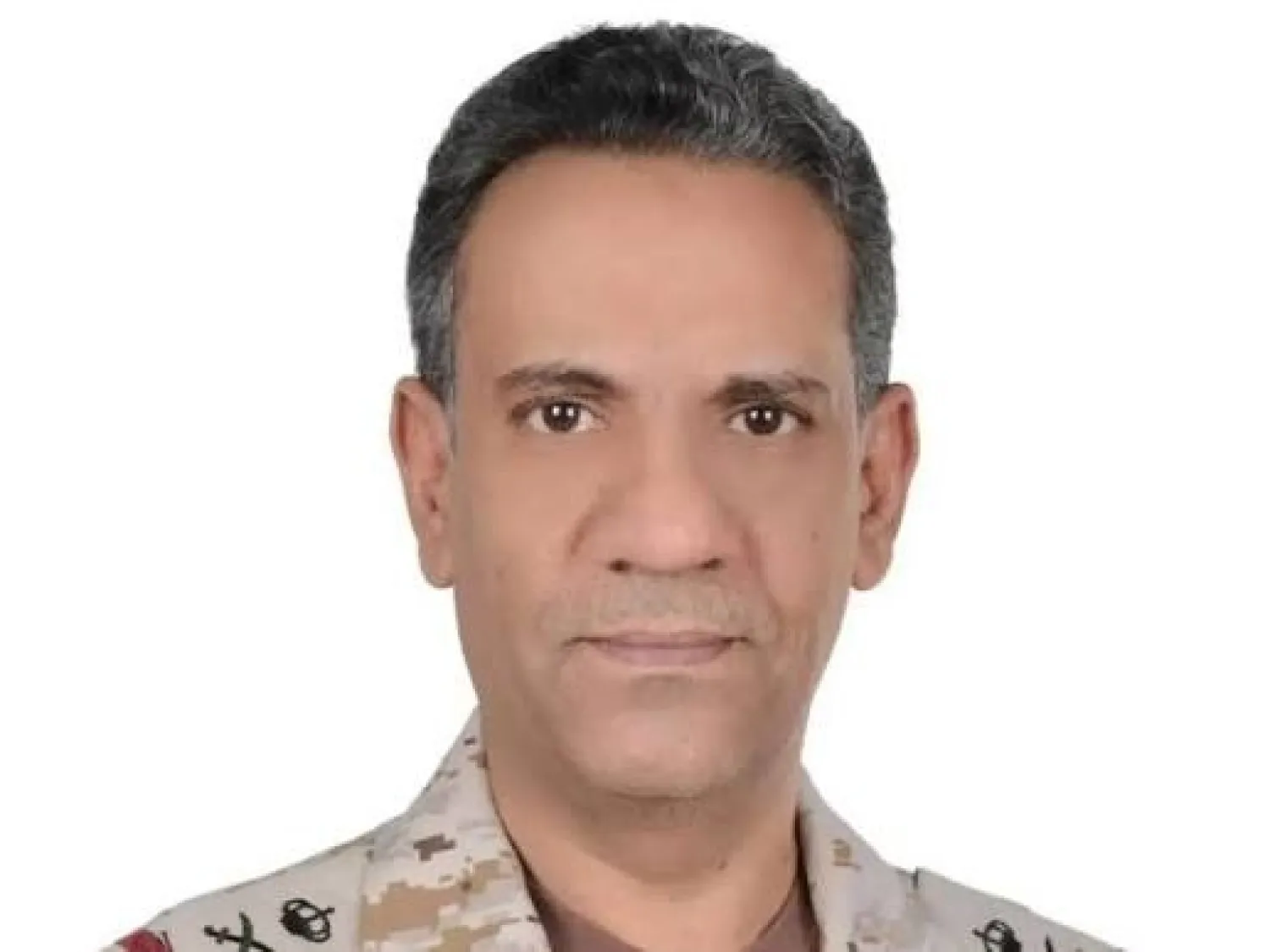
Official Spokesperson for the Coalition to Restore Legitimacy in Yemen Major General Turki Al-Malki
TT

Coalition Destroys Houthi Missile Targeting Western Region

Official Spokesperson for the Coalition to Restore Legitimacy in Yemen Major General Turki Al-Malki

Official Spokesperson for the Coalition to Restore Legitimacy in Yemen Major General Turki Al-Malki said that air defenses intercepted and destroyed a ballistic missile launched by the terrorist Houthi militia toward Saudi Arabia's western region, the Saudi Press Agency reported on Sunday.