


Saudi Arabia Reiterates its Strong Rejection of Regional Threats, Violation of Sovereignty of Nations

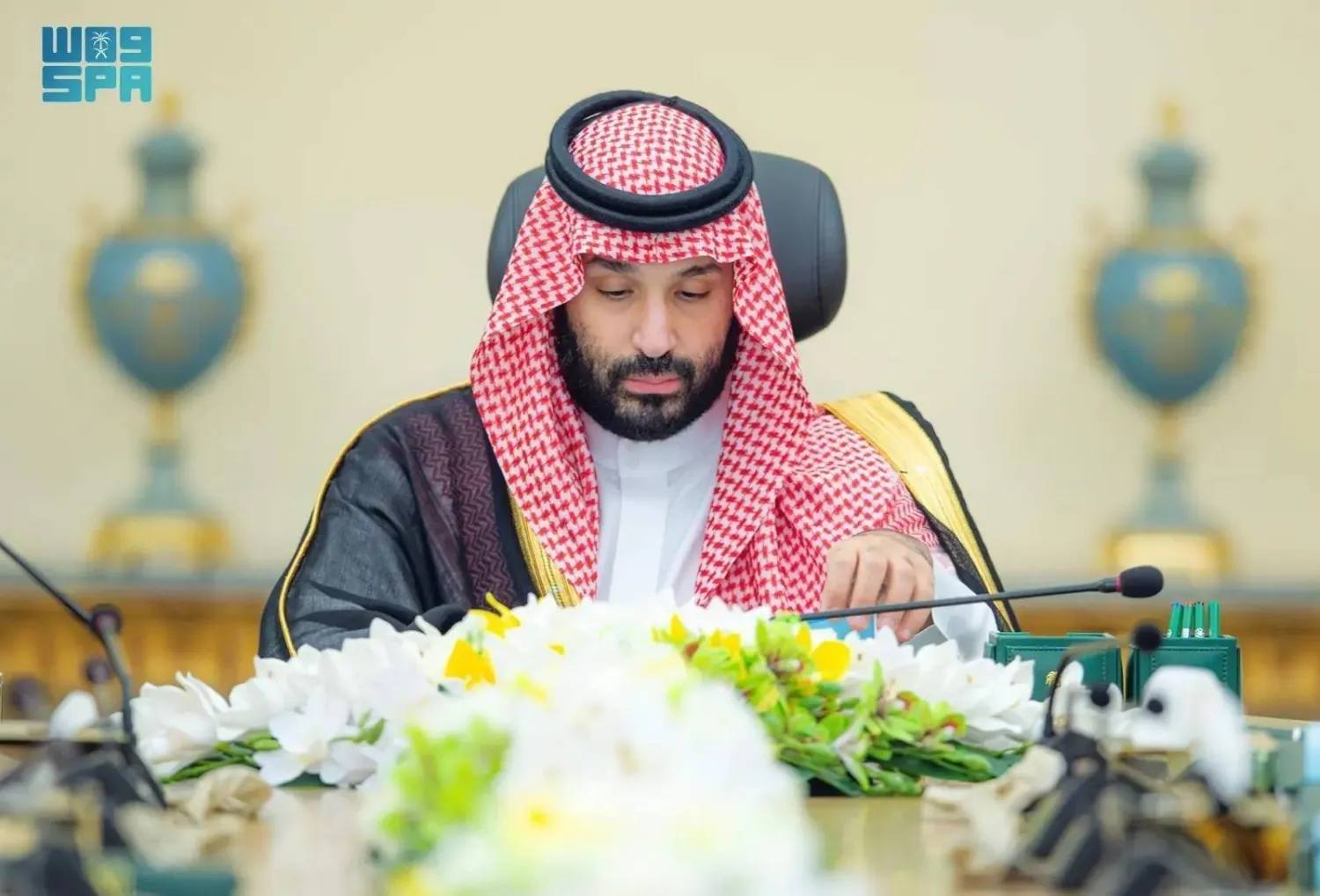
Prince Mohammed bin Salman bin Abdulaziz Al Saud, Crown Prince and Prime Minister, chairs the Cabinet meeting in Jeddah. (SPA)
TT

Saudi Arabia Reiterates its Strong Rejection of Regional Threats, Violation of Sovereignty of Nations

Prince Mohammed bin Salman bin Abdulaziz Al Saud, Crown Prince and Prime Minister, chairs the Cabinet meeting in Jeddah. (SPA)

The Saudi government reiterated on Tuesday the Kingdom’s categorical rejection of the violations of the sovereignty of nations and attempts to threaten the security and stability of the region.

It reiterated its strong condemnation of the blatant attacks that targeted Saudi Arabia and the Gulf Cooperation Council (GCC) member states with drones launched from Iraqi territory, underscoring the importance of the Iraqi government assuming responsibility in addressing these threats.

Prince Mohammed bin Salman bin Abdulaziz Al Saud, Crown Prince and Prime Minister, chaired the Cabinet meeting that was held in Jeddah.

At the outset of the session, the Cabinet praised the “heroic role of the Saudi Armed Forces and their valor in defending the Kingdom and protecting its achievements and resources against the Iranian attacks and their serious repercussions that have affected the region.”

The Cabinet stressed that Saudi Arabia “remains a haven of security and stability, advancing with steadfast steps to strengthen its blessed course and support regional and international stability, drawing from Allah Almighty's guidance and resolve in confronting various challenges.”

It commended the success of operational and technical efforts to restore production at several energy facilities damaged by the attacks.

“The swift recovery reflects the Kingdom’s energy system's high operational resilience and crisis-management capacity, reinforcing the reliability and continuity of supplies to domestic and international markets and supporting the global economy,” said the Cabinet.

The Cabinet also commended the outcomes of the Umrah and Ziyarah Forum held in Madinah, which witnessed broad international participation and the signing of a number of agreements and memoranda of understanding (MoUs) that will help in developing the system of services for the Umrah performers and pilgrims, and boosting integration among the entities operating in this sector.

The Cabinet praised the Kingdom's new achievement in space exploration with the launch of the “Shams” satellite and the success of its mission, aligning with the aspired goals of fostering innovation and scientific creativity and strengthening international partnerships in this field.

The Cabinet highlighted the numerous awards earned by the education and health systems at the Geneva International Exhibition of Inventions 2026, reflecting the Kingdom’s continuous support to empower and advance these two sectors.

The Cabinet noted the advanced positions achieved by eight Saudi cities in the Smart City Index 2026 issued by the International Institute for Management Development (IMD), saying it was confirmation of the accelerating pace of development in services provided to residents, infrastructure, and the quality of life across the Kingdom.

Moreover, the Cabinet praised the steps taken in environmental protection and vegetation restoration, including the rehabilitation of the first one million hectares of degraded land and the planting of more than 159 million trees under the Saudi Green Initiative.



Saudi Joint Chiefs of Staff Director Inspects Armed Forces Preparations for Hajj

Director of the Joint Chiefs of Staff of the Armed Forces Major General Pilot Hamid Al-Omari and other officials are seen during his inspection tour. (SPA)
TT

Saudi Joint Chiefs of Staff Director Inspects Armed Forces Preparations for Hajj

Director of the Joint Chiefs of Staff of the Armed Forces Major General Pilot Hamid Al-Omari and other officials are seen during his inspection tour. (SPA)

Director of the Joint Chiefs of Staff of the Armed Forces Major General Pilot Hamid Al-Omari, on behalf of Chief of the General Staff Lieutenant-General Fayyad Al-Ruwaili, inspected on Monday the readiness of Armed Forces units involved in this year’s Hajj across the holy sites to ensure support for security and government agencies serving pilgrims.

The tour included the air force detachment at Arafat Airport, Ministry of Defense camps, religious affairs facilities, military police operations at the Grand Mosque, Armed Forces headquarters in Al-Awali, and the Defense Ministry’s field hospital in Mina.

Al-Omari reviewed operational plans, awareness programs, crowd management efforts, and medical preparedness to support pilgrims throughout the Hajj season.

The Military Police of the Royal Saudi Land Forces is participating in the Ministry of Defense's comprehensive Hajj plan, coordinating with internal security forces to manage crowd movement in the Grand Mosque's courtyards, oversee the Grand Mosque's gates, and organize the flow of pilgrims arriving from Mina, ensuring smooth movement during peak times.

The participating force underwent intensive training and exercises simulating various scenarios to boost its capacity for effective response and crowd management in coordination with relevant security entities.


Saudi Arabia Condemns Terrorist Attack on Train in Pakistan’s Balochistan

People inspect the wreckage of vehicles the day after a deadly train blast, in Quetta, Pakistan, 25 May 2026. (EPA)
TT

Saudi Arabia Condemns Terrorist Attack on Train in Pakistan’s Balochistan

People inspect the wreckage of vehicles the day after a deadly train blast, in Quetta, Pakistan, 25 May 2026. (EPA)

Saudi Arabia condemned on Monday the “heinous terrorist” attack targeting a train in Pakistan’s Balochistan province.

In a statement, the Ministry of Foreign Affairs said the Kingdom reiterates its “complete rejection of all forms of terrorism and extremism and strongly condemns attempts to undermine the security and stability of Pakistan and its people.”

It expressed its condolences to the families of the victims, as well as to the government and people of Pakistan.

An explosion targeted a train in Balochistan's provincial capital, Quetta, on Sunday, killing at least 24 people and wounding more than 50 others, according to officials.


Saudi Health Minister Visits Ministry of Interior Field Hospital in Arafat

Saudi Minister of Health Fahad Al-Jalajel visits the Ministry of Interior Field Hospital in Arafat on Monday. (SPA)
TT

Saudi Health Minister Visits Ministry of Interior Field Hospital in Arafat

Saudi Minister of Health Fahad Al-Jalajel visits the Ministry of Interior Field Hospital in Arafat on Monday. (SPA)

Saudi Minister of Health Fahad Al-Jalajel visited on Monday the Ministry of Interior Field Hospital in Arafat, where he reviewed the hospital’s readiness and the healthcare services provided during the Hajj.

He was briefed on the hospital’s operational capacity, service delivery pathways, and procedures for handling urgent and emergency cases, including heat exhaustion and sunstroke.

The briefing also covered resuscitation services, short-term intensive care, medical observation, infection control measures, and preventive medicine services.

The minister reviewed the latest operational developments at the field hospital and its role in supporting the healthcare provider network in Arafat, as well as improving the efficiency of healthcare services provided to pilgrims and security personnel during the Hajj season.

The visit comes within the framework of coordination and integration among health authorities involved in the Hajj and reflects a commitment to boosting field readiness to serve pilgrims and enable them to perform their rituals safely.