Saudi, Qatari FMs Discuss Regional Developments

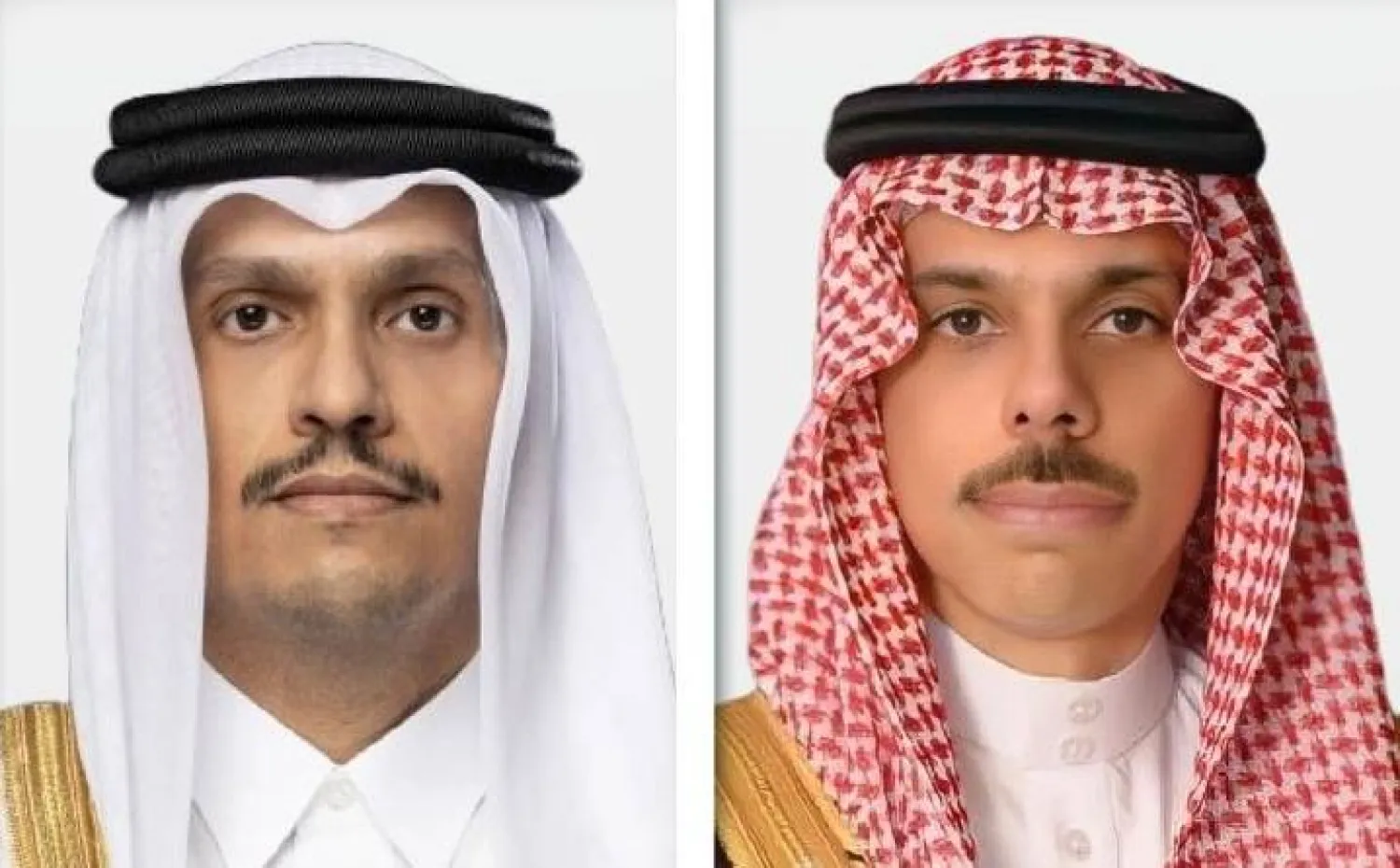
Saudi Minister of Foreign Affairs Prince Faisal bin Farhan bin Abdullah and his Qatari counterpart, Sheikh Mohammed bin Abdulrahman Al Thani (Asharq Al-Awsat)
TT

Saudi, Qatari FMs Discuss Regional Developments

Saudi Minister of Foreign Affairs Prince Faisal bin Farhan bin Abdullah and his Qatari counterpart, Sheikh Mohammed bin Abdulrahman Al Thani (Asharq Al-Awsat)

Saudi Minister of Foreign Affairs Prince Faisal bin Farhan bin Abdullah has received a phone call from Qatari Prime Minister and Minister of Foreign Affairs Sheikh Mohammed bin Abdulrahman Al Thani.

During Saturday’s call, they discussed the latest developments in the region and the efforts of the two countries to maintain security and stability.


UAE Reaffirms Commitment to Protecting Regional Security, Addressing Iranian Threat

UAE Ministry of Foreign Affairs (WAM)
TT

UAE Reaffirms Commitment to Protecting Regional Security, Addressing Iranian Threat

UAE Ministry of Foreign Affairs (WAM)

The United Arab Emirates on Saturday reaffirmed its steadfast approach to supporting regional security and stability in coordination with regional and international partners amid escalating tensions in the Middle East.

A foreign ministry statement stressed UAE’s firm commitment to safeguarding regional security and protecting the peoples of the region from the repercussions of conflicts.

The UAE condemned in “the strongest terms the unprovoked Iranian attacks and threats targeting the UAE and countries across the region, which included the launch of nearly 3,000 ballistic missiles, cruise missiles, and drones toward the country,” read the statement.

“These attacks resulted in civilian casualties and injuries, as well as damage to civilian infrastructure, constituting a clear violation of state sovereignty and a direct threat to the security and stability of the region,” it said.

The ministry stressed that “all measures undertaken by the UAE have been within the framework of defensive actions aimed at protecting its sovereignty, civilians, and vital infrastructure, in line with the country’s legitimate right to safeguard its national security and maintain its stability.”

It also underscored that Abu Dhabi reserves its full sovereign, legal, diplomatic, and military rights to address any threat or hostile act.

“Attempts at coercion or the promotion of malicious narratives and allegations will not undermine the UAE’s principled positions, nor deter the country from safeguarding its supreme national interests and upholding its sovereignty and independent decision-making,” the ministry statement said.

It underscored that the UAE continues its close coordination and consultation with member states of the Gulf Cooperation Council (GCC), alongside regional and international partners, in support of regional security and stability and to further strengthen joint Gulf cooperation.


Interactive 3D Maps Launched to Facilitate Pilgrim Movement at Two Holy Mosques

The digital platform directly connects the holy sites with surrounding infrastructure, transportation routes, and hotels to optimize crowd management during peak times. SPA
TT

Interactive 3D Maps Launched to Facilitate Pilgrim Movement at Two Holy Mosques

The digital platform directly connects the holy sites with surrounding infrastructure, transportation routes, and hotels to optimize crowd management during peak times. SPA

The General Authority for the Care of the Affairs of the Grand Mosque and the Prophet's Mosque has launched an interactive 3D maps initiative to facilitate navigation and enhance services for pilgrims.

Integrated into the Nusuk card, the digital platform directly connects the holy sites with surrounding infrastructure, transportation routes, and hotels to optimize crowd management during peak times.

The responsive interface provides users with real-time operational data, including weather updates, restroom locations, and occupancy rates for prayer, Tawaf, and Sa'i areas, alongside pinpointing locations for religious guidance and fatwa offices.

Designed to align with Saudi Vision 2030, this tech-driven service utilizes modern technology to deliver a unified, accessible, and high-quality environment for international and local visitors.


Saudi Arabia Stresses Importance of Maritime Security, Energy Flows at UN Meeting

Vessels in the Strait of Hormuz, Musandam, Oman, May 15, 2026. (Reuters)
TT

Saudi Arabia Stresses Importance of Maritime Security, Energy Flows at UN Meeting

Vessels in the Strait of Hormuz, Musandam, Oman, May 15, 2026. (Reuters)

Permanent Representative of Saudi Arabia to the United Nations Dr. Abdulaziz Alwasil stressed on Friday the Kingdom’s commitment to global market stability, sustainable development, and ensuring reliable energy flows to support the global economy.

Speaking at the UN Economic and Social Council (ECOSOC) Special Meeting on “Safeguarding energy and supply flows: Supporting global development through international cooperation,” he underlined the critical importance of protecting maritime routes and freedom of navigation, specifically in the Strait of Hormuz and Bab al-Mandab, as pillars of international supply chains.

He condemned attacks on energy infrastructure and civilian facilities that threaten maritime transit.

He also highlighted draft resolution 2817, submitted by Bahrain to protect navigation in the Strait of Hormuz, noting its broad support as a vital step toward regional stability.

Moreover, he underscored the need for reliable, affordable energy access to combat energy poverty, particularly in developing countries. He called for an integrated international approach that fosters innovation and cooperation.