
Saudi Journalism Pioneer Mohamed Ali Hafez Passes Away

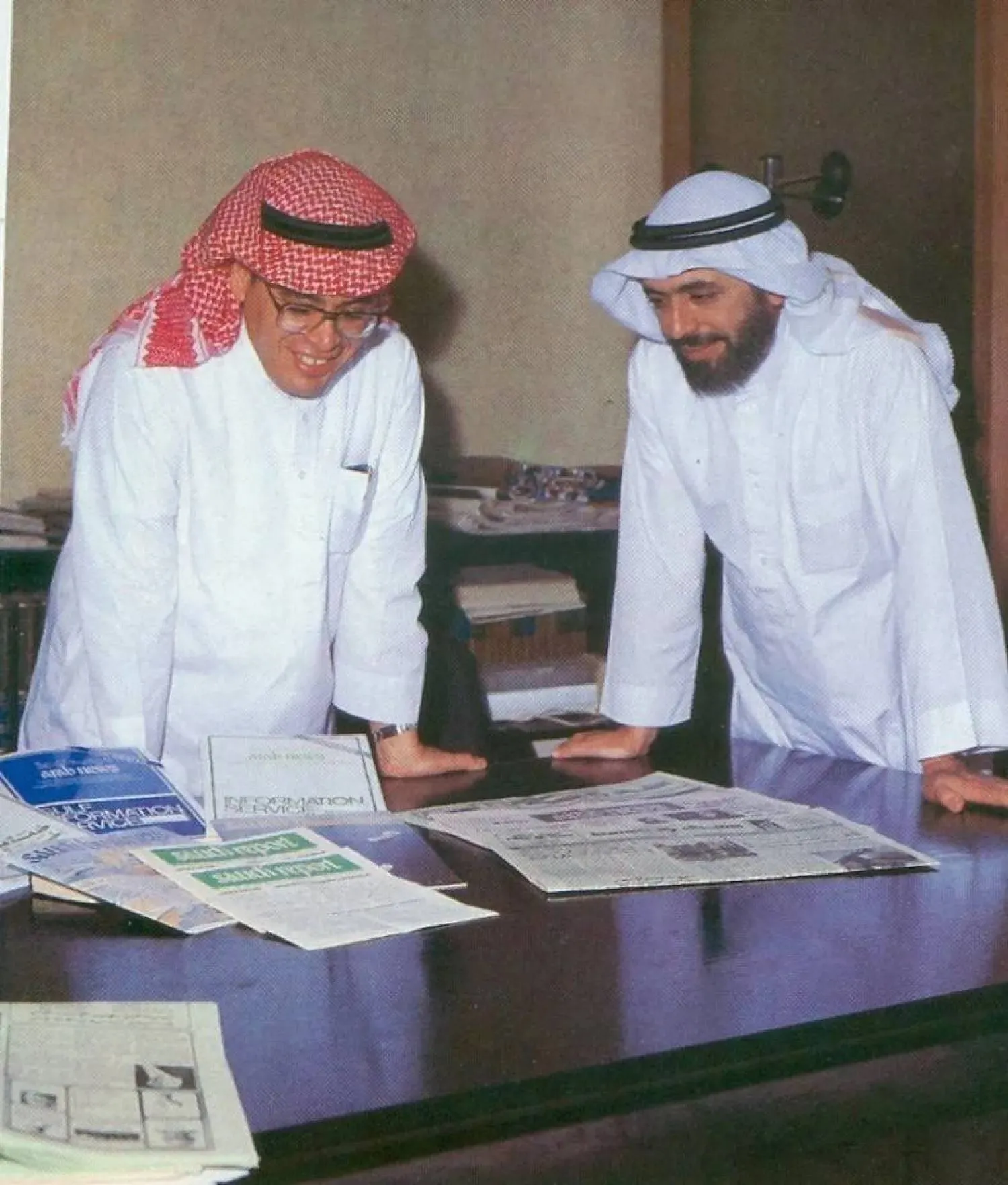
Publishers Hisham and Mohamed Ali Hafez look through publications. 
TT

Saudi Journalism Pioneer Mohamed Ali Hafez Passes Away

Publishers Hisham and Mohamed Ali Hafez look through publications. 

Veteran Saudi publisher and media pioneer Mohamed Ali Hafez passed away on Sunday afternoon after a long career of influence and innovation that helped shape modern journalism in Saudi Arabia and the Arab world.

Together with his brother Hisham Ali Hafez, who died on Feb. 26, 2006, Mohamed Ali Hafez was regarded as one of the leading figures in the publishing industry in the Middle East. The two brothers played a central role in taking Saudi media to unprecedented global horizons and establishing one of the region’s most influential publishing institutions.

Mohamed Ali Hafez belonged to the Hafez family, whose name became closely tied to the rise and development of Saudi journalism. The family’s media journey began with his father and uncle, Ali and Othman Hafez, who founded Al-Madina newspaper on April 7, 1937.

Considered one of Saudi Arabia’s earliest newspapers, Al-Madina became a true reflection of the aspirations of the Kingdom’s youth and the generations that accompanied its modern renaissance. Ali Hafez served as editor-in-chief until 1962, and the newspaper became a journalistic school that produced Mohamed and Hisham Ali Hafez, along with a generation of Saudi journalists.

Following in his father’s footsteps, Mohamed Ali Hafez assumed the editorship of Al-Madina after undergoing journalistic training in Egypt at the Akhbar Al-Yom publishing house under the supervision of its founder, Mustafa Amin.

At the age of 25, he became the youngest editor-in-chief of a Saudi newspaper, serving in the position until 1964.

Like their father and uncle before them, Mohamed and Hisham Ali Hafez formed a journalistic partnership that contributed significantly to the development of Arab media and publishing. The brothers succeeded in injecting a modern spirit into Arab journalism.

The defining turning point in Mohamed Ali Hafez’s career came when he decided to take Saudi media beyond local and regional boundaries and establish a media industry capable of competing with the world’s leading press institutions, not only in the Arab world. He also sought to break the monopoly of traditional Arab capitals over regional media influence.

That vision materialized with the launch of Asharq Al-Awsat from London as the first international Arabic-language newspaper to be printed and distributed simultaneously in several world capitals, a milestone that elevated Saudi media into the ranks of major international institutions.

The launch of Asharq Al-Awsat was preceded by the founding of Arab News, the first Saudi English-language daily newspaper.

Under the umbrella of the Saudi Research and Marketing Group - now the Saudi Research and Media Group (SRMG) - which he helped establish and served on its boards, Mohamed Ali Hafez and his brother built a vast publishing network that issued dozens of publications in multiple languages, including Arabic, English and Indian languages.

His entrepreneurial vision also extended to establishing supporting companies in printing, marketing, advertising, media services and technology.

SRMG went on to become the largest integrated Arab media group and one of the world’s leading media institutions, providing publishing, broadcasting, distribution, printing, advertising and intellectual production services targeting audiences across the Arab world and internationally.

With the group’s major expansion since 2022, SRMG forged global media partnerships, most notably with Bloomberg and The Independent, alongside the launch of Asharq News and several digital platforms focused on news, sports, entertainment and technology.

Mohamed Ali Hafez was a journalist by instinct and a media visionary by intuition. He possessed an exceptional ability to recognize defining moments that shape events.

His initiative with his brother to establish Saudi publications in London in the mid-1970s was followed by the creation of an integrated media network that remains among the largest media institutions in the world.

Despite his extensive administrative and founding responsibilities, Mohamed Ali Hafez never abandoned writing. Readers knew him as a distinguished columnist with sound judgment through his famous daily column “Sabah Al-Khair” (“Good Morning”), which appeared in the pages of Al-Madina, Okaz, Asharq Al-Awsat and Aleqtisadiah newspapers.


Saudi Arabia Says Will Not Allow Practices That Deviate Hajj from its Objectives

Security commanders are seen at the press conference in Makkah on Friday (Bashir Saleh)
TT

Saudi Arabia Says Will Not Allow Practices That Deviate Hajj from its Objectives

Security commanders are seen at the press conference in Makkah on Friday (Bashir Saleh)

Saudi Arabia said it would not allow the Hajj to be used for any activity that strays from its religious purpose, as more than 1.5 million pilgrims arrived from abroad by Friday afternoon.

He made his statement during a press conference by Hajj security commanders at the Unified Security Operations Center (911) in the Makkah region.

Officials outlined security, traffic, and organizational plans for this year’s holy pilgrimage, along with related instructions and guidelines.

Lt. Gen. Mohammed Al-Bassami, director of Public Security, said the Hajj security system was fully ready to carry out its duties.

“Our goal is for pilgrims to reach their destination, perform their rituals, and return home safely,” he stressed.

Al-Bassami said crowd management plans focused on regulating pilgrim flows and minimizing overlap between routes. Technology, he said, was playing a key role alongside security personnel on the ground.

He said authorities were prepared for various scenarios based on risk assessments, following extensive drills and field exercises to test the readiness of all security agencies.

Lt. Gen. Mohammed Al-Omari, commander of the Special Emergency Forces at the Presidency of State Security, described the security plans as “integrated, proactive and flexible.” He said security forces were deployed in the central area and the holy sites to protect pilgrims.

Maj. Gen. Dr. Hammoud Al-Faraj, director general of Civil Defense, said preparations for the Hajj season were complete.

“We trained all bodies involved in serving pilgrims on self-protection,” he said, adding that male and female volunteers were working alongside Civil Defense personnel across all tasks and operations.

Maj. Gen. Dr. Saleh Al-Murabba, commander of the Passports Forces for Hajj, said the “Makkah Route” initiative accounted for 30% of arriving pilgrims. He said 1,518,153 pilgrims had arrived from outside Saudi Arabia by Friday afternoon.


Saudi, Pakistani Interior Ministers Discuss Security Cooperation

Saudi Minister of Interior Prince Abdulaziz bin Saud bin Naif bin Abdulaziz. (SPA)
TT

Saudi, Pakistani Interior Ministers Discuss Security Cooperation

Saudi Minister of Interior Prince Abdulaziz bin Saud bin Naif bin Abdulaziz. (SPA)

Saudi Minister of Interior Prince Abdulaziz bin Saud bin Naif bin Abdulaziz received on Friday a telephone call from his Pakistani counterpart Mohsin Naqvi for talks on issues of common interest.

They also reviewed aspects of security cooperation and coordination.


Saudi Leadership Congratulates Yemen on Unity Day

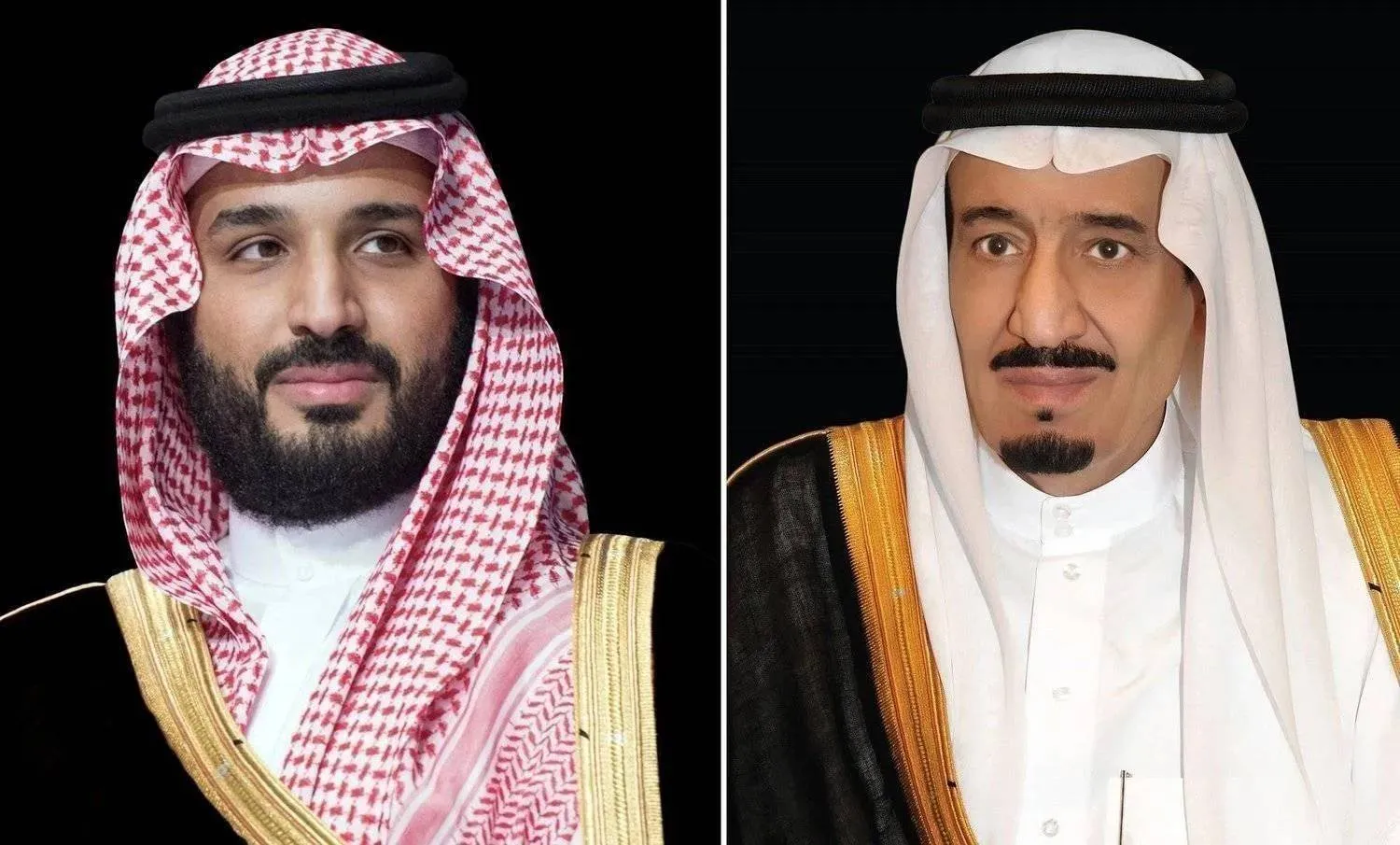
Custodian of the Two Holy Mosques King Salman bin Abdulaziz Al Saud and Prince Mohammed bin Salman bin Abdulaziz Al Saud, Crown Prince and Prime Minister. (SPA)
TT

Saudi Leadership Congratulates Yemen on Unity Day

Custodian of the Two Holy Mosques King Salman bin Abdulaziz Al Saud and Prince Mohammed bin Salman bin Abdulaziz Al Saud, Crown Prince and Prime Minister. (SPA)

Custodian of the Two Holy Mosques King Salman bin Abdulaziz Al Saud sent on Friday a cable of congratulations to Chairman of Yemen's Presidential Leadership Council Dr. Rashad Mohammed Al-Alimi on the occasion of his country's Unity Day.

King Salman wished the president continued good health, and the government and people of Yemen further security and stability.

Prince Mohammed bin Salman bin Abdulaziz Al Saud, Crown Prince and Prime Minister, sent Al-Alimi a similar cable on the occasion.