


42,000 Iraqi Pilgrims Arrive in Makkah

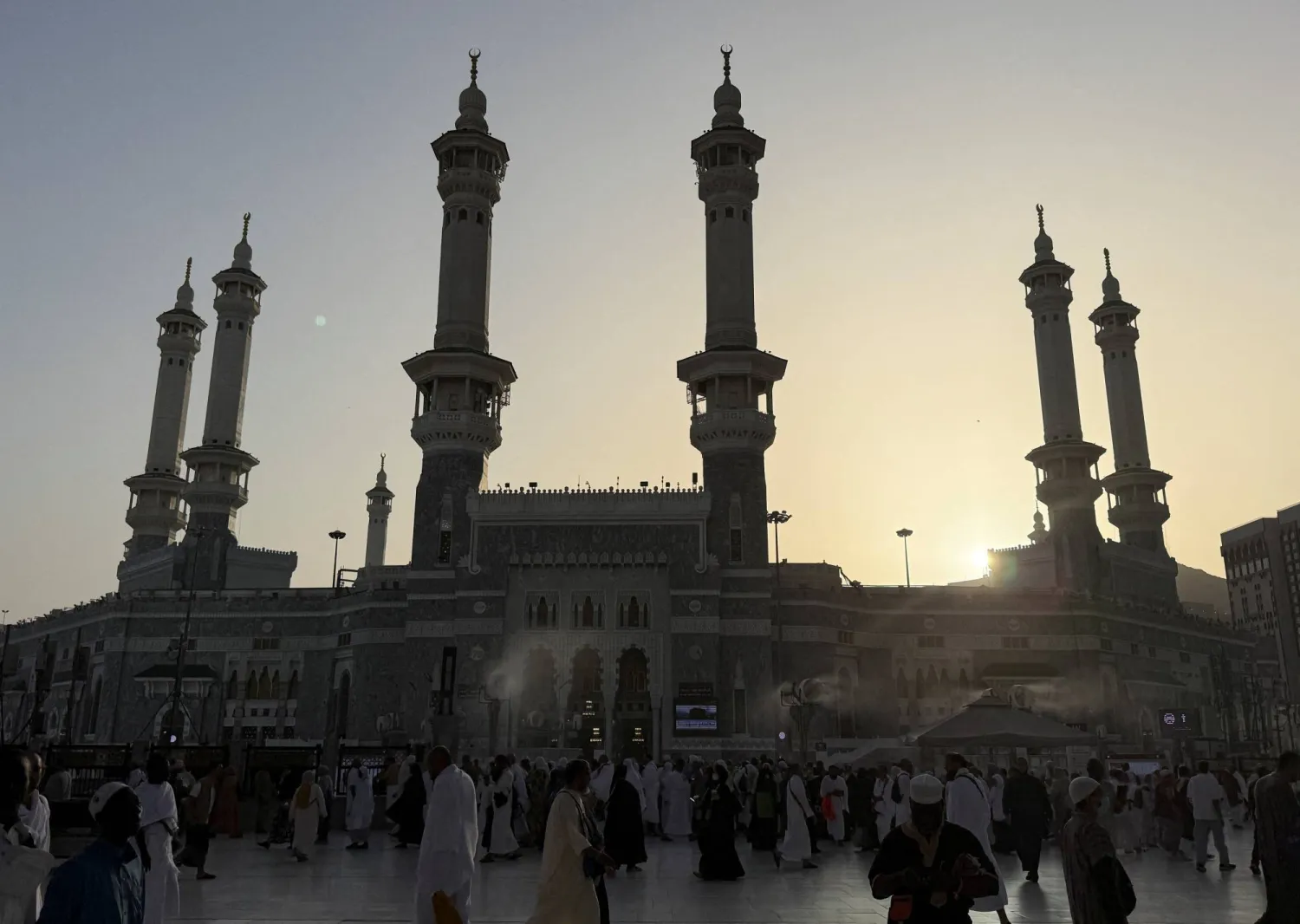
Muslim pilgrims at the Grand Mosque complex, ahead of the annual hajj pilgrimage, in the holy city of Makkah, Saudi Arabia, May 22, 2026. Picture taken with a mobile phone. REUTERS/Ibraheem Abu Mustafa
TT

42,000 Iraqi Pilgrims Arrive in Makkah

Muslim pilgrims at the Grand Mosque complex, ahead of the annual hajj pilgrimage, in the holy city of Makkah, Saudi Arabia, May 22, 2026. Picture taken with a mobile phone. REUTERS/Ibraheem Abu Mustafa

Sami al-Masoudi, head of Iraq’s High Commission for Hajj and Umrah, said 42,000 Iraqi pilgrims have arrived in Saudi Arabia, praising the Kingdom’s efforts to ensure pilgrims’ comfort through a wide range of services and facilities aimed at helping worshippers perform their rituals with ease.

Al-Masoudi told Asharq Al-Awsat that the arrival of Iraqi pilgrims came amid early and well-organized preparations following directives from Saudi Arabia’s Ministry of Hajj and Umrah, which called for readiness across all sectors, including accommodation, catering, services at the holy sites, and internal and external transportation, to guarantee pilgrims’ comfort and the smooth performance of rituals.

One of the most notable features of this year’s Hajj season for Iraqi pilgrims is the adoption of sacrificial offerings services through the electronic platform after they became managed under the Saudi Project for Utilization of Hady and Adahi, a step al-Masoudi described as “qualitative.”

“It reflects the level of development and organization within the Hajj system,” he said.

“Today, all contracts, including sacrificial offerings, are completed electronically, which has helped simplify procedures, reduce bureaucracy and improve the level of services provided to pilgrims,” he added.

The Saudi Project for Utilization of Hady and Adahi is one of the initiatives of the Royal Commission for Makkah City and Holy Sites.

The project aims to facilitate the performance of Hady and expiation rituals for pilgrims and enable Muslims worldwide to carry out sacrifices, charity donations and aqiqah on their behalf, while distributing the meat to eligible beneficiaries inside and outside the Kingdom.

Al-Masoudi also highlighted the major transformation and development projects supported by artificial intelligence technologies that Saudi Arabia has deployed to serve pilgrims.

“Year after year, we witness continuous progress and major efforts by the Saudi Ministry of Hajj and Umrah and supporting agencies in the Kingdom, especially in automation and digital transformation, which directly improve pilgrims’ comfort and the quality of services provided to them,” he said.

Saudi Arabia has consistently worked to improve services for pilgrims arriving from around the world through projects that are upgraded and expanded annually, reflecting the leadership’s commitment to serving pilgrims and Umrah performers, enhancing service quality and enriching their religious experience in line with the goals of Saudi Vision 2030.

The first groups of Iraqi pilgrims began arriving in the Kingdom through the al-Haditha border crossing in al-Qurayyat and the Jadidat Arar crossing, where entry procedures were completed smoothly within minutes under an integrated service system designed to ease the burden of long-distance travel and provide a more comfortable and reassuring experience for pilgrims traveling by land to Makkah.

Expressions of gratitude were evident among Iraqi pilgrims, many of whom described the reception as “beyond expectations,” saying the welcome they received upon entering the Kingdom gave them a sense of comfort and reassurance even before reaching the holy sites.



Saudi Ambassador Inaugurates 3rd Phase of Lebanese Land Exports to the Kingdom

Part of Thursday’s inauguration ceremony. SPA
TT

Saudi Ambassador Inaugurates 3rd Phase of Lebanese Land Exports to the Kingdom

Part of Thursday’s inauguration ceremony. SPA

Saudi Ambassador to Lebanon Fahd bin Abdulrahman Al-Dosari inaugurated on Thursday the third phase of Lebanese exports to the Kingdom.

Saudi Crown Prince and Prime Minister Mohammed bin Salman had ordered the resumption of Lebanese exports to the Kingdom.

The exports will pass through the Masnaa border crossing between Lebanon and Syria.

Thursday’s inauguration ceremony was attended by Lebanese Minister of Public Works and Transport Fayez Rasamny, representing the prime minister, along with several government officials.

Rasamny praised the Kingdom’s decision to resume imports of Lebanese products, describing it as a direct support for the national economy and a step that opens new opportunities for Lebanese producers.

The ceremony also included the activation of the scanner at Masnaa. This was followed by an inspection visit to the site designated for the establishment of a new land border crossing center.


Oman Says Lasting Security in Strait of Hormuz Requires Regional Peace

Vessels near the Strait of Hormuz, as seen from Musandam, Oman, August 17, 2026. REUTERS/Stringer
TT

Oman Says Lasting Security in Strait of Hormuz Requires Regional Peace

Vessels near the Strait of Hormuz, as seen from Musandam, Oman, August 17, 2026. REUTERS/Stringer

Oman said lasting security in the Strait of Hormuz required permanent peace in the region and rejected further escalation or conflict, its foreign minister told his Japanese counterpart on Thursday, Reuters reported.

Iran has said a deal with Oman on new shipping lanes through the strait was in its final stages.


Faisal bin Farhan Stresses Diplomacy to Ease Regional Tensions

Prince Faisal bin Farhan receives Japanese Foreign Minister Toshimitsu Motegi in Riyadh on Wednesday (Saudi Foreign Ministry)
TT

Faisal bin Farhan Stresses Diplomacy to Ease Regional Tensions

Prince Faisal bin Farhan receives Japanese Foreign Minister Toshimitsu Motegi in Riyadh on Wednesday (Saudi Foreign Ministry)

Saudi Foreign Minister Prince Faisal bin Farhan on Wednesday reaffirmed the Kingdom’s commitment to reducing regional tensions and preventing renewed conflict through comprehensive, sustainable diplomatic solutions addressing the sources of instability in the Middle East.

“Diplomacy, dialogue and peaceful means remain our priorities,” Prince Faisal declared during the third Saudi-Japanese Strategic Dialogue with Japanese Foreign Minister Toshimitsu Motegi in Riyadh.

Prince Faisal highlighted the decades-long relationship between Saudi Arabia and Japan, built on mutual trust and respect, and identified maritime security as a key shared priority.

He stressed the importance of safeguarding freedom of navigation in international waterways in accordance with international law, emphasizing that the Strait of Hormuz, Bab al-Mandab and other maritime passages must remain open, secure and free from threats.

The Saudi minister described Japan as an important economic partner and noted that Riyadh sought to expand cooperation in investment, energy, resources, supply chains, defense and technology, as well as the exchange of expertise and capabilities.

He reaffirmed that Saudi Arabia would remain a reliable partner for Japan, including in energy, while praising Tokyo’s efforts to strengthen economic resilience and stabilize global energy markets and trade.

Ahead of his visit to Riyadh and Muscat, Motegi noted that Saudi Arabia was playing a mediating role in talks between the United States and Iran and had seen its international influence expand significantly in recent years.

He pledged to deepen cooperation with the Kingdom as a strategic partner, particularly in ensuring stable energy supplies.

Toshihiro Kitamura, Japan’s assistant foreign minister and ministry spokesman, told Asharq Al-Awsat that cooperation between Riyadh and Tokyo was “strategic and encompasses all fields,” adding that future defense cooperation was possible.

Speaking at a news conference in Riyadh, Kitamura explained that Japan wanted to hear Saudi Arabia’s assessment of regional developments and strengthen coordination with Riyadh and Oman in support of peace and stability, particularly regarding Iran.

He noted that more than 95% of Japan’s crude oil imports passed through the Strait of Hormuz, underscoring its importance to global trade and the world economy.

Kitamura also expressed serious concern over Houthi attacks in Bab al-Mandab and indicated that Japan aimed to broaden bilateral cooperation beyond oil under the Saudi-Japan Vision 2030 framework, in line with Saudi Vision 2030.