
Saudi authorities have dedicated a unique health system that accompanies Hajj pilgrims every step of the way of their holy journey. They are surrounded with comprehensive and completely free medical care, without distinction between nationalities, placing human dignity and health above all else.
This is part of a system of services provided to the pilgrims to allow them to perform their rituals in an atmosphere filled with faith, security, and tranquility.
This humanitarian mission begins from the moment the pilgrims arrive in Saudi Arabia. Medical teams and volunteers are spread across all pedestrian paths and between the tents. They traverse the field on foot or using emergency motorcycles to provide immediate assistance, ensuring that no pilgrim is left alone in the face of illness, physical exhaustion, or the heat of the sun.
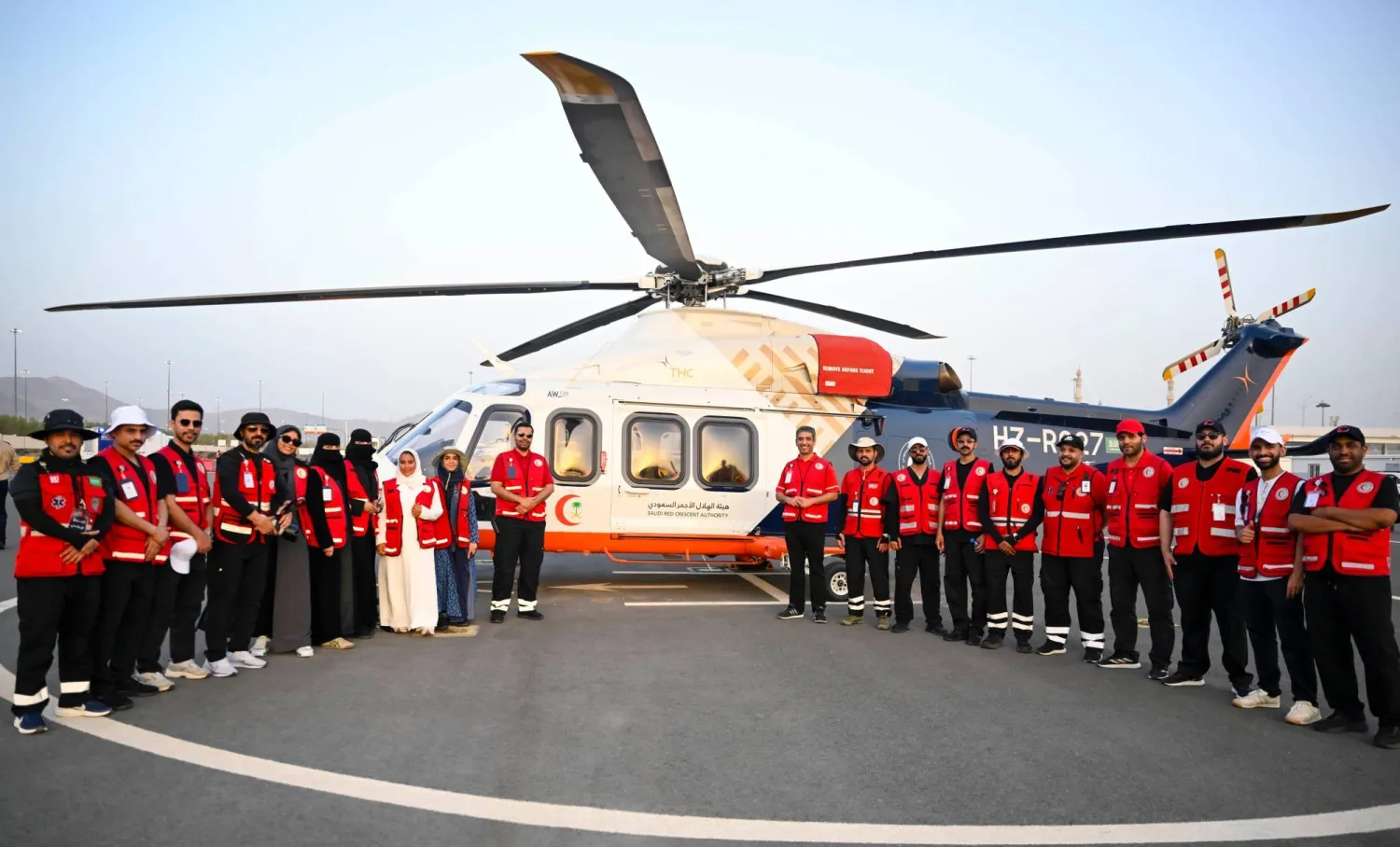
The Saudi Red Crescent Authority air ambulance helicopters are also present to provide the swift medical assistance when needed or to transport a pilgrim to hospital in case of an emergency.
Flight paramedic Dr. Mohammed al-Enezi told Asharq Al-Awsat that the air ambulance acts as an “airborne intensive care unit” that is equipped with the latest global medical technologies that allow doctors and paramedics to start resuscitating the patient, stabilizing their health, and monitoring their vital signs during flight.
He explained that the air ambulance also boasts a complete intensive care unit bag. Some are capable of transporting two intensive care patients simultaneously between healthcare facilities, with all the necessary medical equipment provided inside the aircraft.
Al-Enezi said medical teams are committed to achieving a standard response time, ensuring that the preparation and takeoff of the aircraft do not exceed 7 minutes, reaching the report site within less than 10 minutes and transferring the patient to the nearest healthcare facility in about 10 minutes.
The Saudi Red Crescent Authority has mobilized 2,771 emergency personnel and health volunteers and 100 qualified health volunteers, and provided 70 emergency points in Makkah.
The Authority's fleet includes more than 900 emergency vehicles, including 305 ambulances, 20 rapid response vehicles to support early access and initiate medical procedures, 119 golf carts, 23 motorcycles for quick access through crowded areas, 155 scooters, 200 electric stretchers, 80 bicycles and seven air ambulances.
The Saudi Ministry of Health has also harnessed smart technologies, such as the "Virtual Health Hospital," and digital applications that allow pilgrims to request medical assistance at the push of a button and accurately determine their location without needing to speak Arabic.