
Oman, Kuwait Support Stability, Dialogue to Tackle Regional Challengeshttps://english.aawsat.com/gulf/5281923-oman-kuwait-support-stability-dialogue-tackle-regional-challenges
Oman, Kuwait Support Stability, Dialogue to Tackle Regional Challenges
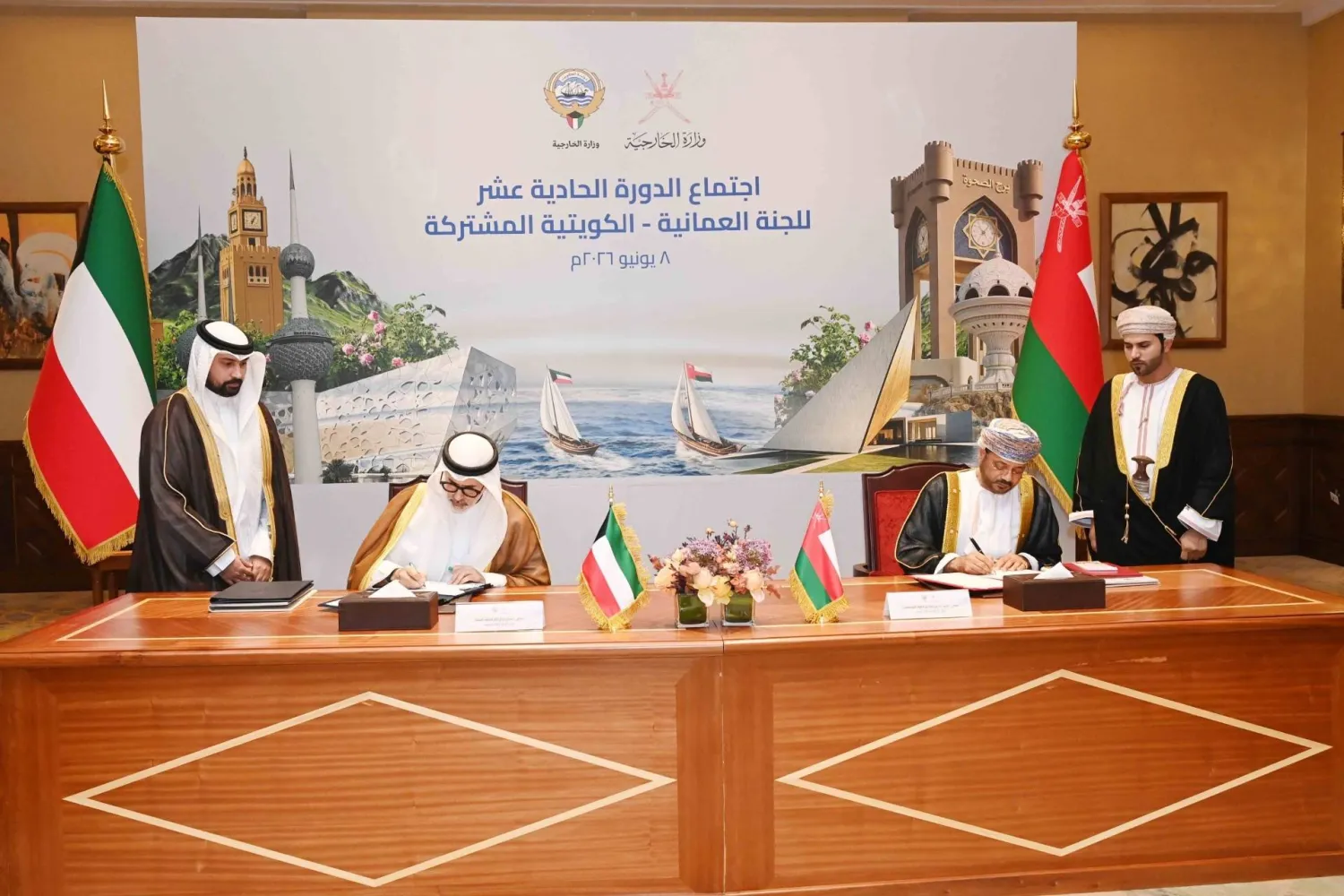
Omani Foreign Minister Badr bin Hamad Al Busaidi and his Kuwaiti counterpart Sheikh Jarrah Jaber Al Ahmad Al Sabah sign the MoU during their meeting on Monday. (ONA)
Oman, Kuwait Support Stability, Dialogue to Tackle Regional Challenges
Omani Foreign Minister Badr bin Hamad Al Busaidi and his Kuwaiti counterpart Sheikh Jarrah Jaber Al Ahmad Al Sabah sign the MoU during their meeting on Monday. (ONA)
Oman and Kuwait stressed on Monday the importance of maintaining coordination and consultations, bolstering security and stability, and supporting dialogue and diplomacy to tackle challenges in the region.
The countries held the 11th session of the Oman-Kuwait Joint Committee in Al Jabal Al Akhdar in Oman. It was chaired by Omani Foreign Minister Badr bin Hamad Al Busaidi and his Kuwaiti counterpart Sheikh Jarrah Jaber Al Ahmad Al Sabah.
The meeting addressed the deep-rooted fraternal relations between their countries. The officials discussed ways to boost bilateral cooperation in a number of fields to serve common interests, in translation of the aspirations of the wise leaderships of Oman’s Sultan Haitham bin Tarik and Kuwait’s Emir Sheikh Mishal Al Ahmad Al Jaber Al Sabah, reported Oman’s state news agency ONA.
Al Busaidi said that the meeting was held in implementation of the supreme directives of the leaderships of the two countries, calling for deepening bilateral cooperation, particularly in the economic, commercial, cultural, and scientific fields, and exchanging expertise to achieve greater integration and partnership between Oman and Kuwait.
He pointed out that the regular convening of the joint committee reflects the attention and care it receives from the leaderships of both countries, and embodies the joint commitment to strengthening its role as an effective institutional framework to propel cooperative relations toward more advanced and comprehensive levels.
For his part, Sheikh Jarrah stressed that the two countries' celebration this year of the 55th anniversary of their diplomatic relations reflects the development and growth of their ties.
The FMs said that Omani-Kuwaiti relations are a model of sincere fraternal bonds among the countries of the Gulf Cooperation Council.
They signed a memorandum of understanding in the field of cybersecurity, and an executive program in the field of standardization.
Iranian Attacks on Gulf Intensify, Kuwait Bears Brunt
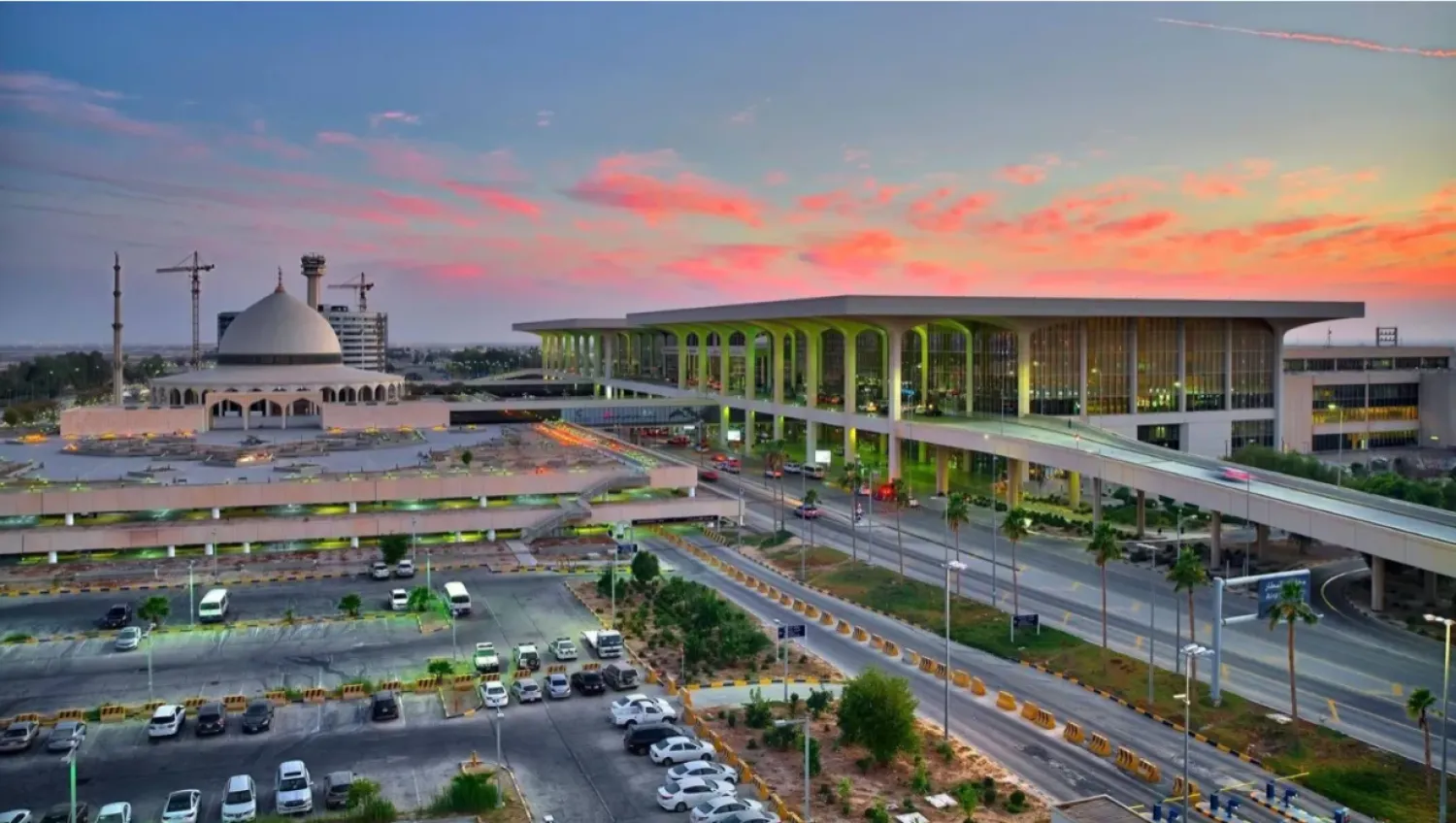
Smoke rises near Kuwait International Airport after a drone strike targeted a fuel depot. (File photo/AFP)
Iranian attacks on Gulf states have intensified sharply in recent days, with Kuwait bearing the brunt as fighting between the United States and Iran resumed and tensions rose in the Strait of Hormuz.
From the renewed escalation last Wednesday through early Thursday, Kuwaiti forces detected about 77 hostile drones and 18 missiles in the country’s airspace, according to an Asharq Al-Awsat tally.
The missiles included eight ballistic missiles and 10 cruise missiles. Kuwaiti forces intercepted or otherwise dealt with the threats.
The latest attacks stood out for causing casualties and damage.
Kuwait said several Iranian strikes targeted vital facilities and scattered debris across multiple locations, causing material damage and injuring six people, including four members of the Kuwaiti armed forces.
Three land border posts in northern Kuwait were also attacked, causing further damage and one injury.
Kuwaiti Defense Minister Sheikh Abdullah Al-Sabah checks on the health condition of those injured as a result of the Iranian aggression. KUNA
Kuwait’s consulate general in the southern Iraqi city of Basra was targeted again on Monday.
Kuwait condemned the attack and acknowledged the Iraqi government’s efforts to confront such incidents. It also called for “immediate and decisive” action to hold those responsible accountable and prevent a recurrence.
The continued attacks drew broad condemnation and expressions of solidarity from Gulf states.
Calls to strike back at launch sites
Academic and political researcher Ayed al-Manaa said Gulf Cooperation Council states should prepare for further Iranian retaliation following US attacks.
Speaking to Asharq Al-Awsat, al-Manaa urged Gulf states to respond to the sources of fire rather than remain on the defensive.
He said the escalation showed that Tehran had gone too far, particularly during the 40-day war.
Iran, he added, could retaliate against nearby US forces or Israel instead of targeting Gulf states.
Al-Manaa said Iran’s conduct reflected a lack of respect for Gulf sovereignty and a disregard for fraternal ties, neighborly relations and shared religious bonds.
Gulf states are peaceful countries that maintain normal relations, trade and neighborly ties with Iran, he said.
Tehran had treated that position with disdain, he added, making it necessary for Gulf states to raise their level of readiness and prepare to confront and respond to further attacks.
Fragile truce, vague memorandum
Political analyst Khaled al-Habbas said the renewed fighting between Washington and Tehran, and the failure of the ceasefire to hold, showed that the memorandum of understanding reached in mid-June was broad and highly ambiguous.
He said the uncertainty was most evident in provisions dealing with the Strait of Hormuz, Iran’s nuclear program, sanctions on Tehran and its frozen assets.
Al-Habbas said other factors were also driving the crisis.
These included “the deep hostility and mistrust between the two sides, the aggressive nature of the Iranian regime and the sharp divisions between hardline leaders within the Revolutionary Guards and other officials who support negotiations with the United States.”
Doubts over Iran’s commitment to a deal
“The continuation of Iranian aggression against some Gulf states, alongside attacks on shipping in the Strait of Hormuz, indicates that the Iranian side is not serious about reaching a final agreement,” al-Habbas said.
He said the negotiations also faced major obstacles, while the ceasefire remained fragile.
Tension and instability would therefore continue to define the regional landscape for now, he added.
Al-Habbas did not rule out further exchanges of military action in the region, although he said both sides appeared keen to avoid a return to full-scale war.
“The danger remains, however, and all possibilities are still open. This is why Gulf states are following these developments with concern,” he said.
He praised Gulf states for successfully confronting Iranian attacks while continuing to support diplomatic efforts to prevent a return to war and the risks it would pose to the region.
Al-Habbas called for greater regional and international diplomatic pressure on Iran to isolate it politically and expose what he described as its aggression.
He said Iran should be held responsible for the damage caused by “this blatant aggression,” while Gulf states retained the right to defend themselves at a time and place of their choosing.
Saudi Arabia: Iranian Attacks on Kuwait, Bahrain and Jordan Threaten Regional Securityhttps://english.aawsat.com/gulf/5296788-saudi-arabia-iranian-attacks-kuwait-bahrain-and-jordan-threaten-regional-security
Saudi Arabia: Iranian Attacks on Kuwait, Bahrain and Jordan Threaten Regional Security
Kuwait City. (KUNA)
Saudi Arabia strongly condemned Iran's continued "unjustified attacks" on Kuwait, Bahrain and Jordan, reaffirming its full support for the measures taken by the three countries in response to what it described as Iran's blatant attacks.
Kuwaiti civil defense personnel work to contain a fire at Kuwait International Airport following the Iranian attack on fuel storage tanks. (File photo: KUNA)
In a statement, the Saudi Ministry of Foreign Affairs reiterated its condemnation of what it described as Iran's actions threatening regional security and stability and violating the principles of international law and good-neighborliness.
It stressed the importance of an immediate halt to all forms of military escalation and called for a return to dialogue and the resolution of disputes through diplomatic means.
Saudi Minister of Defense Offers Condolences to Emir of Qatarhttps://english.aawsat.com/gulf/5296757-saudi-minister-defense-offers-condolences-emir-qatar
Saudi Minister of Defense Offers Condolences to Emir of Qatar
Saudi Minister of Defense Prince Khalid bin Salman bin Abdulaziz and Qatari Emir Sheikh Tamim bin Hamad Al Thani - AAWSAT
Saudi Minister of Defense Prince Khalid bin Salman bin Abdulaziz made a phone call on Thursday to Emir of the State of Qatar Sheikh Tamim bin Hamad Al Thani.
During the call, the minister expressed his condolences and sympathy to the amir over the death of Sheikh Hamad bin Khalifa Al Thani.
لم تشترك بعد
انشئ حساباً خاصاً بك لتحصل على أخبار مخصصة لك ولتتمتع بخاصية حفظ المقالات وتتلقى نشراتنا البريدية المتنوعة