


Saudi Arabia and Canada: Questions and Answers on Joint Action and Coordination Council

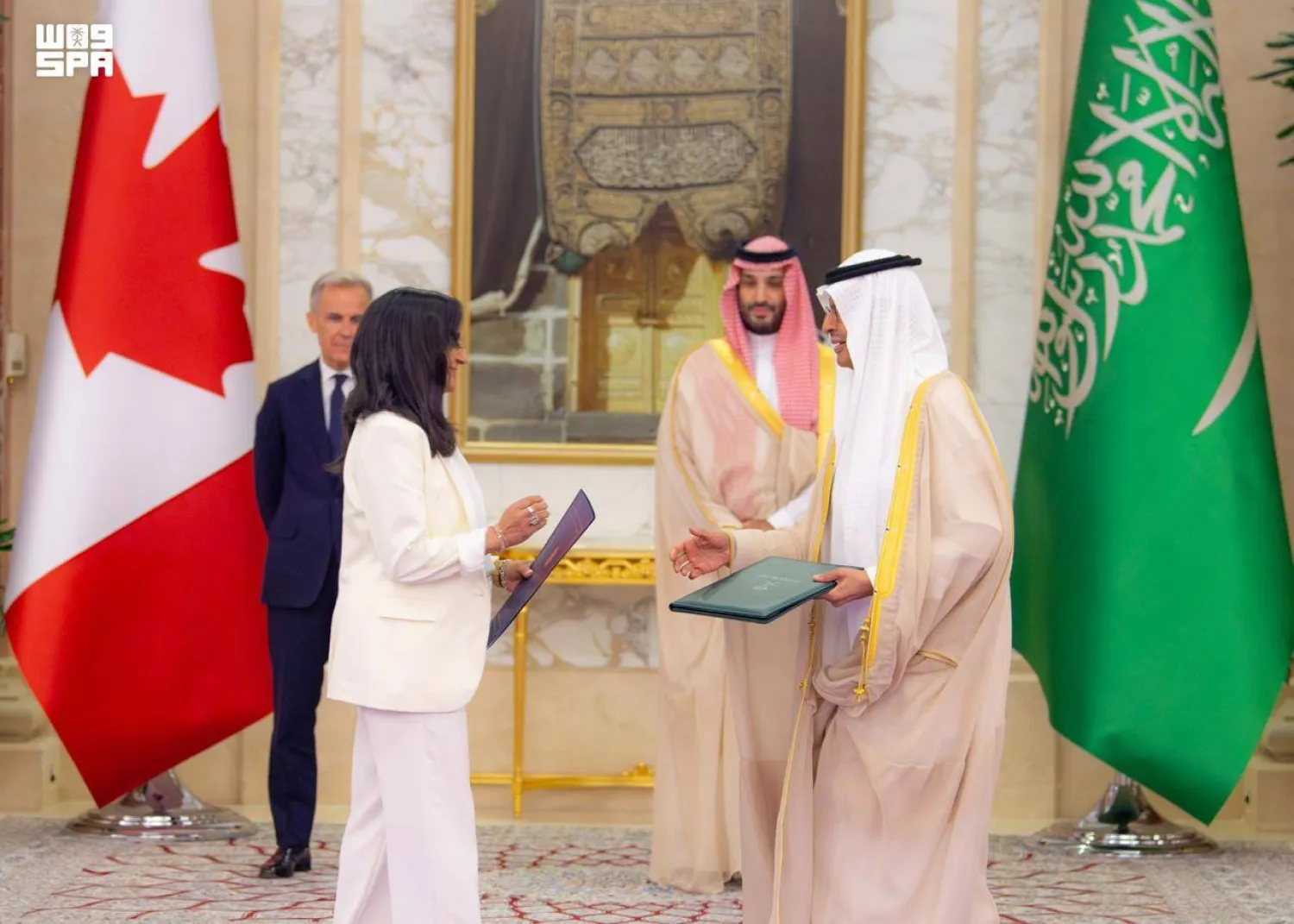
Part of the memorandum signing ceremony attended by the Saudi Crown Prince and the Canadian Prime Minister in Jeddah on Thursday. (SPA)
TT

Saudi Arabia and Canada: Questions and Answers on Joint Action and Coordination Council

Part of the memorandum signing ceremony attended by the Saudi Crown Prince and the Canadian Prime Minister in Jeddah on Thursday. (SPA)

Saudi Arabia and Canada announced a series of agreements and memorandums of understanding signed in the presence of Saudi Crown Prince and Prime Minister Mohammed bin Salman and Canadian Prime Minister Mark Carney in Jeddah on Thursday.

The signing followed talks between the two sides and an official reception for Carney, the first Canadian prime minister to visit Saudi Arabia in 25 years.

The following questions, answers and background explain the Joint Action Document and the establishment of the Saudi-Canadian Coordination Council, both referenced in the joint statement issued after the leaders’ meeting, based on explanations provided to Asharq Al-Awsat by informed sources.

What is the Joint Action Document?

According to the sources, the Joint Action Document will serve as the overarching framework for bilateral cooperation.

It is intended to bring together the priority areas of cooperation for the next phase, with its provisions to be institutionalized and implemented through the establishment of the Saudi-Canadian Coordination Council.

What does the document aim to achieve?

The document seeks to strengthen the partnership in line with both countries’ national priorities in relevant fields, reflecting their shared commitment to expanding cooperation, deepening consultation and reinforcing ties in areas of mutual interest.

It also aims to establish a comprehensive framework for cooperation based on a shared understanding of global challenges, including enhancing security and stability, supporting economic growth and empowering communities.

What areas of cooperation are envisaged?

• Political affairs
• Security and defense
• Economic, trade and investment cooperation
• Cultural, educational and scientific cooperation
• Consular affairs

What is the Saudi-Canadian Coordination Council?

As part of their commitment to strengthening and deepening friendly relations, the two governments are working to establish a Saudi-Canadian Coordination Council at the level of the two countries’ foreign ministers.

The council will operate under a governance framework, organizational structure and clear implementation mechanisms for the relevant authorities on both sides. The objective is to ensure the council fulfills its mandate by developing strategic initiatives jointly agreed upon in the areas covered by the Joint Action Document.

Each initiative will be supported by a clear implementation timetable and defined performance indicators, with progress monitored under the council’s approved governance framework.

What are the council’s objectives?

• Establish an institutional framework for cooperation between the two countries.
• Strengthen bilateral cooperation through continuous consultation and coordination across all fields.
• Serve as a unified platform encompassing all existing areas of cooperation between Saudi Arabia and Canada.
• Advance bilateral relations at all levels.
• Promote shared interests and mutual benefit.

What are the council’s main pillars?

• Develop the council’s governance framework, including its organizational structure, responsibilities, procedures, operating models and subsidiary committees, in coordination with the relevant authorities.
• Prepare an annual schedule for meetings of the council and its subsidiary committees, to be approved as part of the council’s official meeting minutes.
• Implement joint initiatives across the full spectrum of bilateral cooperation.



Saudi Arabia Condemns Israeli Airstrikes on Syria’s Abu al-Duhur Military Airport

The Abu al-Duhur base following the Israeli strikes, Syria, August 18, 2026. (Reuters)
TT

Saudi Arabia Condemns Israeli Airstrikes on Syria’s Abu al-Duhur Military Airport

The Abu al-Duhur base following the Israeli strikes, Syria, August 18, 2026. (Reuters)

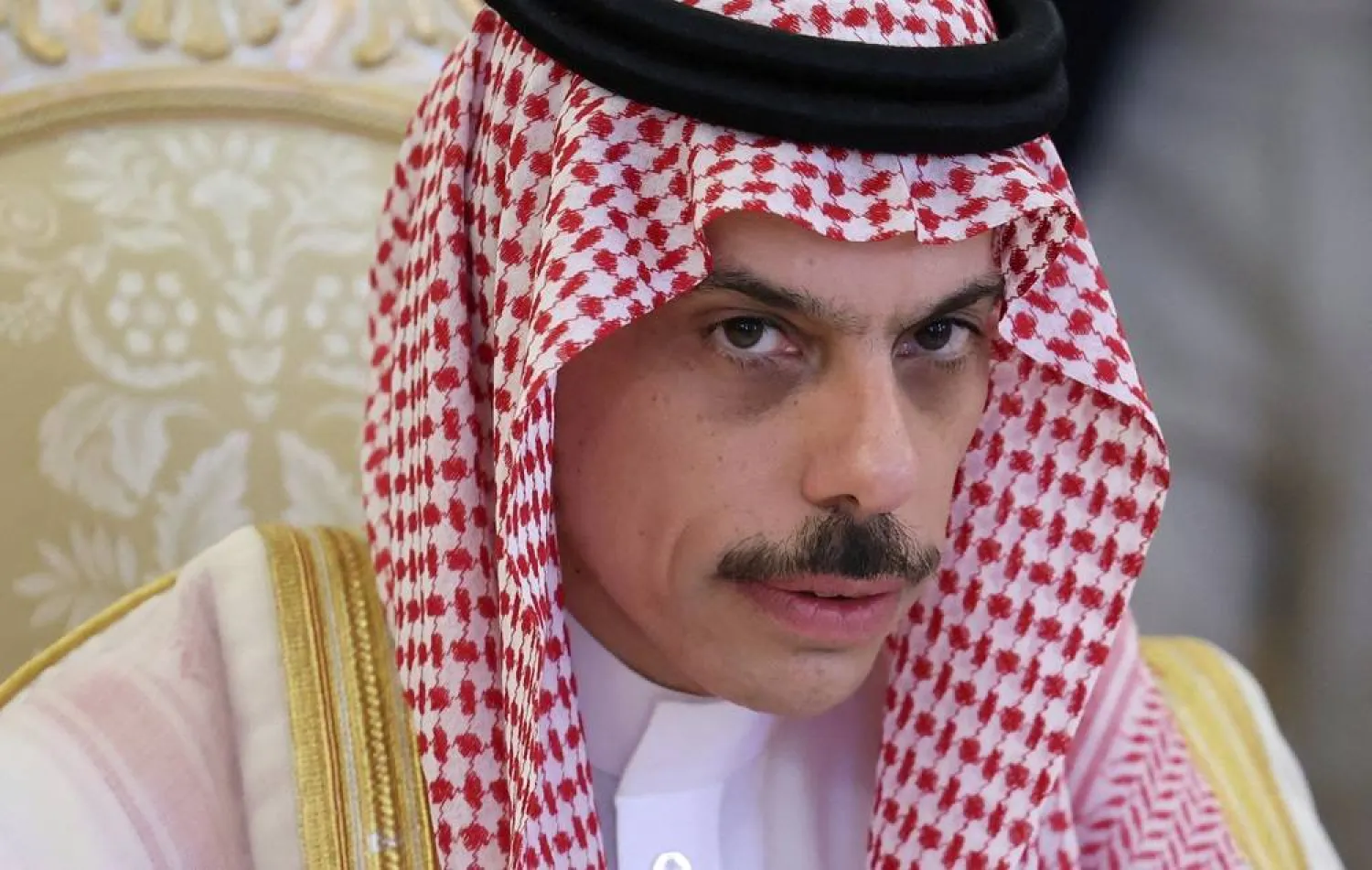
Saudi Arabia strongly condemned on Tuesday Israeli airstrikes on Syria’s Abu al-Duhur Military Airport.

A Foreign Ministry statement said the Kingdom slammed the attack as a “flagrant violation of international law and Syria's sovereignty.”

“The Kingdom stresses its rejection of this blatant act of aggression and renews its call on the international community to put an end to Israel’s violations of international laws and norms,” it demanded.

It reiterated its solidarity with Syria and “support for all efforts aimed at safeguarding its sovereignty, preserving the integrity and unity of its territory, and achieving security and stability for the brotherly Syrian people.”


UAE Accuses Iran of Firing Ballistic Missiles at Its Territory

Tuesday's warning was the first such alert since a false alarm in June and an alert in July for an attack that ultimately did not enter UAE territory. (Reuters)
TT

UAE Accuses Iran of Firing Ballistic Missiles at Its Territory

Tuesday's warning was the first such alert since a false alarm in June and an alert in July for an attack that ultimately did not enter UAE territory. (Reuters)

The United Arab Emirates on Tuesday accused Iran of firing two ballistic missiles at its territory, marking the first time the defense ministry detected a barrage aimed at the country in months. 

"UAE air defenses detected two ballistic missiles launched from Iran toward the country, with the first falling outside the country's territorial waters, while the second fell within the territorial waters," said a statement posted by the defense ministry on X. 

The statement came nearly two hours after a brief phone alert warned UAE residents of a "potential missile threat". 

"Due to the current situation, potential missile threats, immediately seek a safe place in the closest secure building," the interior ministry said in the phone alert, which was lifted shortly after. 

It was the first such alert since a false alarm in June and an alert in July for an attack that ultimately did not enter UAE territory. Before that, the last missile warning came in early May. 

Tankers belonging to state-owned oil company ADNOC have been repeatedly targeted in the past few weeks. 

When the Middle East war began on February 28, the UAE bore the brunt of Iran's attacks, with nearly 3,000 missiles and drones directed at the country -- more than anywhere else in the region. 

After a memorandum of understanding came into effect in June between the two parties, which has since collapsed, the UAE reported no attacks. 


Saudi Cabinet Welcomes Launch of Multinational Maritime Defense Alliance

Custodian of the Two Holy Mosques King Salman bin Abdulaziz Al Saud  - SPA
Custodian of the Two Holy Mosques King Salman bin Abdulaziz Al Saud - SPA
TT

Saudi Cabinet Welcomes Launch of Multinational Maritime Defense Alliance

Custodian of the Two Holy Mosques King Salman bin Abdulaziz Al Saud  - SPA
Custodian of the Two Holy Mosques King Salman bin Abdulaziz Al Saud - SPA

Custodian of the Two Holy Mosques King Salman bin Abdulaziz Al Saud chaired the Cabinet session on Tuesday, which reviewed Saudi Arabia’s recent discussions and consultations with brotherly and friendly nations to enhance bilateral and multilateral cooperation across various fields, achieve mutual interests, and support regional and international security and stability.

The Cabinet welcomed the institutional and operational activation of the Saudi-led Multinational Maritime Defense Alliance following the completion of its organizational and planning frameworks. This marks a new phase of joint action to achieve full operational readiness and fulfill its mission to enhance collective maritime security, protect freedom of navigation across maritime straits and waterways, and support the continuity of international trade and global supply chains.

The Cabinet reiterated its categorical rejection of repeated Iranian attacks on commercial vessels and tankers, viewing them as a dangerous escalation and a direct threat to the safety and security of maritime navigation.

It also affirmed that these attacks constitute a grave violation of international laws and norms and a blatant defiance of the Security Council resolution obligating respect for commercial vessels' freedom of navigation through the Strait of Hormuz and condemning any threats or actions obstructing it.

On bilateral relations, the Cabinet deemed establishing the Saudi-Sudanese Coordination Council an extension of both nations' commitment to institutionalized joint coordination, advancing cooperation and integration through tangible outputs, initiatives, projects, and objectives to achieve desired aspirations.

The Cabinet commended the Kingdom's successful presidency of the 16th session of the UNCCD Conference of the Parties (COP16), which launched international partnerships and initiatives to combat land degradation, desertification, and drought, enhance water and food security, support climate adaptation, and advance innovative solutions for environmental protection and sustainable development.

On World Humanitarian Day, observed on August 19, the Cabinet expressed pride in Saudi Arabia's pioneering humanitarian role and its prominent standing among the world's leading donor nations. This reflects the Kingdom's long history of generosity, proactive initiative, and providing aid, assistance, and disaster relief to countries and communities in need globally.

Domestically, as the new academic year approaches, the Cabinet reviewed the education sector's achievements, notably in improving organizational and operational efficiency, advancing educational institutions, expanding students' scientific expertise, upgrading teachers' capabilities, and providing exemplary learning environments with leading curricula and specialized programs that foster innovation and creativity—all contributing to human capital development and Saudi Vision 2030 goals.

The Cabinet also commended the Public Investment Fund's (PIF) financial performance and continued progress toward its targets, evidenced by revenue and net profit growth in 2025. This reflects PIF's ongoing drive to spur economic diversification in the Kingdom, expand domestic and international investments, and bolster key strategic sectors, including artificial intelligence, technology, energy, infrastructure, and advanced manufacturing.

The Cabinet praised government agencies' tangible progress in the 2026 Digital Experience Maturity Index, reflecting ongoing commitment to developing operations, innovating flexible and effective technological solutions, and delivering top-tier procedures and services to citizens, residents, and visitors, in line with the Kingdom's leadership and competitiveness in international rankings and indicators.