



Gulf States Condemn Repeated Iranian Attacks, Tehran's Destabilizing Behavior

Air defense interceptions are seen in the sky above Doha on July 12, 2026. AFP
TT

Gulf States Condemn Repeated Iranian Attacks, Tehran's Destabilizing Behavior

Air defense interceptions are seen in the sky above Doha on July 12, 2026. AFP

Gulf states condemned on Sunday repeated Iranian attacks targeting Qatar, Bahrain, Kuwait, Oman, the United Arab Emirates, and Jordan, saying such assaults represent a blatant violation of state sovereignty and a direct threat to regional security and stability.

The Saudi Ministry of Foreign Affairs expressed the Kingdom's condemnation and denunciation, in the strongest terms, of Iran's continued destabilizing behavior toward regional security and stability, its violations of the principles of international law, the UN Charter, the Charter of the Organization of Islamic Cooperation, and the principles of good neighborliness.

This includes Iran's repeated attacks on commercial vessels, threatening the security and freedom of navigation, and its continued heinous assaults on Kuwait, Bahrain, Qatar, the UAE, Oman, and Jordan.

The Kingdom reaffirmed its categorical rejection of Iran's violation of the sovereignty of brotherly states and its continued threats to regional security and stability.

The Omani government also lambasted on Sunday an attack on its territory, state media announced, with Iran's Guards saying they targeted it during a barrage aimed at countries across the Gulf.

The Oman News Agency said on X that "the Sultanate of Oman affirms its condemnation and denunciation of this attack,” which came just hours after the country hosted Iran's foreign minister to address security issues in the Strait of Hormuz.

Doha too condemned the Iranian attacks against its territory and its neighbors.

"Qatar condemns in the strongest possible terms the renewed attacks carried out by the Islamic Republic of Iran," the foreign ministry said in a statement, also referring to the targeting of Jordan, the UAE, Bahrain, Oman and Kuwait and calling the barrages a "dangerous escalation.”

In Kuwait, the Ministry of Foreign Affairs expressed the country's strongest condemnation and denunciation of the egregious Iranian attacks that targeted it. It affirmed that these repeated assaults reflect a persistent hostile approach, constituting a grave violation of Kuwait's sovereignty and territorial integrity, and a direct threat to its security, stability, and the safety of its citizens and residents.

Furthermore, they represent a clear breach of international law, the United Nations Charter, and Security Council Resolution 2817.

The ministry stressed in a statement that the continuation of attacks constitutes an extremely dangerous escalation, which will increase tension and instability in the region, threaten regional peace and security, and undermine diplomatic efforts aimed at de-escalation and peaceful resolution of crises.

The ministry reiterated that Kuwait's security, sovereignty, and territorial integrity are inviolable, and that Kuwait reserves its full rights to take necessary measures to protect its security and preserve its sovereignty, in accordance with the provisions of international law and the UN Charter.



Attacks from Iraq on East-West Pipeline Draw Strong Condemnations

Saudi Aramco logo. Reuters
TT

Attacks from Iraq on East-West Pipeline Draw Strong Condemnations

Saudi Aramco logo. Reuters

Attacks on a key Saudi oil pipeline launched from Iraqi territory drew on Saturday strong condemnations from many countries and organizations.

The Saudi Foreign Ministry blamed the attacks on the East-West pipeline in the Riyadh and Madinah regions on several drones that came from Iraq and, in a statement, said the Kingdom would not retaliate to give the Iraqi government “an opportunity to take the necessary measures.”

For its part, the Iraqi government strongly condemned the attacks, reiterating its categorical rejection of any aggression that threatens the Kingdom's security, stability, or bilateral relations.

Iraqi Prime Minister and Commander-in-Chief of the Armed Forces Ali Al-Zaidi ordered an immediate investigation to determine the circumstances of the strikes and identify the perpetrators.

In a statement carried by the Iraqi News Agency, Spokesperson for the Commander-in-Chief of the Armed Forces Sabah Al-Numan emphasized that Baghdad will take strict legal action against anyone implicated in the assault, stressing that the state will not tolerate activities that jeopardize Iraq's national security or its ties with brotherly nations.

Al-Numan voiced appreciation for Saudi Arabia's measured response and constructive engagement with Baghdad's efforts to de-escalate tensions, noting that this stance underscores Riyadh's commitment to regional stability and bilateral cooperation.

He reaffirmed that Iraq's territory and airspace will not serve as a launchpad for hostile actions against any state. He reiterated Baghdad's dedication to upholding state sovereignty, good neighborliness, and regional diplomacy, ensuring relations with neighboring nations foster mutual stability rather than conflict.

Also, UAE, Qatar, Bahrain, Jordan, Oman, Egypt, Libya, Syria, Lebanon, Pakistan, OIC, the Arab Parliament, the Gulf Cooperation Council (GCC) and the Muslim World League (MWL) were quick to condemn the attacks.

The separate statements all stressed full solidarity with Saudi Arabia and backed all measures taken by the Kingdom to safeguard its territory. 


Saudi Foreign Minister Receives Phone Call from British Counterpart

Saudi Minister of Foreign Affairs Prince Faisal bin Farhan bin Abdullah in Moscow on July 4, 2025. (Reuters)
TT

Saudi Foreign Minister Receives Phone Call from British Counterpart

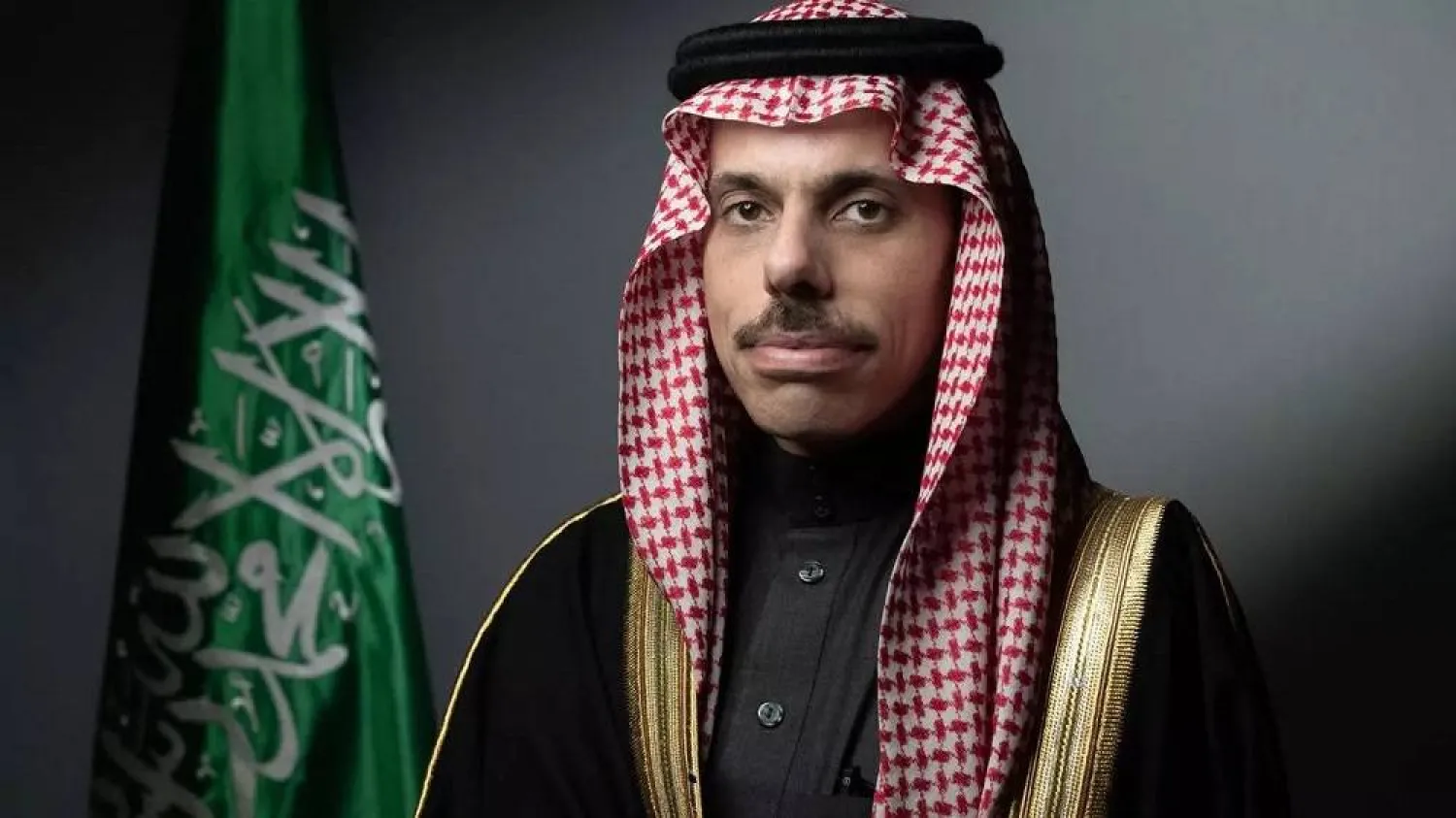
Saudi Minister of Foreign Affairs Prince Faisal bin Farhan bin Abdullah in Moscow on July 4, 2025. (Reuters)

Saudi Foreign Minister Prince Faisal bin Farhan bin Abdullah received a phone call on Saturday from Secretary of State for Foreign, Commonwealth and Development Affairs of the United Kingdom Edward Miliband.

During the call, the two sides discussed regional developments.

According to SPA, at the outset, Miliband renewed his country's solidarity with Saudi Arabia following the attacks launched by the Houthi militia, stressing the Kingdom's right to take necessary measures to defend its security and capabilities in accordance with international law.

The two sides also discussed the importance of intensifying joint efforts to ensure the security and freedom of navigation in waterways, contributing to regional security and stability and protecting global trade and supply chains from the repercussions of the current crisis.


Saudi Arabia Welcomes Launch of Global Alliance for South-South and Triangular Cooperation

File photo of the Saudi flag/AAWSAT
TT

Saudi Arabia Welcomes Launch of Global Alliance for South-South and Triangular Cooperation

File photo of the Saudi flag/AAWSAT

Saudi Arabia has welcomed the launch of the Global Alliance for South-South and Triangular Cooperation, emphasizing its importance in enhancing integration and reducing duplication of efforts while respecting countries’ national priorities.

In the Kingdom’s speech delivered on the occasion of the United Nations Day for South-South Cooperation, Saudi Permanent Representative to the United Nations Ambassador Dr. Abdulaziz Alwasil said Saudi Vision 2030 aligns with the priorities of South-South cooperation, particularly in economic diversification, digital transformation, innovation, sustainability, youth empowerment, and the private sector, SPA reported.

He noted that the Saudi Fund for Development has contributed to supporting and financing development projects and programs in more than 100 developing countries across various vital sectors, affirming Saudi Arabia’s commitment to continuing to work with member states, the United Nations, and partners to strengthen cooperation and achieve more prosperous, sustainable, and inclusive development.