Oman Says 23 Crew Members Rescued from Vessel Attacked off Musandam

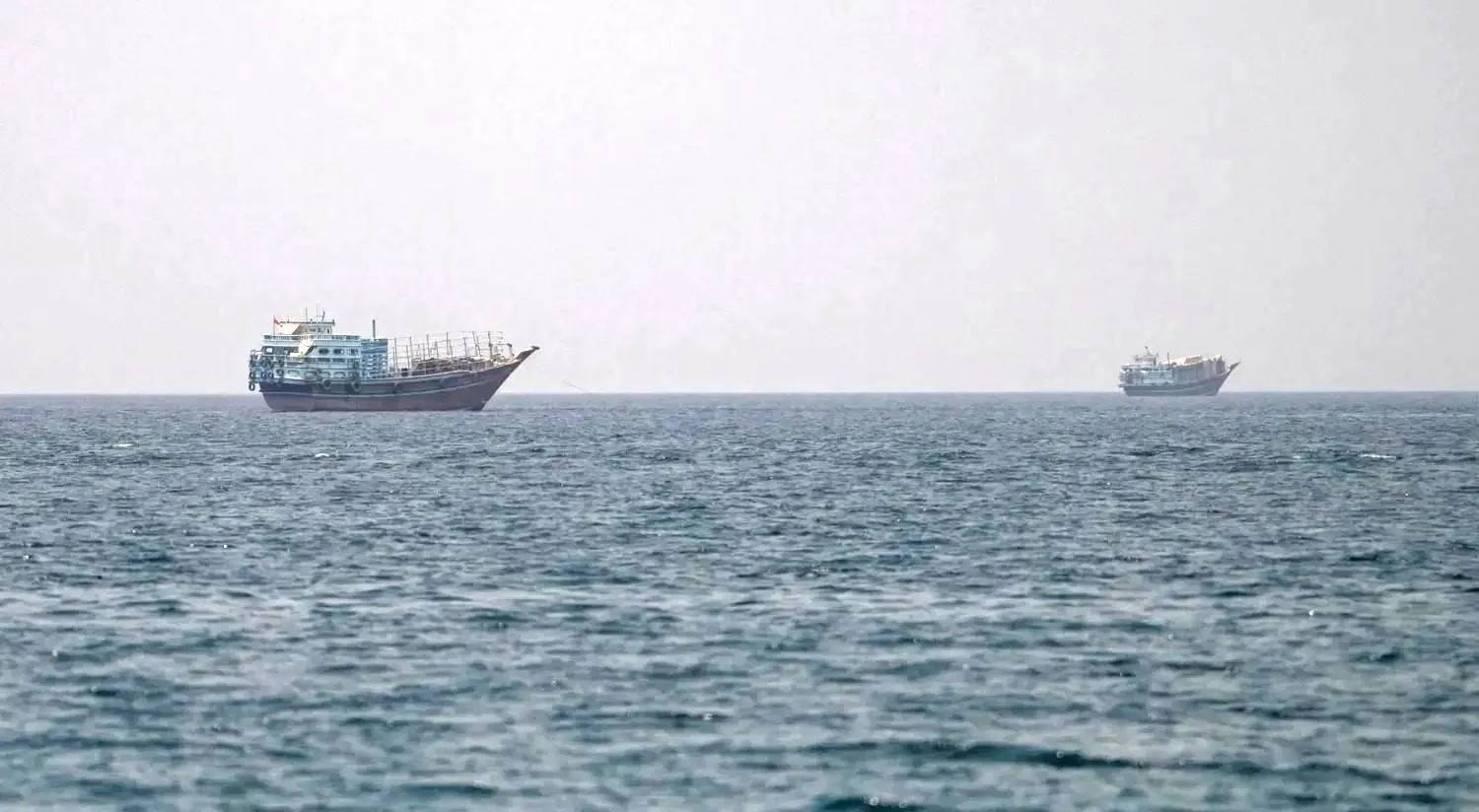
Vessels at the Strait of Hormuz, as seen from Musandam, Oman, July 12, 2026. REUTERS/Stringer 
TT

Oman Says 23 Crew Members Rescued from Vessel Attacked off Musandam

Vessels at the Strait of Hormuz, as seen from Musandam, Oman, July 12, 2026. REUTERS/Stringer 

Oman said Sunday it had rescued 23 crew members from a commercial ship after the vessel was targeted off the coast of Musandam, while search operations remain underway for one missing crew member.
In a statement, Oman’s Maritime Security Center said it responded to a distress call from the Cypriot-flagged GFS Galaxy 4.4 nautical miles off the coast of Musandam Governorate.

“Twenty-three crew members were rescued and provided with necessary medical care. Search operations are continuing for one crew member who remains missing,” the statement said.

It gave no further information about the incident.

The incident comes amid heightened maritime tensions in the region, with authorities monitoring security threats affecting commercial shipping routes.

Earlier on Sunday, a Omani security source said drones targeted sites in the Musandam Governorate. The Sultanate of Oman condemned the attack and affirmed that it is taking all necessary measures to address these developments and safeguard the country and its residents.

The Sultanate added that security forces continue to monitor the area closely following this incident, as the country takes decisive steps to address these ongoing security developments.

The Musandam Governorate is located in the far north of the Sultanate and overlooks the Strait of Hormuz, one of the world's most critical maritime chokepoints, carrying around a quarter of global seaborne oil trade and significant volumes of liquefied natural gas and fertilizers.

The Strait serves as the gateway that links the Gulf to the Sea of Oman and the Indian Ocean.

Musandam includes four wilayats: Khasab, Dibba, Bukha, and Madha.

On Sunday, US Central Command said the Strait of Hormuz is ‌open to all vessels and US military forces are “positioned ⁠and prepared” to ensure freedom of navigation, a ‌day ⁠after US and Iranian forces exchanged fire and ⁠Iran said it had closed ⁠the vital waterway.


Saudi Foreign Minister Receives Phone Call from South African Foreign Minister

Saudi Minister of Foreign Affairs Prince Faisal bin Farhan bin Abdullah in Moscow on July 4, 2025. (Reuters)
TT

Saudi Foreign Minister Receives Phone Call from South African Foreign Minister

Saudi Minister of Foreign Affairs Prince Faisal bin Farhan bin Abdullah in Moscow on July 4, 2025. (Reuters)

Saudi Minister of Foreign Affairs Prince Faisal bin Farhan bin Abdullah received a phone call from South African Minister of International Relations and Cooperation Ronald Lamola.

During the call, the two sides reviewed relations between Saudi Arabia and South Africa and discussed ways to strengthen cooperation across various fields to serve the mutual interests of both countries, SPA reported.

They also exchanged views on the latest regional and international developments and efforts to address current challenges in ways that support regional and international security and stability.


Lockheed Martin to Asharq Al-Awsat: We Support Saudi Arabia's Defense Systems Against Missile Threats

Retired Brig. Gen. Joseph “Joe” Rank, head of Lockheed Martin Saudi Arabia (Asharq Al-Awsat)
TT

Lockheed Martin to Asharq Al-Awsat: We Support Saudi Arabia's Defense Systems Against Missile Threats

Retired Brig. Gen. Joseph “Joe” Rank, head of Lockheed Martin Saudi Arabia (Asharq Al-Awsat)

Retired Brig. Gen. Joseph "Joe" Rank, chief executive of Lockheed Martin Saudi Arabia, revealed that the Kingdom's participation in the US company's global supply chains quadrupled over the past year, reflecting the growing role of Saudi defense industries in global manufacturing and a shift from meeting domestic needs to producing components for international defense systems.

Speaking to Asharq Al-Awsat on the sidelines of a forum organized by the General Authority for Military Industries (GAMI) in Riyadh, Rank said Saudi Arabia had become one of the few Middle Eastern countries integrated into Lockheed Martin's global supply chains.

He noted that the Kingdom's participation was expanding rapidly as part of efforts to strengthen local industrial capabilities and enhance their international competitiveness.

Rank said the goal is no longer limited to manufacturing products to meet the Kingdom's needs. It extends to integrating Saudi industries into the company's global supply chains.

Rank stressed that this approach would create new jobs, generate revenue for the Saudi economy and strengthen the Kingdom's position in the global defense industry.

From Imports to Manufacturing

Rank said the industrial relationship between Lockheed Martin and Saudi Arabia had undergone a fundamental transformation in recent years.

Previously focused on supplying defense systems and equipment, the partnership now includes manufacturing key components in the Kingdom, as well as providing local maintenance and technical support.

"In the past, we simply sold products to the Kingdom. Today, we manufacture products there and maintain them locally as well. In the future, we will move beyond this stage to even greater opportunities," he said.

Rank described Saudi Arabia as Lockheed Martin's most important partner in the Middle East, noting that cooperation with the Ministry of Defense and GAMI forms a cornerstone of efforts to expand industrial investment and transfer advanced defense technologies.

He described the current period as one of significant opportunity, given the transformation underway in Saudi Arabia's military industries sector and efforts to develop a national industrial base capable of participating in the production and maintenance of defense systems.

Local Manufacturing of THAAD Components

The Lockheed Martin Saudi Arabia chief executive highlighted several projects demonstrating progress in local defense manufacturing, foremost among them the production of key components for the Terminal High Altitude Area Defense (THAAD) ballistic missile defense system.

He explained that Lockheed Martin is working with Saudi industrial partners to manufacture components for the system in the Kingdom, including launcher components at Arabian International Company for Steel Structures (AIC Steel) in Jeddah and interceptor missile canisters at Middle East Propulsion Company (MEPC) in Riyadh.

Rank said THAAD is one of the principal defense systems used to counter missile threats, including those originating from Yemen or Iran, stressing that localizing the manufacture of its components reflects the advancement of Saudi Arabia's defense industrial capabilities.

He added that these two projects are only examples of a broader portfolio of industrial initiatives undertaken by Lockheed Martin with its partners in the Kingdom to expand local manufacturing and integrate it into global production operations.

Technology Transfer and Workforce Development

Rank emphasized that Lockheed Martin's strategy in Saudi Arabia extends beyond transferring manufacturing operations to include technology and technical knowledge transfer, as well as training Saudi personnel to operate advanced defense systems.

He said developing human capital is among the most important factors in successfully localizing military industries, explaining that acquiring advanced technologies cannot deliver the intended benefits without qualified personnel capable of operating and developing them.

"You can have the greatest technology in the world, but if you don't have the people who can use it, it's useless," he said.

Rank reaffirmed Lockheed Martin's commitment to developing the skills of the next generation of Saudi professionals, helping establish a sustainable base of technical and engineering expertise in the defense industry.

Strategic Partnership

Rank said Lockheed Martin's participation as a gold sponsor of the GAMI forum for the second consecutive year reflected the importance of the Saudi market to the company's regional strategy.

He explained that partnerships with GAMI and the Ministry of Defense play a central role in enabling Lockheed Martin to expand its industrial presence in the Kingdom and deepen cooperation with Saudi companies.

The expansion comes as Saudi Arabia seeks, under Vision 2030, to localize more than 50% of its spending on military equipment and services by building a domestic industrial ecosystem encompassing manufacturing, maintenance, research and development, and knowledge transfer.

The increase in Saudi participation in Lockheed Martin's global supply chains reflects a shift beyond localization focused on domestic consumption toward building production capabilities that can help meet global demand.

This approach strengthens the added value of Saudi industries and opens new opportunities for Saudi companies in international markets.

60 Years of Partnership

During his address at the military industries forum, the Lockheed Martin Saudi Arabia chief executive noted that the F-35 fighter jet deal had passed the congressional notification stage in the United States, describing it as an important milestone.

Rank said Lockheed Martin's relationship with Saudi Arabia spans 60 years, beginning with the delivery of C-130 aircraft and evolving from product sales to local manufacturing and support for maintenance and sustainment capabilities.

He noted that strengthening local supply chains had become increasingly important following the disruptions experienced during the COVID-19 pandemic and amid rising political and military risks affecting global trade and shipping.


Saudi Arabia Calls on Iran to De-escalate and Reach Agreement to End Crisis

Saudi Defense Minister Prince Khalid bin Salman. (Asharq Al-Awsat)
TT

Saudi Arabia Calls on Iran to De-escalate and Reach Agreement to End Crisis

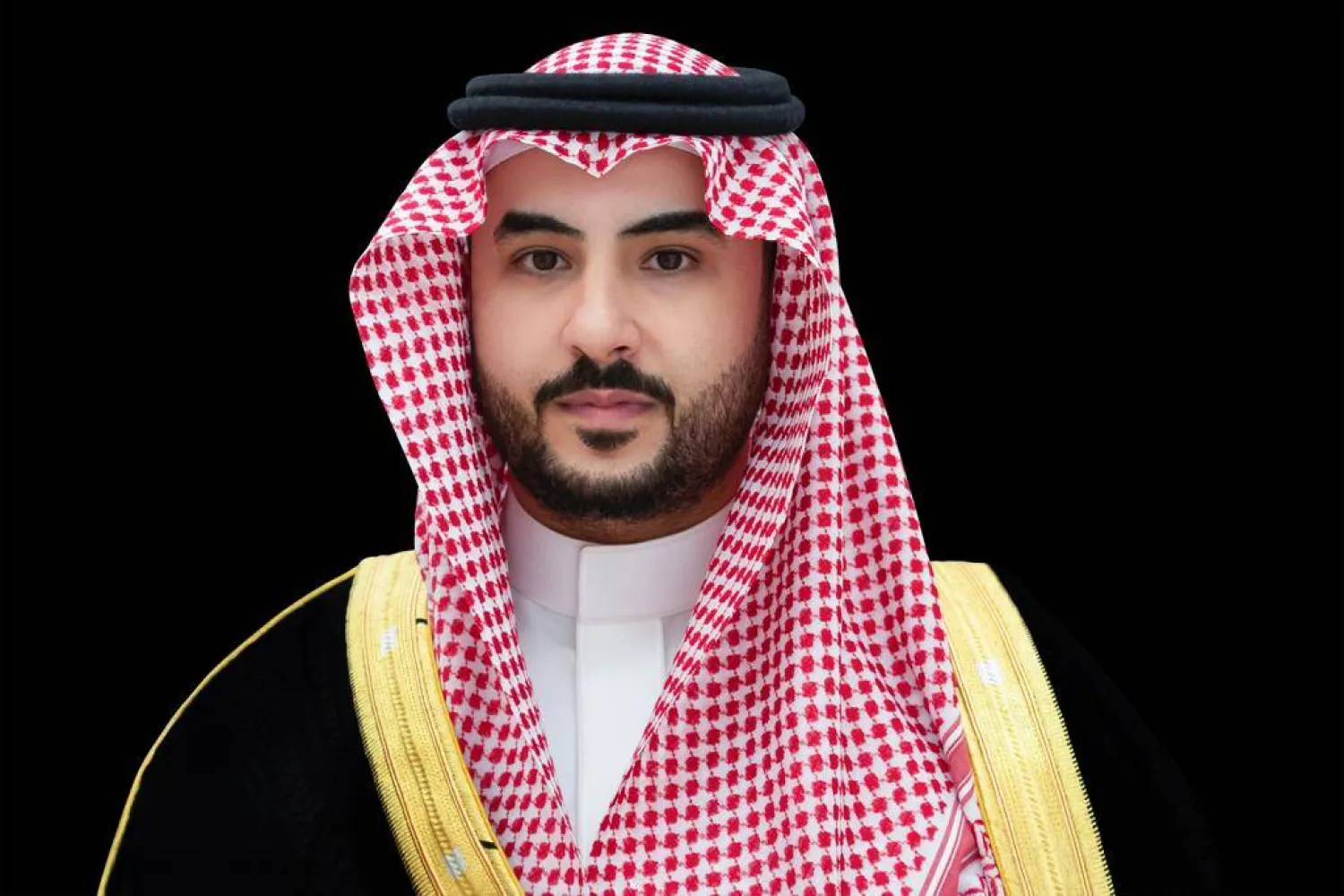
Saudi Defense Minister Prince Khalid bin Salman. (Asharq Al-Awsat)

Saudi Arabia stressed the importance of all parties to the current crisis responding positively and constructively to the outcomes of a visit to Tehran led by Defense Minister Prince Khalid bin Salman and to mediation efforts undertaken by Qatar and Pakistan.

The Kingdom emphasized the need to open channels for negotiations to prevent renewed military escalation in the region and pave the way for an agreement to end the crisis.

In a statement issued Monday, the Saudi Foreign Ministry said the visit by Prince Khalid bin Salman and representatives of the countries party to the Makkah Joint Defense Agreement to Tehran for meetings with senior Iranian officials was an extension of the Kingdom's role in promoting dialogue and regional and international peace.

The ministry said the visit was part of efforts to de-escalate tensions between the parties to the current crisis and encourage dialogue and diplomatic solutions.

It explained that the initiative also supports mediation efforts undertaken by the State of Qatar and the Islamic Republic of Pakistan, expressing the Kingdom's hope that all parties would respond positively and constructively to the visit's outcomes and the two countries' ongoing efforts to resolve the crisis through dialogue and diplomacy.

The statement stressed the importance of opening channels for negotiations to prevent renewed military escalation and reach an agreement that would end the crisis and strengthen peace and security in the region and worldwide.

Earlier, Saudi Deputy Minister for Public Diplomacy Ambassador Rayed Krimly announced that Prince Khalid bin Salman was leading the Kingdom's delegation to meetings hosted by Tehran, with the participation of Pakistan's Chief of Army Staff Field Marshal Asim Munir and Turkish intelligence chief Ibrahim Kalin.

Krimly said representatives of the countries party to the Makkah Joint Defense Agreement would meet Iranian President Masoud Pezeshkian and Secretary of Iran's Supreme National Security Council Mohsen Rezaei.

He noted that the visit was part of ongoing efforts to de-escalate tensions between the parties to the current crisis and support mediation efforts undertaken by Qatar and Pakistan.

The Saudi official emphasized the importance of promoting dialogue and diplomatic solutions to overcome current tensions, highlighting the role of the Makkah Joint Defense Agreement countries in supporting regional security and stability and working with countries across the region to achieve that goal.

The Saudi Foreign Ministry reaffirmed the pivotal role of the Makkah Joint Defense Agreement countries in establishing regional security and stability and cooperating with other nations to ensure regional and international peace.