Iranian Missile Strikes Target Bahrain, Kuwait and Jordan
Bahrain's capital, Manama (file photo)
Iran's Revolutionary Guards on Monday claimed strikes against Jordan, Bahrain and Kuwait, saying they targeted US military facilities.
Iran's official IRNA news agency, citing a series of statements by the Revolutionary Guards, said Iran had launched attacks targeting Prince Hassan Air Base in Jordan, a US drone command center in Bahrain and other air bases, including Ali Al Salem Air Base in Kuwait.
Bahrain's Interior Ministry said on X that warning sirens had been activated, urging citizens and residents to remain calm, head to the nearest safe location and follow updates through official channels.
Kuwait's military also said its armed forces had intercepted hostile aerial targets within Kuwaiti airspace.
The military's General Staff said in a post on X, any explosions heard were the result of air defense systems intercepting hostile attacks and urged the public to follow safety instructions issued by the relevant authorities.
The Jordanian army said in a statement that its air defenses successfully intercepted four missiles launched from Iran, with no casualties or property damage reported.
The statement cited a military source as saying that the air defense systems intercepted and destroyed four missiles that entered Jordanian airspace from Iranian territory early on Monday, adding that the incident caused no injuries or material damage.
Saudi Arabia Underscores Support for Legitimate Yemeni Govt to End Houthi Couphttps://english.aawsat.com/gulf/5326783-saudi-arabia-underscores-support-legitimate-yemeni-govt-end-houthi-coup
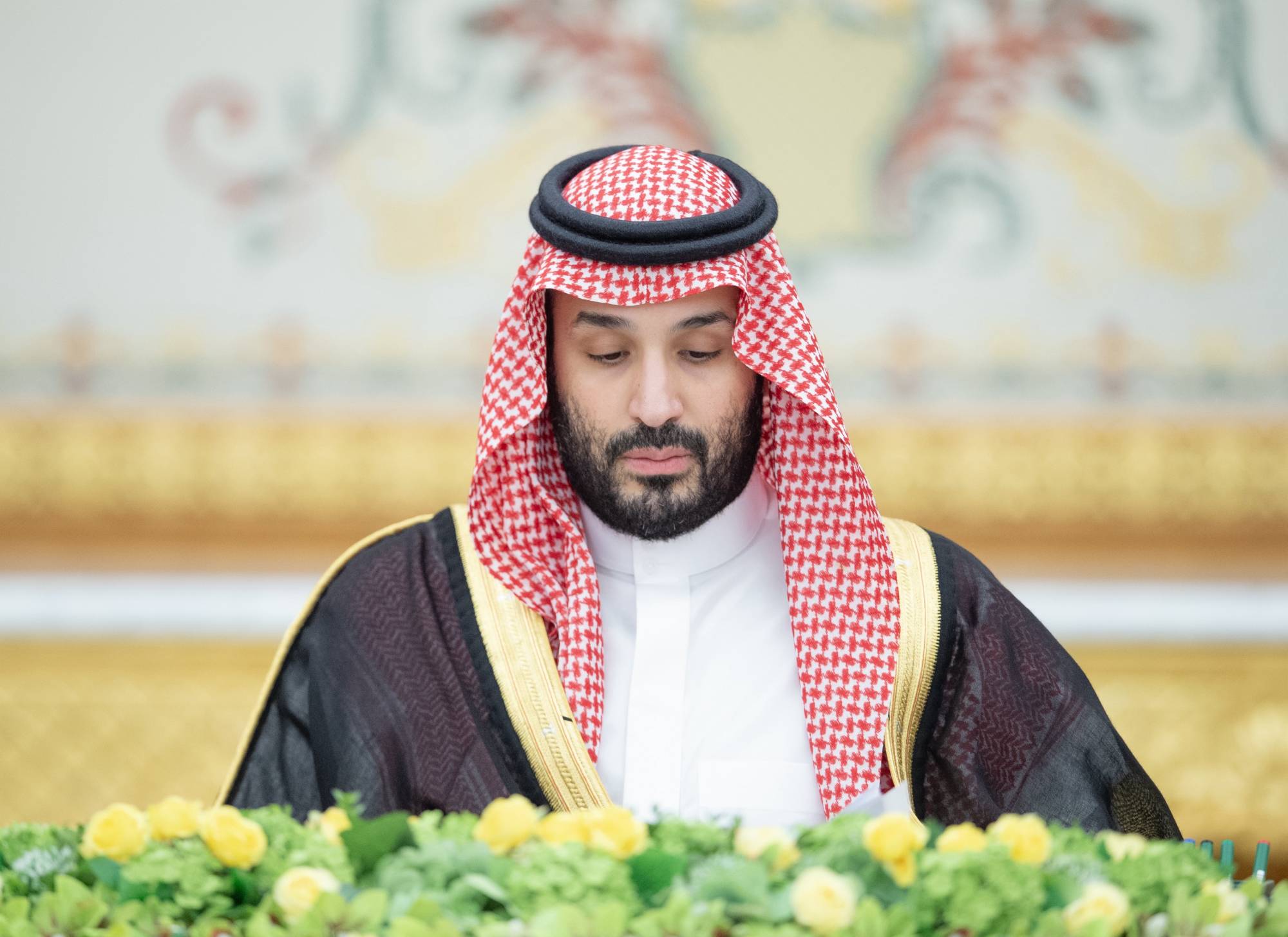
Prince Mohammed bin Salman bin Abdulaziz Al Saud, Crown Prince and Prime Minister, chairs the Cabinet meeting in Riyadh. (SPA)
TT
TT
Saudi Arabia Underscores Support for Legitimate Yemeni Govt to End Houthi Coup
Prince Mohammed bin Salman bin Abdulaziz Al Saud, Crown Prince and Prime Minister, chairs the Cabinet meeting in Riyadh. (SPA)
The Saudi government underlined on Tuesday its absolute support for the Yemeni Presidential Leadership Council, legitimate government and people in ending the coup by the Iran-backed terrorist Houthi militia and reclaiming the state and its institutions.
Prince Mohammed bin Salman bin Abdulaziz Al Saud, Crown Prince and Prime Minister, chaired the Cabinet meeting held in Riyadh.
The Houthi militia “has chosen military escalation as an alternative approach to peace, further deepening the humanitarian and economic suffering of Yemen and its brotherly people, while continuing to threaten the region and maritime navigation in the southern Red Sea and the Bab al-Mandeb Strait,” added the government.
The Cabinet commended the outcomes of the emergency meeting of the Strategic-Political and Defense Committee of the Makkah Alliance for Defense. The meeting underlined solidarity among Saudi Arabia, Pakistan and Türkiye and their unified stance in confronting the criminal attacks against the Kingdom that targeted Makkah, Madinah, civilian objects, and civil and economic facilities.
The meeting also resulted in an agreement to activate collective deterrence and immediately move toward the practical implementation of mutual defense commitments, in a manner that boosts military readiness, integration, and the capability to confront such threats.
The Crown Prince briefed the Cabinet on his meeting with Syrian President Ahmad Al-Sharaa that covered the prospects of relations and areas of cooperation between their countries.
The Cabinet highly praised the annual royal address of Custodian of the Two Holy Mosques King Salman bin Abdulaziz Al Saud at the opening of the third year of the ninth session of the Shura Council. The address highlighted the state’s enduring principles and foundations, the key achievements of Saudi Vision 2030, the gains of developmental reforms and economic momentum, as well as the foundations of foreign policy and its steadfast positions, which have strengthened the Kingdom’s regional and international standing.
Prince Mohammed bin Salman bin Abdulaziz Al Saud, Crown Prince and Prime Minister, at the Cabinet meeting on Tuesday. (SPA)
The Cabinet expressed its appreciation for the role of the Shura Council in supporting the Kingdom’s comprehensive development journey, enhancing integration and coordination with government entities, contributing to the development of the legislative and regulatory framework, and raising the level of performance efficiency.
It affirmed that the aspirations of citizens and the interests of the nation will always remain at the forefront of the work of state institutions, guiding and informing their decisions and strategic directions.
The Cabinet viewed the preliminary state budget estimates for the coming fiscal year as confirmation of the strength of the Kingdom’s economy and its resilience in responding to global changes and developments through proactive policies. These policies help meet national targets and sustain spending on services and on development and social priorities while maintaining fiscal sustainability.
The Cabinet reviewed several reports on international conferences hosted by the Kingdom, commending the work of the Global CSR Forum, held under the patronage of King Salman. It also hailed the launch of initiatives during the forum’s second edition.
The initiatives will help put partnerships with social and developmental impact into action and expand sustainable institutional support in this field, supporting national objectives and advancing comprehensive development.
Saudi FM Discusses Regional Developments with Egyptian, Jordanian Counterpartshttps://english.aawsat.com/gulf/5326780-saudi-fm-discusses-regional-developments-egyptian-jordanian-counterparts
Saudi Foreign Minister Prince Faisal bin Farhan bin Abdullah looks on alongside US Secretary of State Marco Rubio as they pose for photos before a meeting at the US State Department on September 28, 2026 in Washington, DC. (Getty Images/AFP)
TT
TT
Saudi FM Discusses Regional Developments with Egyptian, Jordanian Counterparts
Saudi Foreign Minister Prince Faisal bin Farhan bin Abdullah looks on alongside US Secretary of State Marco Rubio as they pose for photos before a meeting at the US State Department on September 28, 2026 in Washington, DC. (Getty Images/AFP)
Saudi Minister of Foreign Affairs Prince Faisal bin Farhan bin Abdullah held on Tuesday separate telephone talks on regional developments with his counterpart from Egypt, Dr. Badr Abdelatty, and Jordan, Ayman Safadi.
Abdelatty reiterated his country’s condemnation of all attacks targeting the Kingdom, underscoring Egypt’s full support for the Kingdom’s security and stability.
The two ministers stressed the need to safeguard the security of maritime routes and freedom of navigation, particularly in the Red Sea and the Bab al-Mandeb Strait.
They reaffirmed their countries’ steadfast support for Sudan’s unity and sovereignty and the preservation of its national institutions, in a manner that safeguards its security and stability and fulfills the aspirations of the Sudanese people.
They also reviewed the fraternal and strategic relations between their countries and ways to boost bilateral cooperation across various fields.
Safadi, for his part, expressed Jordan’s condemnation of the “brutal attacks by the Houthi militia targeting areas in the Kingdom, including attempts to target Makkah and Madinah, as well as civilian and economic facilities.”
He underlined Jordan’s solidarity with Saudi Arabia and its full support for all measures it takes to safeguard its security, stability, and territorial integrity.
Prince Faisal and Safadi discussed the deep-rooted fraternal relations between the two Kingdoms and the latest regional developments.
They stressed the importance of continued coordination and consultation between their countries to support and strengthen joint efforts to achieve security and stability in the region.
Coalition: Ballistic Missile Launched by Terrorist Houthis at Khamis Mushait Destroyedhttps://english.aawsat.com/gulf/5326777-coalition-ballistic-missile-launched-terrorist-houthis-khamis-mushait-destroyed
Coalition official Spokesperson Major General Turki Al-Malki. (Asharq Al-Awsat)
TT
TT
Coalition: Ballistic Missile Launched by Terrorist Houthis at Khamis Mushait Destroyed
Coalition official Spokesperson Major General Turki Al-Malki. (Asharq Al-Awsat)
The Coalition to Restore Legitimacy in Yemen intercepted and destroyed a ballistic missile fired by the Iran-backed terrorist Houthi militia towards Saudi Arabia.
Coalition official Spokesperson Major General Turki Al-Malki said the missile was fired at Khamis Mushait.
لم تشترك بعد
انشئ حساباً خاصاً بك لتحصل على أخبار مخصصة لك ولتتمتع بخاصية حفظ المقالات وتتلقى نشراتنا البريدية المتنوعة