Bahrain Says Iran Targeted Air Navigation Systems, Traffic Unaffected

Smoke rises after a drone was intercepted during early morning hours in Manama, Bahrain, July 14, 2026. (Reuters)
TT

Bahrain Says Iran Targeted Air Navigation Systems, Traffic Unaffected

Smoke rises after a drone was intercepted during early morning hours in Manama, Bahrain, July 14, 2026. (Reuters)

Bahrain said Iranian drones targeted its air navigation systems on Monday, though traffic remained unaffected, while Kuwait also reported attacks as the United States and Iran traded strikes.

A shaky US-Iran ceasefire has all but collapsed as Iran began attacking vessels using an Omani route in the Strait of Hormuz.

In response, the US has attacked Iran, which has responded with strikes on the Gulf and other Arab countries.

"As a result of a hostile Iranian act of aggression against the Kingdom of Bahrain, civil air navigation systems... were targeted by hostile drones," Bahrain's aviation authority said.

"However, air navigation operations remained unaffected," it added.

Bahrain's military had said in the morning that it "intercepted and destroyed a number of Iranian aerial attacks".

Bahrain’s Foreign Ministry strongly condemned the repeated Iranian attacks targeting the kingdom's civilian and vital facilities with missiles and drones.

It slammed them as a "blatant violation of Bahrain’s sovereignty, security, and stability, a direct threat to civilians, and a breach of international law, international humanitarian law, the UN Charter, principles of good neighborliness, and international legitimacy resolutions."

The ministry also condemned the targeting of civilian air navigation systems, saying that it poses a "serious threat to the safety of international civil aviation, as well as the lives of passengers and flight crews."

The attack violates the Chicago Convention on International Civil Aviation and resolutions of the International Civil Aviation Organization (ICAO), it added, calling it a "grave breach of international customs and pacts that prohibit targeting civilian facilities."

The ministry underscored the kingdom’s right to take all legitimate measures to protect its sovereignty, security and stability and defend its territories and vital facilities in line with the UN Charter and international laws.

The General Command of the Bahrain Defense Force said all military branches and units are at the highest state of readiness and fully prepared to defend the kingdom.

It urged citizens and residents to avoid approaching any foreign or suspicious objects that could be remnants of the attacks, and to report them immediately.

Kuwait's military also said on Monday it was responding to renewed missile and drone salvos.

"Kuwaiti air defenses are currently confronting hostile missile and drone attacks," the army said in a statement blaming Iran.

Both Kuwait and Bahrain have borne the brunt of attacks by Iran on its Gulf neighbors since hostilities resumed this month.

Bahrain has accused Iran of targeting civilians, while Kuwait has reported Iranian attacks on water and electricity plants as well as oil facilities.


Riyadh Reiterates Need for Immediate End to Threats to Bab al-Mandeb, Hormuz Straits

Prince Mohammed bin Salman bin Abdulaziz Al Saud, Crown Prince and Prime Minister, chairs the Cabinet meeting in Riyadh. (SPA)
TT

Riyadh Reiterates Need for Immediate End to Threats to Bab al-Mandeb, Hormuz Straits

Prince Mohammed bin Salman bin Abdulaziz Al Saud, Crown Prince and Prime Minister, chairs the Cabinet meeting in Riyadh. (SPA)

The Saudi government reiterated on Tuesday the Kingdom’s support for efforts to achieve regional and international security and stability and to combat terrorist and its criminal militias.

Prince Mohammed bin Salman bin Abdulaziz Al Saud, Crown Prince and Prime Minister, chaired the Cabinet meeting that was held in Riyadh.

The government also underlined the need for an immediate end to all acts that threaten the security of navigation in the Red Sea and Bab al-Mandeb and Hormuz Straits.

At the outset of the session, the Crown Prince briefed the Cabinet on the outcomes of his talks with Bahrain’s King Hamad bin Isa Al Khalifa and Syrian President Ahmed al-Sharaa. He also briefed it on the message he received from Sierra Leone’s President Dr. Julius Maada Bio and on his phone calls with Canada’s Prime Minister Mark Carney and Greek PM Kyriakos Mitsotakis.

The talks covered Saudi Arabia’s bilateral relations with their countries and ways to strengthen them, and underscored the importance of continued coordination on regional and international issues of mutual interest.

The Cabinet welcomed the signing of the General Agreement on the GCC Railway Project to connect the member states of the Gulf Cooperation Council (GCC).

It commended ongoing efforts to advance strategic cooperation and economic and development integration and to continue implementing the Custodian of the Two Holy Mosques’ vision for strengthening joint GCC action, achieving shared objectives, and meeting the aspirations of the peoples of the GCC countries.

It praised the address of Custodian of the Two Holy Mosques King Salman bin Abdulaziz Al Saud at the opening of the sixth Hajj Conference and Exhibition. The address highlighted Saudi Arabia’s efforts to serve the Two Holy Mosques and pilgrims and its continued commitment to improving Hajj services by adopting the latest technologies and strengthening coordination among government agencies.

It also highlighted the expansion of the Direct Hajj Program to serve 133 countries and the announcement of new agreements and partnerships to make pilgrims’ journeys easier from their departure from their home countries until their return.

The Cabinet reviewed the overall performance of national sectors and systems in implementing strategies, programs, projects, and initiatives, and the progress achieved in development and prosperity indicators.

It hailed government agencies on winning dozens of international and regional awards across various fields, including health, infrastructure, digital government, and technological innovation, reflecting the state’s support and its commitment to providing these and other entities with every enabler to sustain leadership and excellence and achieve the targets of Saudi Vision 2030.


Saudi Arabia, Bahrain Discuss Efforts to Bolster Regional Security, Stability

Prince Mohammed bin Salman, Crown Prince and Prime Minister, and Bahrain’s King Hamad bin Isa Al Khalifa meet in Riyadh on Tuesday. (SPA)
TT

Saudi Arabia, Bahrain Discuss Efforts to Bolster Regional Security, Stability

Prince Mohammed bin Salman, Crown Prince and Prime Minister, and Bahrain’s King Hamad bin Isa Al Khalifa meet in Riyadh on Tuesday. (SPA)

Prince Mohammed bin Salman, Crown Prince and Prime Minister, held talks in Riyadh on Tuesday with Bahrain’s King Hamad bin Isa Al Khalifa. 

The talks focused on the latest regional developments and efforts exerted towards them to bolster stability and security. 

King Hamad had arrived in the Saudi capital earlier on Tuesday. He was welcomed at King Khalid International Airport by the Crown Prince. 

The talks between the two leaders also tackled the historic ties between their countries and aspects of cooperation and means to bolster and develop them. 

Crown Prince Mohammed underscored the Kingdom’s keenness on deepening the close fraternal relations with Bahrain in all fields. 

For his part, King Hamad hailed the efforts by Custodian of the Two Holy Mosques King Salman bin Abdulaziz and Crown Prince Mohammed to strengthen ties between their countries. 

He also praised the honorable historic Saudi stances taken towards Bahrain and its people on all occasions. 

He expressed his appreciation for the Saudi leadership’s efforts in developing collective Gulf work and its pioneering role in supporting the pillars of security, peace and stability in the region. 


What Does the Approval of an Advanced Command for the Unified Military Command in Kuwait Signify?

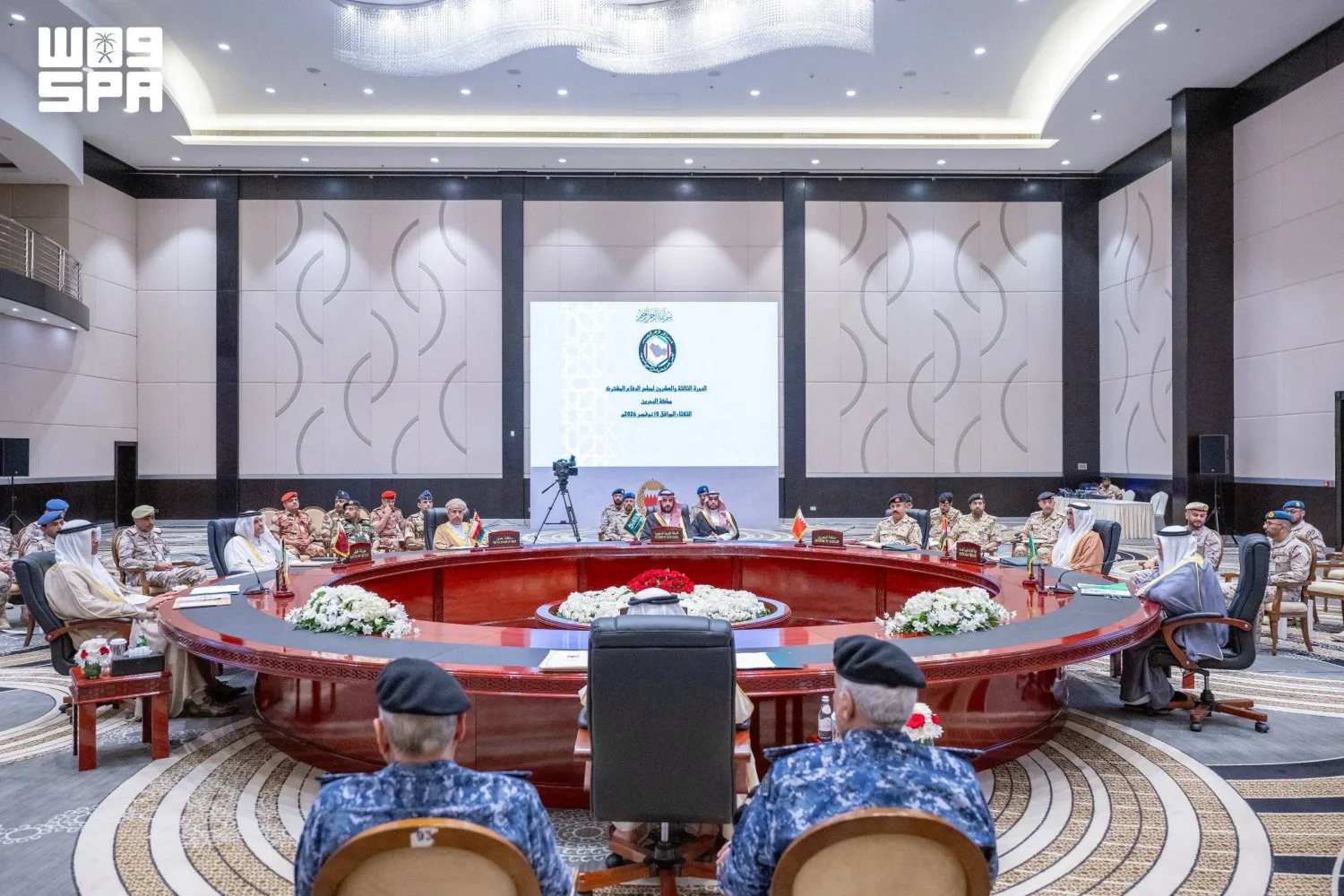
Saudi Defense Minister Prince Khalid bin Salman attends the 23rd meeting of the GCC's Joint Defense Council in Manama, Bahrain, November 10, 2026. (SPA)
TT

What Does the Approval of an Advanced Command for the Unified Military Command in Kuwait Signify?

Saudi Defense Minister Prince Khalid bin Salman attends the 23rd meeting of the GCC's Joint Defense Council in Manama, Bahrain, November 10, 2026. (SPA)

GCC defense ministers on Tuesday approved the launch of an advanced command for the Unified Military Command in Kuwait and allocated appropriate forces to it.

The ministers met at the 23rd session of the GCC Joint Defense Council in Manama, chaired by Bahrain's Minister of Defense Affairs and current session president, Lieutenant General Abdullah bin Hassan Al-Nuaimi.

Analysts and observers speaking to Asharq Al-Awsat viewed the step as a significant move toward strengthening joint Gulf security.

Political researcher Dr. Ayed Al-Manna said the announcement was a step that is both necessary and urgent to guarantee collective Gulf security through the presence of forces tasked with protecting GCC states, independent of any internal disputes or differences.

Al-Manna told Asharq Al-Awsat that unprovoked Iranian attacks against GCC states underscored the critical need for constant, comprehensive readiness to deter external aggression.

The Gulf faces multiple threats, led primarily by the Iranian axis and its regional proxies, including militias in Iraq, the Houthis in Yemen, and Hezbollah in Lebanon.

However, Al-Manna added that the security challenges extend beyond this, pointing to threats stemming from Israel and concerns surrounding the "Greater Israel" project.

He noted that the lack of stability in several regional countries and “ambitions” of targeting the Gulf, makes it imperative to boost military readiness and activate the unified Gulf force.

This step should have been taken a long time ago to bolster the security of all GCC states, he remarked.

He underscored the importance of equipping Gulf forces with the necessary military components and capabilities to enable them to deter and respond to any external aggression, meeting the collective security requirements of the council's member states.

Former Saudi officer Abdullatif Al Mulhem told Asharq Al-Awsat that establishing the Unified Military Command is a vital step in advancing joint Gulf military cooperation.

It is essential given the region's current security developments, which demand heightened coordination and readiness among the armed forces of the Gulf countries, he said.

Al Mulhem explained that the military significance of the decision lies in the GCC states strengthening the organizational structure of joint military action through an advanced command. This step is expected to boost coordination among Gulf forces and bolster their capacity to handle shared challenges and threats.

Saudi Arabia is expected to host the upcoming meeting of the Joint Defense Council as announced by Defense Minister Prince Khalid bin Salman at the Manama meeting.