



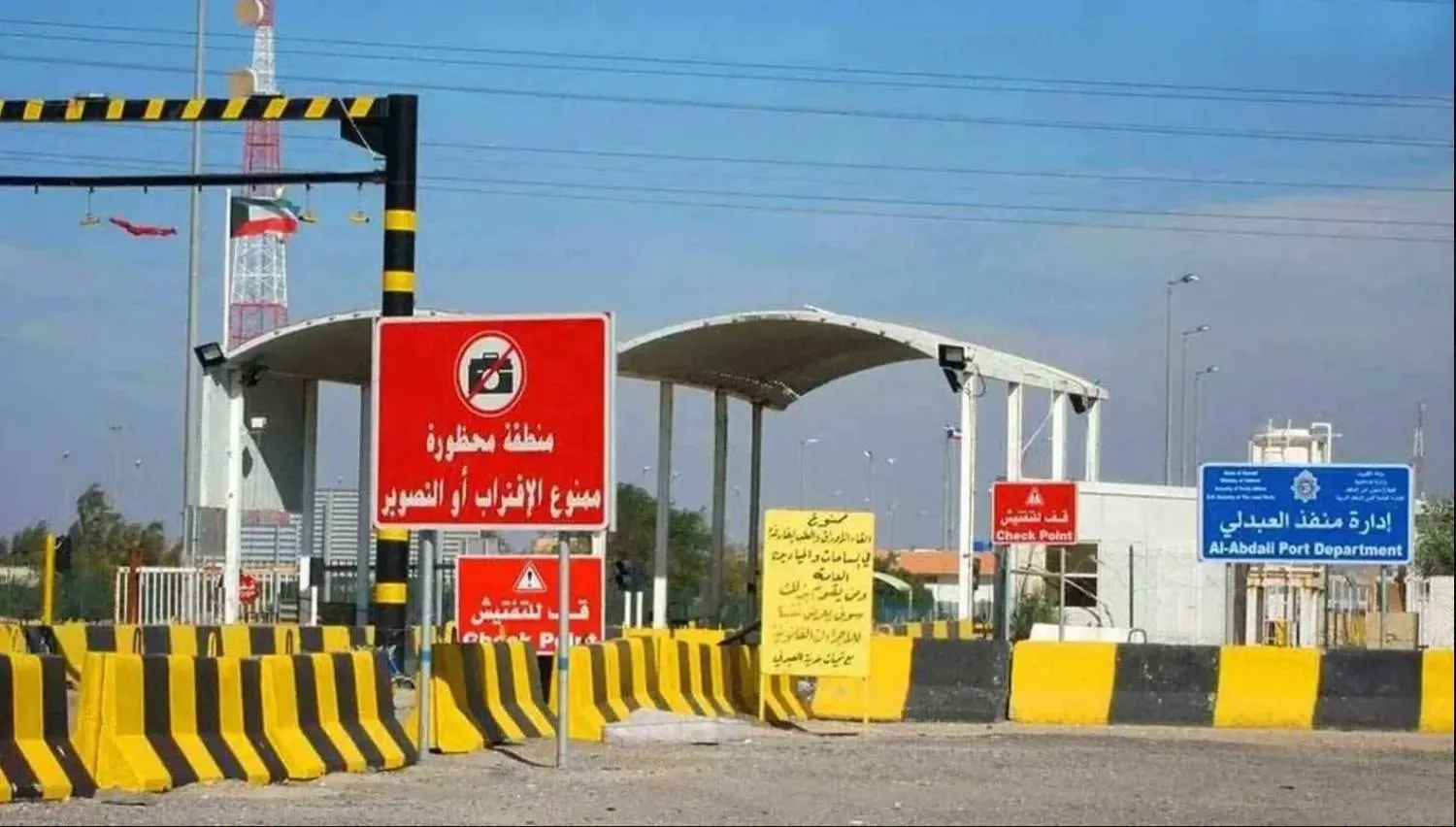

Kuwaiti Interior Minister Fahad Yusuf Saud Al-Sabah said on Saturday that relations with Iraq remained “deep-rooted” despite ongoing challenges, pledging to confront any “attempts to sow discord” between the two peoples.
He also said the Abdali border crossing would resume normal operations within 48 hours.
The Kuwaiti minister made the remarks during a visit to Iraq’s southern Basra province, days after security incidents along the border and rising tensions raised concerns about the future of cooperation between the two countries.
Speaking at a joint news conference with Basra Governor Asaad al-Eidani at the Safwan border crossing, following a high-level security and government reception for the Kuwaiti delegation, Al-Sabah said Kuwaiti-Iraqi relations were “firmly established, regardless of the challenges facing the two countries.”
He added that both sides were determined to “confront any attempts to sow discord between the two brotherly peoples.”
“The relationship that binds us to Iraq and to my brother, the governor of Basra, goes beyond friendship to a deeply rooted brotherhood. Whatever happens, we will remain brothers,” Al-Sabah said, adding that reciprocal official visits “will continue and this will not be the last.”
The Kuwaiti minister said relations between Iraq and Kuwait “will remain a source of concern for Iran because we will always work to keep Iran concerned.”
“To anyone attempting to divide the two countries, we say that discord will be buried at birth,” he added.
On security matters, Al-Sabah said he would personally follow up on an attack on the Abdali border crossing two days earlier, when it was targeted by drones. He said the crossing “will resume normal operations within the next 48 hours.”
“We will fight forcefully against anyone who seeks harm for Kuwait and Iraq,” he said, stressing that any attempt to disrupt travel or trade between the two countries was “destined to fail” and that cross-border and commercial movement would continue normally.
‘Complex circumstances’
For his part, Eidani said the visit reflected the level of coordination between Baghdad and Kuwait and was intended to “convey messages of brotherhood between Iraq and the Gulf states through the State of Kuwait.”
He said the region was facing complex security conditions caused by wars that had harmed countries not involved in them, adding that Iraq and Kuwait had both been affected by the repercussions.
Eidani said “irresponsible actions” that might occur from time to time did not reflect the nature of relations between the two countries. He added that their fraternal ties and coordination between the two governments were sufficient to contain such incidents and safeguard regional security and stability.
The Kuwaiti interior minister’s visit to Basra followed hostile attacks against Gulf Arab states, the latest of which targeted Kuwait near the Abdali border crossing with Iraq, prompting widespread condemnation and anger.
On Thursday, Gulf states and Jordan said in a joint statement that they were united in condemning attacks by Iran and its proxies on their territories. The statement cited positions adopted by Gulf and Arab ministerial councils, international law and United Nations Security Council Resolution 2817 (2026).
Meanwhile, Baghdad and Kuwait have sought to contain the fallout from a series of security incidents, including the attack near the Abdali crossing and the killing of an Iraqi fisherman and the wounding of others by Kuwaiti coastguard fire.
The incidents prompted officials in both countries to intensify contacts to prevent tensions from escalating.
Faction denies involvement
In a related development, Abu Mahdi al-Jaafari, the military spokesperson for Saraya Awliya al-Dam, denied on Saturday media reports that the faction had been involved in attacks targeting Erbil or Kuwait in recent days.
Al-Jaafari said in a statement that the group’s fighters “did not carry out any military operation against Erbil, Kuwait or any other location in recent days.”
He said reports circulated by some media outlets were “completely baseless and unsupported by any evidence.”
“Promoting such allegations serves agendas aimed at confusing the situation and creating unrest,” he said.
Al-Jaafari said the faction was “not affiliated with any other party or entity, does not serve as a front for any side and acts only in accordance with its religious, national and humanitarian obligations.”
He described recent reports and studies examining the faction’s activities as “conclusions that lack accuracy and objectivity and reflect a limited understanding of the reality on the ground.”
His comments came in response to media reports saying that a faction bearing the name Awliya al-Dam had previously claimed attacks on sites in Jordan, Kuwait and Saudi Arabia, which it said were carried out on the grounds that the sites housed US bases.


