
Gulf, Arab States Condemn Attempted Drone Attack against Saudi Arabia

General view of Riyadh, Saudi Arabia. (SPA)
TT

Gulf, Arab States Condemn Attempted Drone Attack against Saudi Arabia

General view of Riyadh, Saudi Arabia. (SPA)

Bahrain, Palestine, Syria, Pakistan, Oman, Qatar and the United Arab Emirates have strongly condemned on Tuesday the attempted terrorist drone attack targeting oil facilities in Saudi Arabia's Eastern Province and the Riyadh region. 

The attack was launched from Iraqi territory and carried out by Iran-backed terrorist militias, the Bahraini Ministry of Foreign Affairs said in a statement. 

The attack is a “flagrant violation of international law and the Charter of the United Nations, a blatant challenge to United Nations Security Council Resolution 2817, a threat to regional security, stability and energy supplies, and a systematic attempt to undermine de-escalation efforts.” 

The ministry underscored Bahrain's “full solidarity with Saudi Arabia and its full support for the measures it takes to protect its sovereignty, security and stability and defend its territory and civilian and vital facilities, in accordance with Article 51 of the Charter of the United Nations, international law and the Joint Defense Agreement of the Gulf Cooperation Council (GCC).” 

It reiterated Bahrain's support “for any response Saudi Arabia decides to take against those responsible for the attack, based on the deep-rooted and longstanding ties between the two countries and peoples.” 

It stressed that the security and stability of Saudi Arabia “are an integral part of the national security of Bahrain, and that any threat to them undermines the security of the entire region and the interests of its peoples.” 

It commended the efficiency and vigilance of the Saudi air defenses in detecting, intercepting and destroying the drones before they reached their targets, preventing any damage and safeguarding civilians and national assets. 

Bahrain highlighted Saudi Arabia's “longstanding support for Iraq, describing the launch of the attacks from Iraqi territory as particularly reprehensible and placing greater responsibility on the Iraqi government to prevent such attacks.” 

The ministry stressed the GCC's call for the implementation of the Iraqi government's decision to restrict weapons to state control within the announced timeframe. 

It called for “all necessary and decisive measures to prevent Iraqi territory from being used as a launchpad for attacks against countries in the region and to stop Iran-backed armed factions and militias from continuing their attacks.” 

It urged Iran to “cease supporting those militias and immediately end its hostile approach.” 

The ministry reiterated Bahrain's call on the international community, particularly the UN Security Council, to fulfil its responsibilities and enforce its previous resolutions, foremost Resolution 2817, by adopting an urgent resolution demanding an end to the unjustified terrorist attacks carried out by Iran and its proxies against the region, and holding them fully legally and financially accountable under international law and relevant international resolutions. 

The Palestinian presidency and the foreign ministries of Pakistan, Syria, Oman, Qatar and the UAE issued similar statements condemning the provocative attacks and reaffirming solidarity with Saudi Arabia. 


Saudi Arabia Urges Unified Global Efforts Toward Two-State Solution

Saudi Arabia’s Permanent Representative to the League of Arab States Ambassador Abdulaziz Al-Matar delivered the remarks in the Kingdom’s address at a ceremony organized by the league to mark the International Day of Solidarity with the Palestinian People. SPA
TT

Saudi Arabia Urges Unified Global Efforts Toward Two-State Solution

Saudi Arabia’s Permanent Representative to the League of Arab States Ambassador Abdulaziz Al-Matar delivered the remarks in the Kingdom’s address at a ceremony organized by the league to mark the International Day of Solidarity with the Palestinian People. SPA

Saudi Arabia on Sunday reaffirmed its continued support for the Palestinian government to strengthen its ability to remain operational and fulfill its commitments to the Palestinian people.

The Kingdom also stressed that establishing an independent, sovereign, viable, and geographically contiguous Palestinian state along the June 4, 1967 borders, with East Jerusalem as its capital, constitutes the core of the two-state solution and represents a realistic path toward achieving a just and lasting peace in the region.

Saudi Arabia’s Permanent Representative to the League of Arab States Ambassador Abdulaziz Al-Matar delivered the remarks in the Kingdom’s address at a ceremony organized by the league to mark the International Day of Solidarity with the Palestinian People.

He stressed that solidarity with the Palestinian people must translate into an effective political stance, a shared international will, and practical steps to end the occupation and safeguard their rights.

He also reiterated Saudi Arabia’s firm and longstanding support for the Palestinian cause and the need for a solution that ensures justice for the Palestinian people and security and stability for all peoples of the region.

Al-Matar emphasized that the Arab Peace Initiative has established a clear and comprehensive framework for achieving peace in the region based on land for peace, the two-state solution, mutual security, and shared prosperity.

He added that the New York Declaration reflected a historic international consensus on the need to end the occupation and establish an independent Palestinian state.

He noted that Saudi Arabia, in partnership with the European Union and Norway, launched the Global Alliance for the Implementation of the Two-State Solution, underscoring the importance of mobilizing efforts and coordinating international action to achieve peace.

The ambassador said the New York Declaration, US President Donald Trump’s Comprehensive Plan, UN Security Council Resolution 2803, and the Global Alliance for the Implementation of the Two-State Solution represent complementary tracks.

He stressed that their success requires unified international efforts and follow-up on commitments to consolidate the ceasefire, ensure the unimpeded delivery of humanitarian aid, and link transitional arrangements in the Gaza Strip to the Palestinian Authority.

Al-Matar warned against the continued undermining of peace prospects through settlement expansion, annexation attempts, forced displacement, and escalating settler violence.

He stressed that the unity of the Palestinian territories is fundamental to establishing an independent and viable Palestinian state.

The ambassador underscored the need to protect the Palestinian Authority and preserve its legitimate institutions.

He reiterated Saudi Arabia’s call to halt measures that seek to weaken the authority or threaten the collapse of its institutions, pointing to the launch of the Emergency Coalition for the Financial Sustainability of the Palestinian Authority by Saudi Arabia in cooperation with its partners.

Al-Matar called on brotherly and friendly countries to join the initiative and provide sustained, coordinated financial support to strengthen institutional and financial stability and preserve the foundations of the envisioned Palestinian state.

The diplomat added that, in keeping with its responsibility and historic, steadfast positions, Saudi Arabia will continue working in coordination with brotherly countries and partners to end the suffering of the brotherly Palestinian people and enable them to secure their full legitimate rights, foremost among them the right to self-determination and the establishment of an independent, sovereign Palestinian state.


OIC Marks International Palestinian Solidarity Day, Urges Wider Recognition of State of Palestine

OIC Marks International Palestinian Solidarity Day, Urges Wider Recognition of State of Palestine
TT

OIC Marks International Palestinian Solidarity Day, Urges Wider Recognition of State of Palestine

OIC Marks International Palestinian Solidarity Day, Urges Wider Recognition of State of Palestine

The General Secretariat of the Organization of Islamic Cooperation (OIC) marked the United Nations-designated International Day of Solidarity with the Palestinian People on Sunday at its headquarters in Jeddah.

In this regard, OIC Secretary-General Ismail Ould Cheikh Ahmed praised the positions of countries that have stood on the side of truth, justice, and international legitimacy by recognizing the State of Palestine.

According to SPA, he called on other countries to follow suit, thereby reaffirming their commitment to international law and support for the Palestinian people's right to self-determination and to establish their independent, sovereign state within the borders of June 4, 1967, with Jerusalem as its capital.

He stressed the need to provide international protection for the Palestinian people in accordance with relevant UN resolutions and the Geneva Conventions, and to end Israel's impunity by activating legal accountability and justice mechanisms.

The Sec-Gen also underscored the importance of completing the implementation of the Gaza peace plan to ensure a permanent ceasefire and the opening of crossings to deliver humanitarian aid, while firmly rejecting any attempts to displace the Palestinian people from their land.

He further renewed the OIC's steadfast support for the Palestinian people's sovereignty over Jerusalem, warning of the dangers posed by repeated Israeli attacks on Al-Aqsa Mosque. He called on the international community to continue providing political, financial, and legal support to the United Nations Relief and Works Agency for Palestine Refugees in the Near East (UNRWA).


Coalition: Saudi Arabia Not Facing Depletion of Air Defense Interceptors, Aden is ‘Red Line’

Coalition Spokesperson Turki Al-Malki
TT

Coalition: Saudi Arabia Not Facing Depletion of Air Defense Interceptors, Aden is ‘Red Line’

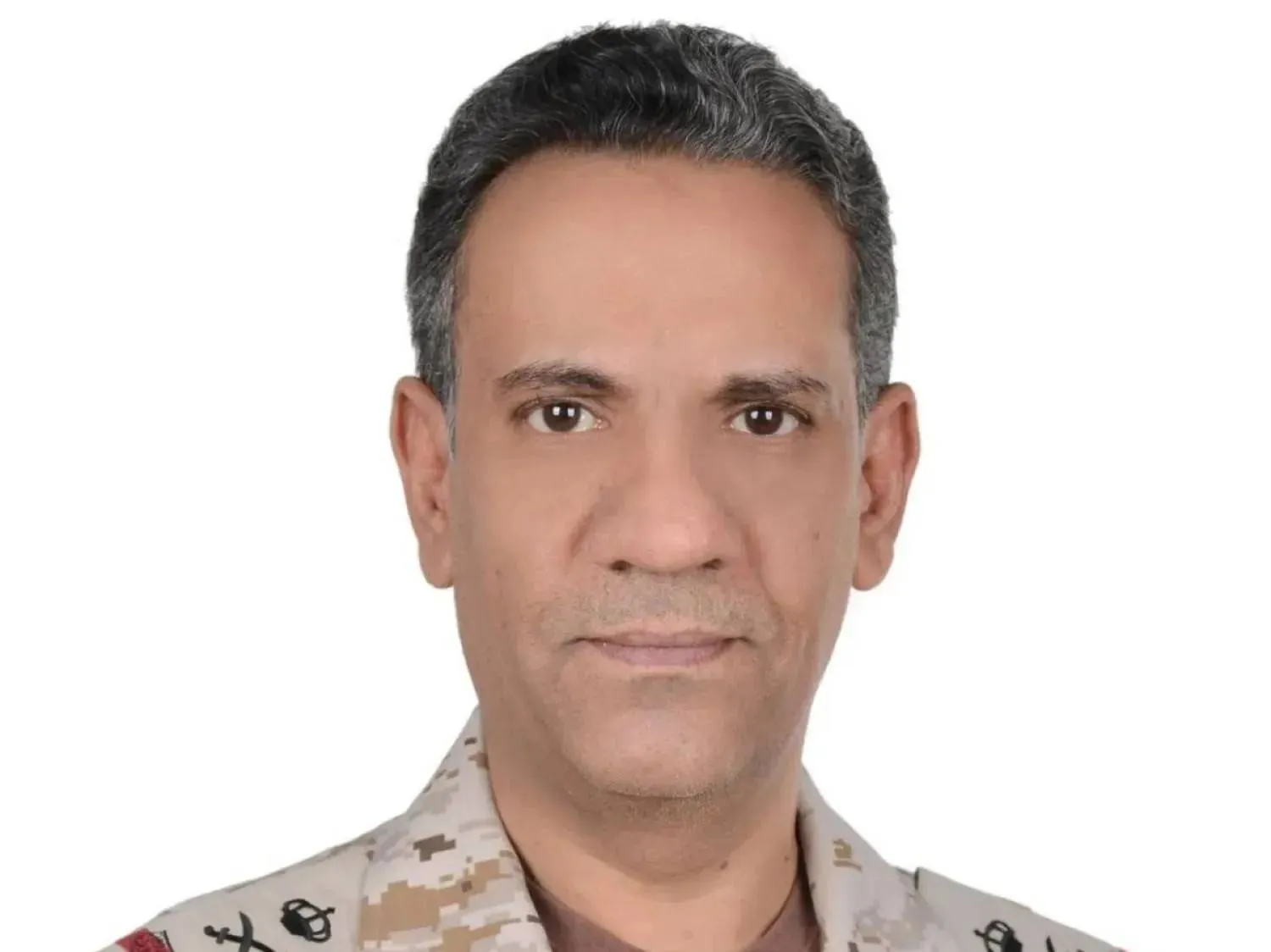
Coalition Spokesperson Turki Al-Malki

The war in Yemen could end "tomorrow" if the Houthi militias agree to a UN-backed peace plan, the Coalition to Restore Legitimacy in Yemen said Sunday, adding that Riyadh had drawn a "red line" around the Yemeni government's interim capital Aden.

Coalition Spokesperson Major General Turki Al-Malki said in an interview with Reuters that the Coalition would do "whatever it takes" to protect Aden.

"The best solution is the political solution. But we have to support the Yemeni government to achieve their objective," Al-Malki said.

"If the Houthis decided to go for the roadmap with the Yemeni government, the war can end... tomorrow," he said, referring to a UN-backed peace plan.

Until then, Al-Malki said, the Coalition will rely on military force to impose costs on the group and compel a change in behavior, providing continuous, 24-hour close air support to Yemeni units on the ground and degrading Houthi capabilities to menace Saudi cities, he said.

"We are achieving the objective to dismantle and to destroy the TBMs (theater ballistic missiles) and also the launchers and some of the components of the ballistic missiles and UAVs," he said.

Al-Malki stated that the Yemeni government forces possess the necessary numbers, tribal support, and military capability.

He also said the Yemeni government acknowledged "some gaps happened two times in the last three months" on the battlefield, expressing hope that the Yemeni army will "put things together."

Al-Malki told Reuters that Saudi Arabia was not facing a depletion of its air defense interceptor stockpiles.

"I assure (you) that we have the capability to defend our country."

"What the Houthi is doing is (not) a military operation. He's doing a terror act against, you know, civilians and civilian objects," Al-Malki added.