Gulf, Arab States Condemn Attempted Drone Attack against Saudi Arabia https://english.aawsat.com/gulf/5300721-gulf-arab-states-condemn-attempted-drone-attack-against-saudi-arabia
Gulf, Arab States Condemn Attempted Drone Attack against Saudi Arabia
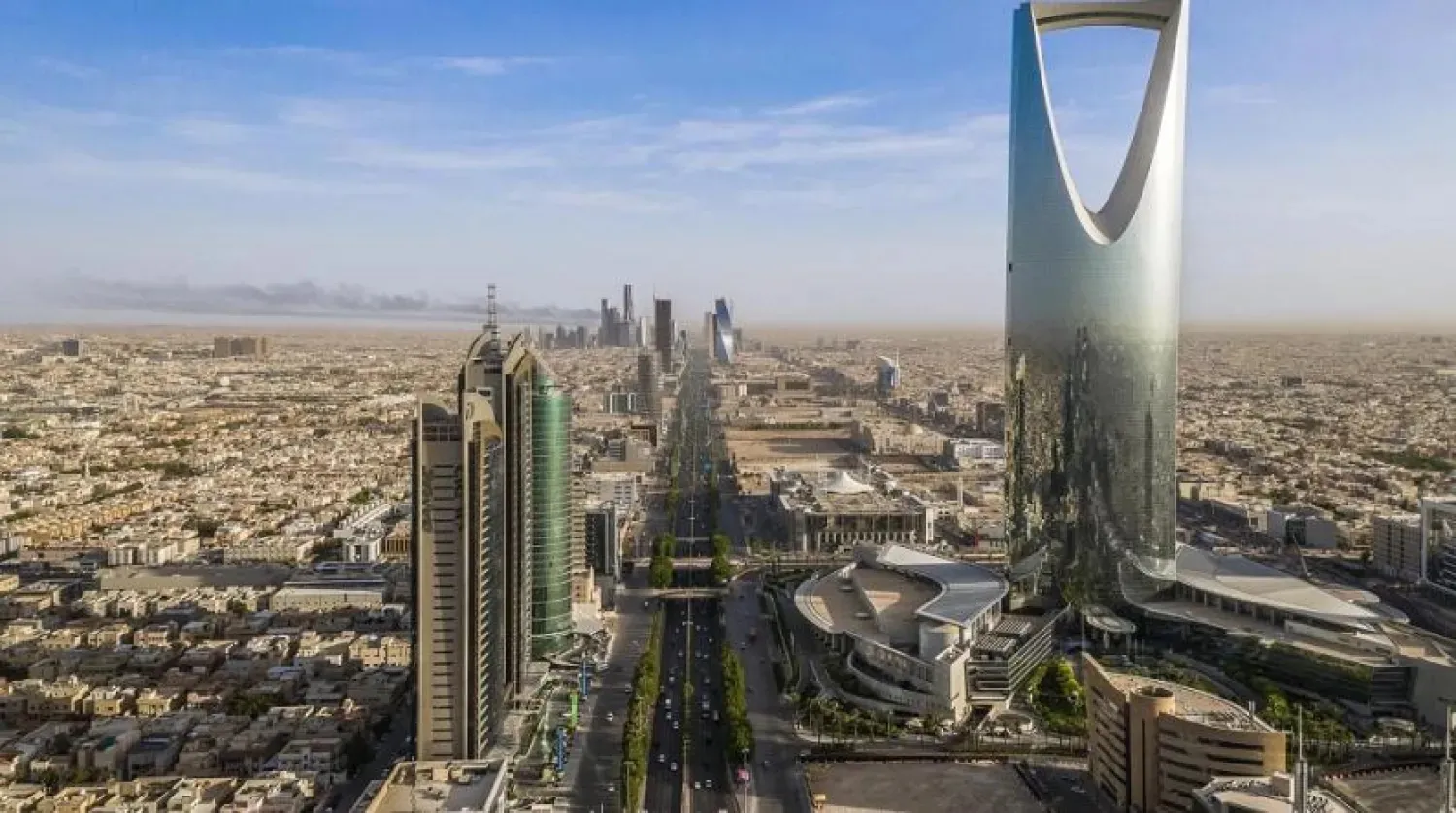
General view of Riyadh, Saudi Arabia. (SPA)
TT
TT
Gulf, Arab States Condemn Attempted Drone Attack against Saudi Arabia
General view of Riyadh, Saudi Arabia. (SPA)
Bahrain, Palestine, Syria, Pakistan, Oman, Qatar and the United Arab Emirates have strongly condemned on Tuesday the attempted terrorist drone attack targeting oil facilities in Saudi Arabia's Eastern Province and the Riyadh region.
The attack was launched from Iraqi territory and carried out by Iran-backed terrorist militias, the Bahraini Ministry of Foreign Affairs said in a statement.
The attack is a “flagrant violation of international law and the Charter of the United Nations, a blatant challenge to United Nations Security Council Resolution 2817, a threat to regional security, stability and energy supplies, and a systematic attempt to undermine de-escalation efforts.”
The ministry underscored Bahrain's “full solidarity with Saudi Arabia and its full support for the measures it takes to protect its sovereignty, security and stability and defend its territory and civilian and vital facilities, in accordance with Article 51 of the Charter of the United Nations, international law and the Joint Defense Agreement of the Gulf Cooperation Council (GCC).”
It reiterated Bahrain's support “for any response Saudi Arabia decides to take against those responsible for the attack, based on the deep-rooted and longstanding ties between the two countries and peoples.”
It stressed that the security and stability of Saudi Arabia “are an integral part of the national security of Bahrain, and that any threat to them undermines the security of the entire region and the interests of its peoples.”
It commended the efficiency and vigilance of the Saudi air defenses in detecting, intercepting and destroying the drones before they reached their targets, preventing any damage and safeguarding civilians and national assets.
Bahrain highlighted Saudi Arabia's “longstanding support for Iraq, describing the launch of the attacks from Iraqi territory as particularly reprehensible and placing greater responsibility on the Iraqi government to prevent such attacks.”
The ministry stressed the GCC's call for the implementation of the Iraqi government's decision to restrict weapons to state control within the announced timeframe.
It called for “all necessary and decisive measures to prevent Iraqi territory from being used as a launchpad for attacks against countries in the region and to stop Iran-backed armed factions and militias from continuing their attacks.”
It urged Iran to “cease supporting those militias and immediately end its hostile approach.”
The ministry reiterated Bahrain's call on the international community, particularly the UN Security Council, to fulfil its responsibilities and enforce its previous resolutions, foremost Resolution 2817, by adopting an urgent resolution demanding an end to the unjustified terrorist attacks carried out by Iran and its proxies against the region, and holding them fully legally and financially accountable under international law and relevant international resolutions.
The Palestinian presidency and the foreign ministries of Pakistan, Syria, Oman, Qatar and the UAE issued similar statements condemning the provocative attacks and reaffirming solidarity with Saudi Arabia.
Qatar Affirms Full Solidarity with Saudi Arabia, Supports De-escalation Effortshttps://english.aawsat.com/gulf/5333800-qatar-affirms-full-solidarity-saudi-arabia-supports-de-escalation-efforts
Qatar Affirms Full Solidarity with Saudi Arabia, Supports De-escalation Efforts
(L) Qatari Prime Minister and Foreign Minister Sheikh Mohammed bin Abdulrahman Al Thani, (R) Saudi Foreign Minister Prince Faisal bin Farhan.
Qatar reaffirmed its full solidarity with Saudi Arabia, expressing support for all legitimate measures Riyadh takes to protect its sovereignty, security, territorial integrity and interests.
It stressed that Saudi Arabia’s security is inseparable from Qatar’s and forms an integral part of the collective security of Gulf Cooperation Council (GCC) states.
This was discussed during a phone call between Qatari Prime Minister and Foreign Minister Sheikh Mohammed bin Abdulrahman Al Thani and Saudi Foreign Minister Prince Faisal bin Farhan.
The two officials reviewed bilateral relations and ways to strengthen cooperation, as well as the latest regional developments, particularly diplomatic efforts and coordination to de-escalate tensions and promote regional security and stability.
Sheikh Mohammed reaffirmed Qatar’s full support for all efforts to defuse tensions and reach a comprehensive agreement that would achieve lasting peace in the region.
Khalid bin Salman Leads Saudi Delegation at Meeting of Makkah Defense Pact Countries in Tehranhttps://english.aawsat.com/gulf/5333699-khalid-bin-salman-leads-saudi-delegation-meeting-makkah-defense-pact-countries-tehran
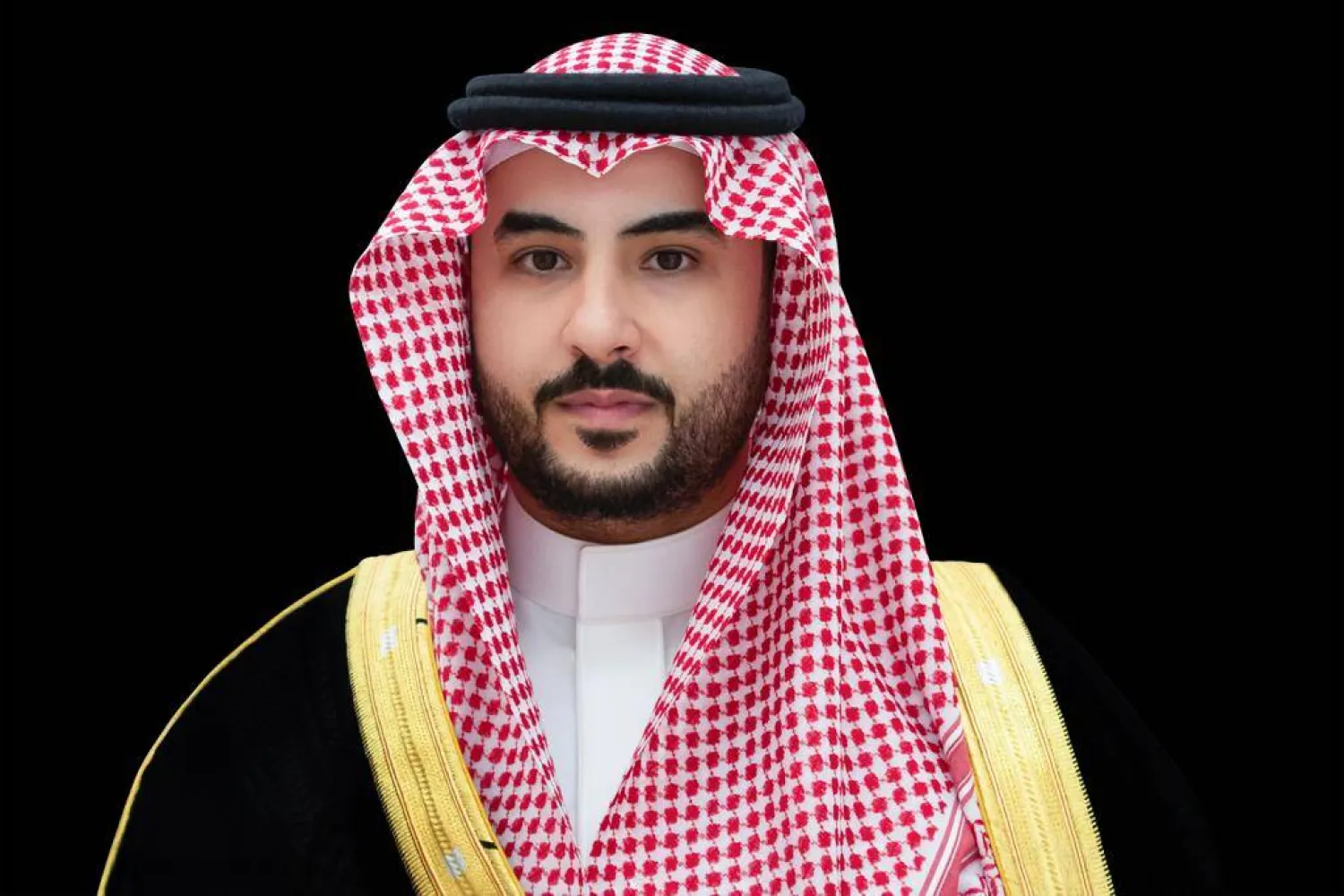
Saudi Defense Minister Prince Khalid bin Salman. (Asharq Al-Awsat)
TT
TT
Khalid bin Salman Leads Saudi Delegation at Meeting of Makkah Defense Pact Countries in Tehran
Saudi Defense Minister Prince Khalid bin Salman. (Asharq Al-Awsat)
Saudi Defense Minister Prince Khalid bin Salman is leading a Saudi delegation taking part in meetings hosted by Tehran on Monday for the countries of the Makkah Joint Defense Agreement.
The meetings are part of de-escalation efforts in the region and aim to encourage dialogue and diplomatic solutions.
The agreement was signed by Saudi Arabia, Türkiye, and Pakistan in Istanbul.
Pakistan’s Chief of Army Staff Asim Munir and Türkiye’s chief of intelligence Ibrahim Kalin will take part in the meetings, said Ambassador Rayed Krimly, Saudi Deputy Minister of Foreign Affairs for Public Diplomacy.
In a post on the X platform, he added that the representatives of the Makkah agreement will meet with Iranian President Masoud Pezeshkian and Secretary of the Supreme National Security Council of Iran Mohsen Rezaei.
He said that the visit is taking place within the framework of ongoing efforts to de-escalate tensions between the parties to the current crisis and to support mediation efforts undertaken by Qatar and Pakistan, underscoring the importance of bolstering dialogue and diplomatic solutions to defuse existing tensions.
Krimly pointed to the role played by the member states of the Makkah pact in supporting regional security and stability, as well as working with regional countries to achieve this goal.
Riyadh and Athens Seek to Deepen Defense, Security Cooperation and Coordinationhttps://english.aawsat.com/gulf/5333670-riyadh-and-athens-seek-deepen-defense-security-cooperation-and-coordination
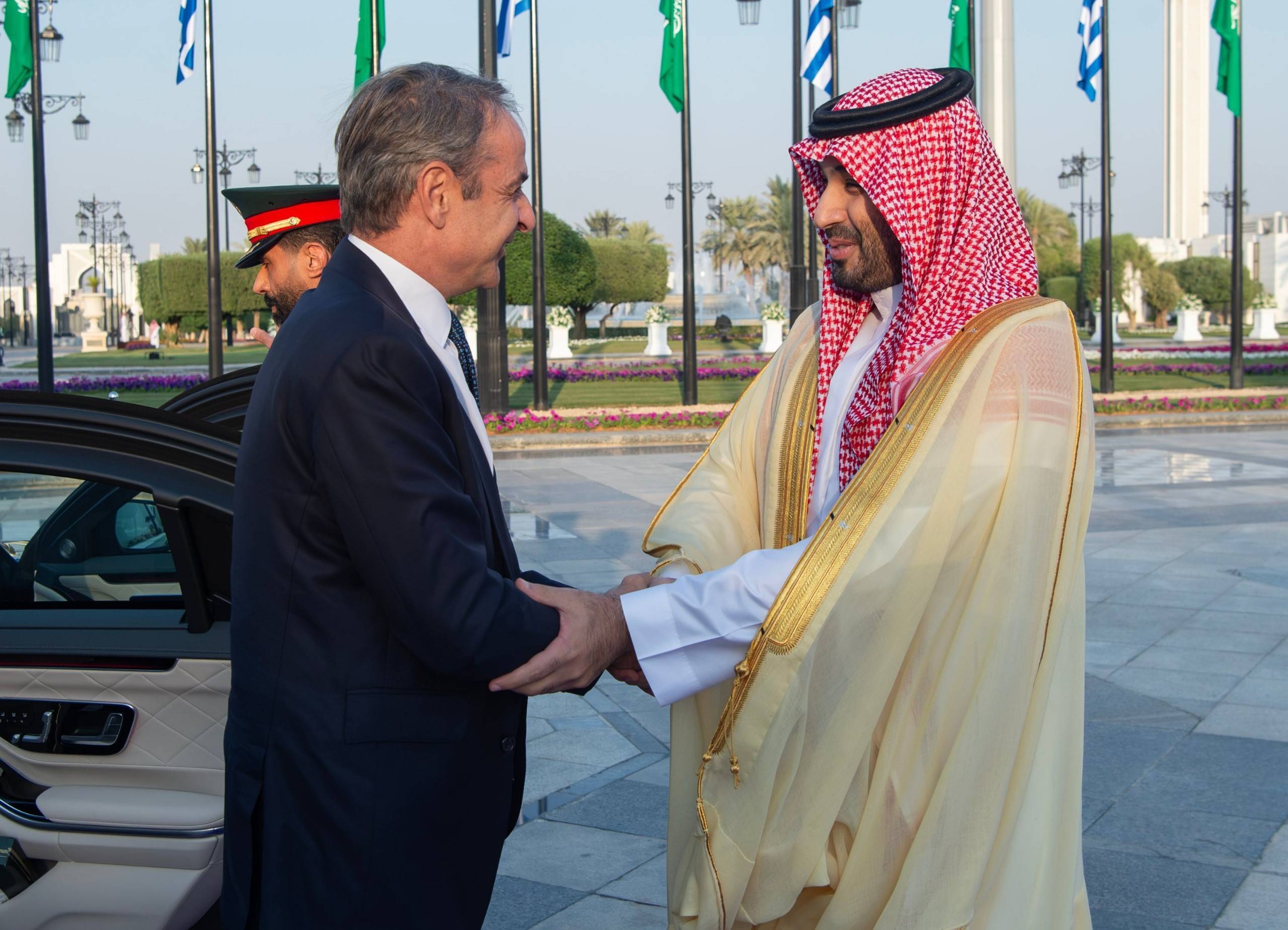
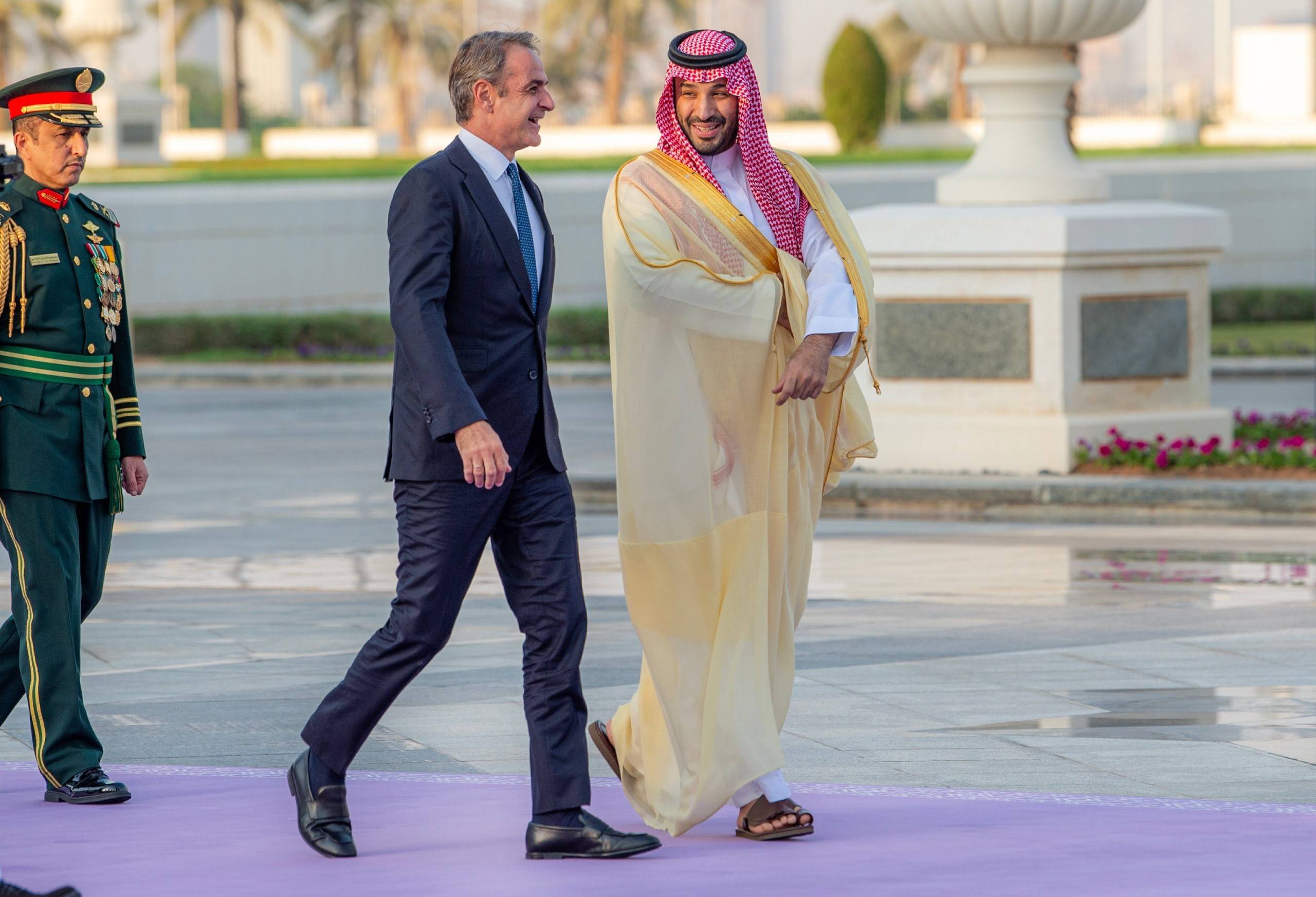
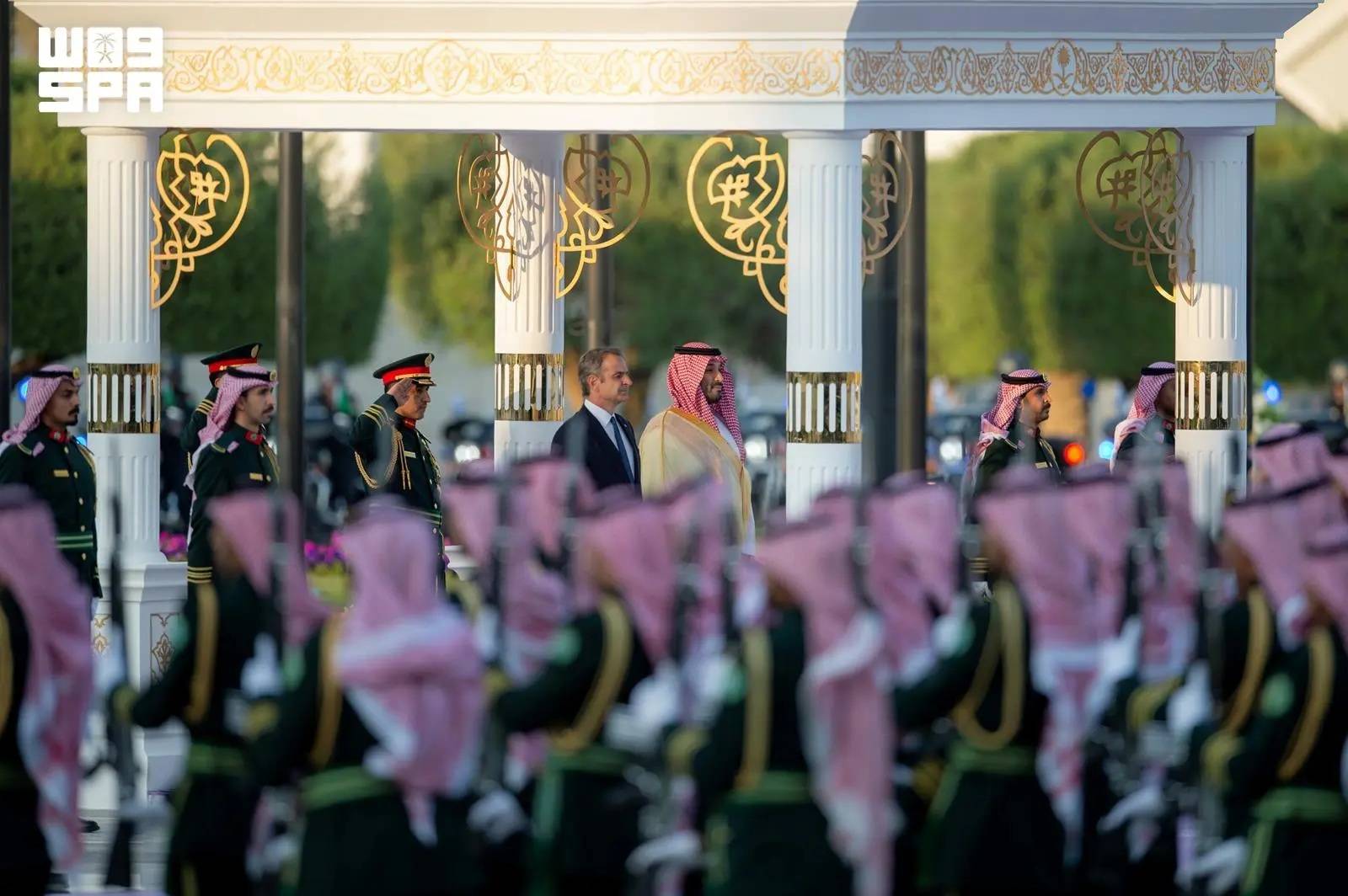
Prince Mohammed bin Salman bin Abdulaziz Al Saud, Saudi Crown Prince and Prime Minister, and Greek Prime Minister Kyriakos Mitsotakis meet at the Royal Court at Al-Yamamah Palace in Riyadh on Sunday. (SPA)
TT
TT
Riyadh and Athens Seek to Deepen Defense, Security Cooperation and Coordination
Prince Mohammed bin Salman bin Abdulaziz Al Saud, Saudi Crown Prince and Prime Minister, and Greek Prime Minister Kyriakos Mitsotakis meet at the Royal Court at Al-Yamamah Palace in Riyadh on Sunday. (SPA)
Saudi Arabia and Greece stressed on Sunday their determination to strengthen defense cooperation and coordination to serve mutual interests and contribute to regional and global security and peace.
They underlined their commitment to bolstering security cooperation and coordination on issues of common concern, including combating all forms of crime, extremism, terrorism, and terrorism financing, alongside exchanging expertise and training in these fields.
Prince Mohammed bin Salman bin Abdulaziz Al Saud, Saudi Crown Prince and Prime Minister, received Greek Prime Minister Kyriakos Mitsotakis at the Royal Court at Al-Yamamah Palace in Riyadh on Sunday.
A joint statement after their talks said both sides further agreed on the importance of enhancing cyber security cooperation and information sharing to protect the vital interests and national security of both countries.
The visit stems from the distinguished relations uniting the two countries and their peoples, coinciding with the centenary of the establishment of diplomatic relations between Riyadh and Athens, it noted.
“Both sides commended the outcomes of the Crown Prince's visit to Greece in July 2022, during which the Saudi-Greek Strategic Partnership Council was announced, and of the prime minister's visit to the Kingdom in January 2025, which included the council's first meeting,” it said
“These visits have broadened cooperation between the two countries. Both sides stressed the council's importance as an effective institutional framework for the strategic partnership and affirmed their commitment to continuing work within it and implementing priority joint initiatives,” it added.
Prince Mohammed bin Salman bin Abdulaziz Al Saud, Saudi Crown Prince and Prime Minister, welcomes Greek Prime Minister Kyriakos Mitsotakis in Riyadh. (SPA)
Economy and investment
On the economy, trade, and investment, both sides “commended the strength of economic ties and agreed on the importance of strengthening them further, particularly in priority sectors, and of seizing the investment opportunities created by both countries' strategic visions.”
“They noted with appreciation the growth in bilateral trade since 2021, which reached about $1.7 billion in 2025. They welcomed the progress made by the investment and trade committee under the council and stressed the need to implement agreed initiatives to deliver tangible results,” continued the statement.
“They also welcomed the recent meeting of the Saudi-Greek Business Council in Athens and agreed on the importance of strengthening investment in key sectors, including infrastructure, construction, energy, digital connectivity, logistics, and technology,” it said.
Both sides acknowledged the progress made on the East to Med Data Corridor (EMC) subsea cable project, which aims to boost digital connectivity between East and West, and reaffirmed their commitment to completing it on schedule.
The Saudi side welcomed Greek investors and companies, expressing interest in attracting high-quality investment and advanced expertise in promising sectors. It encouraged Greek firms to establish regional headquarters in the Kingdom and to explore opportunities in major projects, including those linked to the Kingdom’s hosting of Expo 2030 Riyadh and the 2034 FIFA World Cup.
The Greek side encouraged Saudi companies to explore investment opportunities in Greece, highlighting its strategic location as a gateway to the European market and Southeast Europe, and opportunities in energy, transport, logistics, digital infrastructure, and advanced technologies.
Prince Mohammed bin Salman bin Abdulaziz Al Saud, Saudi Crown Prince and Prime Minister, and Greek Prime Minister Kyriakos Mitsotakis in Riyadh. (SPA)
Energy
In the energy sector, “the Greek side commended the Kingdom’s leading role in enhancing the reliability and stability of global oil markets and its positive contribution to balancing energy markets in the interests of both producers and consumers, supporting sustainable economic growth.”
Both sides “stressed the critical importance of safeguarding the security of international maritime corridors to ensure the safe, uninterrupted flow of energy supplies to global markets, and expressed concern over attacks on energy infrastructure, which affect supply availability and market stability.”
The Greek side praised the Kingdom’s efforts “to ensure continuity of supplies and strengthen supply chain resilience, notably through alternative export routes such as the East-West Pipeline, which have helped mitigate market volatility and strengthen global energy security.”
Both sides stressed the importance of the 2022 memorandum of cooperation in the energy sector, which includes the Saudi-Greek electrical interconnection project, and committed to accelerating cooperation in this strategic field.
The Saudi side noted that the project is one of several interconnection initiatives the Kingdom is implementing as part of its ambition to become a global hub for electrical interconnection and energy exports. It will enable the exchange and export of electricity, enhance the security and reliability of interconnected grids, and link the Kingdom’s grid to Europe through Greece.
The Greek side highlighted Greece’s strategic location and existing infrastructure as pillars of its development into a regional hub for energy and digital connectivity, a vision that complements the interconnection project.
Prince Mohammed bin Salman bin Abdulaziz Al Saud, Saudi Crown Prince and Prime Minister, and Greek Prime Minister Kyriakos Mitsotakis during an official reception in Riyadh. (SPA)
Both sides emphasized the importance of cooperation on clean hydrogen, including exploring exports from the Kingdom to Greece and on to demand centers in other European Union member states.
They also stressed the importance of expanding bilateral investment in conventional energy, renewable energy, and petrochemicals to diversify global supply chains, develop the necessary technologies, and encourage partnerships between companies to make the most of local resources in both countries.
They agreed to boost cooperation on energy efficiency and conservation in the building, industrial, and transport sectors, including raising awareness, and to collaborate on energy services and related capacity building.
Climate
On climate change, both sides stressed the importance of adhering to the principles of the United Nations Framework Convention on Climate Change (UNFCCC) and the Paris Agreement.
They highlighted the value of cooperation on circular carbon economy applications as a tool for managing emissions and achieving climate mitigation and adaptation goals.
Both sides also underlined the importance of strengthening cooperation in the digital economy, artificial intelligence, emerging technologies, and space; transport, logistics, and civil aviation; the judiciary and justice; culture; tourism; sports and youth; science and education; media; advanced industries and supply chain integration; environment, water, and agriculture; and public health, health security, the pharmaceutical industry, and biotechnology.
Defense cooperation
They stressed “their determination to strengthen defense cooperation and coordination in a way that serves their mutual interests and contributes to regional and global peace and security.”
They also underscored their commitment “to enhancing security cooperation on issues of common concern, including combating crime in all its forms, countering extremism, terrorism, and terrorist financing, and exchanging expertise and training.”
“They agreed on the importance of strengthening cooperation in cybersecurity and information sharing to protect both countries’ core interests and national security,” said the joint statement.
لم تشترك بعد
انشئ حساباً خاصاً بك لتحصل على أخبار مخصصة لك ولتتمتع بخاصية حفظ المقالات وتتلقى نشراتنا البريدية المتنوعة