


Saudi Position and Washington's Return to Talks With Tehran

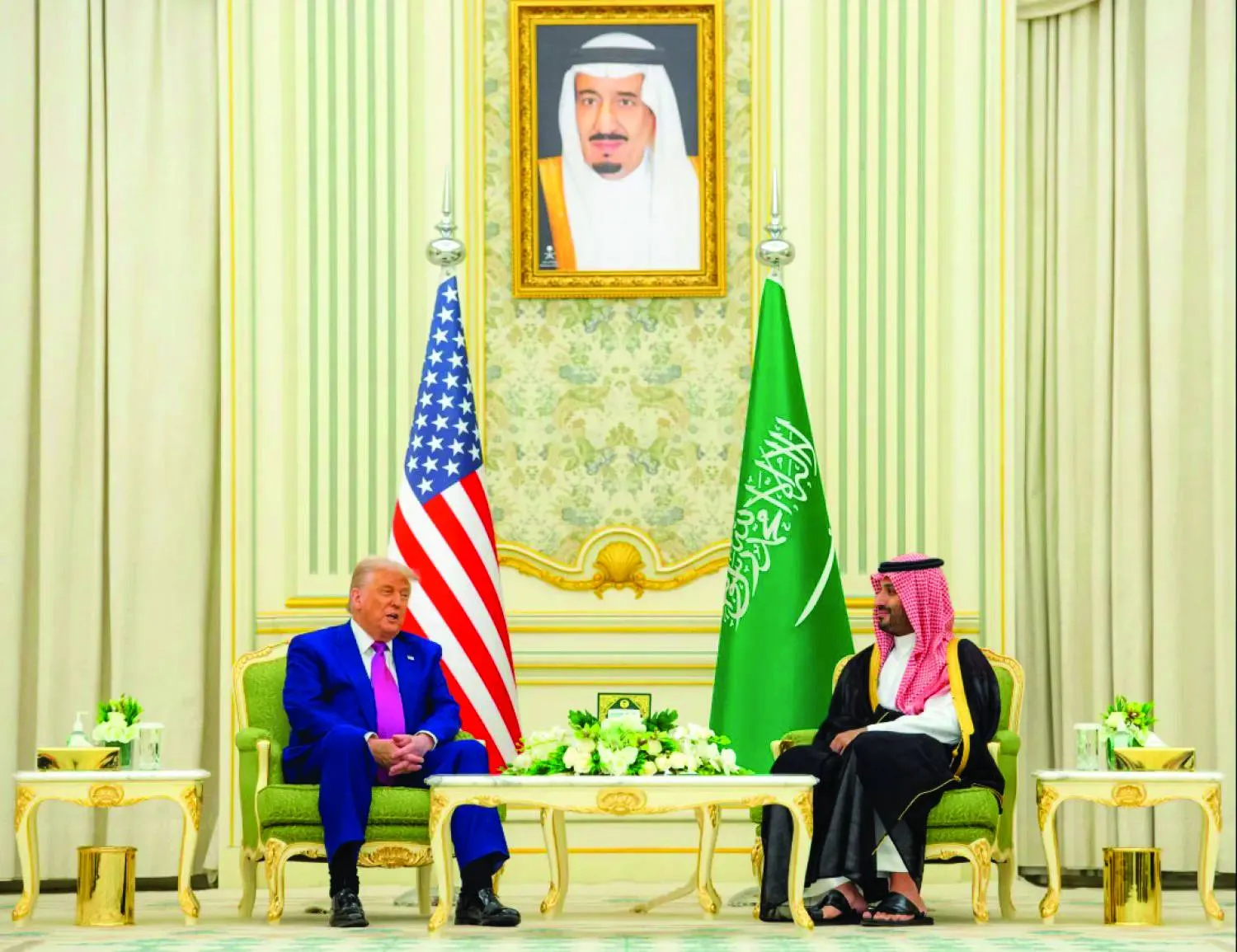
Saudi Crown Prince Mohammed bin Salman and US President Donald Trump in Riyadh last year. (SPA)
TT

Saudi Position and Washington's Return to Talks With Tehran

Saudi Crown Prince Mohammed bin Salman and US President Donald Trump in Riyadh last year. (SPA)

Political analysts said President Donald Trump's announcement on Sunday that he had postponed a planned military strike against Iran, in response to requests from several Gulf states including Saudi Arabia, reflects the importance of Riyadh's role at this stage. They noted that Saudi Arabia is pursuing a dual-track approach by supporting diplomatic efforts to reach an agreement while also confronting attacks by Iran-backed militias in Iraq and Houthi threats to navigation in the Red Sea and the Bab al-Mandab Strait.

Saudi Position Shapes US Calculations

Political analyst Faisal Al Shammeri said the Saudi move does not represent a defense of Iran or a downplaying of the risks posed by its nuclear program and regional conduct. Rather, it reflects a pragmatic assessment of the nature of conflicts in the Middle East, where initiating military confrontation may be easier than containing its consequences or controlling its course.

Speaking to Asharq Al-Awsat, he said President Donald Trump's remarks underscored the influence of the Saudi position on US decision-making after the president indicated that his contacts with Gulf leaders, led by Crown Prince and Prime Minister Mohammed bin Salman, had helped create additional space for diplomacy while emphasizing the need to prioritize dialogue and de-escalation.

He added that Defense Minister Prince Khalid bin Salman's visit to Washington, as reported by US media, formed part of a Saudi effort to convey the Kingdom's assessments directly to US policymakers.

Gulf Security Is the Priority

Explaining the rationale behind the Saudi position, Al Shammeri said the foremost priority is safeguarding Gulf security, as the region would be the first to bear the consequences of any potential Iranian retaliation. He also pointed to the importance of preserving the stability of trade and energy flows through the Strait of Hormuz and protecting economic transformation and development projects that require a stable, investment-friendly environment.

He argued that the Kingdom's approach is based on preventing Iran from acquiring the capability to threaten regional security while also preventing any confrontation from escalating into a full-scale war that would impose its greatest costs on the Gulf. This, he said, requires an implementable agreement that addresses the root causes of the crisis rather than a temporary truce.

Political analyst Nidal Al Saba, meanwhile, argued that Saudi Arabia's weight gives it influence over major decisions in the region, extending beyond the United States to all major international powers, including China, Russia, and Western countries.

"Saudi Arabia is the leading power in the energy sector, and its position on the Strait of Hormuz, energy security, and maritime navigation carries significant weight and influence. Therefore, the United States' decision to suspend an attack on Iran is not surprising as long as Saudi Arabia is playing a role in encouraging that course," he said.

Saudi Influence Extends to Iran and the United States

Although Al Saba said he is not optimistic about the intentions of either Iran or Israel, unlike what he described as the preference and interest of the Trump administration, he believes Saudi pressure could, in the coming period, extend beyond Washington to include Iran as well.

He said Saudi Arabia possesses considerable leverage and is one of the region's principal powers sitting at the negotiating table rather than observing developments from the sidelines.

Saudi Regional Consultations

Saudi regional diplomacy has seen notable activity over the past several hours following President Trump's remarks about the start of negotiations with Iran.

On Sunday, Saudi Foreign Minister Prince Faisal bin Farhan held discussions with Qatari Prime Minister and Foreign Minister Sheikh Mohammed bin Abdulrahman bin Jassim Al Thani, Jordanian Deputy Prime Minister and Foreign Minister Ayman Safadi, and Iranian Foreign Minister Abbas Araghchi on regional developments.

The consultations also addressed the importance of supporting efforts and coordinating positions aimed at de-escalation and countering anything that could undermine regional security, while ensuring the restoration of freedom of maritime navigation and limiting the negative repercussions of the crisis.

The Saudi foreign minister reaffirmed his country's commitment to continuing its regional role in promoting security and stability in a manner that serves the shared interests of the peoples and states of the region.



GCC, India Discuss Ministerial Meeting Set to be Held Next Month

Secretary-General of the Gulf Cooperation Council (GCC) Jasem Albudaiwi
TT

GCC, India Discuss Ministerial Meeting Set to be Held Next Month

Secretary-General of the Gulf Cooperation Council (GCC) Jasem Albudaiwi

Secretary-General of the Gulf Cooperation Council (GCC) Jasem Albudaiwi met in Riyadh on Sunday with Indian Ambassador to Saudi Arabia Shri Vipul.

During the meeting, the two sides reviewed a number of topics of common interest, most notably relations between the GCC and India, and ways to develop and enhance them in a manner that serves common interests.

They also discussed the latest developments regarding the launch of negotiations on the Free Trade Agreement (FTA) between the GCC and India, signed in February 2026, in addition to preparations for the GCC-India ministerial meeting scheduled to be held next September.

The two officials also exchanged views on the latest developments in the region and the world, affirming the importance of continuing coordination and consultation on issues of common interest.


GCC Secretary-General Holds Separate Meetings with South Korean, Georgian Ambassadors

Gulf Cooperation Council (GCC) Secretary-General Jasem Albudaiwi
TT

GCC Secretary-General Holds Separate Meetings with South Korean, Georgian Ambassadors

Gulf Cooperation Council (GCC) Secretary-General Jasem Albudaiwi

Secretary-General of the Gulf Cooperation Council (GCC) Jasem Albudaiwi met in Riyadh on Sunday with South Korean Ambassador to Saudi Arabia Kang Shin-chul.

During the meeting, the two sides discussed several topics of common interest, most notably GCC-Korean ties and the latest developments on the signing of the Free Trade Agreement (FTA) between the GCC and South Korea, SPA reported.

They also exchanged views on developments in the region, and international and regional efforts aimed at enhancing security and stability.

Albudaiwi also met with Ambassador of Georgia to the Kingdom Nikoloz Revazishvili.

During the meeting, the two sides discussed a number of topics related to strengthening relations between the GCC and Georgia, as well as ways to develop them in a manner that serves common interests, including the latest developments regarding the Joint Action Plan for 2022–2026.

They also discussed the latest developments in the region and the world and exchanged views on a number of issues of common interest.


Senior Officials, Business Leaders to Attend French-Saudi Roundtable on Monday

Saudi Crown Prince during a previous meeting with the French president at the Élysée Palace in Paris (SPA).
TT

Senior Officials, Business Leaders to Attend French-Saudi Roundtable on Monday

Saudi Crown Prince during a previous meeting with the French president at the Élysée Palace in Paris (SPA).

As part of the official visit of Prince Mohammed bin Salman bin Abdulaziz Al Saud, Crown Prince and Prime Minister, to France, Paris will host the French-Saudi Investment Roundtable Meeting on Monday.

Organized by the Ministry of Investment, the roundtable will bring together senior government officials, business leaders, and CEOs of major companies from both countries.

The roundtable will feature strategic discussions among business leaders on industrial partnerships, transportation and logistics, artificial intelligence, and digital infrastructure. Several agreements and memoranda of understanding covering a range of sectors are also expected to be signed.

The meeting builds on the growing economic and investment ties between Saudi Arabia and France.

It supports joint efforts to expand cooperation, strengthen partnerships between the two countries’ business communities, and translate promising opportunities into high-quality investments and projects that advance their shared interests.