


Defense Ministry Spokesperson: Maritime Coalition Reflects Global Commitment to Maritime Security

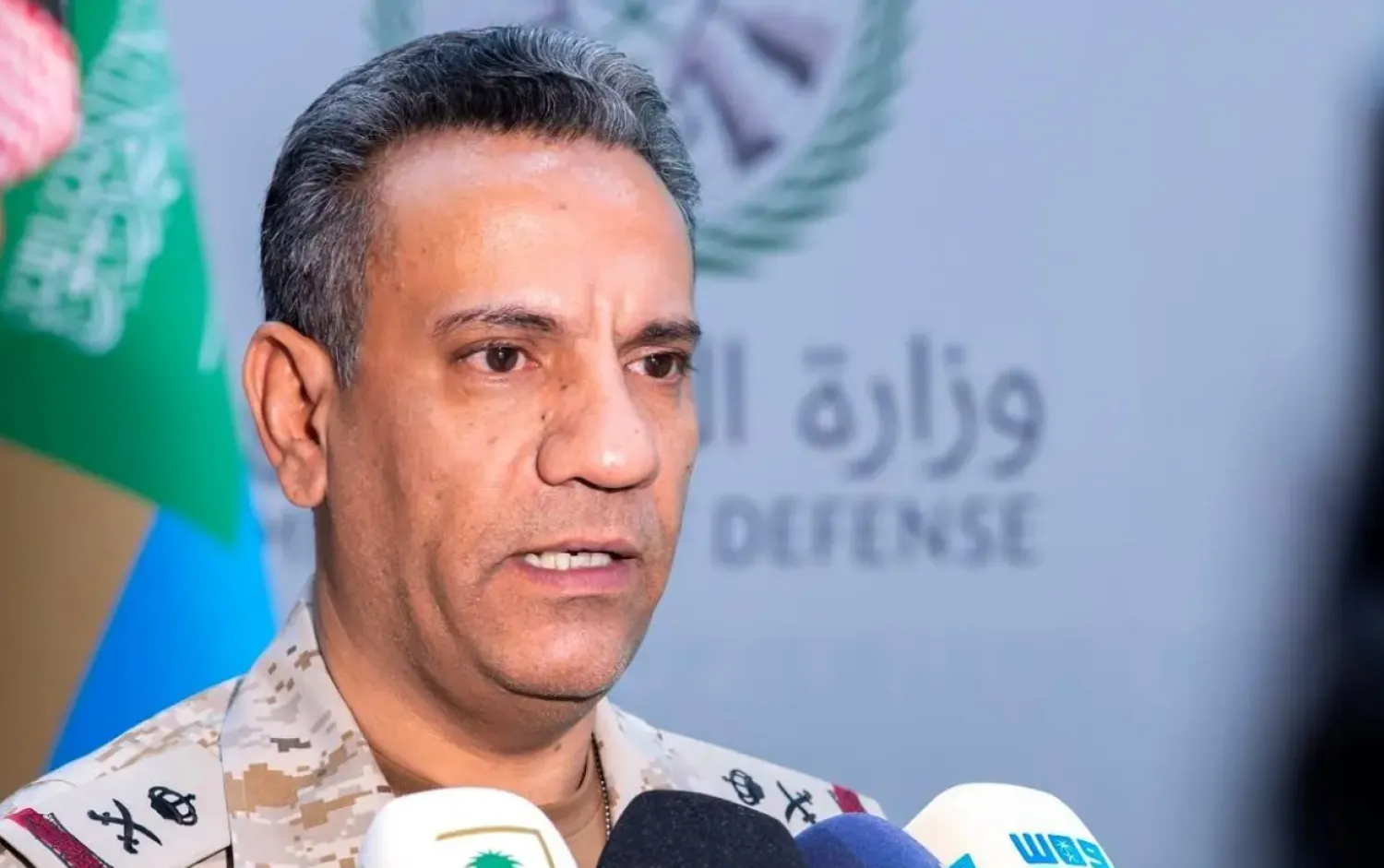
Saudi Spokesperson of the Ministry of Defense Major General Turki Al-Malki  - SPA
Saudi Spokesperson of the Ministry of Defense Major General Turki Al-Malki - SPA
TT

Defense Ministry Spokesperson: Maritime Coalition Reflects Global Commitment to Maritime Security

Saudi Spokesperson of the Ministry of Defense Major General Turki Al-Malki  - SPA
Saudi Spokesperson of the Ministry of Defense Major General Turki Al-Malki - SPA

Saudi Spokesperson of the Ministry of Defense Major General Turki Al-Malki affirmed that the announcement of the Multinational Maritime Defense Coalition reflects a shared international understanding of the scale of threats facing maritime security and freedom of navigation, and embodies a collective responsibility to protect maritime routes and global economic interests.

In a statement to media outlets, Major General Al-Malki disclosed that the region and the world are facing real and emerging threats, noting that every country has the right to take whatever military or political measures it deems necessary to protect its interests and address such threats. He affirmed the existence of continuous coordination among the countries bordering the Red Sea to enhance the security of maritime routes and protect shared interests.

He pointed out that Saudi Arabia, through its experience in the Coalition to Restore Legitimacy in Yemen, has achieved significant accomplishments in eliminating maritime threats, including countering unmanned UAVs, fast boats, and naval mines. He emphasized that maintaining maritime security is a collective responsibility that is not limited to coastal states, but extends to all countries that benefit from the security and stability of maritime routes.

The Ministry of Defense spokesperson stressed that protecting international shipping lanes and oil tankers represents a fundamental pillar of global economic stability, noting that any terrorist acts or threats targeting maritime security affect the entire international community. This requires strengthening international cooperation and coordination to confront such threats, contributing to the security and stability of maritime routes.
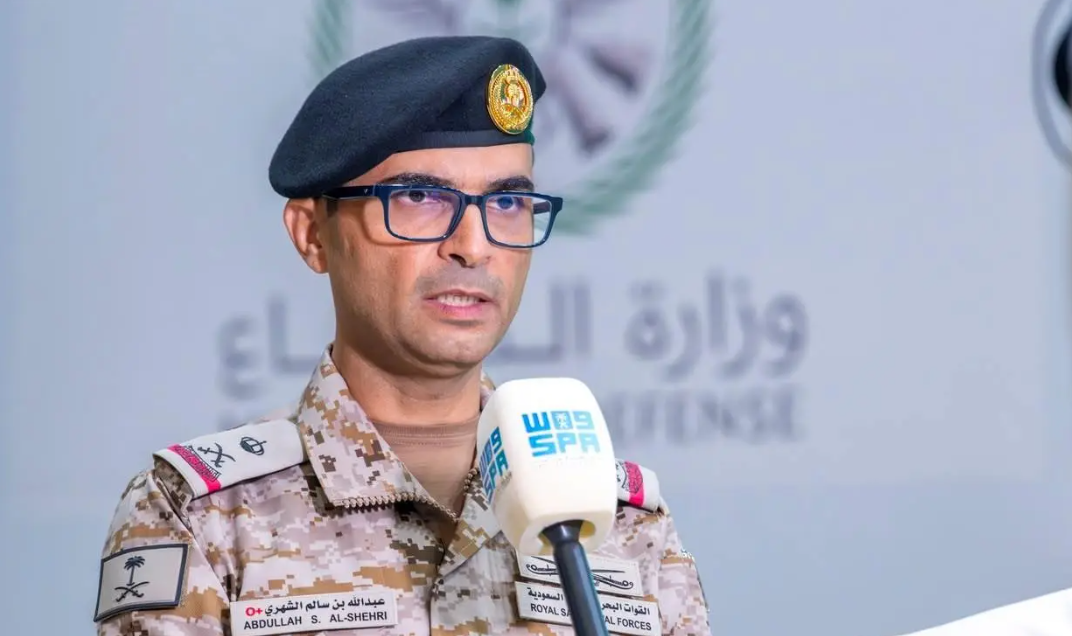
 

Commander of the Multinational Maritime Defense Coalition Rear Admiral Abdullah bin Salem Alshehri

For his part, Commander of the Multinational Maritime Defense Coalition Rear Admiral Abdullah bin Salem Alshehri told SPA that "the Kingdom’s hosting of 43 countries at the coalition’s founding meeting is conclusive evidence of broad international consensus that the security of international waterways is a collective responsibility, and that multilateral defense cooperation and continuous coordination are the cornerstone for ensuring freedom of navigation, securing supply chains, and safeguarding energy supplies.”

Alshehri added that several countries announced at the conclusion of the meeting their accession to the coalition under the joint statement, while the remaining countries continue to complete their national arrangements and procedures in preparation for joining, with membership remaining open to all countries wishing to join the coalition.

He affirmed that the Kingdom’s hosting the headquarters and leadership of the coalition reflect its vital role in enhancing regional and international security, as well as its proactive stance in establishing effective coalitions to deter shared maritime threats.

The commander asserted that the coalition aims to enhance maritime security, ensure freedom of navigation, secure trade routes, supply chains, and energy resources, and protect shared maritime interests in the Bab al-Mandab Strait, the Red Sea, and the Gulf of Aden.

Alshehri stressed that the coalition is purely defensive in nature and does not target any country, organization, or coalition. Instead, it operates in accordance with the principles and purposes of the Charter of the United Nations and in compliance with international law, while fully respecting the sovereignty of states and ensuring freedom of navigation in international maritime waterways.



Türkiye: The Makkah Agreement Will Be a Pivotal Platform That Changes the Rules of the Game in the Region

Saudi Crown Prince Mohammed bin Salman, Turkish President Recep Tayyip Erdogan and Pakistani Prime Minister Shehbaz Sharif signed the Makkah Joint Defense Agreement on August 7 (Turkish Presidency).
TT

Türkiye: The Makkah Agreement Will Be a Pivotal Platform That Changes the Rules of the Game in the Region

Saudi Crown Prince Mohammed bin Salman, Turkish President Recep Tayyip Erdogan and Pakistani Prime Minister Shehbaz Sharif signed the Makkah Joint Defense Agreement on August 7 (Turkish Presidency).

Türkiye said the Makkah Agreement on mutual defense will become a pivotal platform that will change the rules of the game in the region.

Turkish Foreign Minister Hakan Fidan said the Makkah Agreement is progressing well and represents a very strong expression of political will, with intensive efforts under way to translate that will into practical steps.

He added that steps are currently being taken to institutionalize the agreement, and that work to establish the secretariat and associated military command stipulated in the agreement is nearing completion. An understanding has been reached, he said, leaving the deployment of personnel and activation of the command as the remaining steps, adding that Türkiye is satisfied with the progress being made in this regard.

In a televised interview late Saturday, Fidan said the Makkah Agreement is open to the countries of the region and that, once the steps of the foundational phase are completed, the necessary consultations can be held with Saudi Arabia and Pakistan regarding the admission of new allies.

He explained that there is an initial decision to that effect, noting that President Recep Tayyip Erdogan had said from the outset that if the framework did not expand, it would not constitute an alliance but rather a bloc. He added that Türkiye's regional vision is based on bringing together the largest possible group of countries in the region to establish a common defense framework.

Fidan stressed that this defense framework is not directed against outside parties. Rather, its aim is to enable the region to address its internal problems more effectively through the concept of regional ownership, and to prevent new crises from emerging by creating an environment of trust that did not previously exist. He said the fundamental starting point for all of this is the pursuit of regional solutions to regional problems.

Regarding the concerns expressed by some countries, and comments from Israel, Iran, India and Greece describing the Makkah Agreement as merely a piece of paper, Fidan said that the fact that these countries are concerned demonstrates the agreement's impact and importance.

He added that attempts to discredit the agreement and such forms of misinformation through the media are in fact a reflection of that impact and the concerns it has generated. He said Türkiye simply smiles and moves on because such claims have no basis.

Fidan pointed out that Türkiye has been a member of NATO since 1952 and that NATO has activated Article 5 only twice in its history, yet no one described the alliance as merely a piece of paper. He said that describing an agreement signed only three months ago in such terms, despite the rapid progress it is making, amounts to an attempt to end something before it has even begun. He added that, in reality, such an approach indirectly reflects the perception of the threat held by those making these comments, and said the Makkah Agreement will become a pivotal platform that changes the rules of the game.

Asked about the Houthis' recent attacks targeting Saudi Arabia and whether the principle of mutual defense under the Makkah Agreement would be activated, Fidan said Saudi Arabia had come under serious attacks targeting its territorial integrity, sovereignty and infrastructure. He said Türkiye stands in solidarity with Saudi Arabia on this matter, is assessing and analyzing the situation, and is conducting consultations that cannot be made public. These discussions, he added, could identify specific military needs in certain technical areas, and Türkiye would have no difficulty meeting them.

He noted that the Turkish Foreign Ministry had condemned the attacks against Saudi Arabia, particularly those targeting Makkah and oil infrastructure. He stressed that it is unacceptable to turn this matter into part of the ongoing conflict between Iran and the United States, and that Saudi Arabia must be kept outside this equation because it is also not seeking to join it.


Saudi FM Highlights Saudi Arabia’s Commitment to International Peace and Security

Saudi Minister of Foreign Affairs Prince Faisal bin Farhan bin Abdullah in Moscow on July 4, 2025. (Reuters)
TT

Saudi FM Highlights Saudi Arabia’s Commitment to International Peace and Security

Saudi Minister of Foreign Affairs Prince Faisal bin Farhan bin Abdullah in Moscow on July 4, 2025. (Reuters)

Saudi Minister of Foreign Affairs Prince Faisal bin Farhan bin Abdullah said that Saudi Arabia’s participation in the high-level week of the 81st session of the United Nations General Assembly this year reflects its approach of engaging with the international community, continuing its role in supporting international peace and security, promoting dialogue and mediation, and contributing to efforts to address shared challenges.

In a statement to SPA, Prince Faisal said that the Kingdom views the proceedings of this session, held under the theme "Restoring Trust, Managing Transformation: A United Nations That Delivers for All," as an opportunity to reaffirm the principles on which international institutions, foremost among them the United Nations, were established.

These principles include fulfilling their role in promoting security and peace, upholding international law and norms, and strengthening international cooperation in addressing crises.

He added that, in light of current developments in the region, the Kingdom affirms the need to uphold the principles of international law, which underscore respect for the sovereignty of states, the peaceful resolution of disputes, and the safety and freedom of navigation in international waterways, thereby safeguarding the security of all nations and advancing the aspirations of their peoples.

Prince Faisal also noted that, in its participation this year, the Kingdom places great importance on sustainable development, particularly artificial intelligence technologies and their responsible use to develop various sectors, enhance their efficiency, and support innovation, thus delivering tangible benefits to the people, coinciding with the Kingdom’s designation of 2026 as the Year of Artificial Intelligence.


UN Security Council Condemns Houthi Attacks on Saudi Arabia

A UN Security Council meeting
TT

UN Security Council Condemns Houthi Attacks on Saudi Arabia

A UN Security Council meeting

The UN Security Council has warned of the consequences of the Houthi attacks on Saudi Arabia and the threats posed to international navigation in the Red Sea and the Bab al-Mandeb Strait.

The Council considered that the militia's military actions in Yemen, alongside its targeting of Saudi territory and commercial shipping, threaten to expand the regional conflict, undermine maritime security and international trade, and hinder regional and international efforts aimed at achieving peace in Yemen.

In a statement issued on Friday night, Council members expressed solidarity with the Kingdom in confronting assaults targeting civilians and civilian objects, affirming Saudi Arabia's inherent right to self-defense in accordance with international law.

The members called on the Houthi militia to immediately halt its military escalation and attacks affecting civilians, stressing the importance of the full implementation of Security Council Resolution 2216 of 2015 and subsequent relevant resolutions.

Reiterating support for the Yemeni government, the Council emphasized its commitment to Yemen's unity, sovereignty, independence, and territorial integrity.

Also, Council members denounced missile strikes directed at the Kingdom alongside attacks and threats against commercial shipping in the Red Sea and the Bab al-Mandab Strait.

They stressed the critical need to safeguard commercial vessels and crew members while upholding international navigational freedoms under the UN Convention on the Law of the Sea.

Council members affirmed that the Houthi strikes on Saudi territory, threats to shipping in the Red Sea and advances near the Bab Al-Mandab Strait, risked “further expanding the conflict, threatening maritime security and international trade, and undermining regional and international efforts to secure peace in Yemen.”

The Council also backed Riyadh directly, affirming “the inherent right of the Kingdom of Saudi Arabia to self-defense in accordance with international law” and expressing solidarity with the Kingdom “in the face of attacks impacting civilians and civilian objects on its territory.”

The Council members demanded that the Houthis immediately cease their attacks affecting civilians and civilian objects, expressing their grave concern over reports regarding the killing and injuring of civilians, as well as the destruction of civilian objects and infrastructure resulting from these attacks.

Members also expressed grave concern about reports of civilians killed and injured and noted that at least 125,000 people have been displaced in Yemen since the start of September, according to the UN Office for the Coordination of Humanitarian Affairs.

They warned that further escalation would worsen the country's dire humanitarian situation.
The members called for full, safe, rapid and unhindered humanitarian access and demanded the unconditional release of detainees, including 73 UN personnel and staff of NGOs, civil society groups and diplomatic missions.

The Council reaffirmed backing for UN Special Envoy Hans Grundberg's efforts to broker a comprehensive political settlement guided by agreed references and relevant Security Council resolutions, and urged the Yemeni parties to engage constructively with UN efforts.