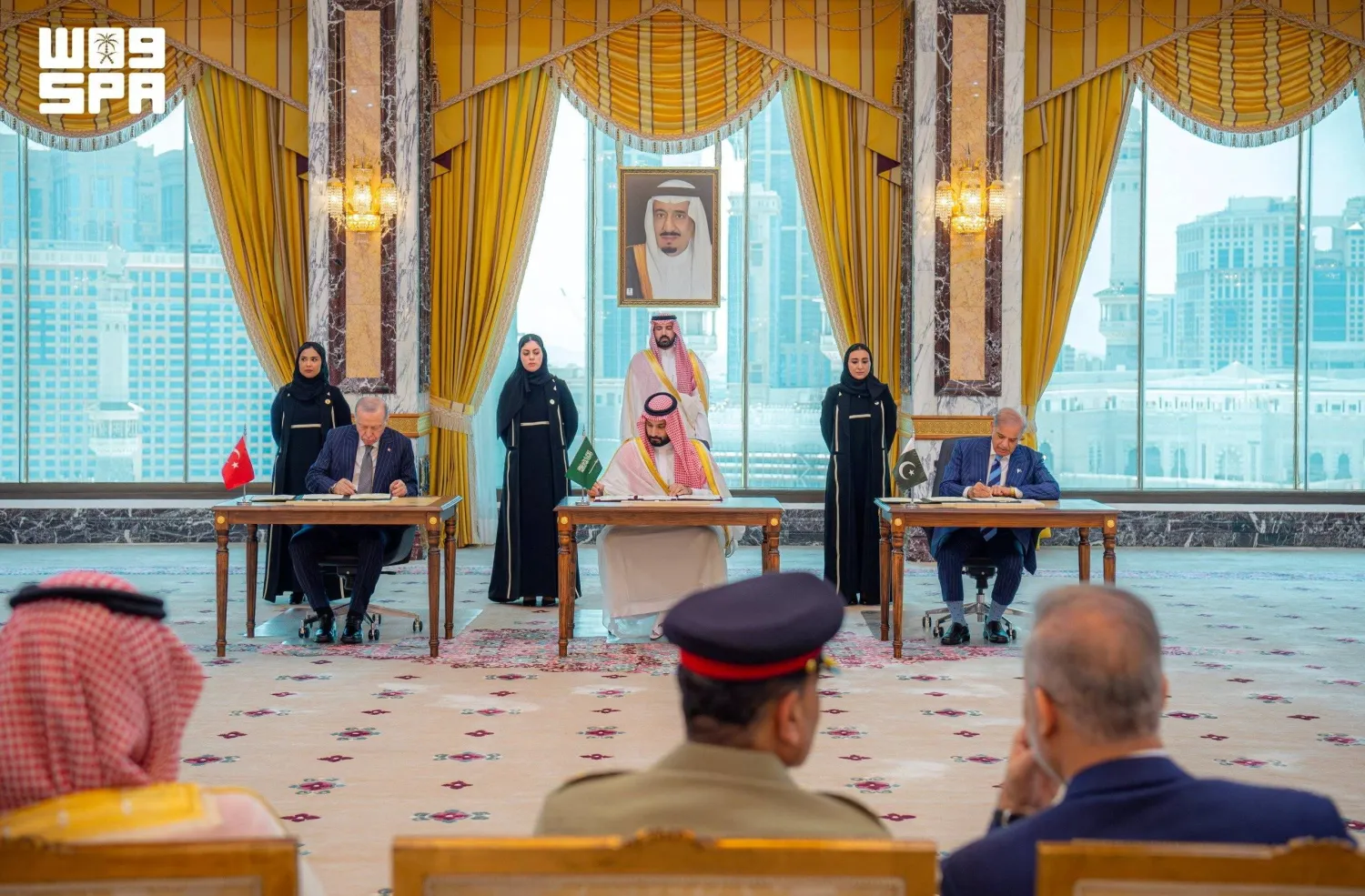

Saudi Arabia, Türkiye and Pakistan signed on Friday a defense agreement that reflects the three nations’ keenness on bolstering their joint security and achieve security, peace and stability in the region and world.
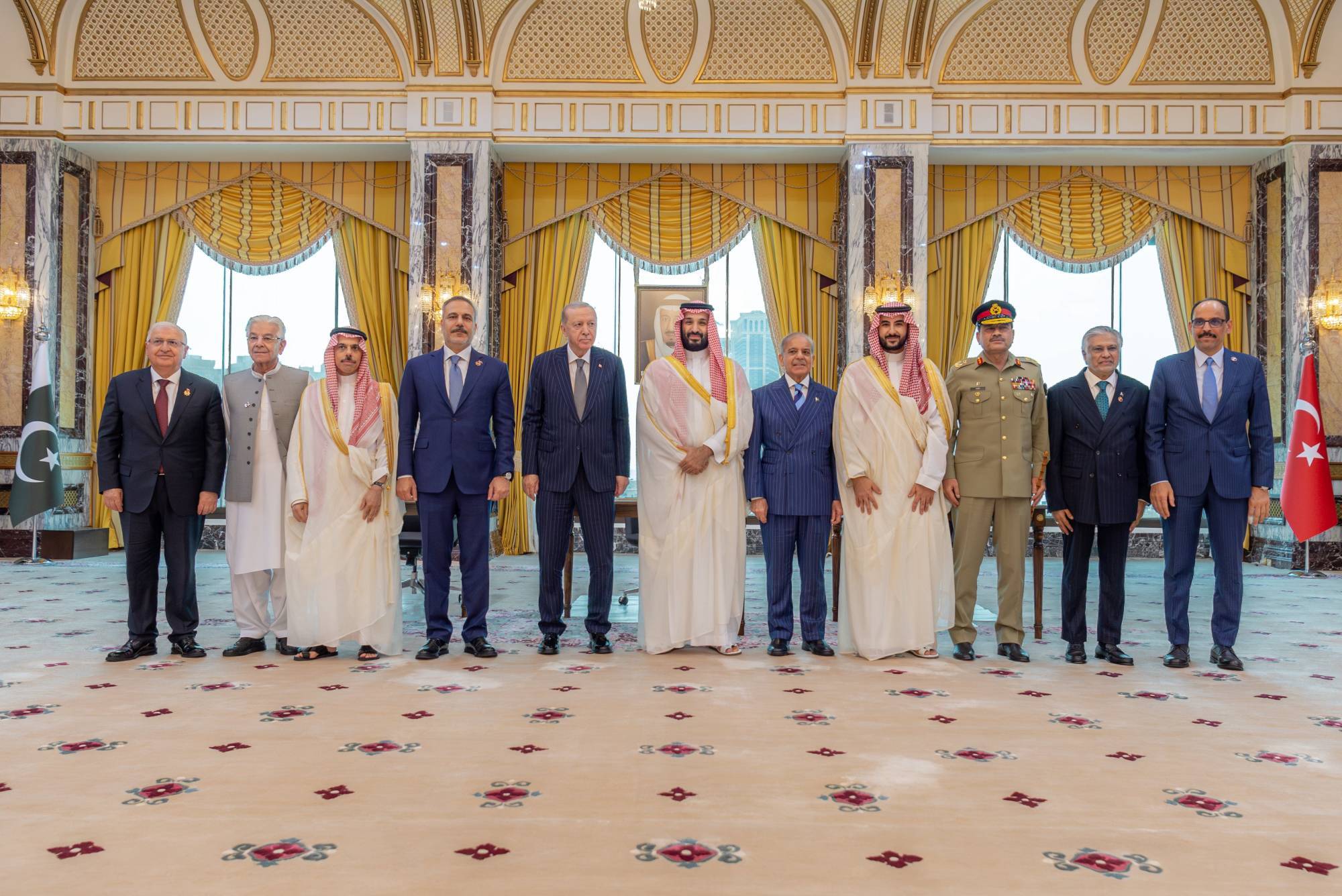
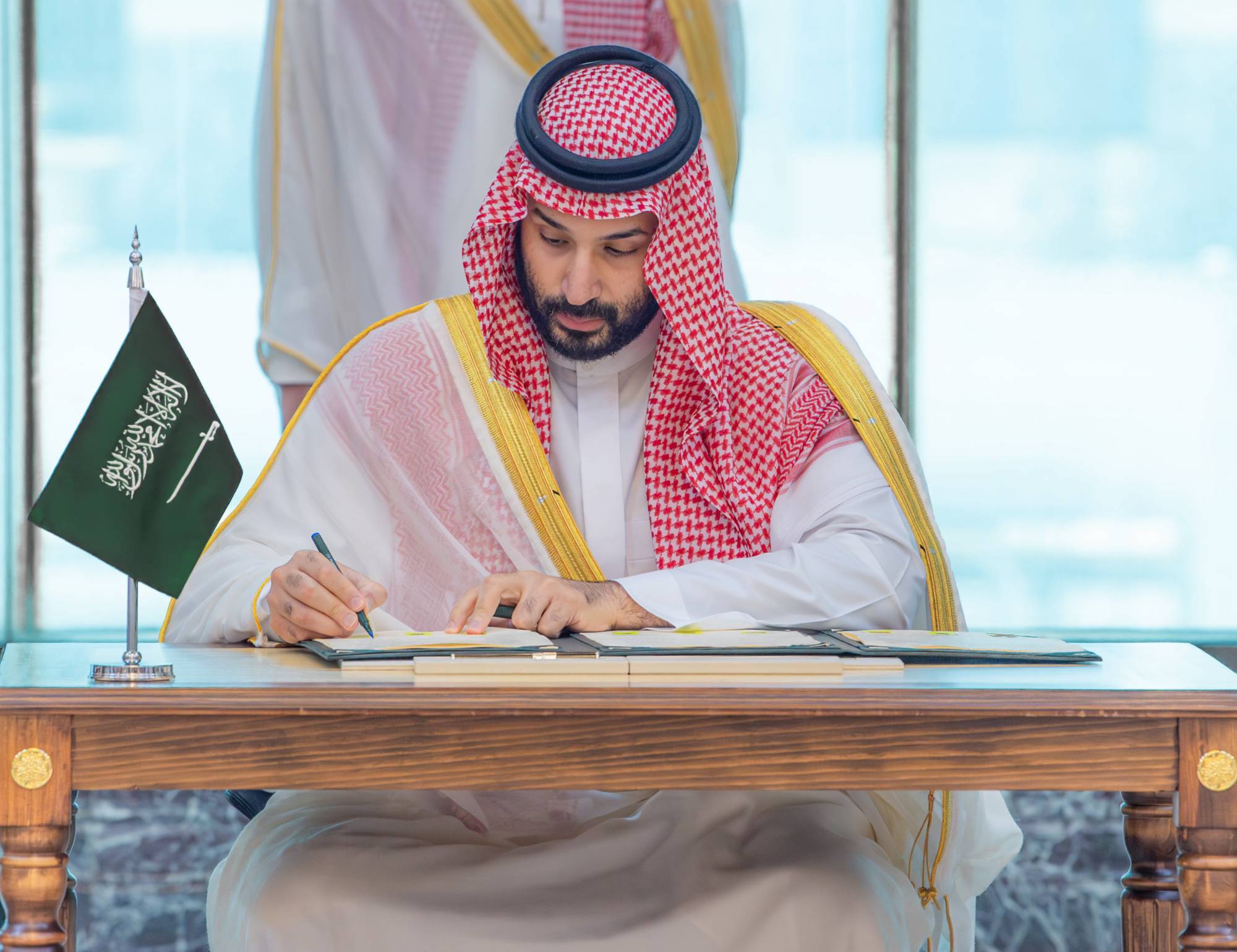
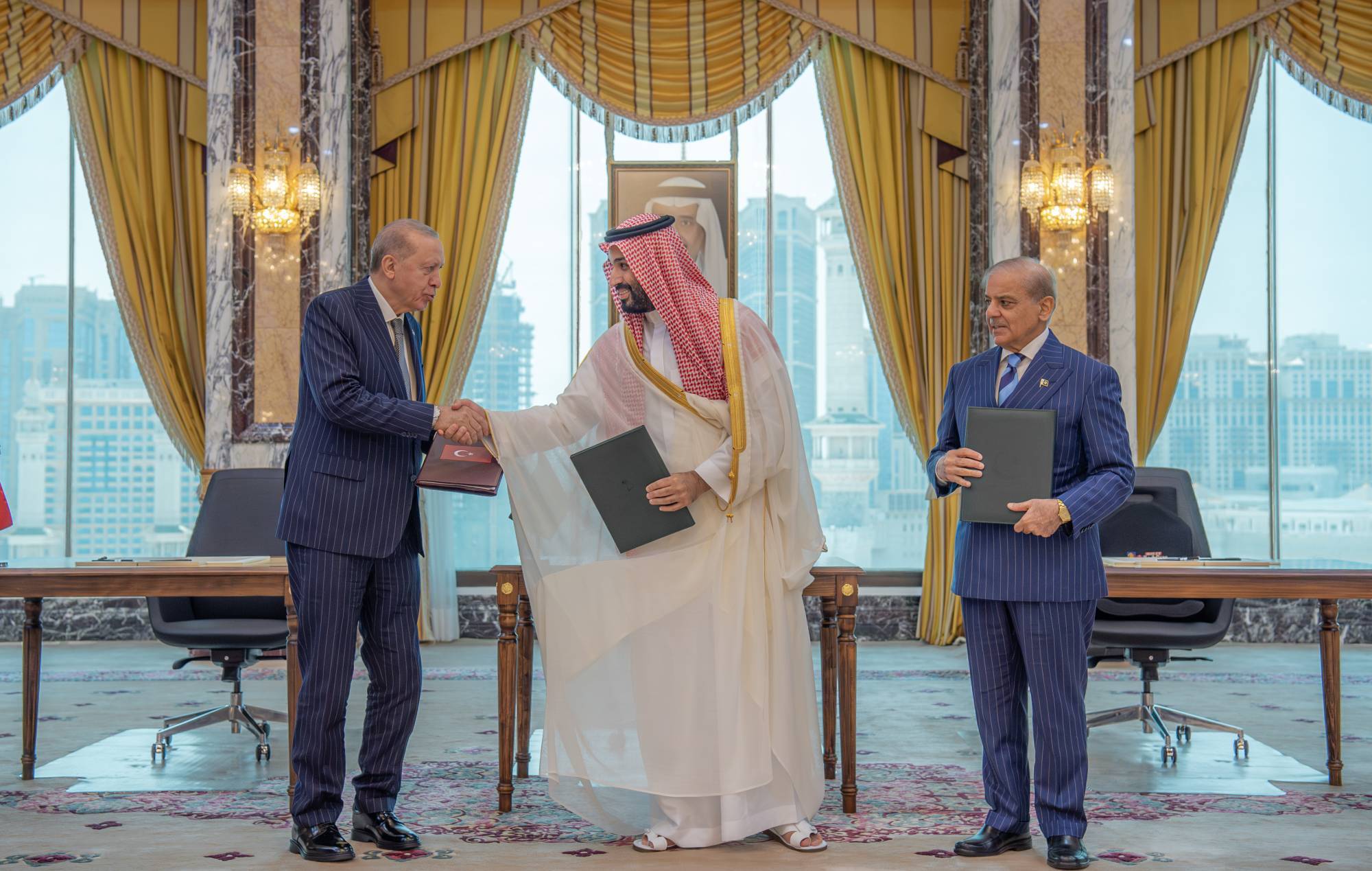
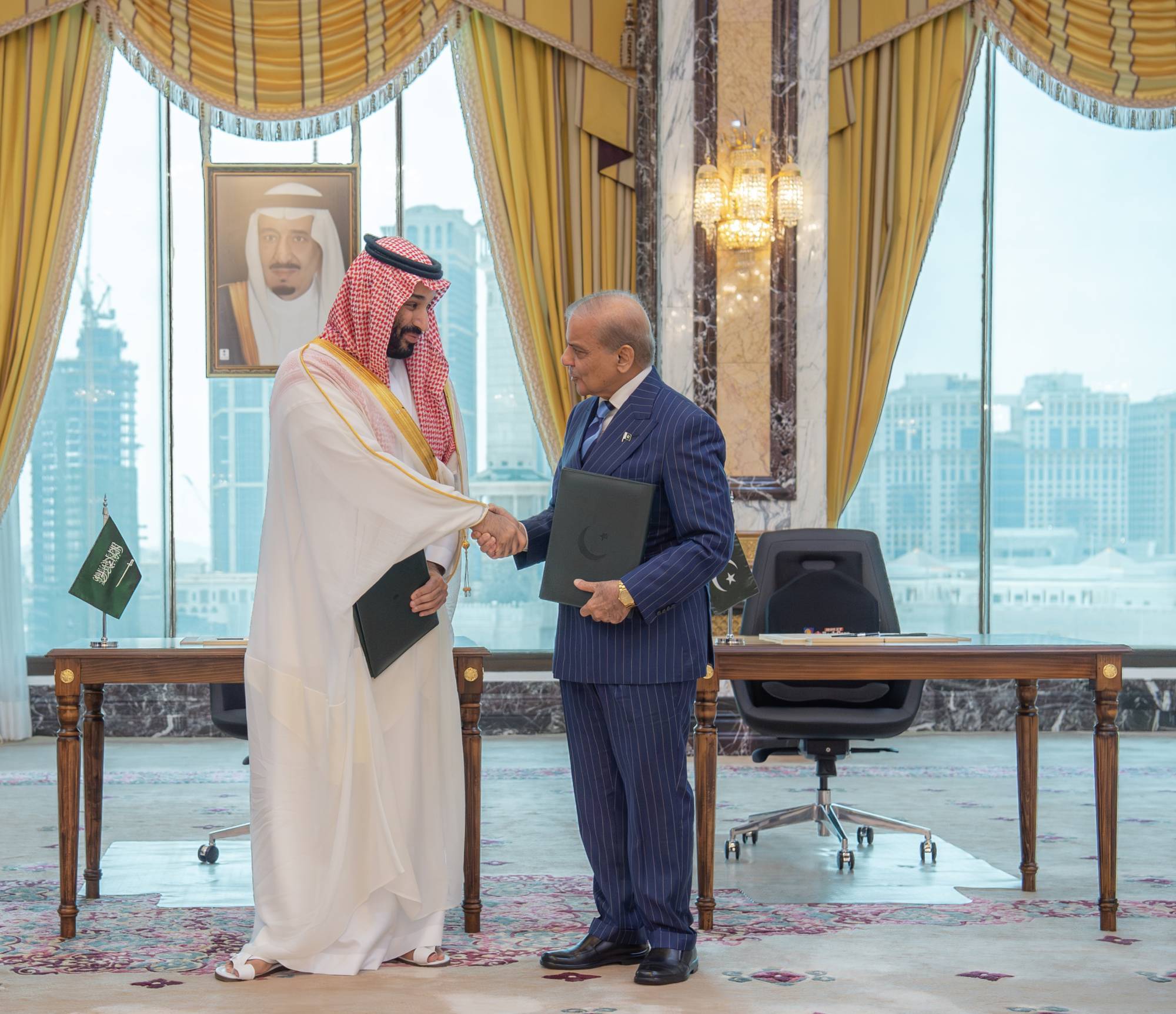
The agreement was signed by Prince Mohammed bin Salman, Saudi Crown Prince and Prime Minister, Turkish President Recep Tayyip Erdogan and Pakistani Prime Minister Shehbaz Sharif in the holy city of Makkah.
The agreement was signed given the strong historic bonds between their countries and based on the ties of fraternity and Islamic solidarity, as well as the joint strategic interests and mutual close defense cooperation between them.
The agreement aims at bolstering collective deterrence against any attack, saying: "Any armed attack on any one of the three countries will be regarded as an attack against them all."
The pact also aims to develop all aspects of defense cooperation between the three nations.
Custodian of the Two Holy Mosques King Salman bin Abdulaziz had invited Erdogan and Sharif to visit the Kingdom. They were received by Crown Prince Mohammed at the al-Safa palace in Makkah.
Collective deterrence
In a post on the X platform, Erdogan said that the agreement "is based on the principle of collective deterrence."
"It will help boost our security and defense cooperation and develop joint defense industries projects and combat terrorism," he added.
He stressed that the agreement is open to "all fraternal nations that want to achieve peace, prosperity and stability in our region."
Moreover, Erdogan said the pact underscores the right to defense as stipulated in Article 51 of UN Charter. The pact "does not target any country," he stressed.
Türkiye will continue to firmly stand by its stance of resolving disputes and crises through dialogue and diplomacy based on the respect of international law and its vision of regional sovereignty, he said.
Pakistan’s President Asif Ali Zardari welcomed the agreement, saying it was a significant development that would boost regional and global peace, security and stability.
"This landmark pact strengthens collective deterrence, deepens defense cooperation and reaffirms the shared commitment of the three brotherly nations to a secure and prosperous future," he noted.
"May Allah Almighty bless this historic agreement and grant lasting peace, security and prosperity to our nations and the Muslim Ummah," he added.
In a post on X, Sharif said: "Three brotherly nations, united by faith, friendship and a shared resolve for peace and security."
"May this historic pact, signed in the shadow of the Haramain, remain a shield of peace for generations to come and may it bring prosperity for our three brotherly countries as well as for the Ummah."
Saudi Defense Minister Prince Khalid bin Salman said on X: "The Makkah Joint Defense Agreement between Saudi Arabia, Türkiye and Pakistan establishes a framework for a long-term defense partnership, enhancing deterrence, coordination, and integration between our countries, and contributing to regional and global security and stability."
Saudi Foreign Minister Prince Faisal bin Farhan bin Abdullah said the agreement "underscores the depth of fraternal and strategic ties" between the three countries.
It is a "milestone in the defense cooperation between them and a crowning achievement for their shared desire to unify efforts in confronting challenges and threats against the security and stability of the region," he added on X.
"It is an embodiment of the joint political will of the three countries towards safeguarding security and stability and supporting a more secure regional environment that serves our nations and peoples," he continued.
The pact will "reflect positively on the whole region and paves the way for a secure future full of opportunities for development and prosperity," he stated.
Positive impact on security
Saudi Undersecretary of the Saudi Foreign Ministry for Public Diplomacy Raed Qarmali said the agreement "embodies the depth of the historic strategic relations between the three nations that stretch decades." It is a culmination of years of negotiations.
It allows the three countries to develop joint defense capabilities and strategic deterrence and raise their levels of preparedness, he continued.
He stated that under the agreement, "any external armed attack on any of the three countries is considered an attack on all."
He stressed, however, that it does not represent any trend toward building a military axis or a sectarian bloc, nor is it linked to nuclear ambitions or an arms race, but rather to building sustainable self-capabilities.
Qarmali said that "the agreement does not come at the expense of Saudi Arabia's strategic and strong relations with the Gulf, Arab, and at international levels, nor is it a threat to the security of any country in the region, or an escalation of tension between any two nations."
He explained that it "does not cancel or replace any bilateral or multilateral agreements between these countries or with other states and organizations."
Professor of political media Dr. Abdullah Al-Rifai described the agreement as "highly important," saying it "represents a gain for the world" as it "contributes to ensuring the balance of power in the region, thereby boosting security and stability in the heart of the world, the main energy source, and the primary shipping lanes between East and West."
Speaking to Asharq Al-Awsat, he added that the agreement will have a positive impact on the security and stability of the region and development in the world.
The presence of a regional power that balances the other competing forces in the region will support the process of security, peace, and stability, especially since the three countries target security, stability, and development, and the agreement falls within this scope, he explained.
The agreement is not aimed at any specific country, but aims to boost the opportunities for peace and the balance that leads to peace, he went on to say.
He considered the phrasing of the agreement to be "its most important aspect," as it "reaffirms a single objective through collective defense among the three nations, and this commitment will impact the balance and calculations of activities that might aim to destabilize the region."
Sovereign right
Military and strategic expert Faisal al-Hamad told Asharq Al-Awsat that the signing of the agreement "reflects Saudi Arabia's keenness to cooperate with sisterly and friendly countries to maintain regional and global security and stability."
"All three countries seek to establish security, stability, and prosperity for the peoples of the region and the world," he stressed.
Al-Hamad said that "the defense agreement is a sovereign right of any country, and there are no external dictates regarding the sovereign rights of these states."
"The agreement did not come as a reaction to current conditions, but was built on talks that lasted for several years. It does not form blocs, meaning it is a defense agreement linked to three nations to preserve their security and stability, which will impact the security and stability of the Middle East region," he added.
He noted that the agreement "is purely defensive, meaning it is not aimed at attacking any country or harming the interests of any other country inside or outside the region, and it will not affect the various strategic relations of the three nations with other states, whether economic, military, or political."
Regarding the areas of cooperation included in the agreement, Al-Hamad said that "the basis of this defense alliance is that any attack on any country will be an attack on the remaining countries. However, it is not a matter of action and reaction; rather, when one of the attacked nations requests the preparation and assistance of the other countries in military operations and entering the war, the other nations will join it. This is similar to Article 5 of the NATO system."
As for future areas of cooperation, he expected there will be military exercises, intelligence sharing, cooperation in defense industries, research and development, military technology transfer, and raising the level of operational coordination among the armed forces of the three nations.
He stressed that most importantly, "the agreement signed today is the political and legal phase of this tripartite defense alliance."