Experts: Houthi Attacks on Islamic Holy Sites Violate International Law

Houthi militia attacks have escalated systematically, targeting Islamic holy sites and civilian facilities in Saudi Arabia (SPA)
TT

Experts: Houthi Attacks on Islamic Holy Sites Violate International Law

Houthi militia attacks have escalated systematically, targeting Islamic holy sites and civilian facilities in Saudi Arabia (SPA)

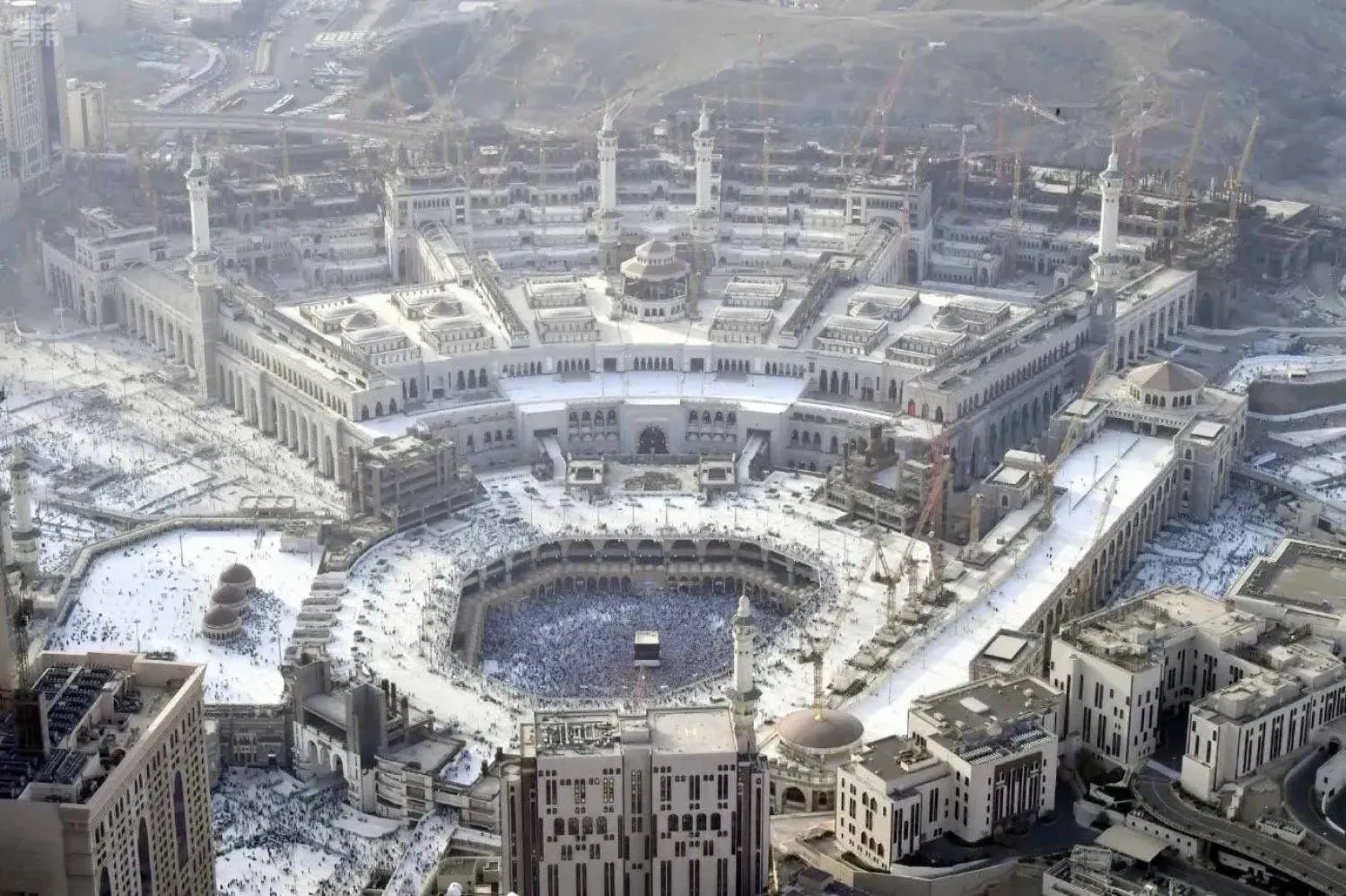
The Houthis have continued to target Islamic holy sites, most recently with a drone attack on Makkah, while the Coalition stressed that “the security of the Two Holy Mosques is a red line.” Experts told Asharq Al-Awsat that attacks on places of worship constitute a violation of international law.

Tuesday’s targeting of Makkah was not the first such attack. Coalition spokesman Maj. Gen. Turki Al-Maliki said it followed an earlier ballistic missile attack in July 2017.

The Coalition stressed that “the security of the Two Holy Mosques and the Umrah performers is a red line” and that its Joint Forces Command “will not hesitate to take the necessary and deterrent measures against the terrorist Houthi militia and its hostile and terrorist behavior.”

The drone targeting Makkah, intercepted and destroyed by the Royal Saudi Air Defense Forces south of the city, marked another attack on Islamic holy sites and places of worship. It followed Saturday’s targeting of a mosque in Al-Tuwal governorate in Jazan, as well as an attack launched from Iraqi territory against Madinah.

The Coalition statement said the incident “can only be described as a disgraceful act — an attempt to target the cradle of revelation, the land of the divine message and a destination cherished by millions of Muslims from around the world.”

It said the attack also sought to terrorize pilgrims visiting the Grand Mosque and harm citizens and residents.

“This hostile attempt will remain a black mark on the record of violations committed by the extremist terrorist Houthi militia, as it was a deliberate act intended to provoke the feelings of millions of Muslims,” the statement said.

Saudi Arabia’s Foreign Ministry condemned the attack, while several Arab and Islamic countries and other states in the region and around the world expressed solidarity. They also praised the Royal Saudi Air Defense Forces for intercepting the hostile drone before it entered restricted airspace over Makkah.

Violation of International Law

Under the Rome Statute of the International Criminal Court, intentionally directing attacks against buildings dedicated to religion, including mosques and places of worship, constitutes a war crime in international and non-international armed conflicts, provided they are not military objectives.

Places of worship of cultural or spiritual importance receive additional protection under Article 53 of Additional Protocol I and Article 16 of Additional Protocol II to the Geneva Conventions. Rule 38 of customary international humanitarian law also requires particular care to avoid damage to buildings dedicated to religious purposes.

Deliberate attacks on mosques and places of worship during armed conflict therefore violate international humanitarian law and may amount to war crimes when the sites are not military objectives.

Targeting Regional Security

Dr. Khaled Al-Habbas, former Arab League assistant secretary-general for political affairs, told Asharq Al-Awsat that attacks on the Kingdom by Iran-aligned militias underscored what he described as their functional role as proxies directed by the Revolutionary Guard Corps to destabilize regional security and stability.

Given Saudi Arabia’s regional and international standing and influence, its spiritual and economic importance, its position as a strategic depth for Gulf states and at the heart of the Arab and Islamic worlds, Al-Habbas argued that Iran had sought to target the Kingdom through its regional proxies.

Such attacks, he maintained, amounted to targeting the security and stability of the entire region and, beyond that, regional and international security.

‘Aggression Against the Islamic World’

Al-Habbas stressed that the escalation came amid a decline in Iran’s regional role, including its ability to control the Strait of Hormuz. He described the conduct and aggression of its proxies against the Kingdom as evidence of disregard for good-neighborly relations, international law and the purposes and principles of the UN Charter.

Attacks on holy sites, he added, constituted a serious violation of their sanctity and “blatant aggression against all Islamic countries” that required condemnation and action.

“Despite the Kingdom’s consistent approach of de-escalation and support for a political settlement, it certainly has the right to defend its security and stability,” Al-Habbas said, calling on Arab and Islamic countries to confront what he described as the arrogance and aggression of Iran and its proxies.

He also urged the international community to take a firm stance against the militias, arguing that regional security was inseparable from international security because of the region’s geostrategic and economic importance.

Political analyst Abdul Latif Al-Mulhim described such attacks as a continuation of what he called the Houthis’ systematic hostile approach and attacks targeting residential areas and vital facilities, in flagrant defiance of international and humanitarian laws and conventions.

He argued that the attacks reflected the group’s extremist criminal conduct, its rejection of all peace efforts and a threat to regional and international security and stability.

International Responsibility

Al-Habbas and Al-Mulhim agreed that the attacks, coinciding with the militia’s control of the Bab Al-Mandab Strait and its imposition of restrictions on maritime navigation, offered the world and the international community a clear indication of the conduct to be expected from the group if it continued such practices.

They warned of an imminent threat to the region’s security and economic future if the international community delayed fulfilling its responsibilities in combating the group’s actions.


Hajj Conference Marks Major Leap, More Than Fivefold Growth

Saudi Minister of Hajj and Umrah meets with journalists on the sidelines of the conference (Asharq Al-Awsat)
TT

Hajj Conference Marks Major Leap, More Than Fivefold Growth

Saudi Minister of Hajj and Umrah meets with journalists on the sidelines of the conference (Asharq Al-Awsat)

The sixth Hajj Conference and Exhibition wrapped up in the Saudi city of Jeddah on Wednesday, drawing more than 200,000 attendees and participants from over 150 countries, a sharp rise from around 14,000 at its 2022 debut.

The four-day gathering brought together officials, experts and service providers for talks and agreements aimed at improving pilgrim services and accelerating preparations for future Hajj seasons.

Saudi Minister of Hajj and Umrah Tawfiq Al-Rabiah hailed the event as a "major qualitative leap," citing soaring attendance, wider international participation and a growing number of contracts to improve services for pilgrims.

Speaking to reporters at the close of the conference, Al-Rabiah said the event had expanded significantly since its launch in 2022 with just 84 participating companies.

The minister said the gathering attracted representatives from more than 150 countries, including ministers, religious leaders, muftis and government officials, reflecting its growing role in shaping pilgrim services.

He said the conference had grown more than fivefold, praising the organizers and expressing hope for further improvements in services.

Held under the theme "From Makkah to the World" at Jeddah Superdome, the conference was organized by the Ministry of Hajj and Umrah in cooperation with the Pilgrim Experience Program.

It brought together government planning and operations agencies, Hajj affairs offices, service providers and technology companies to tackle challenges facing pilgrims and finalize preparations for the 1448 AH Hajj season.

The program focused on three areas: infrastructure and operational services; empowerment and integration; and development and sustainability.

Discussions covered transportation, accommodation, catering, crowd management, healthcare, security and safety, digital transformation and workforce training.

A key focus was the shift toward all-inclusive service packages for pilgrims, alongside tighter contracting procedures, stronger oversight and better ways to measure service quality.

Artificial intelligence and data analytics also featured prominently in discussions on streamlining operations and improving the pilgrimage experience.

Conference sessions revealed that the Nusuk app had surpassed 65 million users worldwide and offered more than 100 services.

The electronic Hajj platform, meanwhile, connects more than 70 entities inside and outside Saudi Arabia, helping coordinate pilgrim reception, transportation, accommodation, group movements and departures.

Participants also examined advances in housing, transportation and healthcare, including the growing use of smart technologies, sensors and communications systems.

Discussions highlighted stronger governance and oversight, and a shift from measuring operational readiness to assessing how services actually affect pilgrims.

On the final day, attention turned to preparations for the next Hajj season, with sessions exploring artificial intelligence, the future of digital services, smart infrastructure, medical readiness and the role of regulations in improving hospitality standards.

The contributions of Saudi Scouts to pilgrim services were also highlighted.

Specialized workshops on the fourth day addressed emergency response coordination, the shift from prevention to healthcare, food safety, catering and services linked to the Nusuk Card.

Other sessions focused on crowd management at the holy sites, early warning systems and improving the skills of Hajj sector workers.

Beyond the formal conference sessions, the program featured the Hajj Council, showcasing personal and professional experiences in serving pilgrims, alongside the Innovation Council, the Awareness and Training Diwaniya and the Hajj Affairs Offices Forum.

Dedicated spaces also allowed participating organizations to exchange expertise and explore cooperation.

The accompanying exhibition showcased technological and operational solutions for the pilgrimage journey, with specialized areas covering healthcare, aviation, technology, innovation and media.

A business center and partner platform provided opportunities for meetings, contract negotiations and partnerships ahead of future Hajj seasons.

The conference's previous five editions generated more than 1,850 agreements related to pilgrim services and hosted over 310 discussion sessions, underscoring the event's expansion over the years.

With the sixth edition concluded, the focus now shifts from discussions and agreements to implementation, as Saudi Arabia seeks to turn new partnerships and technological solutions into practical improvements for the 1448 AH Hajj season.

The effort reflects a broader push to strengthen coordination among service providers, improve efficiency and deliver a better experience for pilgrims at every stage of their journey.


Saudi Arabia, Kenya Sign Technical Annex to Regulate Domestic Worker Recruitment

Saudi Arabia, Kenya Sign Technical Annex to Regulate Domestic Worker Recruitment
TT

Saudi Arabia, Kenya Sign Technical Annex to Regulate Domestic Worker Recruitment

Saudi Arabia, Kenya Sign Technical Annex to Regulate Domestic Worker Recruitment

Saudi Vice Minister of Human Resources and Social Development for Labor Abdullah Nasser Abuthnain met with Kenya’s Cabinet Secretary for Labor and Social Protection Alfred Nganga Mutua on Thursday at the ministry’s headquarters in Riyadh, in the presence of the accompanying Kenyan delegation and several senior ministry officials.

The meeting discussed ways to strengthen cooperation between Saudi Arabia and Kenya in areas of mutual interest in the labor sector, particularly by developing cooperation mechanisms for the recruitment of domestic workers, improving the effectiveness of pre-departure training and qualification programs, and raising awareness of contractual rights and obligations, SPA reported.

These efforts aim to enhance the readiness of domestic workers, improve the quality of recruitment services, promote stability in contractual relations, and protect the rights of all parties.

The two sides also discussed mechanisms for strengthening technical coordination, exchanging expertise and best practices in training and qualification, and improving procedures related to the recruitment of domestic workers. These measures aim to enhance the efficiency of recruitment processes, improve their outcomes, and serve the mutual interests of both countries.

According to SPA, following the meeting, the Saudi vice minister and Kenya’s cabinet secretary signed a technical annex to the agreement on the recruitment of domestic workers between Saudi Arabia and Kenya, signed on July 5, 2026.

The annex is part of efforts to strengthen cooperation and develop the technical and regulatory mechanisms governing the recruitment of domestic workers.

The technical annex aims to streamline procedures and reduce the costs of recruiting domestic workers from Kenya to Saudi Arabia. It also seeks to improve the efficiency of recruitment mechanisms, ensure compliance with approved regulations, protect the rights of employers and domestic workers, and regulate the contractual relationship between the two parties.

The signing of the annex builds on the longstanding relations and ongoing cooperation between Saudi Arabia and Kenya, reflecting both sides’ commitment to developing their partnership in labor-related fields, improving the efficiency of the recruitment system, and promoting sustainable cooperation that serves the mutual interests of both countries.


Saudi Arabia and Kuwait Support Efforts to De-escalate Regional Tensions

Saudi Foreign Minister Prince Faisal bin Farhan and his Kuwaiti counterpart Sheikh Jarrah Al-Sabah (Asharq Al Awsat)
TT

Saudi Arabia and Kuwait Support Efforts to De-escalate Regional Tensions

Saudi Foreign Minister Prince Faisal bin Farhan and his Kuwaiti counterpart Sheikh Jarrah Al-Sabah (Asharq Al Awsat)

Saudi Foreign Minister Prince Faisal bin Farhan discussed the latest regional developments and efforts to address them during a phone call on Wednesday with his Kuwaiti counterpart, Sheikh Jarrah Al-Sabah.

Saudi Arabia and Kuwait stressed the importance of maintaining coordination and consultations between the two countries and supporting joint diplomatic efforts to de-escalate tensions and strengthen regional security and stability.