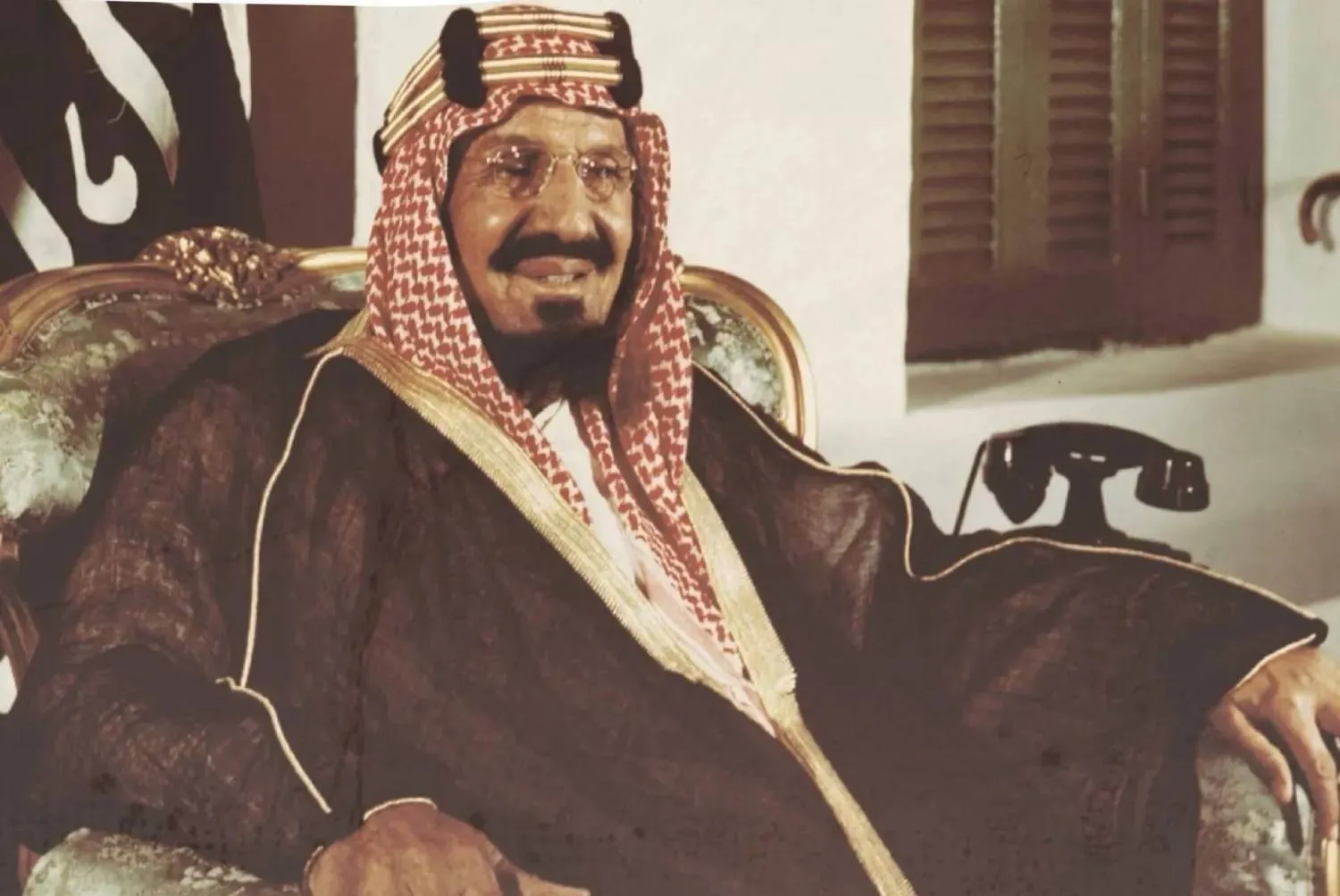
King Abdulaziz Mosque in North Riyadh Preserves Founder’s Legacy in National Memory

Naming the mosque after King Abdulaziz honors and preserves his national legacy. (Royal Commission for Riyadh City) 
TT

King Abdulaziz Mosque in North Riyadh Preserves Founder’s Legacy in National Memory

Naming the mosque after King Abdulaziz honors and preserves his national legacy. (Royal Commission for Riyadh City) 

Custodian of the Two Holy Mosques King Salman bin Abdulaziz Al Saud has directed, following a proposal by Crown Prince and Prime Minister Mohammed bin Salman, that a mosque to be built in northern Riyadh be named after King Abdulaziz.

An 88,000-square-meter site along King Abdulaziz Road has been allocated for the project.

Prince Faisal bin Bandar bin Abdulaziz, governor of Riyadh Region, welcomed the directive on behalf of the region’s residents, describing it as a tribute to the legacy of the Kingdom’s founder and his place in the national memory.

He noted that building and caring for mosques has long been a cornerstone of the Saudi leadership’s approach, with the King Abdulaziz Mosque continuing that tradition.

According to Prince Faisal, the mosque also reflects the leadership’s attention to the Kingdom’s history and its leaders, embodying values of loyalty while reinforcing national unity and highlighting Saudi Arabia’s deep-rooted history.

Prince Mohammed bin Abdulrahman bin Abdulaziz, deputy governor of Riyadh Region, described the directive as a tribute by the leadership to legacy of King Abdulaziz and to the achievements Saudi Arabia has made since he unified the country.

He characterized the Kingdom’s history, heritage, unity and cohesion between its leaders and people as a source of pride, adding that the mosque’s name reflected appreciation for King Abdulaziz’s efforts to build and care for mosques.

Prince Faisal bin Abdulaziz bin Ayyaf, mayor of Riyadh Region, called the mosque an important addition to the capital amid rapid urban and population growth in northern Riyadh.

Its location, size and integrated facilities will serve residents and visitors while meeting demand for a major mosque as well as religious, educational and community facilities, he noted.

The project will include a library, a Quran memorization school, a mortuary washing facility, open courtyards and other community amenities. Its design is intended to make it a prominent architectural landmark at the capital’s northern entrance.

The mayor emphasized that naming the mosque after King Abdulaziz gives the project particular significance, linking a new landmark in the modern capital with the history and legacy of the Kingdom’s founder.

A Saudi tradition of mosque construction

The naming also commemorates King Abdulaziz’s role in unifying Saudi Arabia and his efforts to build and maintain mosques across the Kingdom.

During his reign, mosque construction and preservation became an important part of state-building. In 1344 AH, he ordered the comprehensive restoration of the Grand Mosque in Makkah, followed by the establishment of a facility to produce the Kaaba’s kiswa in Ajyad in 1346 AH. His reign also saw the introduction of electric lighting and the roofing of the Masa’a, the walkway between Safa and Marwah.

Those efforts extended to restoring and establishing major mosques across the Kingdom. King Abdulaziz also established administrative and financial structures to ensure their continued maintenance and care through the creation of the Directorate of Endowments, laying the foundations for Saudi Arabia’s continuing approach to preserving the architectural and cultural significance of mosques.

The new mosque will stand along King Abdulaziz Road in a rapidly developing area of northern Riyadh. Covering 88,000 square meters. It s intended to become a prominent landmark serving residents and visitors while carrying the name of the Kingdom’s founder and meeting the area’s religious and urban needs.

Custodian of the Two Holy Mosques Receives Written Message from Emir of Qatar

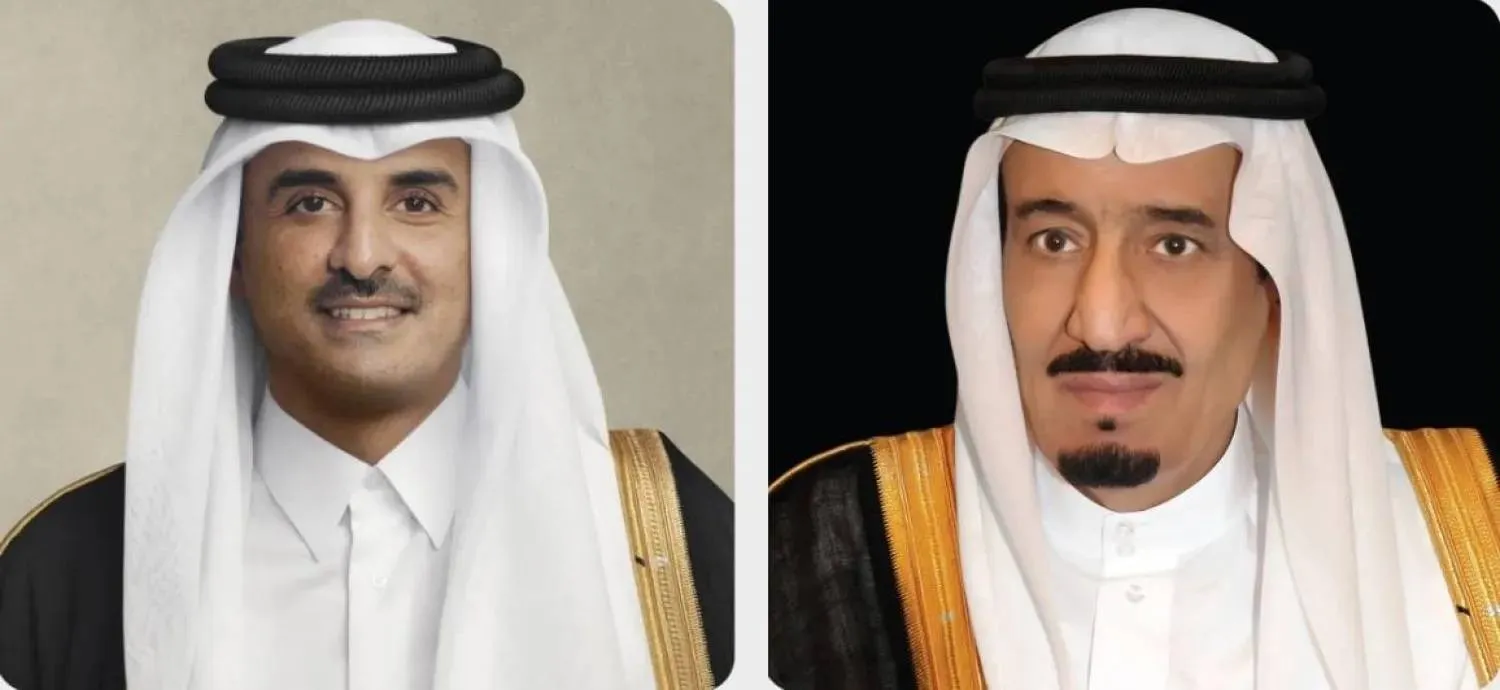
Custodian of the Two Holy Mosques King Salman bin Abdulaziz Al Saud and Emir of Qatar Sheikh Tamim bin Hamad Al Thani. (Asharq Al-Awsat)
TT

Custodian of the Two Holy Mosques Receives Written Message from Emir of Qatar

Custodian of the Two Holy Mosques King Salman bin Abdulaziz Al Saud and Emir of Qatar Sheikh Tamim bin Hamad Al Thani. (Asharq Al-Awsat)

Custodian of the Two Holy Mosques King Salman bin Abdulaziz Al Saud received on Monday a written message from Emir of Qatar Sheikh Tamim bin Hamad Al Thani on bilateral relations between their countries.

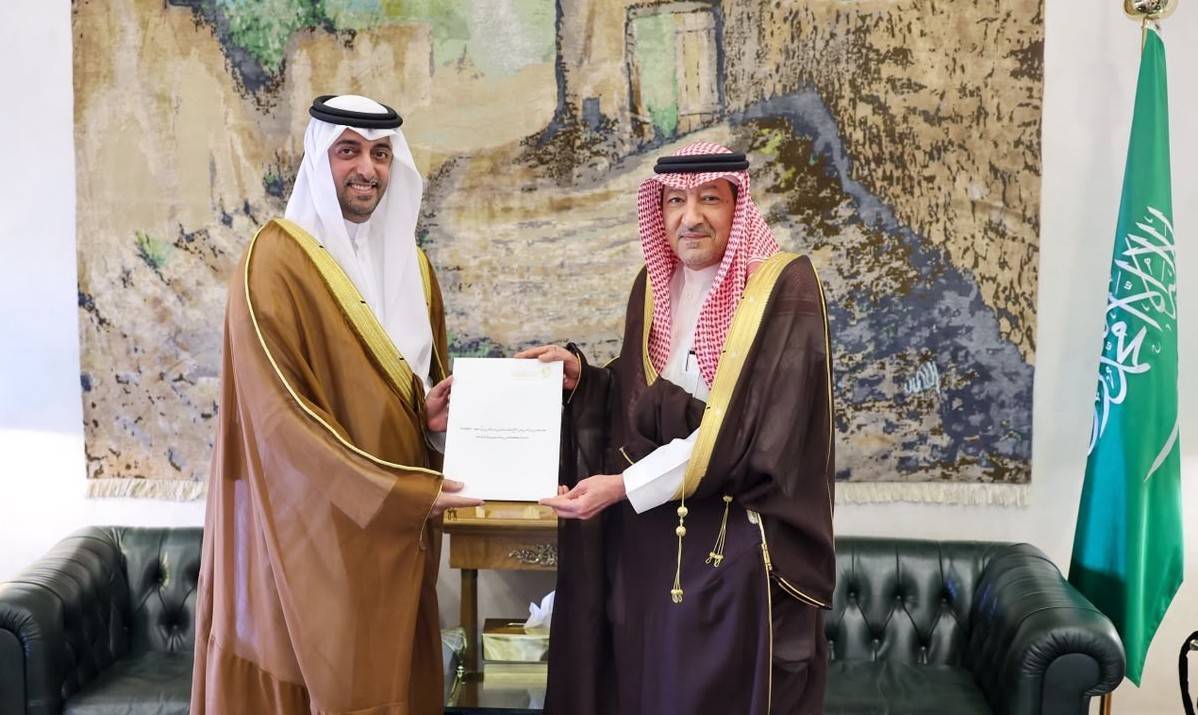
The message was received by Vice Minister of Foreign Affairs Waleed Elkhereiji during a meeting with Ambassador of Qatar to Saudi Arabia Bandar bin Mohammed Al Attiyah at the ministry's headquarters in Riyadh.

Vice Minister of Foreign Affairs Waleed Elkhereiji meets with Ambassador of Qatar to Saudi Arabia Bandar bin Mohammed Al Attiyah in Riyadh on Monday. (SPA)

The meeting reviewed bilateral relations between their countries, ways to boost them in various fields. They also discussed issues of common interest.


Qatar Calls for Non-Aggression Pact with Iran, Announces Plans to Strengthen Defense Industry

Qatari Deputy Prime Minister and Minister of State for Defense Affairs Sheikh Saoud bin Abdulrahman Al Thani attends the opening of the eighth Global Security Forum in Doha on Monday.
TT

Qatar Calls for Non-Aggression Pact with Iran, Announces Plans to Strengthen Defense Industry

Qatari Deputy Prime Minister and Minister of State for Defense Affairs Sheikh Saoud bin Abdulrahman Al Thani attends the opening of the eighth Global Security Forum in Doha on Monday.

Qatar has called for a regional dialogue involving the Gulf Cooperation Council (GCC) states and Iran, with the participation of Türkiye and Pakistan, aimed at reaching security understandings based on confidence-building measures and a non-aggression agreement.

The proposal comes as Doha prepares to unveil new defense partnerships and plans to establish a domestic military production center, part of efforts to strengthen its ability to counter missile threats, drones and cyberattacks.

The announcements were made by Sheikh Saoud bin Abdulrahman Al Thani, Qatar's Deputy Prime Minister and Minister of State for Defense Affairs, during the opening of the eighth Global Security Forum in Doha on Monday.

The forum, which runs through October 21 under the theme "The Future of Alliances", brings together officials and experts in international security and politics.

The Qatari minister said achieving lasting peace with Iran would require addressing mutual security concerns and building economic relationships that could help prevent renewed conflict.

He stressed that Qatar continues to maintain contact with Tehran despite the attacks it has suffered and supports mediation efforts led by Pakistan, in cooperation with Oman and other partners, to seek a settlement to the conflict between the United States and Iran.

On defense security, Sheikh Saoud revealed that Qatar is preparing to announce a partnership with regional parties to develop its air defense, counter-drone and cybersecurity capabilities.

He also announced plans to establish a domestic defense production center in cooperation with a regional partner and countries including the United States, the United Kingdom and France, either by localizing certain military industries or investing in specialized companies.

The minister explained that a defense review conducted by Qatar had identified air defense, cybersecurity and electronic warfare as priorities, following the threats witnessed across the region during the recent conflict.

He said Doha would soon announce the establishment of the domestic defense production center, explaining that Qatar is working with a regional partner, alongside the United States, Britain and France, to develop local defense capabilities or invest in companies operating in the sector.

Asked about the threats facing Qatar and other Gulf countries, particularly ballistic missiles, drones and cyberattacks, Sheikh Saoud said a new partnership with regional parties would be announced soon to launch an initiative aimed at building capabilities in those three areas and others.

The minister emphasized the importance of Qatar's military partnership with the United States, noting that defense cooperation and exchanges of expertise had helped intercept more than 90 percent of attacks during the conflict.

He also reaffirmed Qatar's commitment to the continued development of Al Udeid Air Base, describing it as a Qatari facility that hosts allied forces and supports multiple missions, including counterterrorism operations.

On energy security, Sheikh Saoud warned that the economic repercussions of disruptions to oil and gas supplies had not yet reached their peak, and that their effects on prices and consumers could continue over the coming months.

He also rejected the imposition of fees on vessels transiting the Strait of Hormuz, stressing the need for an agreement guaranteeing freedom of navigation and stability in energy markets.

The minister addressed the Israeli attack on Qatar, arguing that targeting a country engaged in mediation undermines confidence in diplomatic efforts.

He also referred to the apology issued by the Israeli prime minister following the attack.

Discussing Iranian attacks on Qatari facilities and interests, Sheikh Saoud said Doha had drawn lessons from the incidents to strengthen its defense preparedness, without abandoning dialogue with Tehran.

He stressed that mediation and military readiness are not mutually exclusive, explaining that preventing wars requires sustained diplomatic engagement alongside the development of capabilities necessary to protect national sovereignty.

The Global Security Forum, organized by the Soufan Center and the Qatar International Academy for Security Studies, is being held under the patronage of Sheikh Mohammed bin Abdulrahman Al Thani, Qatar's Prime Minister and Minister of Foreign Affairs.

The forum is examining the future of alliances and defense partnerships, maritime security and supply chains, cybersecurity challenges, and de-escalation diplomacy amid ongoing shifts in international relations.


Saudi Arabia, France Discuss Relations and Regional Developments

Saudi Minister of Foreign Affairs Prince Faisal bin Farhan bin Abdullah holding talks with Minister for Europe and Foreign Affairs of the French Republic Jean-Noël Barrot - SPA
TT

Saudi Arabia, France Discuss Relations and Regional Developments

Saudi Minister of Foreign Affairs Prince Faisal bin Farhan bin Abdullah holding talks with Minister for Europe and Foreign Affairs of the French Republic Jean-Noël Barrot - SPA

Saudi Minister of Foreign Affairs Prince Faisal bin Farhan bin Abdullah met with Minister for Europe and Foreign Affairs of the French Republic Jean-Noël Barrot.

During the meeting, they reviewed bilateral relations and the existing partnership across various fields, exploring ways to further strengthen them to serve mutual interests and support the aspirations of both friendly nations.

The ministers also discussed regional developments and efforts to mitigate the repercussions of ongoing events. Barrot expressed his country’s condemnation of the terrorist attacks carried out by the Houthi militia and affirmed France’s solidarity with Saudi Arabia.

The two sides also underscored the importance of intensifying diplomatic efforts to ensure the security and safety of regional waterways and freedom of navigation, as well as supporting diplomatic efforts to achieve comprehensive and sustainable solutions to ongoing regional crises, thereby enhancing security and stability across the region.