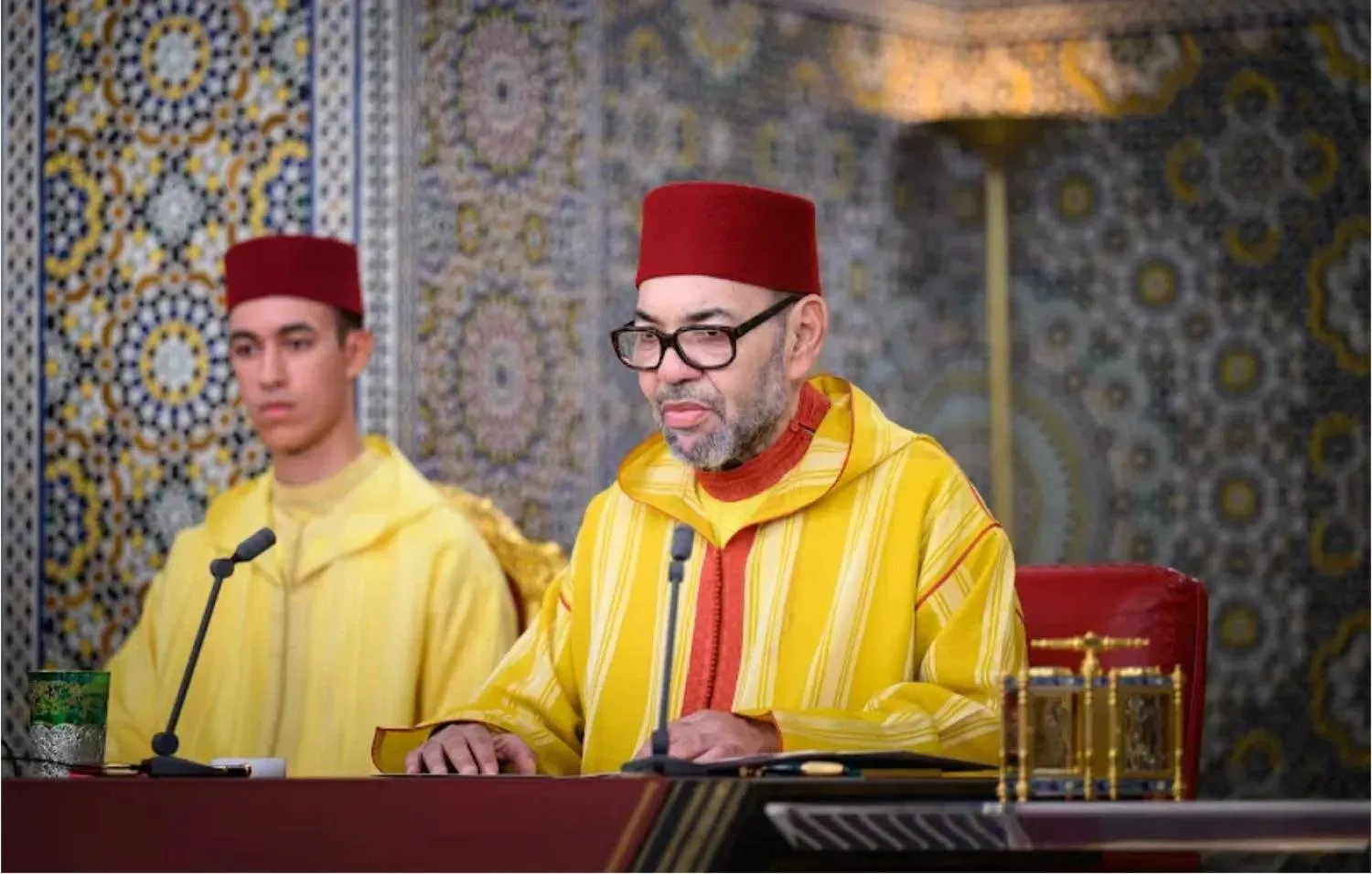
King Mohammed VI: Saudi Security is an Integral Part of Morocco’s Security

Moroccan King Mohammed VI (MAP)
TT

King Mohammed VI: Saudi Security is an Integral Part of Morocco’s Security

Moroccan King Mohammed VI (MAP)

Morocco’s King Mohammed VI, on his own behalf and on behalf of the Moroccan people, has condemned the repeated attacks carried out by the terrorist Houthi militias against Saudi Arabia.

The attacks targeted civilian and economic facilities, vital installations, cities, and residential areas.

The King affirmed on Sunday that what further deepens the condemnation is that the attacks have not been confined to targeting facilities and civilians. Rather, they have extended to desperate and criminal attempts to target the two holiest sites in Islam, revered by Muslims around the world: Makkah and Madinah.

In two cables addressed to Custodian of the Two Holy Mosques King Salman bin Abdulaziz Al Saud and Prince Mohammed bin Salman bin Abdulaziz Al Saud, Saudi Crown Prince and Prime Minister, the Moroccan King said: “Out of loyalty to the bonds of faith, history and shared destiny, and the strong ties of brotherhood that personally unite us, as well as our two families and our two brotherly peoples, I address you at this critical juncture facing your dear country, when our historical responsibility, religious values and strategic considerations require us all to stand united in defense of truth, sovereignty, security and the sacred sites of the Muslim Ummah.”

“These despicable attacks and desperate attempts to undermine the security, stability and well-being of the proud Saudi people are not merely an assault on the brotherly Kingdom of Saudi Arabia, its people and the Umrah performers there; they are also a blatant assault on the sentiments of more than 1.8 billion Muslims across the world. They also constitute a flagrant violation of the values and principles upon which the noble Islamic faith is founded, including peace, tolerance, and the sanctity of blood, honor and sacred sites,” he said.

“We express our condemnation of these criminal acts, for which the terrorist Houthi militias, as well as those who stand behind them, finance and arm them, bear full responsibility. We consider them all accountable before Allah Almighty, history and international law, with the international sanctions that should follow accordingly,” the Moroccan king said.

“The security and stability of the Kingdom of Saudi Arabia, like those of the other Gulf Cooperation Council (GCC) states, are an integral part of the security of the Kingdom of Morocco. Any attack on Saudi Arabia is an attack on Morocco, because we consider standing with our brothers in Saudi Arabia and in the brotherly Arab Gulf states to be standing for truth and legitimacy, while defending their vital interests is defending our shared strategic interests,” King Mohammed VI added.

He also affirmed his country's steadfast support for Saudi Arabia in confronting the risks it faces as a result of the actions of terrorist and separatist militias and the regional powers backing them, which target the security of their neighbors and the wider region with a short-sighted and destructive approach.

He indicated that these actions seek to undermine the security of the entire region, disrupt the stability enjoyed by its countries, and threaten vital maritime routes of paramount importance to the global economy and the security of international maritime navigation.

The King stressed that such attacks “constitute a flagrant violation of international law and relevant UN provisions, foremost among them Resolution 2216 (2015), which calls on the militias to withdraw, surrender their weapons and cease violence, and Resolution 2722 (2024), which calls on them to immediately cease attacks on maritime navigation.”

“The targeting of civilian areas, economic facilities and holy sites also constitutes a blatant violation of international humanitarian law and international conventions and norms, and cannot go without accountability or punishment,” he added.
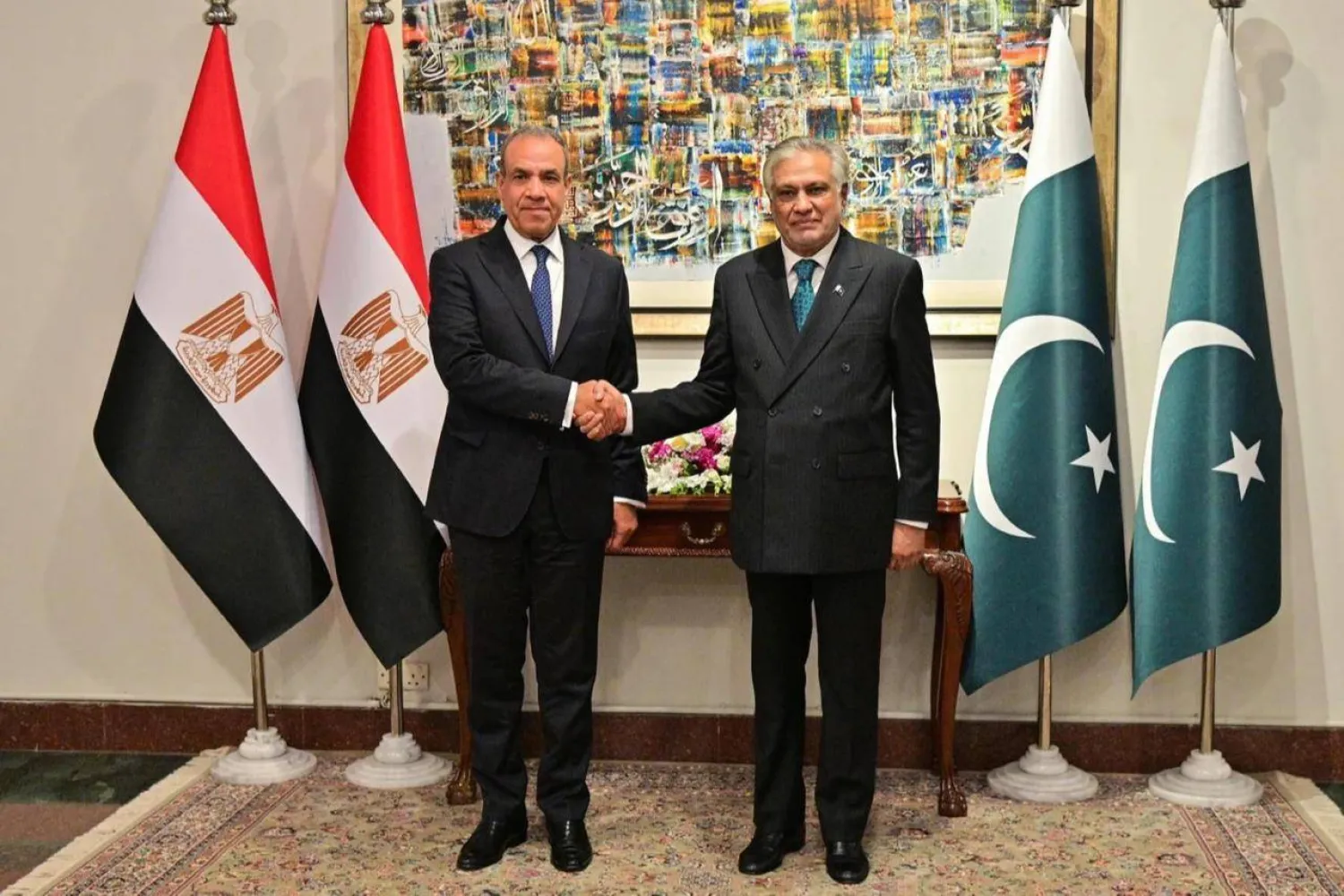


Pakistan, Egypt FMs Condemn Houthi Attacks on Saudi Arabia, Seek Quadrilateral Meeting

This handout photograph taken and released by Pakistan's Ministry of Foreign Affairs on March 29, 2026 shows Pakistan’s Foreign Minister Ishaq Dar (R) shaking hand with his Egyptian counterpart Badr Abdelatty (L) at Foreign Ministry office in Islamabad, Pakistan. (Pakistan's Ministry of Foreign Affairs Handout/AFP)
TT

Pakistan, Egypt FMs Condemn Houthi Attacks on Saudi Arabia, Seek Quadrilateral Meeting

This handout photograph taken and released by Pakistan's Ministry of Foreign Affairs on March 29, 2026 shows Pakistan’s Foreign Minister Ishaq Dar (R) shaking hand with his Egyptian counterpart Badr Abdelatty (L) at Foreign Ministry office in Islamabad, Pakistan. (Pakistan's Ministry of Foreign Affairs Handout/AFP)

Pakistan's Deputy Prime Minister and Minister for Foreign Affairs Ishaq Dar and Egypt's Minister of Foreign Affairs Dr. Badr Abdelatty strongly condemned Houthi attacks on Saudi Arabia.

The condemnation came during a phone call between Dar and Abdelatty on Sunday, during which they affirmed their full solidarity with Saudi Arabia and support for its sovereignty, security, and territorial integrity.

The ministers reviewed regional developments and their implications for security and stability.

They discussed ways to enhance cooperation within the quadrilateral group comprising Saudi Arabia, Pakistan, Egypt, and Türkiye.

They hoped the group's next meeting would be held as soon as possible to strengthen ties and coordinate positions on regional issues.


Mohamed bin Zayed, Khalid bin Salman Discuss Regional Developments

Minister of Defense Prince Khalid bin Salman bin Abdulaziz meets with President of the United Arab Emirates Sheikh Mohamed bin Zayed Al Nahyan at Qasr Al Shatie in Abu Dhabi on Sunday. (SPA)
TT

Mohamed bin Zayed, Khalid bin Salman Discuss Regional Developments

Minister of Defense Prince Khalid bin Salman bin Abdulaziz meets with President of the United Arab Emirates Sheikh Mohamed bin Zayed Al Nahyan at Qasr Al Shatie in Abu Dhabi on Sunday. (SPA)

Upon the directives of the Saudi leadership, Minister of Defense Prince Khalid bin Salman bin Abdulaziz met on Sunday with President of the United Arab Emirates Sheikh Mohamed bin Zayed Al Nahyan at Qasr Al Shatie in Abu Dhabi.

Prince Khalid conveyed the greetings of Custodian of the Two Holy Mosques King Salman bin Abdulaziz Al Saud and Prince Mohammed bin Salman bin Abdulaziz Al Saud, Crown Prince and Prime Minister, to the president, along with their wishes for further progress and prosperity for the UAE government and people. In turn, Sheikh Mohamed bin Zayed conveyed his greetings to King Salman and the Crown Prince.

The meeting reviewed regional developments and the importance of consultations on priorities for the coming period. The officials also exchanged views on the latest developments in the region and discussed issues and matters of mutual interest.

The meeting was attended by UAE Vice President, Deputy Prime Minister, and Chairman of the Presidential Court Sheikh Mansour bin Zayed Al Nahyan.

Prince Khalid arrived in Abu Dhabi earlier on Sunday, where he was received at Al Bateen Airport by Sheikh Mansour bin Zayed Al Nahyan.


Gulf Support to Saudi Arabia’s Right to Defend Itself, Condemnation of Houthi Attacks

The GCC foreign ministers during their meeting in Bahrain. (GCC)
TT

Gulf Support to Saudi Arabia’s Right to Defend Itself, Condemnation of Houthi Attacks

The GCC foreign ministers during their meeting in Bahrain. (GCC)

Gulf foreign ministers discussed in Bahrain on Sunday regional developments, specifically Houthi attacks on Saudi territory. The officials meeting at the 168th GCC Ministerial Council condemned the assaults and supported the Kingdom's right to defend itself.

In addition to developments in Yemen, they discussed the escalation in the region and threats to freedom of navigation in the Arabian Gulf and Red Sea.

The Gulf meeting was followed by the ninth joint ministerial meeting for the Gulf-Russian Strategic Dialogue, aimed at strengthening relations between both sides and expanding the horizons of partnership in various fields.

Secretary-General of the Gulf Cooperation Council (GCC) Jasem Albudaiwi said the talks between the Gulf ministers and Russian Foreign Minister Sergei Lavrov will address ways to develop Gulf-Russian cooperation and exchange views on issues of common interest.

Solidarity with Saudi Arabia

Addressing the Ministerial Council meeting, Bahrain’s FM Dr. Abdullatif bin Rashid Al Zayani underlined Gulf solidarity with Saudi Arabia and their support for its right to self-defense.

“We stand as one with the Kingdom of Saudi Arabia and support its inherent right to self-defense in accordance with Article 51 of the United Nations Charter,” he said.

The security of "Saudi Arabia is an integral part of the security of the member states of the GCC" and "the security of the GCC states is a fundamental pillar of regional and international security,” he declared.

He condemned the terrorist Houthi attacks on Saudi Arabia and “their deliberate targeting of civilians and civilian objects and airports” that has left deaths and injuries.

He noted the attack on King Khalid International Airport that left 14 civilians dead and over 300 people wounded.

The attacks are a flagrant violation of international law and Chicago convention on international civilian aviation, he said, while reiterating Bahrain’s firm stance in support of Saudi Arabia in confronting these assaults.

For his part, Albudaiwi stressed that the heinous assaults committed by the terrorist militia “confront us with deliberate criminal conduct that disregards the sanctity of human life, the safety of civilian facilities, and the consequences of escalation on regional security and stability.”

He reiterated the GCC's “categorical condemnation of these blatant assaults, rejecting the continued targeting of airports, civilian facilities, and energy infrastructure, as well as terrorizing residents and endangering travelers and workers.”

He affirmed that this militia’s “persistence in repeating its crimes necessitates impactful international action to halt its attacks, hold those responsible accountable, and prevent its threats to security and stability.”

"The repeated Iranian attacks to which GCC member states have been subjected cannot be overlooked, as they represent a flagrant violation of their sovereignty and territorial integrity, and a direct threat to their security and stability,” he added.

“This is in addition to the dangerous and ongoing Iranian practices targeting the security and safety of maritime navigation in the Strait of Hormuz, and its attempts to exploit this vital international waterway as a tool for pressure and intimidation, exposing international trade and global energy supplies to grave risks,” Albudaiwi stated.

While reiterating the categorical condemnation of these unacceptable attacks and practices, he asserted the necessity of Iran’s adherence to the principles of international law and the United Nations (UN) Charter, the full implementation of UN Security Council Resolution 2817, and ensuring freedom of navigation and safe passage through the Strait of Hormuz without restrictions or threats.