Saudi Arabia: No Compromise in Protecting our Security, Will Respond Firmly to Any Threat

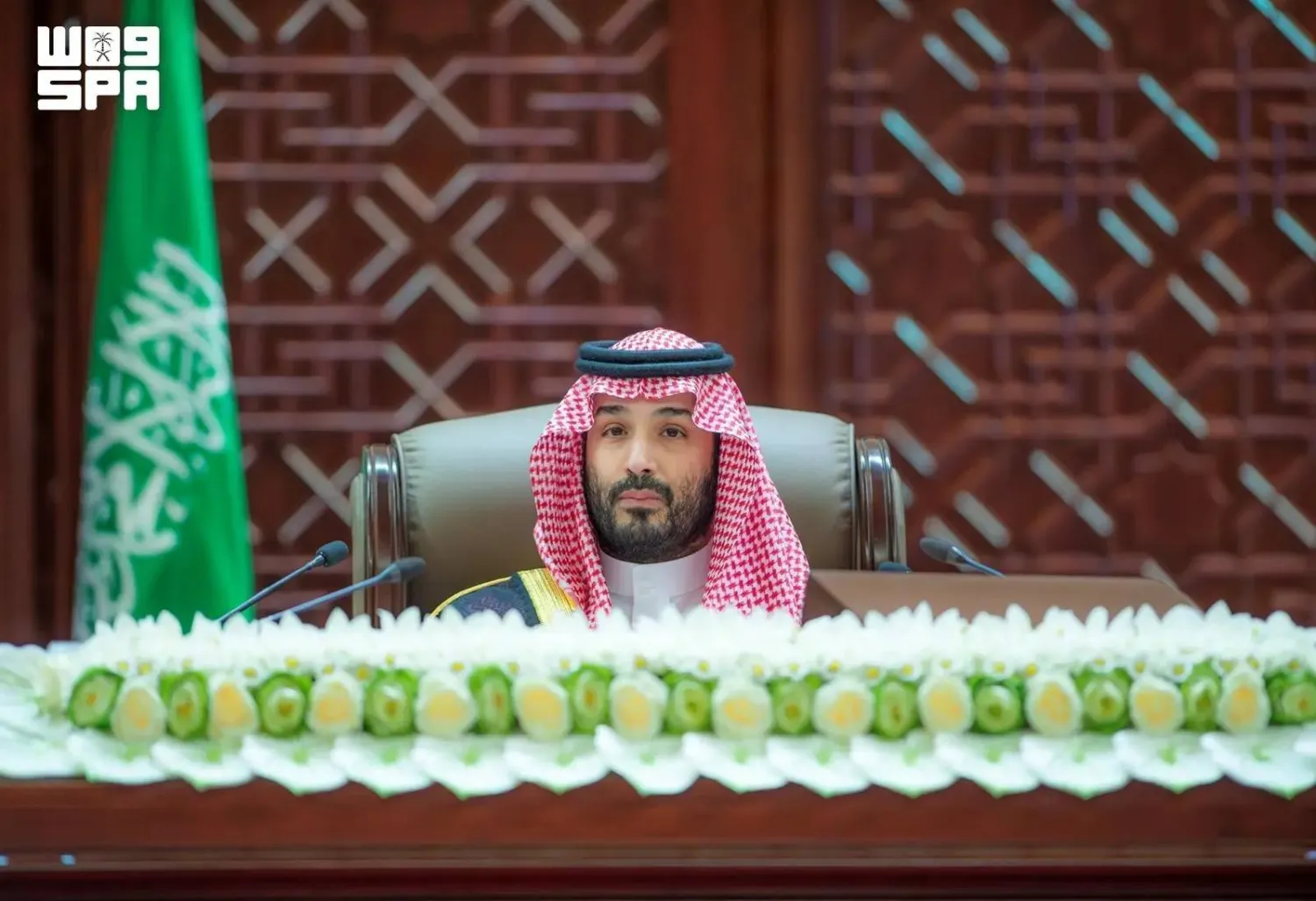
Prince Mohammed bin Salman bin Abdulaziz Al Saud, Crown Prince and Prime Minister, delivers the annual Royal Address as he inaugurates the third year of the Shura Council's ninth session on Wednesday. (SPA)
TT

Saudi Arabia: No Compromise in Protecting our Security, Will Respond Firmly to Any Threat

Prince Mohammed bin Salman bin Abdulaziz Al Saud, Crown Prince and Prime Minister, delivers the annual Royal Address as he inaugurates the third year of the Shura Council's ninth session on Wednesday. (SPA)

Prince Mohammed bin Salman bin Abdulaziz Al Saud, Crown Prince and Prime Minister, stressed on Wednesday that Saudi Arabia was “making every possible effort to reduce escalation and support diplomatic solutions, without the slightest compromise when it comes to safeguarding our security.”

“We will not hesitate to respond firmly to any threat or attack that seeks to undermine it,” he declared as he delivered the annual Royal Address as he inaugurated the third year of the Shura Council's ninth session on behalf of Custodian of the Two Holy Mosques King Salman bin Abdulaziz Al Saud.

Upon arrival at the Shura Council headquarters, the Crown Prince was received by Governor of Riyadh Region Prince Faisal bin Bandar bin Abdulaziz, Deputy Governor of Riyadh Region Prince Mohammed bin Abdulrahman bin Abdulaziz, and Speaker of the Shura Council Sheikh Dr. Abdullah bin Mohammed bin Ibrahim Al Al-Sheikh.

He was greeted by Deputy Speaker of the Shura Council Dr. Mishal Al-Sulami, Assistant Speaker of the Shura Council Dr. Hanan Al-Ahmadi, Secretary-General of the Shura Council Mohammed Al-Mutairi, and the chairs of the council's specialized committees.

Continuing the Royal Address, the Crown Prince said: “We take pride in our valiant heroes for confronting all forms of threats and for their vigilance and constant readiness, so that security continues to protect our country, stability serves as its shield, and prosperity remains its course.”

Saudi Arabia “possesses highly capable human and military resources that are fully able, by the grace of Allah, to confront and deter threats from any source.”

“The attacks targeting the Gulf Cooperation Council (GCC) states underscore that Gulf security and stability are indivisible,” he stressed.

“We are working with our brothers to safeguard Gulf security, pursue strategic cooperation and economic integration, and continue implementing the vision of the Custodian of the Two Holy Mosques for strengthening joint Gulf action, in order to achieve the GCC's goals and meet the aspirations of its citizens,” continued the Crown Prince.

“As part of our efforts to strengthen regional stability, avert the consequences of tension and conflict, and coordinate action, the Makkah Joint Defense Agreement was concluded between Saudi Arabia, Türkiye, and Pakistan,” he added.

“It stems from our shared commitment to fulfilling our role in enhancing regional security and stability. In this regard, we appreciate the support shown to the Kingdom by brotherly and friendly nations and their contributions to bolstering regional peace and stability,” he stated.
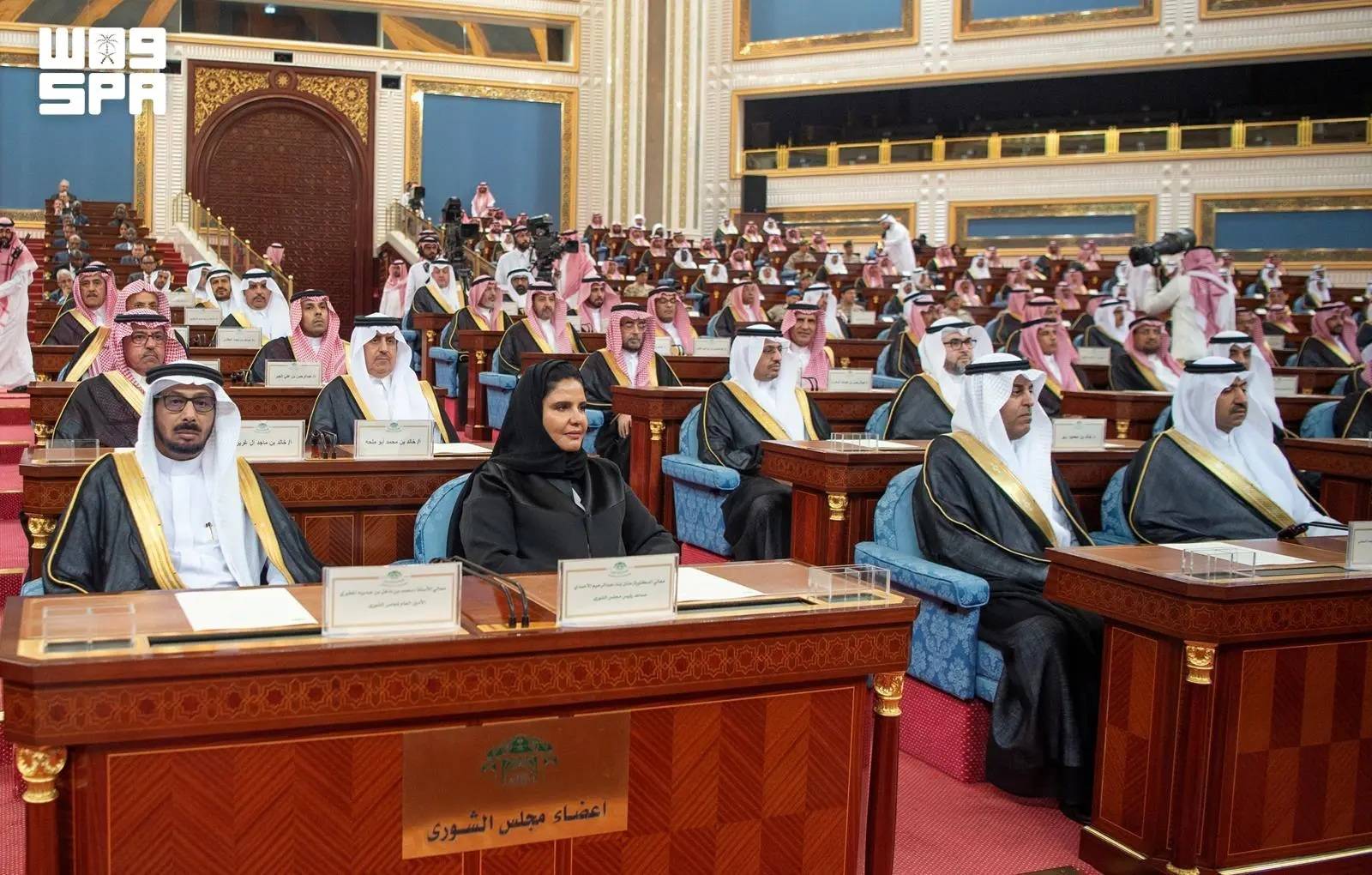
Members of the Shura Council at the inauguration of the third year of its ninth session. (SPA)

Strengthening int’l cooperation

Moreover, he remarked: “Today, the world is facing an energy crisis with uncertain outcomes. In this crisis, the Kingdom has served as a safeguard for global energy security by providing oil supplies to international markets despite the escalation.”

“The Kingdom also took the initiative to establish the Multinational Maritime Defense Alliance to enhance maritime security, protect shared interests in international sea lanes, and prevent their exploitation as a tool of political or economic pressure,” he noted.

“The Kingdom is making every effort, together with its partners, to strengthen international cooperation to maintain security, reduce escalation, and defuse tensions in pursuit of regional and international stability. We also stress the need for the international community to swiftly fulfill its responsibilities to ensure the safe flow of essential goods and humanitarian assistance,” he said.

“We strongly condemn the continued brutal attacks by the Israeli occupation authority against the Palestinian people in the Gaza Strip, as well as its repeated violations of Al-Aqsa Mosque. We call on the international community, and the Board of Peace in particular, to play its anticipated role in reaching a lasting political solution,” he urged.

“The Kingdom's commitment to the rights of the Palestinian people is a firm position and an ongoing endeavor that will not cease until the Palestinian people obtain their legitimate rights, including the establishment of their independent state in accordance with international terms of reference,” stressed the Crown Prince.

“In Yemen, the Kingdom reaffirms its comprehensive support, through the Coalition to Restore Legitimacy in Yemen, for the Yemeni government to extend its authority throughout the country, restore stability, and confront the attacks of the terrorist Houthi militias, which have chosen chaos and destruction and the threatening of the Yemeni people and the region as their course of action,” he remarked.

“The Kingdom also reaffirms its firm support for Sudan's unity and stability, the preservation of its legitimate institutions, and sparing its people the tragedies of war and destruction,” he added.

93 percent of targets achieved

On domestic affairs, Crown Prince Mohammed said: “Allah has honored our state by entrusting it with the service and development of the Two Holy Mosques and the care of their visitors. This is an extension of our inherited commitment in this regard, reflecting our pride in this great honor with which Allah has distinguished us.”

“Ten eventful years of Vision 2030 have seen the performance indicators for its programs and strategies achieve 93% of their targets, thanks to Allah and then to the performance and efficiency of Saudi men and women, who have been the foundation of every success,” he told the Shura Council.

“Non-oil exports grew by 155% compared with 2016, reflecting the growing presence of products from this sector. The private sector’s contribution to the economy rose to 51%, while the transport and logistics ecosystem demonstrated its ability to respond to changes in supply chains and maintain the smooth flow of goods and services,” he noted.

“The Public Investment Fund has embarked on its strategy for the next five years, focusing on building highly competitive domestic economic ecosystems in pivotal partnership with the private sector, enhancing local content to achieve economic transformation and, at the same time, generating sustainable financial returns,” he continued.

“The National Development Fund is also contributing to the development of numerous sectors, supported by annual financing that ensures the achievement of their targets,” he said.

Moreover, he highlighted that the Kingdom “is advancing globally across many indicators, ranking first in the Digital Readiness Framework, the ICT Development Index and the cybersecurity indicator, and second in the GovTech Maturity Index. It has also entered the list of the 10 jurisdictions most attractive for mining investment.”

“We have designated 2026 as the ‘Year of Artificial Intelligence,’ reaffirming our commitment to making the Kingdom a global leader in developing applications and artificial intelligence solutions, using them to increase productivity, improve the quality of services, and train Saudi talent,” added Crown Prince Mohammed.
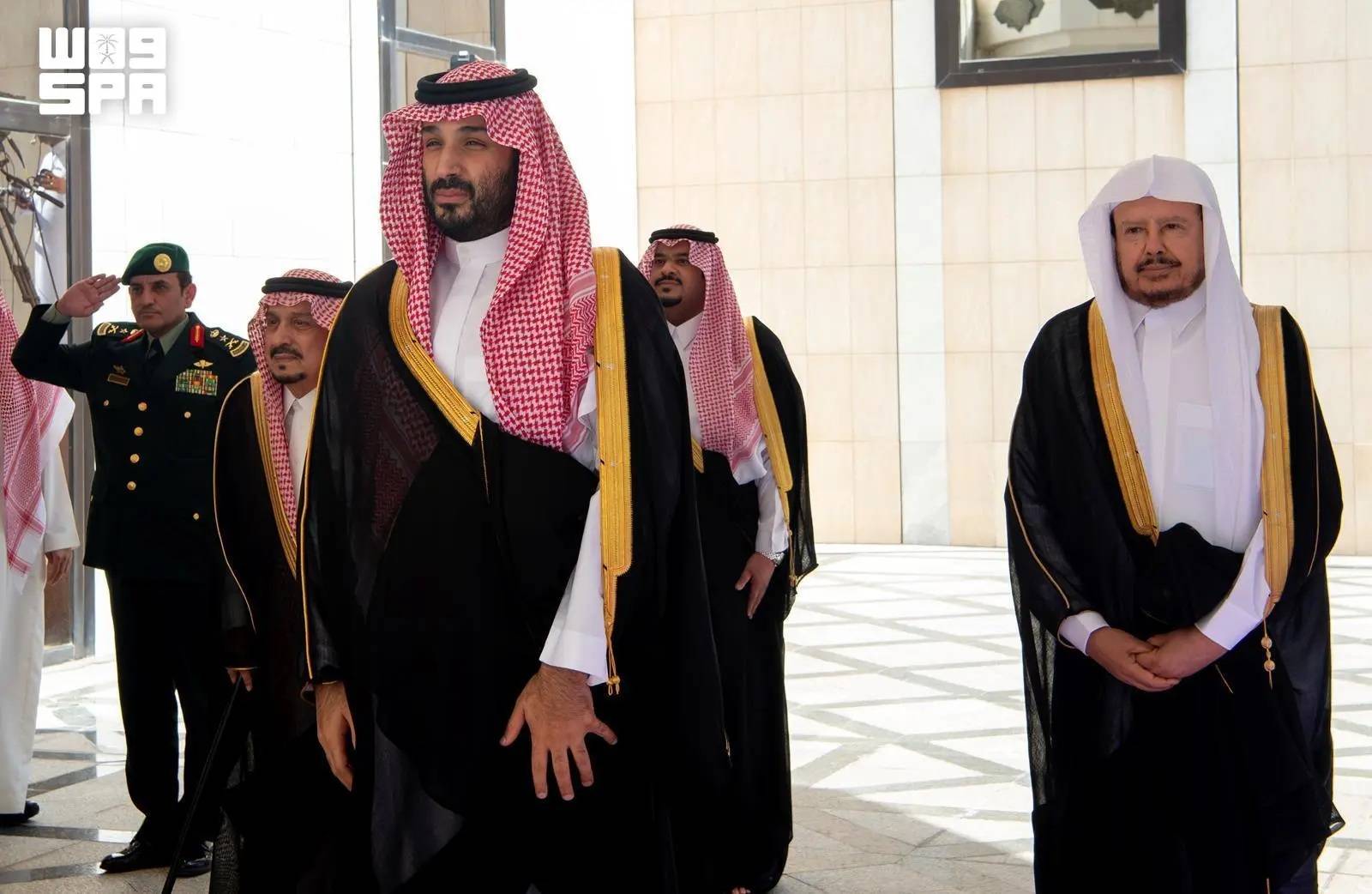
Prince Mohammed bin Salman bin Abdulaziz Al Saud, Crown Prince and Prime Minister, arrives at the Shura Council. (SPA)

Adapting to change

“Current events in the region show that long-term planning does not mean rigidity or stagnation; it means the ability to adapt to changing circumstances,” he went on to say.

“Amid the successive transformations the world is witnessing, the importance of the reforms that have diversified our economy has become clear. These reforms have strengthened Saudi Arabia's resilience in times of crisis and enabled it to turn threats into opportunities to reinforce its standing and pursue its development priorities efficiently and sustainably,” he stressed.

“Current conditions attest to the resilience of the national economy, the maturity of its business sector, the strength of state institutions, and the economy's fiscal sustainability,” he pointed out.

“At the core of the Kingdom's economic policies are developing national capabilities, empowering promising sectors, attracting local and international investment, and directing resources toward the areas with the greatest economic and social impact. This approach safeguards our ability to fund development priorities and sustains our achievements for future generations,” he added.

“The fundamental goal of everything the state does is the advancement and prosperity of the nation and a better quality of life for its people,” he stressed.

“Education and healthcare remain at the forefront of our priorities and receive significant allocations in the state budget. The General Education Law was enacted to raise the quality of education to a globally advanced level, while the healthcare transformation is progressing rapidly to ensure the highest quality of service and comprehensive coverage for all citizens,” said the Crown Prince.

“Building on our success in reducing unemployment, we are investing in human capital to maximize citizens' opportunities to enter the labor market, enabling them to compete and excel in all fields as the driving force of development,” he noted.

“Real estate reforms have provided citizens with diverse options, improved market efficiency, and raised homeownership rates. We remain committed to addressing the sector's challenges and taking decisive steps that benefit citizens in all aspects of their lives, without compromising development or the resources of future generations, while safeguarding the state's financial and economic stability,” he vowed.


Saudi Arabia and 17 Arab, Islamic Countries Condemn Israeli Strike on Nasser Medical Complex in Gaza

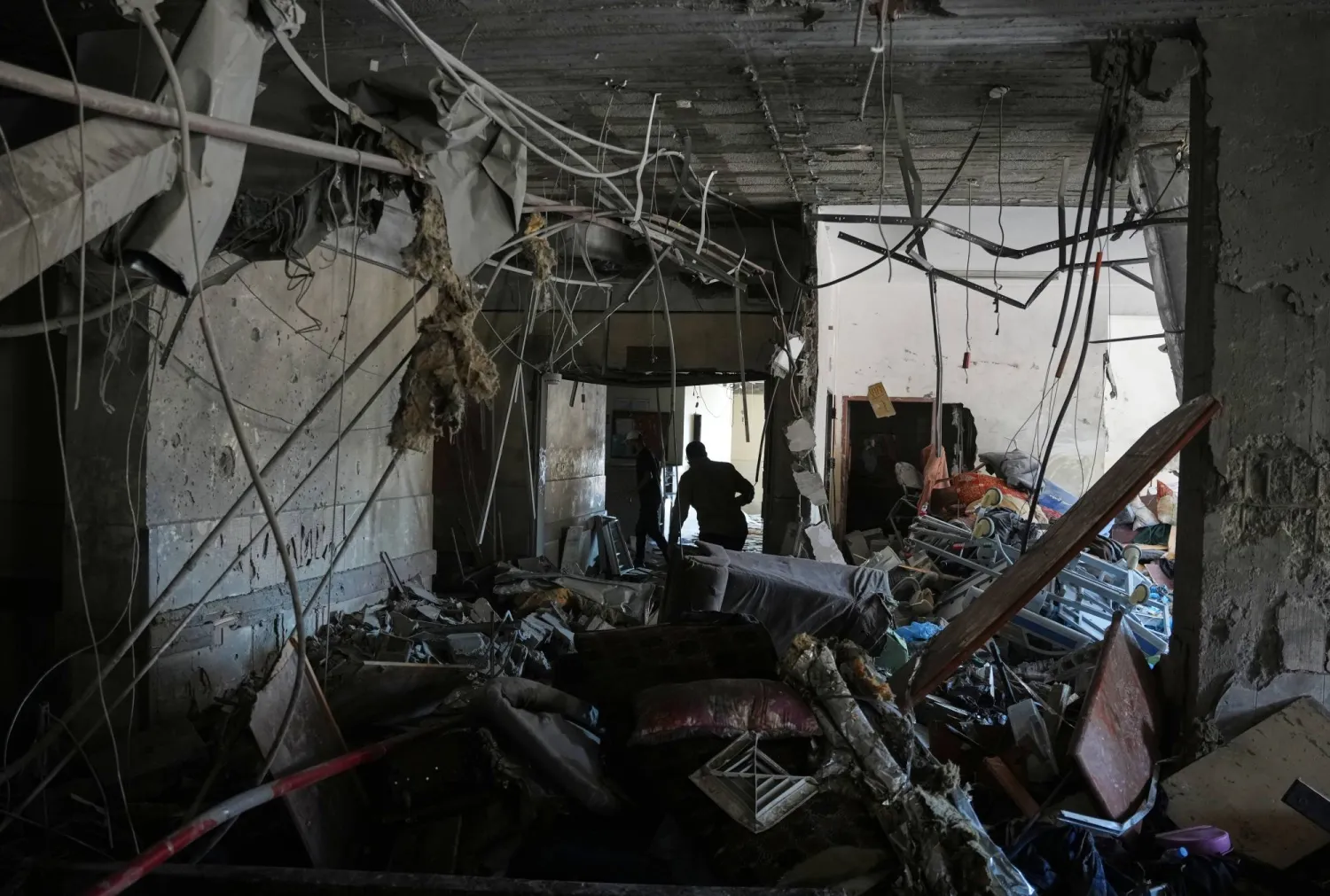
 People inspect damage to Nasser Hospital after it was hit by an Israeli airstrike overnight in Khan Younis, Gaza Strip, Thursday, Nov. 12, 2026. (AP)
People inspect damage to Nasser Hospital after it was hit by an Israeli airstrike overnight in Khan Younis, Gaza Strip, Thursday, Nov. 12, 2026. (AP)
TT

Saudi Arabia and 17 Arab, Islamic Countries Condemn Israeli Strike on Nasser Medical Complex in Gaza

 People inspect damage to Nasser Hospital after it was hit by an Israeli airstrike overnight in Khan Younis, Gaza Strip, Thursday, Nov. 12, 2026. (AP)
People inspect damage to Nasser Hospital after it was hit by an Israeli airstrike overnight in Khan Younis, Gaza Strip, Thursday, Nov. 12, 2026. (AP)

Saudi Arabia and 17 Arab and Islamic countries strongly condemned on Saturday the Israeli on the Nasser Medical Complex in Khan Younis earlier this week.

The foreign ministers of Saudi Arabia, Egypt, Sudan, Libya, Palestine, Djibouti, Somalia, Oman, Mauritania, Jordan, Qatar, Kuwait, the United Arab Emirates, Türkiye, Pakistan, Indonesia, Lebanon, and Algeria slammed the attack “as a violation of international humanitarian law, which affords special protection to medical facilities and healthcare workers.”

In a statement, they also condemned “continued Israeli attacks on Palestinian civilians, including strikes on tents and other sites sheltering displaced persons.”

“These attacks undermine the ceasefire and efforts to restore security and stability in Gaza and are inconsistent with President Trump’s Comprehensive Plan,” they added.

An Israeli airstrike hit one of the main hospitals still operating in the Gaza Strip on Thursday, killing six people and wounding 28 others.

The Israeli military said the strike on Nasser Hospital in southern Gaza targeted an unidentified Hamas commander and other fighters, without providing evidence.

The FMs expressed on Saturday “grave concern that continued Israeli restrictions on humanitarian aid, shelter materials, including tents, caravans and mobile homes, as well as medical supplies are deepening Gaza's humanitarian catastrophe as winter approaches.”

“Inadequate shelter and deteriorating water, sanitation and healthcare services put civilian lives at grave risk, particularly those of children and infants, who could once again die from exposure to freezing temperatures,” they warned.

The FMs called on Israel “to heed appeals from the international community and the Board of Peace, for increased aid and to fulfil immediately and in full its obligations under the Sharm El-Sheikh Agreement, President Trump's Comprehensive Plan and United Nations Security Council Resolution 2803.”

“Israel must uphold the ceasefire, protect civilians and medical facilities, and ensure the safe, sustained and unimpeded delivery of humanitarian aid in sufficient quantities, including shelter and early recovery supplies and equipment to restore essential infrastructure,” they demanded.

“It must also allow UN agencies and humanitarian organizations to carry out their mandates without obstruction,” they said.

“These first-phase commitments were due to take effect upon signature. Israel must implement them without further delay or additional conditions, including political and security conditions, that impede humanitarian access,” they continued.

“Urgent humanitarian assistance must proceed independently of progress on subsequent phases. The ministers called on the United States and the Board of Peace, within their respective roles, to intensify their efforts to ensure Israel's full implementation of these commitments and the lifting of all restrictions on the entry of humanitarian aid, thereby preserving the credibility of the agreements and consolidating the ceasefire,” they stressed.

The ministers reaffirmed their determination “to work with regional and international partners to consolidate the ceasefire, implement all phases of the Plan and scale up humanitarian assistance to alleviate the suffering of the brotherly Palestinian people.”


Coalition Destroys 2 Houthi Drones Fired at Riyadh, Southern Regions

Saudi air defenses. (Saudi Ministry of Defense)
TT

Coalition Destroys 2 Houthi Drones Fired at Riyadh, Southern Regions

Saudi air defenses. (Saudi Ministry of Defense)

The Coalition to Restore Legitimacy in Yemen announced on Saturday the interception and destruction of two drones in the Riyadh and Southern Regions launched by the terrorist Houthi militia toward Saudi Arabia.

In Yemen, the army announced that it had carried out 723 strikes and targeting operations "hitting Houthi militia sites, gatherings, fortifications, firing positions, vehicles, and combat equipment."

According to an army statement, the operations included "37 airstrikes by warplanes, 56 targeting operations by drones, 89 by rocket launchers, and 541 by field artillery."

Internationally, the United Nations Security Council condemned earlier this week the Houthi attacks on Saudi Arabia and their threats to commercial vessels in the Bab al-Mandeb Strait and the Red Sea, affirming the Kingdom's right to self-defense.

The Council unanimously adopted Resolution 2837, which calls for an immediate halt to the attacks, intensified efforts to combat weapons smuggling to the group, and stricter oversight on its access to drone and ballistic missile components, alongside tasking the Panel of Experts with tracking the group's funding sources and revenues.

The Gulf Cooperation Council welcomed the resolution, calling for it to be translated into a concrete commitment that protects civilians, facilities, and the safety of international navigation.


Türkiye, Qatar Sign Mutual Defense Agreement

Turkish President Recep Tayyip Erdogan meets with Qatar's Emir Sheikh Tamim bin Hamad Al Thani in Istanbul, Türkiye, November 13, 2026. (Murat Cetinmuhurdar/Turkish Presidential Press Office/Handout via Reuters)
TT

Türkiye, Qatar Sign Mutual Defense Agreement

Turkish President Recep Tayyip Erdogan meets with Qatar's Emir Sheikh Tamim bin Hamad Al Thani in Istanbul, Türkiye, November 13, 2026. (Murat Cetinmuhurdar/Turkish Presidential Press Office/Handout via Reuters)

Türkiye and Qatar announced on Friday that they signed a mutual defense agreement, which they said was aimed at adopting a "unified position" in the face of an external attack.

The announcement came after Turkish President Recep Tayyip Erdogan met Qatari Emir Sheikh Tamim bin Hamad Al Thani in Istanbul.

Erdogan had said the agreement would further strengthen ties between them, according to his office.

Qatar's ruler travelled to Istanbul after attending the United Nations COP31 climate summit in southern Türkiye.

"The two parties hailed the signing of the mutual defense agreement between Qatar and Türkiye," according to a joint statement carried by Qatar's state news agency.

The agreement was "aimed at bolstering collective defense and achieving regional security and stability, as well as adopting a unified position in the face of any external armed attack targeting either or both parties", the statement said.

"The two parties agreed to hold consultations on threats to their security... and to strengthen cooperation through joint military exercises, collaboration in the field of defense industries, and the exchange of personnel training."

Erdogan's office had earlier announced the agreement, without going into the details of its contents.

"A mutual defense agreement signed by Türkiye and Qatar today will add a new dimension to the brotherly ties between the two countries," Erdogan said during the meeting, according to the statement from his office.

Erdogan also said Türkiye and Qatar would expand cooperation in the defense industry.