

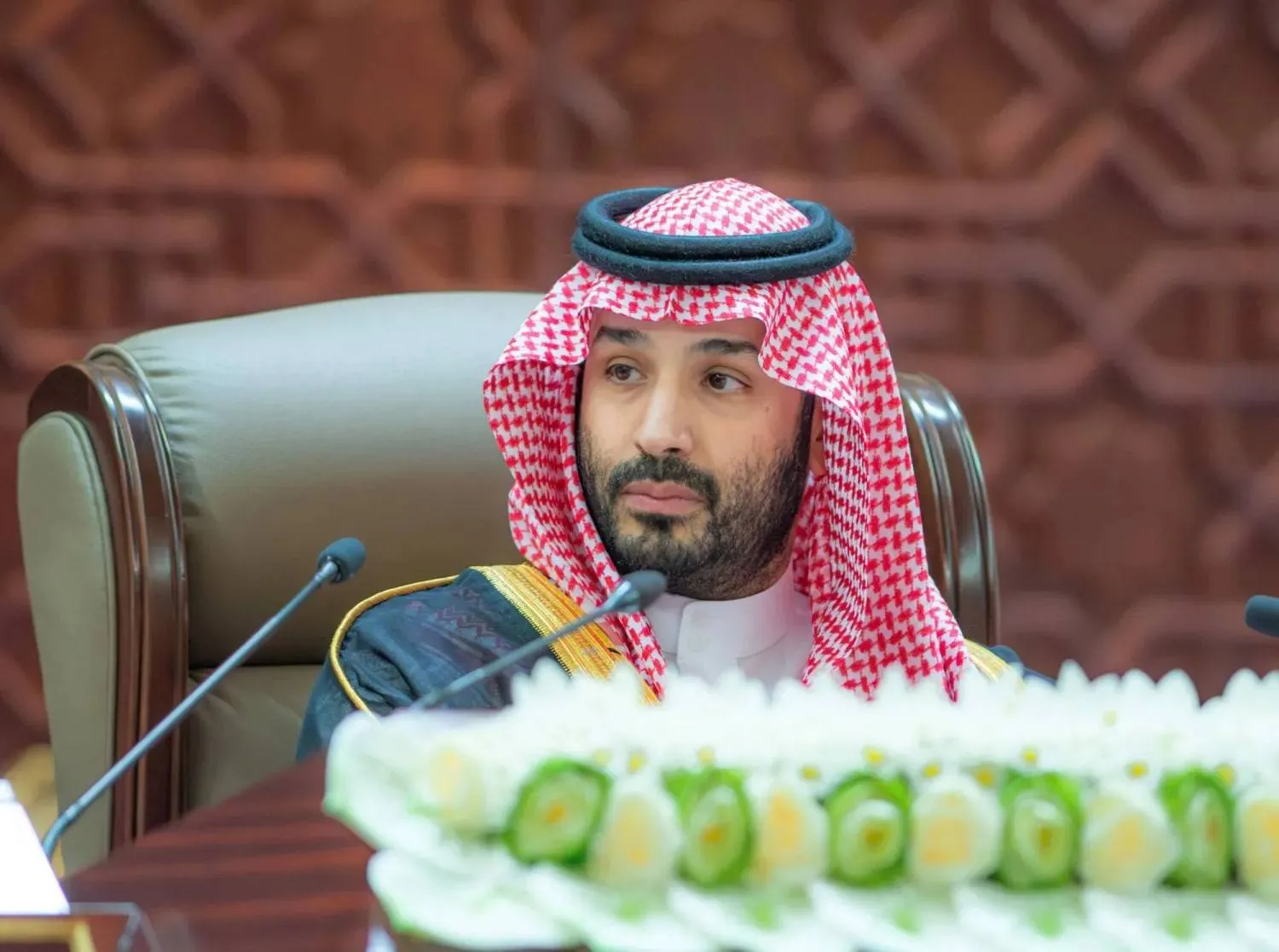

Saudi Address: Stability, Deterrence, and Accelerating Economic Reforms

Saudi Crown Prince delivering the royal address (SPA)
TT

Saudi Address: Stability, Deterrence, and Accelerating Economic Reforms

Saudi Crown Prince delivering the royal address (SPA)

The Royal Address delivered by Saudi Crown Prince and Prime Minister Mohammed bin Salman on behalf of King Salman bin Abdulaziz, Custodian of the Two Holy Mosques, to the Shura Council on Wednesday conveyed several messages about Saudi Arabia’s approach to regional crises.

Analysts said the messages reaffirmed support for stability and political solutions, alongside the protection of sovereignty and national interests, while underscoring the continued implementation of rapid economic reforms under Saudi Vision 2030.

In the address, the Crown Prince stressed that Saudi Arabia was working to strengthen international cooperation, de-escalate conflicts and defuse tensions.

He said the Kingdom would not hesitate to respond firmly to any threat or attack against it.

He said Saudi Arabia supported the Yemeni government through the Arab Coalition “to extend its authority across the country, restore stability, and confront the attacks of the terrorist Houthi militias, which have chosen chaos and destruction and threats to the Yemeni people and the region.”

The Crown Prince said attacks targeting all Gulf states demonstrated that their security and stability were indivisible.

“We are working with our brothers to safeguard Gulf security and pursue strategic cooperation and economic integration,” he said.

He stressed that Saudi Arabia’s commitment to the rights of the Palestinian people was an unwavering position, backed by efforts that would continue until Palestinians secured their legitimate rights.

Six key points

Political analyst Munif al-Harbi said the Royal Address had six key points, foremost among them support for Yemen’s internationally recognized government to extend its authority over all Yemeni territory.

He said this indicated that reaching a political solution required “an effective change on the ground in favor of Yemen’s legitimate government.”

“Makkah Pact”

Harbi pointed to what he described as “clear Saudi satisfaction” with the Turkish and Pakistani roles in the Makkah agreement, which he said the Crown Prince had called the “Makkah Pact.”

He also highlighted the emphasis on the importance of the multinational maritime defense coalition, freedom of navigation and the international community’s responsibility in this regard.

“The Palestinian issue remains a Saudi foreign policy priority”

The inclusion of the Palestinian issue in the address, despite successive regional crises, reflected its continued place among Saudi foreign policy priorities, Harbi said.

He said this was evident in the assertion that peace in the Middle East required the establishment of a Palestinian state on the 1967 borders, with East Jerusalem as its capital.

On domestic affairs, Harbi noted that the address linked the response to political and security conditions with the continued implementation of Saudi Vision 2030.

He pointed to the Crown Prince’s statement that Saudi Vision programs had achieved 93% of their objectives, alongside a continued focus on development, national advancement, prosperity and quality of life.

A message about “Saudi human and military capabilities”

Harbi added that the address conveyed a message about Saudi Arabia’s human and military capabilities and its ability to respond to threats.

He also cited what he described as the Kingdom’s “advanced deterrence capability,” which enabled it to address challenges and turn them into opportunities.

Political researcher Faisal al-Shammeri said the address reflected Saudi Arabia acting “from the position of a confident state that knows its interests and approaches regional issues through stability and the responsible exercise of power.”

Shammeri said the political dimension of the address focused on the interconnected nature of Gulf security. Regional challenges were presented as parts of a single framework affecting the region’s security and stability, rather than as separate issues.

He added that, in his reading, the address balanced support for diplomatic solutions and de-escalation with a commitment to protecting sovereignty and national interests.

“Leaving no strategic vacuum”

Shammeri said the positions on the Palestinian issue, Red Sea and Gulf security, and Yemen’s stability reflected the continuity of Saudi policy on those issues.

He said the address’s overall message was that the Kingdom did not seek escalation but would not leave what he described as a “strategic vacuum” in its neighborhood.

International affairs researcher Ahmed al-Ibrahim said the address reflected Saudi Arabia’s continued policy of combining diplomatic action with the ability to protect national interests.

It also stressed that regional stability depended on supporting state institutions and preventing crises from becoming persistent sources of threats, he said.

Ibrahim added that linking regional developments with the continued implementation of Vision 2030 indicated that Riyadh viewed development as a strategic course that would continue through crises.

On regional affairs, he said Yemen, maritime security and the Palestinian issue stood out in a context that emphasized political solutions, alongside the Kingdom’s readiness to address threats to its security and regional stability.


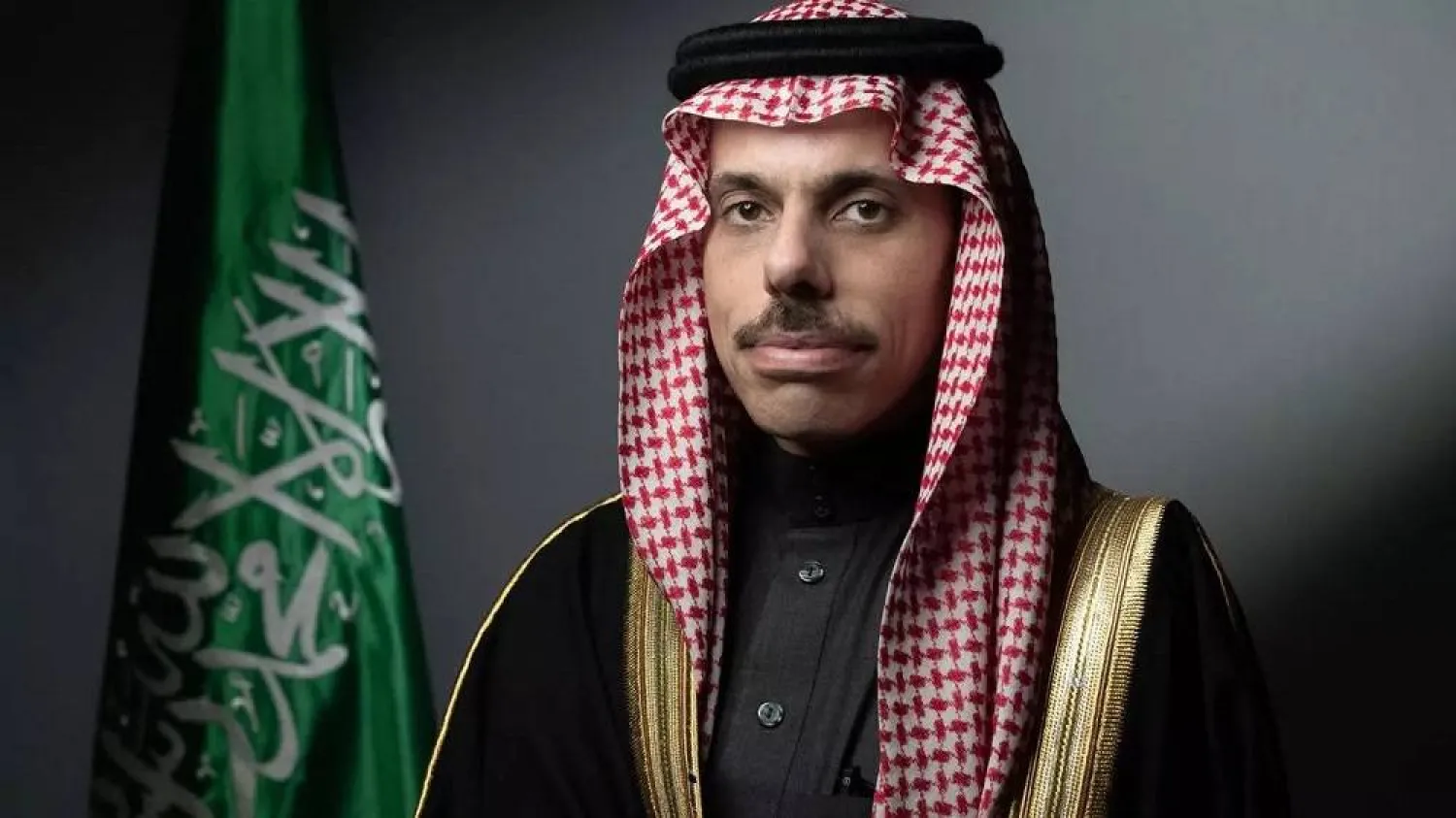

Coalition Intercepts Houthi Ballistic Missile Targeting Khamis Mushait

Major General Turki Al-Malki, Spokesperson for the Coalition to Restore Legitimacy in Yemen (Asharq Al-Awsat)
TT

Coalition Intercepts Houthi Ballistic Missile Targeting Khamis Mushait

Major General Turki Al-Malki, Spokesperson for the Coalition to Restore Legitimacy in Yemen (Asharq Al-Awsat)

Official Spokesperson of the Coalition to Restore Legitimacy in Yemen Major General Turki Al-Malki stated on Friday that a ballistic missile launched by the terrorist Houthi militia toward Khamis Mushait was intercepted and destroyed.


Arab and Islamic Bodies Condemn Houthi Attack on Power Station in Saudi Arabia’s Madinah

File photo of the Saudi flag/AAWSAT
TT

Arab and Islamic Bodies Condemn Houthi Attack on Power Station in Saudi Arabia’s Madinah

File photo of the Saudi flag/AAWSAT

Several Arab and Islamic bodies on Friday condemned a Houthi attack that targeted a power station in Saudi Arabia’s Madinah that supplies electricity to the Prophet’s Mosque and other civilian facilities.

Kuwait, Qatar, the Arab League, the OIC, Egypt, Lebanon, Sudan, the Muslim World League, the Arab Parliament president, GCC, Al-Azhar, and the Presidency of Religious Affairs at the Grand Mosque and the Prophet's Mosque condemned the attack, saying it violated the Kingdom's sovereignty and breached international law.

The condemnations described the attack as a threat to civilian infrastructure and expressed solidarity with Saudi Arabia, while stressing the need to protect holy sites and civilian facilities from attacks.

They also renewed full solidarity with Saudi Arabia and reaffirmed support for the Kingdom in confronting attacks targeting its security, stability, and sovereignty, as well as the safety of its citizens and residents.


Coalition: Terrorist Houthi Militia Targets Taibah Power Distribution Station in Madinah

Damage is seen at the station from the Houthi attack. (SPA)
TT

Coalition: Terrorist Houthi Militia Targets Taibah Power Distribution Station in Madinah

Damage is seen at the station from the Houthi attack. (SPA)

Official Spokesperson of the Coalition to Restore Legitimacy in Yemen Major General Turki Al-Malki announced on Thursday that the terrorist Houthi militia in Yemen was behind a terrorist attack on the Taibah electricity distribution station in Madinah.

The attack took place at 5:11 am on Tuesday. The investigation and evidence gathered by the relevant authorities confirmed the involvement of the Houthi militia in planning and executing this “cowardly” terrorist act, based on after action review and the wreckage of the drone used.

The attack resulted in one power transformer being taken out of service, without affecting the electricity network.

Debris of the drone used by the terrorist Houthi in the attack. (SPA)

“The cowardly terrorist act, targeting a civilian facility providing electricity to the Prophet's Mosque in Madinah, is a continuation of this extremist militia's attempts to target the Two Holy Mosques and their deliberate provocation of millions of Muslims worldwide by targeting Makkah and Madinah,” said Al-Malki.

“The Coalition continues to take and implement measures to deter the terrorist Houthi militia, ensuring the protection of the Two Holy Mosques and the safety of the pilgrims in Makkah and Madinah,” he stressed.

Secretary-General of the Gulf Cooperation Council (GCC) Jasem Albudaiwi strongly condemned the attack.

He stressed that “this heinous Houthi attack has crossed all red lines, represents a blatant provocation to the sentiments of Muslims across the world, and constitutes a grave escalation in violating the sanctity of Islamic holy sites.”

It reveals “an aggressive approach that disregards religious and humanitarian values as well as international laws and norms, particularly in light of repeated attempts to target the Two Holy Mosques and their surrounding areas.”

Damage is seen at the plant as a result of the Houthi attack. (SPA)

Albudaiwi underscored the GCC member states' “steadfast and unwavering stance alongside Saudi Arabia and their full solidarity in confronting anything that threatens its security, stability, and sovereignty.”

He reiterated “complete support for all measures taken by the Kingdom to protect its territory, citizens, residents, and pilgrims,” stressing that the security of the Kingdom and its holy sites “is an integral part of the collective security of the GCC, and that any threat to the Kingdom is a threat to the security of all GCC member states.”

The Jordanian government condemned the Houthi attack as an “outrageous violation of Saudi Arabia's sovereignty, a threat to its security, stability, and territorial integrity, and a clear breach of international law and the UN Charter.” 

Official Spokesperson of the Jordanian Ministry of Foreign Affairs Ambassador Fuad Al-Majali expressed Jordan's full solidarity with Saudi Arabia.  

He reaffirmed Jordan's support for all measures taken to ensure the security and safety of its citizens and residents. 

President of the Arab Parliament Mohamed Al-Yammahi strongly condemned the attack, stressing that “such criminal acts constitute a flagrant violation of the sanctity of holy sites, provoke the feelings of Muslims around the world, and threaten the security and stability of the region, rather than the Kingdom’s security alone.” 

Al-Yammahi affirmed the Arab Parliament’s full solidarity with Saudi Arabia and its support for all measures it takes to confront such terrorist acts.  

“Such terrorist acts will not undermine Saudi Arabia’s ability to protect its resources, security, and the safety of its citizens and residents,” he added.