Report: Suspect in Flydubai Attack was Barred from Flying in Oman

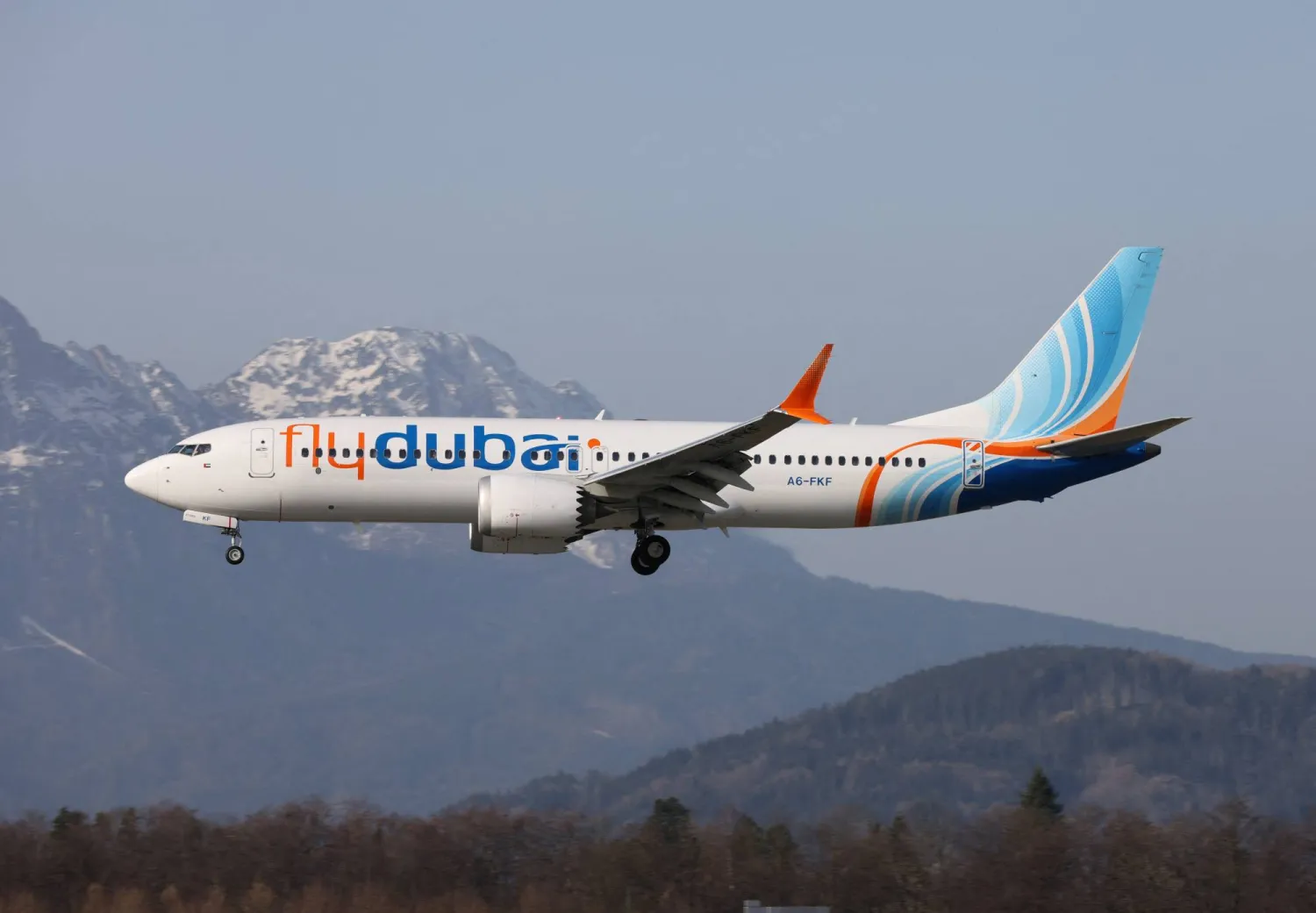
A picture taken on March 8, 2026, shows a Fly Dubai Boeing 737-8 MAX A6-FKF aircraft, which was bound for Israel from the United Arab Emirates diverted to Saudi Arabia after transmitting emergency signals following a fight between the pilots rather than a hijacking, according to an Israeli official, in this handout image in a location given as Salzburg, Austria. Karl Dittlbacher/Handout via REUTERS
TT

Report: Suspect in Flydubai Attack was Barred from Flying in Oman

A picture taken on March 8, 2026, shows a Fly Dubai Boeing 737-8 MAX A6-FKF aircraft, which was bound for Israel from the United Arab Emirates diverted to Saudi Arabia after transmitting emergency signals following a fight between the pilots rather than a hijacking, according to an Israeli official, in this handout image in a location given as Salzburg, Austria. Karl Dittlbacher/Handout via REUTERS

The co-pilot accused of attacking the captain of a flydubai flight to Israel had previously been barred from flying in Oman over concerns about his extremist views, The Wall Street Journal reported Friday.

The WSJ said that Omani authorities had banned the pilot from flying over concerns he had adopted radical ideological views, citing people familiar with the matter.

The sources said Flydubai later hired the pilot, allowing him to operate flights on the route between the United Arab Emirates and Israel.

It was not immediately clear whether Oman had shared its concerns about the pilot’s extremism with other countries or airlines. There was also no information about the nature of the views that led to him being described as an extremist.

UAE authorities are leading the investigation into the incident. A UAE government spokesman declined to comment on the attacker’s record in Oman, saying it would be inappropriate to “preempt the findings of the investigation or influence its course.”

Israeli Prime Minister Benjamin Netanyahu on Friday described Wednesday’s incident, in which a Flydubai plane came close to being brought down, as a terrorist act. He said the attacker “came with the intention of bringing down the plane with everyone on board.”

Aviation security analysts said the incident represented a major security failure. While a lapse in screening procedures may have allowed a weapon to get through, they said, an attacker with such motives should have been identified and stopped long before reaching the airport.

Netanyahu said Israel was investigating whether the pilot had carried out the attack alone or had been acting in coordination with others.

The captain and co-pilot are being investigated in the UAE after being transferred there on Thursday from Tabuk, where the plane made an emergency landing. Israel hopes to be able to question the attacker.

The flight from Dubai to Tel Aviv came close to disaster on Wednesday morning when the attacker stabbed the captain.

People who were on board told interviewers that the captain, who was seriously wounded, managed to open the cockpit door, allowing a group of passengers and crew members to overpower the attacker. Two reserve pilots who were on the flight then managed to regain control of the aircraft, stabilize it and land safely.


Saudi Arabia Calls for Effective Collective Response to Protect Vital Shipping Routes

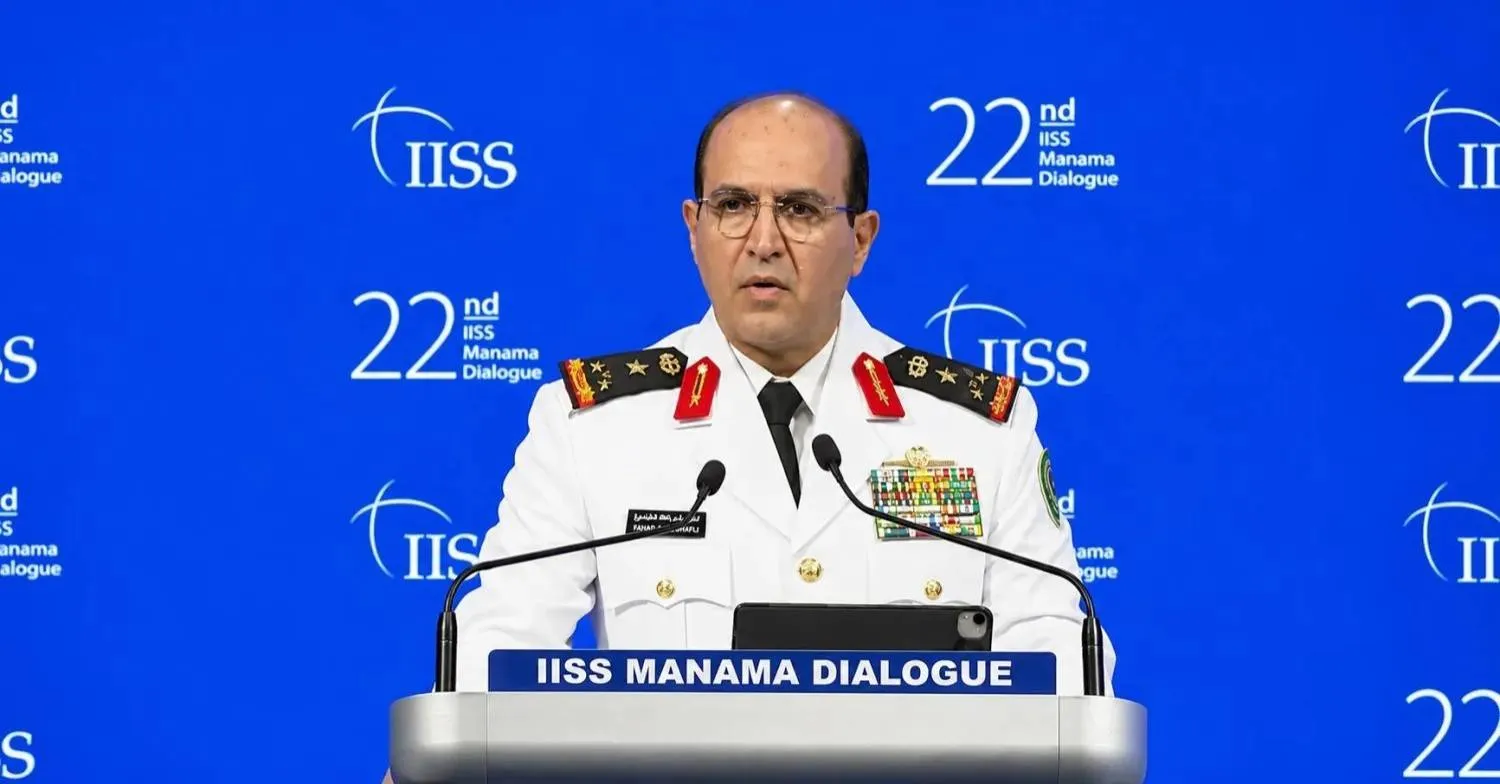
Saudi Deputy Chief of the General Staff Lieutenant General Fahd Al-Ghufaili during his participation in the 22nd Regional Security Summit in Manama (Asharq Al-Awsat)
TT

Saudi Arabia Calls for Effective Collective Response to Protect Vital Shipping Routes

Saudi Deputy Chief of the General Staff Lieutenant General Fahd Al-Ghufaili during his participation in the 22nd Regional Security Summit in Manama (Asharq Al-Awsat)

Saudi Deputy Chief of the General Staff Lieutenant General Fahd Al-Ghufaili emphasized on Sunday the importance of strengthening international cooperation to protect vital maritime corridors.

He stressed the need to ensure freedom of navigation and the safety of international trade, noting that maritime security is a shared responsibility requiring concerted international efforts.

Al-Ghufaili headed the Saudi Ministry of Defense delegation at the opening of the 22nd Regional Security Summit (IISS Manama Dialogue 2026). The summit brought together high-level international delegations comprising ministers, security officials, and military commanders.

Addressing the forum, Al-Ghufaili explained that seas and waterways are vital arteries for the global economy, energy security, and supply chains. He warned that any disruption in the Arabian Gulf, Strait of Hormuz, Red Sea, Bab al-Mandab Strait, or Gulf of Aden would affect international trade, energy markets, and food security.

Al-Ghufaili noted that Houthi attacks on commercial vessels and oil tankers since 2023, alongside disruptions to maritime traffic through the Strait of Hormuz, underscore the seriousness of maritime threats.

He stressed the need for an effective collective response to protect vital shipping routes and strengthen regional and international security and stability.

He stated that Saudi Arabia launched an international initiative on July 30, resulting in the establishment of the Multinational Maritime Defense Coalition.

The coalition has been joined by 14 countries, while others have expressed their willingness to join upon completing their relevant national procedures.

Al-Ghufaili emphasized that protecting vessels, maritime facilities, ports, and shipping lanes requires cooperation, coordination, and information sharing. He also highlighted the importance of joint capacity building and preventive measures to avert crises before they occur.

He stressed that force cannot replace the rule of law and that disputes must not threaten freedom of navigation or the safety of international trade.

He explained that Saudi Arabia's vision for maritime security is based on respecting the sovereignty and legitimate rights of states and ensuring freedom of navigation and passage in accordance with international law.

It also calls for preventing the use of maritime corridors as instruments of pressure or escalation and categorically rejects attacks on commercial vessels and civilian facilities. The vision further emphasizes strengthening regional and international cooperation to address maritime threats in all their forms.

Al-Ghufaili stated that maritime security cannot be achieved through military capabilities alone. It also requires trust, transparency, common rules, and mechanisms to prevent escalation. He called for establishing a sustainable regional maritime security framework based on prevention, early warning, information sharing, and operational coordination. Such a framework would support collective action to address risks before they develop into crises.

He stressed that seas must remain bridges of communication and prosperity rather than arenas of conflict. International straits must remain safe passages for navigation rather than instruments of political or military pressure, while international law must remain the reference framework for resolving disputes between states.

Al-Ghufaili reaffirmed that maritime security, freedom of navigation, and the stability of international straits are shared international responsibilities. He emphasized the need for partnership, adherence to international law, and prioritizing dialogue and wisdom over escalation and confrontation.

These principles serve the security of regional countries and safeguard the interests of the international community.


Saudi Arabia Strongly Condemns Targeting of Qatar Gas Transport Company's LNG Carrier Al Mayeda

Saudi Arabia Strongly Condemns Targeting of Qatar Gas Transport Company's LNG Carrier Al Mayeda
TT

Saudi Arabia Strongly Condemns Targeting of Qatar Gas Transport Company's LNG Carrier Al Mayeda

Saudi Arabia Strongly Condemns Targeting of Qatar Gas Transport Company's LNG Carrier Al Mayeda

The Saudi Ministry of Foreign Affairs expressed the Kingdom’s strongest condemnation and denunciation of the targeting of "Al Mayeda" liquefied natural gas (LNG) carrier, owned by Qatar Gas Transport Company, in the waters of the Arabian Gulf, reiterating its rejection of all violations that threaten the security and safety of maritime navigation and global energy supplies, SPA reported.

“The Kingdom of Saudi Arabia affirms its solidarity with the State of Qatar in all the measures it takes to protect its maritime vessels and ensure the safety of its international trade. It stresses the importance of the international community taking urgent measures to ensure maritime security and the safety of international trade, and to enforce international law in this regard,” the foreign ministry said.


Coalition Targets Houthi Maritime Support Assets in Specialized Military Operation

Major General Turki Al-Malki, spokesperson for the Coalition to Support Legitimacy in Yemen (Asharq Al-Awsat)
TT

Coalition Targets Houthi Maritime Support Assets in Specialized Military Operation

Major General Turki Al-Malki, spokesperson for the Coalition to Support Legitimacy in Yemen (Asharq Al-Awsat)

The Coalition's Joint Forces Command carried out a specialized military operation on Sunday to neutralize maritime assets used by the Houthi terrorist militia to support its war effort, in a move aimed at curbing the group's ability to continue its repeated and brutal attacks.

Major General Turki Al-Malki, the Coalition Forces' official spokesperson, said the operation followed the Houthi terrorist militia's continued deliberate and systematic attacks against civilians and civilian objects in Yemen and Saudi Arabia, as well as its attempts to exploit maritime resources to strengthen its military capabilities and sustain its hostile and brutal operations.

Al-Malki said these attacks posed a direct threat to civilian lives and the safety of civilian objects, as well as to the security of Saudi Arabia and Yemen and maritime shipping lanes in the southern Red Sea.

He affirmed that the Coalition's Joint Forces Command would continue taking and implementing the necessary operational measures to deter the Houthi terrorist militia's conduct and prevent it from using maritime assets to support its war effort.

He stressed the need for the militia to cease all hostile and brutal operations against civilians and civilian objects, warning that otherwise, the Houthi terrorist militia would bear the consequences of its hostile actions.