


Widespread Regional, Int’l Condemnation of Houthi Attack on Riyadh Airport

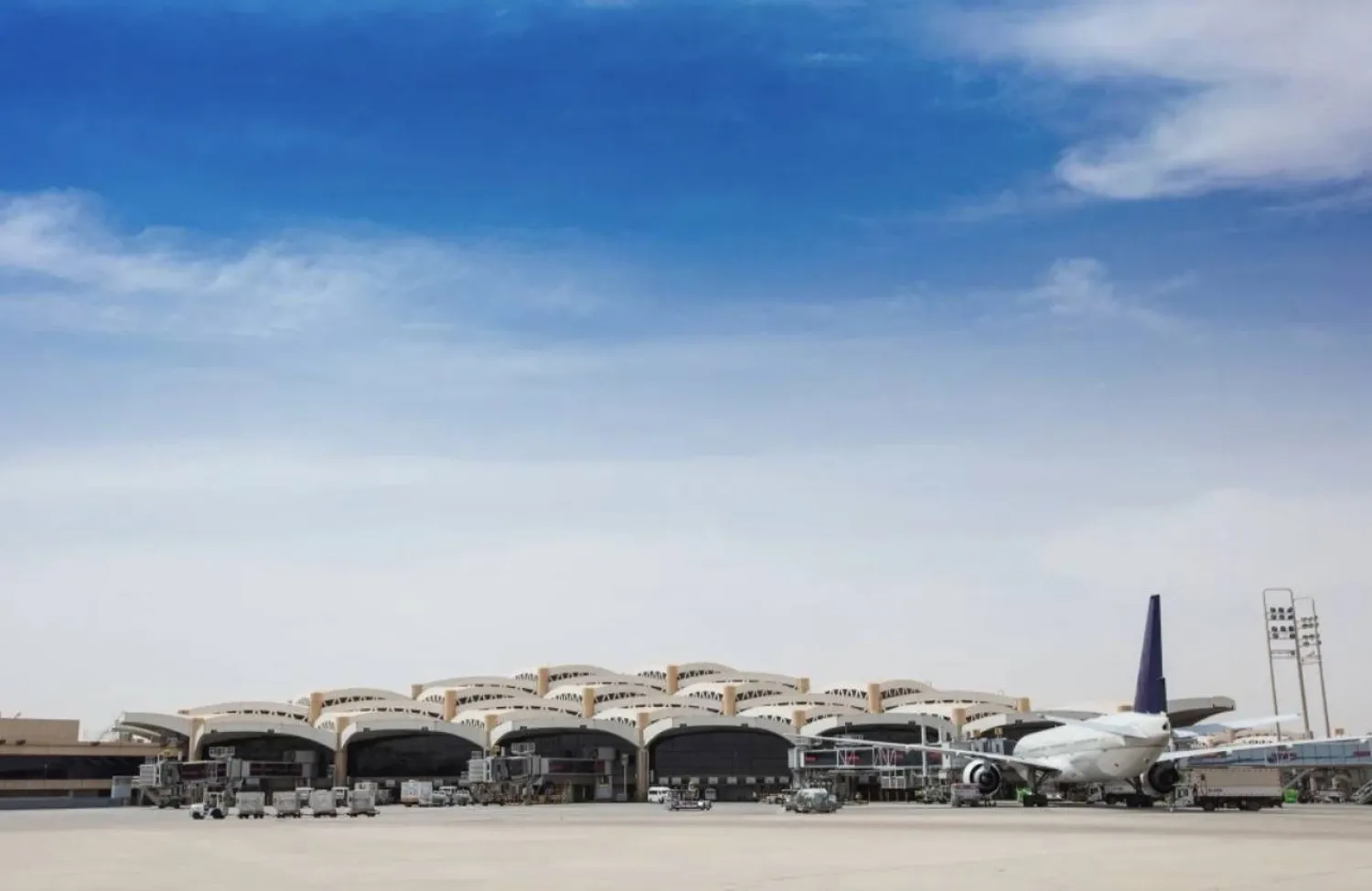
King Khalid International Airport in Riyadh (SPA)
TT

Widespread Regional, Int’l Condemnation of Houthi Attack on Riyadh Airport

King Khalid International Airport in Riyadh (SPA)

The recent Houthi attack on Saudi Arabia’s King Khalid International Airport drew widespread condemnation, with officials warning that strikes on civilian infrastructure threaten regional security and endanger civilian lives.  

Jordan, Egypt, Qatar, Bahrain, UAE, Iraq, Lebanon, Sudan, Pakistan, the United States, Palestinian Foreign Ministry, Russia, Cyprus, Italy, Nigeria, Malaysia, Bulgaria, Senegal, Ireland, Gulf Cooperation Council, Muslim World League and Council of Arab Interior Ministers condemned the Houthi militia's attack on King Khalid International Airport on Saturday as a blatant violation of the country's sovereignty, a dangerous escalation that threatens its security and stability, and a flagrant breach of international law and the United Nations Charter.  

They stressed full solidarity with Saudi Arabia and support for all measures it takes to protect its security, stability, national assets, and the safety of its citizens and residents.  

On Saturday, the Saudi General Authority of Civil Aviation (GACA) said operations at the Riyadh airport were temporarily suspended after it was targeted in an attack, reporting several people injured in the incident. 

The member states of the R4 Group, which includes Saudi Arabia, Egypt, Pakistan, and Türkiye, strongly condemned the ongoing hostile attacks perpetrated by the Houthi militia against Saudi Arabia, including “the heinous attacks” targeting King Khalid International Airport in Riyadh that they deemed a blatant violation of international law. 

The group reaffirmed that these attacks are a flagrant violation of the Kingdom’s sovereignty and territorial integrity, posing a direct threat to its security, stability, and the safety of civilians. They are a “dangerous escalation that cannot be justified or accepted under any pretext.” 

The group further underscored its solidarity with and support for Saudi Arabia, including its full support for all legitimate measures and steps it takes to counter these attacks, deter the sources of their threats, and prevent their recurrence, in defense of the Kingdom’s security, sovereignty, and territorial integrity, and in protection of the safety of its citizens and residents in line with the UN Charter and international law. 

The group held the Houthi militia fully accountable for the attacks and any repercussions that come with them that threaten regional and international peace and security, and demands the immediate and unconditional halt of these attacks. 

Secretary-General of the League of Arab States Nabil Fahmy underlined the organization’s full support for Saudi Arabia against Houthi attacks. 

In a statement on Sunday, Fahmy said the continuation of these attacks is a violation of international law and threat to regional security and stability. He called on the international community to take decisive measures to stop the attacks and hold those responsible accountable. 

The secretary-general reiterated the Arab League's solidarity with Saudi Arabia and its support for the measures the Kingdom takes to protect its security and stability and the safety of citizens and residents. 

He stressed that Saudi Arabia's security is an integral part of Arab national security. 

The Independent Permanent Human Rights Commission (IPHRC) of the Organization of Islamic Cooperation (OIC) strongly condemned the attack. 

It stressed that targeting a civilian airport demonstrates flagrant disregard for human life and the protected status of civilians and civilian objects.  

Such attacks violate fundamental principles of international human rights law and international humanitarian law, particularly the principles of distinction, proportionality, and precaution. It added that deliberately directing attacks against civilians or civilian objects constitutes a war crime. 

The IPHRC reiterated its full solidarity with the government and people of Saudi Arabia and expressed support for the Kingdom's efforts to protect its population, civil aviation system, territorial integrity, and sovereignty. 

It called on the United Nations, the international community, and relevant regional and international institutions to take coordinated and effective measures to deter further attacks and ensure accountability for the terrorist acts committed by the Houthis. 


Saudi Arabia and 17 Arab, Islamic Countries Condemn Israeli Strike on Nasser Medical Complex in Gaza

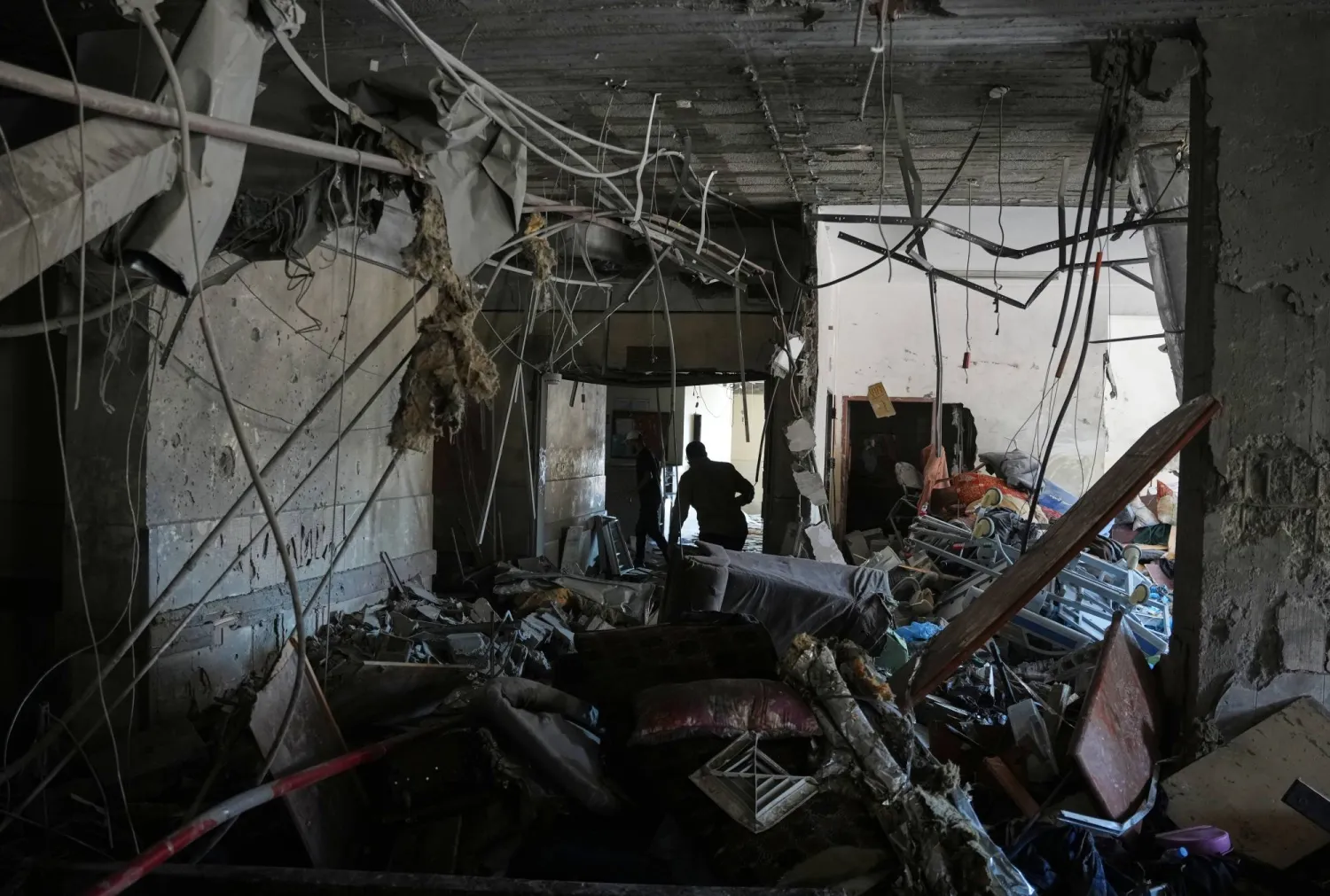
 People inspect damage to Nasser Hospital after it was hit by an Israeli airstrike overnight in Khan Younis, Gaza Strip, Thursday, Nov. 12, 2026. (AP)
People inspect damage to Nasser Hospital after it was hit by an Israeli airstrike overnight in Khan Younis, Gaza Strip, Thursday, Nov. 12, 2026. (AP)
TT

Saudi Arabia and 17 Arab, Islamic Countries Condemn Israeli Strike on Nasser Medical Complex in Gaza

 People inspect damage to Nasser Hospital after it was hit by an Israeli airstrike overnight in Khan Younis, Gaza Strip, Thursday, Nov. 12, 2026. (AP)
People inspect damage to Nasser Hospital after it was hit by an Israeli airstrike overnight in Khan Younis, Gaza Strip, Thursday, Nov. 12, 2026. (AP)

Saudi Arabia and 17 Arab and Islamic countries strongly condemned on Saturday the Israeli on the Nasser Medical Complex in Khan Younis earlier this week.

The foreign ministers of Saudi Arabia, Egypt, Sudan, Libya, Palestine, Djibouti, Somalia, Oman, Mauritania, Jordan, Qatar, Kuwait, the United Arab Emirates, Türkiye, Pakistan, Indonesia, Lebanon, and Algeria slammed the attack “as a violation of international humanitarian law, which affords special protection to medical facilities and healthcare workers.”

In a statement, they also condemned “continued Israeli attacks on Palestinian civilians, including strikes on tents and other sites sheltering displaced persons.”

“These attacks undermine the ceasefire and efforts to restore security and stability in Gaza and are inconsistent with President Trump’s Comprehensive Plan,” they added.

An Israeli airstrike hit one of the main hospitals still operating in the Gaza Strip on Thursday, killing six people and wounding 28 others.

The Israeli military said the strike on Nasser Hospital in southern Gaza targeted an unidentified Hamas commander and other fighters, without providing evidence.

The FMs expressed on Saturday “grave concern that continued Israeli restrictions on humanitarian aid, shelter materials, including tents, caravans and mobile homes, as well as medical supplies are deepening Gaza's humanitarian catastrophe as winter approaches.”

“Inadequate shelter and deteriorating water, sanitation and healthcare services put civilian lives at grave risk, particularly those of children and infants, who could once again die from exposure to freezing temperatures,” they warned.

The FMs called on Israel “to heed appeals from the international community and the Board of Peace, for increased aid and to fulfil immediately and in full its obligations under the Sharm El-Sheikh Agreement, President Trump's Comprehensive Plan and United Nations Security Council Resolution 2803.”

“Israel must uphold the ceasefire, protect civilians and medical facilities, and ensure the safe, sustained and unimpeded delivery of humanitarian aid in sufficient quantities, including shelter and early recovery supplies and equipment to restore essential infrastructure,” they demanded.

“It must also allow UN agencies and humanitarian organizations to carry out their mandates without obstruction,” they said.

“These first-phase commitments were due to take effect upon signature. Israel must implement them without further delay or additional conditions, including political and security conditions, that impede humanitarian access,” they continued.

“Urgent humanitarian assistance must proceed independently of progress on subsequent phases. The ministers called on the United States and the Board of Peace, within their respective roles, to intensify their efforts to ensure Israel's full implementation of these commitments and the lifting of all restrictions on the entry of humanitarian aid, thereby preserving the credibility of the agreements and consolidating the ceasefire,” they stressed.

The ministers reaffirmed their determination “to work with regional and international partners to consolidate the ceasefire, implement all phases of the Plan and scale up humanitarian assistance to alleviate the suffering of the brotherly Palestinian people.”


Coalition Destroys 2 Houthi Drones Fired at Riyadh, Southern Regions

Saudi air defenses. (Saudi Ministry of Defense)
TT

Coalition Destroys 2 Houthi Drones Fired at Riyadh, Southern Regions

Saudi air defenses. (Saudi Ministry of Defense)

The Coalition to Restore Legitimacy in Yemen announced on Saturday the interception and destruction of two drones in the Riyadh and Southern Regions launched by the terrorist Houthi militia toward Saudi Arabia.

In Yemen, the army announced that it had carried out 723 strikes and targeting operations "hitting Houthi militia sites, gatherings, fortifications, firing positions, vehicles, and combat equipment."

According to an army statement, the operations included "37 airstrikes by warplanes, 56 targeting operations by drones, 89 by rocket launchers, and 541 by field artillery."

Internationally, the United Nations Security Council condemned earlier this week the Houthi attacks on Saudi Arabia and their threats to commercial vessels in the Bab al-Mandeb Strait and the Red Sea, affirming the Kingdom's right to self-defense.

The Council unanimously adopted Resolution 2837, which calls for an immediate halt to the attacks, intensified efforts to combat weapons smuggling to the group, and stricter oversight on its access to drone and ballistic missile components, alongside tasking the Panel of Experts with tracking the group's funding sources and revenues.

The Gulf Cooperation Council welcomed the resolution, calling for it to be translated into a concrete commitment that protects civilians, facilities, and the safety of international navigation.


Türkiye, Qatar Sign Mutual Defense Agreement

Turkish President Recep Tayyip Erdogan meets with Qatar's Emir Sheikh Tamim bin Hamad Al Thani in Istanbul, Türkiye, November 13, 2026. (Murat Cetinmuhurdar/Turkish Presidential Press Office/Handout via Reuters)
TT

Türkiye, Qatar Sign Mutual Defense Agreement

Turkish President Recep Tayyip Erdogan meets with Qatar's Emir Sheikh Tamim bin Hamad Al Thani in Istanbul, Türkiye, November 13, 2026. (Murat Cetinmuhurdar/Turkish Presidential Press Office/Handout via Reuters)

Türkiye and Qatar announced on Friday that they signed a mutual defense agreement, which they said was aimed at adopting a "unified position" in the face of an external attack.

The announcement came after Turkish President Recep Tayyip Erdogan met Qatari Emir Sheikh Tamim bin Hamad Al Thani in Istanbul.

Erdogan had said the agreement would further strengthen ties between them, according to his office.

Qatar's ruler travelled to Istanbul after attending the United Nations COP31 climate summit in southern Türkiye.

"The two parties hailed the signing of the mutual defense agreement between Qatar and Türkiye," according to a joint statement carried by Qatar's state news agency.

The agreement was "aimed at bolstering collective defense and achieving regional security and stability, as well as adopting a unified position in the face of any external armed attack targeting either or both parties", the statement said.

"The two parties agreed to hold consultations on threats to their security... and to strengthen cooperation through joint military exercises, collaboration in the field of defense industries, and the exchange of personnel training."

Erdogan's office had earlier announced the agreement, without going into the details of its contents.

"A mutual defense agreement signed by Türkiye and Qatar today will add a new dimension to the brotherly ties between the two countries," Erdogan said during the meeting, according to the statement from his office.

Erdogan also said Türkiye and Qatar would expand cooperation in the defense industry.
