



Ministers, Islamic Figures from Over 70 Countries Condemn Houthi Attacks Targeting Saudi Arabia

The Governor of the Riyadh Region visits civilians injured by Houthi terrorist attacks on Saudi Arabia. (SPA)
TT

Ministers, Islamic Figures from Over 70 Countries Condemn Houthi Attacks Targeting Saudi Arabia

The Governor of the Riyadh Region visits civilians injured by Houthi terrorist attacks on Saudi Arabia. (SPA)

A total of 176 ministers, Islamic scholars, muftis, and heads of Islamic associations, universities, and institutions from more than 70 countries strongly condemned attacks by the Iran-backed Houthi militia on Saudi Arabia.

They highlighted the threat these attacks pose to the security of the Two Holy Mosques and the safety of their visitors and condemned the targeting of airports and other civilian and vital infrastructure across the Kingdom.

In statements and cables sent to Saudi Minister of Islamic Affairs, Dawah and Guidance Sheikh Dr. Abdullatif Al Alsheikh, they expressed full support for Saudi Arabia's measures to protect its territory, safeguard its security and stability, and defend Islam's holy sites.

They described the attacks as a flagrant violation of the sanctity of Islamic holy sites, an infringement upon humanitarian and moral values and principles, and a disregard for the sanctity of human life, which Islamic Sharia seeks to preserve and protect.

They stressed that the Houthis' actions reflect a disregard for human and moral values and underscore the danger their practices pose to regional security and stability. They called for a firm international response to end these attacks and hold those responsible accountable under international laws and regulations.

They strongly condemned the deliberate targeting of Saudi airports and civilian and vital facilities, warning that such attacks directly threaten the safety of travelers and other civilians, disrupt air traffic, and cause hardship for passengers. Those affected include Umrah performers and visitors arriving from around the world to perform their religious rituals and visit the Two Holy Mosques, they added.

Deliberately endangering innocent lives, terrorizing people, and obstructing the journeys of pilgrims to their destinations show the Houthis' disregard for human life and their lack of Islamic principles and human, moral, and ethical values, they warned. They described these acts as serious violations of international laws and norms, requiring serious international action to protect civilian facilities and ensure travelers' safety.

They emphasized that standing with Saudi Arabia in confronting these attacks is an urgent duty and a religious, moral, and humanitarian responsibility.

The security of the Two Holy Mosques and the safety of their visitors, they said, are not solely Saudi Arabia's concern, but an issue of importance to Muslims around the world. They highlighted the special place Makkah and Madinah hold in Muslims' hearts and the enduring sanctity and significance of Islamic holy sites, stressing that any threat to Saudi Arabia's security or to Muslim holy sites represents an affront to the sentiments of the entire Muslim world.

They affirmed Saudi Arabia's legitimate right to take all necessary measures to protect its sovereignty, ensure the security of its citizens and residents, and counter any threat to its security, Islamic holy sites, or civilian facilities.

They praised Saudi Arabia's historic and leading role in serving Islam and Muslims under the leadership of Custodian of the Two Holy Mosques King Salman bin Abdulaziz Al Saud and Prince Mohammed bin Salman bin Abdulaziz Al Saud, Crown Prince and Prime Minister.

They highlighted Saudi Arabia's care for the Two Holy Mosques and its commitment to mobilizing its resources and capabilities to serve pilgrims and make it possible for them to perform their rituals safely and peacefully. They said these efforts are a source of pride and appreciation for Muslims worldwide and stressed that attacks on Saudi Arabia could not be separated from its standing in the Islamic world and its major responsibilities in caring for the holy sites and serving those who visit them.

They urged the international community and relevant organizations and bodies to fulfill their legal, humanitarian, and moral responsibilities in confronting these attacks. They called for firm positions and decisive measures to deter those responsible, hold them accountable, prevent further attacks, and protect civilians, religious sites, airports, and vital facilities from threats or targeting.

They warned that leniency toward such practices would encourage their continuation, endanger innocent lives, and undermine efforts to achieve regional security and stability.

They underlined their unwavering solidarity with Saudi Arabia, its leadership, and its people against any threat to its security, stability, or Muslim holy sites. They prayed for the protection of the Custodian of the Two Holy Mosques and the Crown Prince, continued security, strength, and stability for Saudi Arabia, and the safety of the Two Holy Mosques and their visitors, praying that the aggressors' plots would be thwarted.
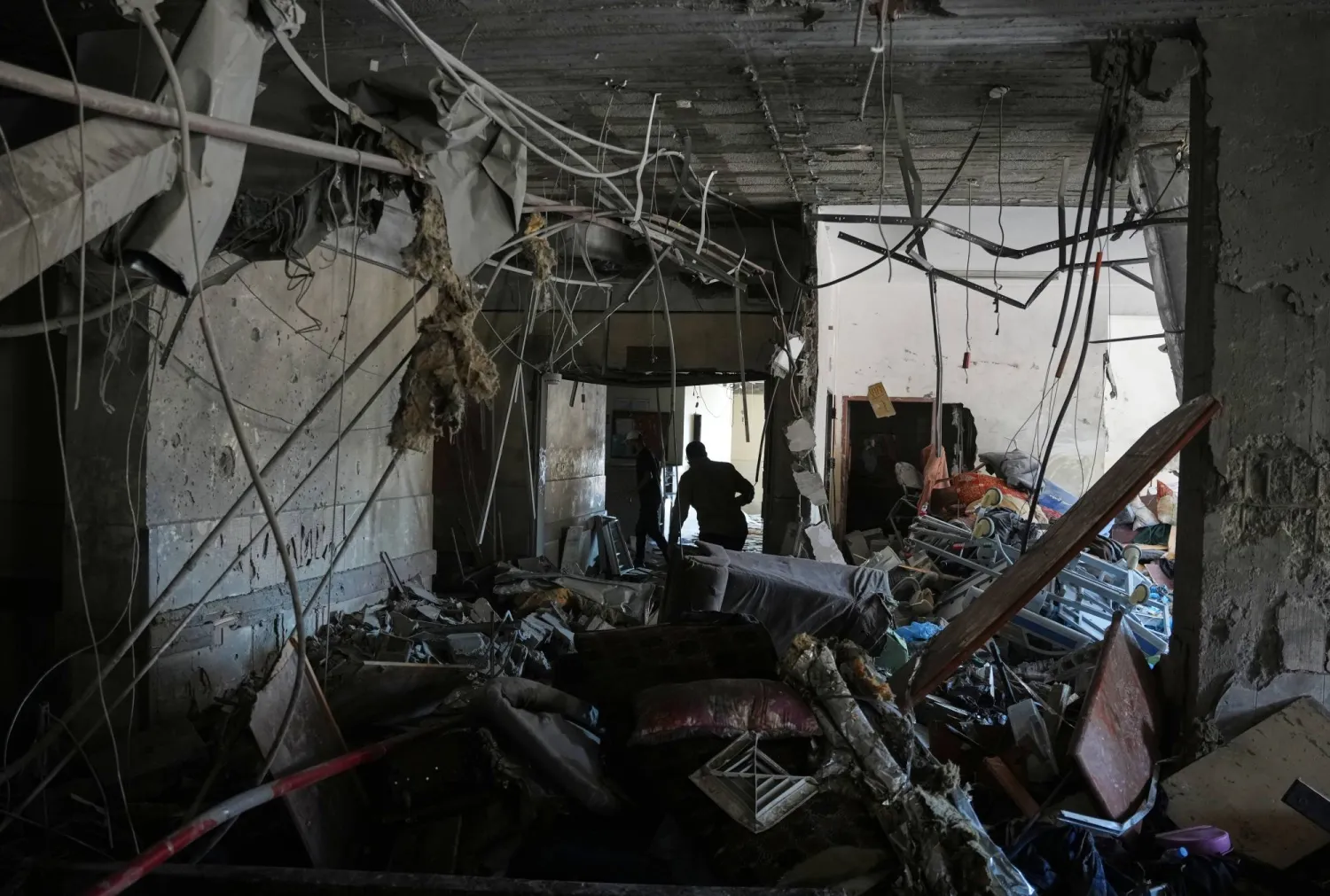



Saudi Arabia and 17 Arab, Islamic Countries Condemn Israeli Strike on Nasser Medical Complex in Gaza

 People inspect damage to Nasser Hospital after it was hit by an Israeli airstrike overnight in Khan Younis, Gaza Strip, Thursday, Nov. 12, 2026. (AP)
People inspect damage to Nasser Hospital after it was hit by an Israeli airstrike overnight in Khan Younis, Gaza Strip, Thursday, Nov. 12, 2026. (AP)
TT

Saudi Arabia and 17 Arab, Islamic Countries Condemn Israeli Strike on Nasser Medical Complex in Gaza

 People inspect damage to Nasser Hospital after it was hit by an Israeli airstrike overnight in Khan Younis, Gaza Strip, Thursday, Nov. 12, 2026. (AP)
People inspect damage to Nasser Hospital after it was hit by an Israeli airstrike overnight in Khan Younis, Gaza Strip, Thursday, Nov. 12, 2026. (AP)

Saudi Arabia and 17 Arab and Islamic countries strongly condemned on Saturday the Israeli on the Nasser Medical Complex in Khan Younis earlier this week.

The foreign ministers of Saudi Arabia, Egypt, Sudan, Libya, Palestine, Djibouti, Somalia, Oman, Mauritania, Jordan, Qatar, Kuwait, the United Arab Emirates, Türkiye, Pakistan, Indonesia, Lebanon, and Algeria slammed the attack “as a violation of international humanitarian law, which affords special protection to medical facilities and healthcare workers.”

In a statement, they also condemned “continued Israeli attacks on Palestinian civilians, including strikes on tents and other sites sheltering displaced persons.”

“These attacks undermine the ceasefire and efforts to restore security and stability in Gaza and are inconsistent with President Trump’s Comprehensive Plan,” they added.

An Israeli airstrike hit one of the main hospitals still operating in the Gaza Strip on Thursday, killing six people and wounding 28 others.

The Israeli military said the strike on Nasser Hospital in southern Gaza targeted an unidentified Hamas commander and other fighters, without providing evidence.

The FMs expressed on Saturday “grave concern that continued Israeli restrictions on humanitarian aid, shelter materials, including tents, caravans and mobile homes, as well as medical supplies are deepening Gaza's humanitarian catastrophe as winter approaches.”

“Inadequate shelter and deteriorating water, sanitation and healthcare services put civilian lives at grave risk, particularly those of children and infants, who could once again die from exposure to freezing temperatures,” they warned.

The FMs called on Israel “to heed appeals from the international community and the Board of Peace, for increased aid and to fulfil immediately and in full its obligations under the Sharm El-Sheikh Agreement, President Trump's Comprehensive Plan and United Nations Security Council Resolution 2803.”

“Israel must uphold the ceasefire, protect civilians and medical facilities, and ensure the safe, sustained and unimpeded delivery of humanitarian aid in sufficient quantities, including shelter and early recovery supplies and equipment to restore essential infrastructure,” they demanded.

“It must also allow UN agencies and humanitarian organizations to carry out their mandates without obstruction,” they said.

“These first-phase commitments were due to take effect upon signature. Israel must implement them without further delay or additional conditions, including political and security conditions, that impede humanitarian access,” they continued.

“Urgent humanitarian assistance must proceed independently of progress on subsequent phases. The ministers called on the United States and the Board of Peace, within their respective roles, to intensify their efforts to ensure Israel's full implementation of these commitments and the lifting of all restrictions on the entry of humanitarian aid, thereby preserving the credibility of the agreements and consolidating the ceasefire,” they stressed.

The ministers reaffirmed their determination “to work with regional and international partners to consolidate the ceasefire, implement all phases of the Plan and scale up humanitarian assistance to alleviate the suffering of the brotherly Palestinian people.”


Coalition Destroys 2 Houthi Drones Fired at Riyadh, Southern Regions

Saudi air defenses. (Saudi Ministry of Defense)
TT

Coalition Destroys 2 Houthi Drones Fired at Riyadh, Southern Regions

Saudi air defenses. (Saudi Ministry of Defense)

The Coalition to Restore Legitimacy in Yemen announced on Saturday the interception and destruction of two drones in the Riyadh and Southern Regions launched by the terrorist Houthi militia toward Saudi Arabia.

In Yemen, the army announced that it had carried out 723 strikes and targeting operations "hitting Houthi militia sites, gatherings, fortifications, firing positions, vehicles, and combat equipment."

According to an army statement, the operations included "37 airstrikes by warplanes, 56 targeting operations by drones, 89 by rocket launchers, and 541 by field artillery."

Internationally, the United Nations Security Council condemned earlier this week the Houthi attacks on Saudi Arabia and their threats to commercial vessels in the Bab al-Mandeb Strait and the Red Sea, affirming the Kingdom's right to self-defense.

The Council unanimously adopted Resolution 2837, which calls for an immediate halt to the attacks, intensified efforts to combat weapons smuggling to the group, and stricter oversight on its access to drone and ballistic missile components, alongside tasking the Panel of Experts with tracking the group's funding sources and revenues.

The Gulf Cooperation Council welcomed the resolution, calling for it to be translated into a concrete commitment that protects civilians, facilities, and the safety of international navigation.


Türkiye, Qatar Sign Mutual Defense Agreement

Turkish President Recep Tayyip Erdogan meets with Qatar's Emir Sheikh Tamim bin Hamad Al Thani in Istanbul, Türkiye, November 13, 2026. (Murat Cetinmuhurdar/Turkish Presidential Press Office/Handout via Reuters)
TT

Türkiye, Qatar Sign Mutual Defense Agreement

Turkish President Recep Tayyip Erdogan meets with Qatar's Emir Sheikh Tamim bin Hamad Al Thani in Istanbul, Türkiye, November 13, 2026. (Murat Cetinmuhurdar/Turkish Presidential Press Office/Handout via Reuters)

Türkiye and Qatar announced on Friday that they signed a mutual defense agreement, which they said was aimed at adopting a "unified position" in the face of an external attack.

The announcement came after Turkish President Recep Tayyip Erdogan met Qatari Emir Sheikh Tamim bin Hamad Al Thani in Istanbul.

Erdogan had said the agreement would further strengthen ties between them, according to his office.

Qatar's ruler travelled to Istanbul after attending the United Nations COP31 climate summit in southern Türkiye.

"The two parties hailed the signing of the mutual defense agreement between Qatar and Türkiye," according to a joint statement carried by Qatar's state news agency.

The agreement was "aimed at bolstering collective defense and achieving regional security and stability, as well as adopting a unified position in the face of any external armed attack targeting either or both parties", the statement said.

"The two parties agreed to hold consultations on threats to their security... and to strengthen cooperation through joint military exercises, collaboration in the field of defense industries, and the exchange of personnel training."

Erdogan's office had earlier announced the agreement, without going into the details of its contents.

"A mutual defense agreement signed by Türkiye and Qatar today will add a new dimension to the brotherly ties between the two countries," Erdogan said during the meeting, according to the statement from his office.

Erdogan also said Türkiye and Qatar would expand cooperation in the defense industry.