


Egypt Extends to Next Week Discussions on Military Support for Saudi Arabia

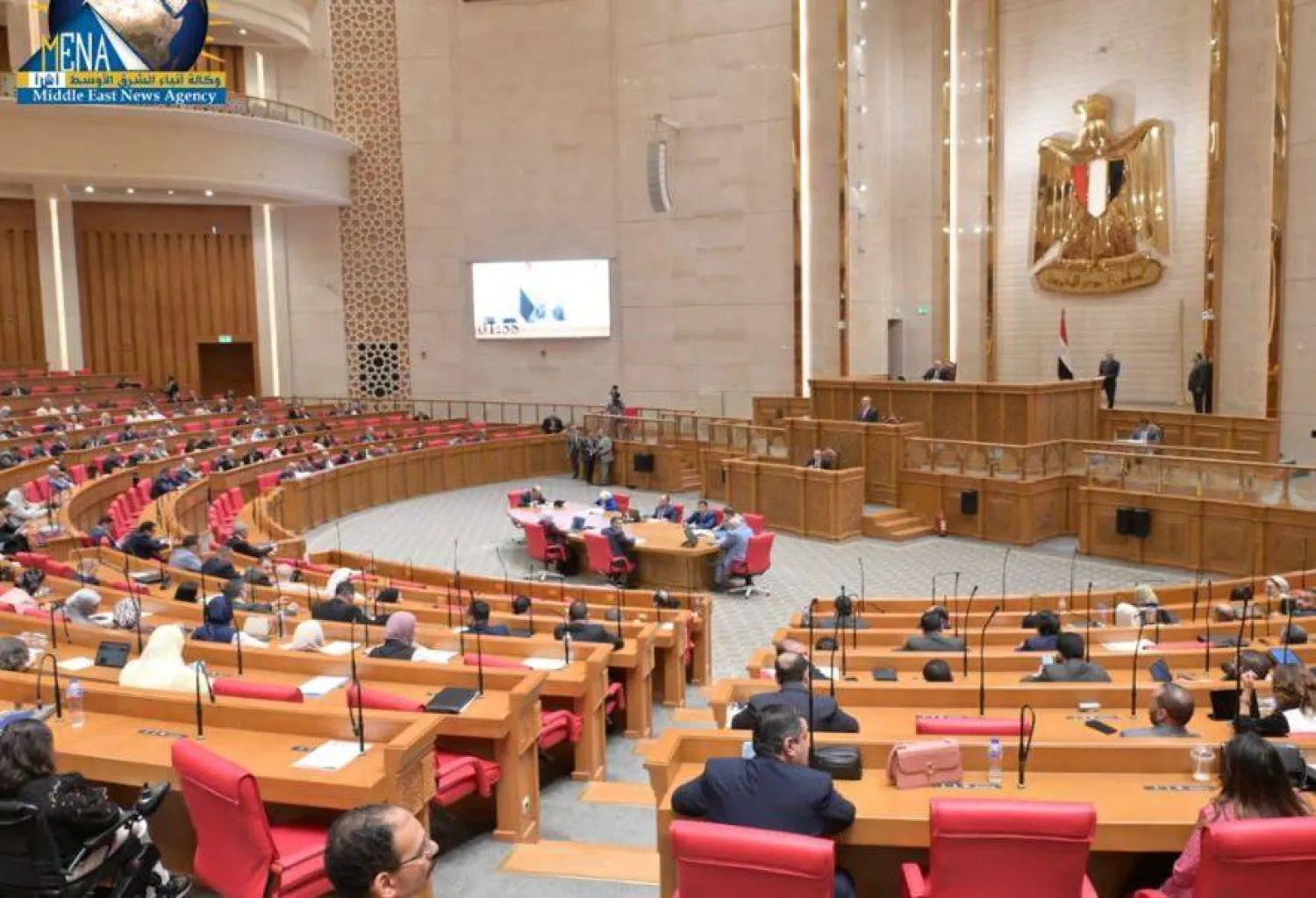
The Egyptian parliament in session. (MENA file)
TT

Egypt Extends to Next Week Discussions on Military Support for Saudi Arabia

The Egyptian parliament in session. (MENA file)

The Egyptian parliament extended to next week on Monday discussions on President Abdel Fattah al-Sisi's authorization to provide military support to Saudi Arabia, a move that observers have interpreted as a "desire for further clarification on the nature of the Egyptian action."

On Saturday, Sisi requested that parliament hold an emergency session to authorize the defense of Gulf states, stressing that his country is "ready to implement any measure requested by Saudi Arabia to protect its security." This was followed by two parliamentary sessions on Sunday and Monday to discuss the issue.

At the conclusion of Monday's meeting, Speaker Hisham Badawi decided to adjourn the sessions until October 26 to resume discussions.

Parliamentary sources said the decision stemmed from the high number of requests from MPs to speak. The sources told Asharq Al-Awsat that the discussions over the two days witnessed broad support for the Kingdom, as well as several requests to clarify the nature of the support, and how Egypt will defend its security and stability.

They added: "In light of hundreds of requests received from MPs to speak, and given the nature of the issue, discussions were extended to next week for further clarifications."
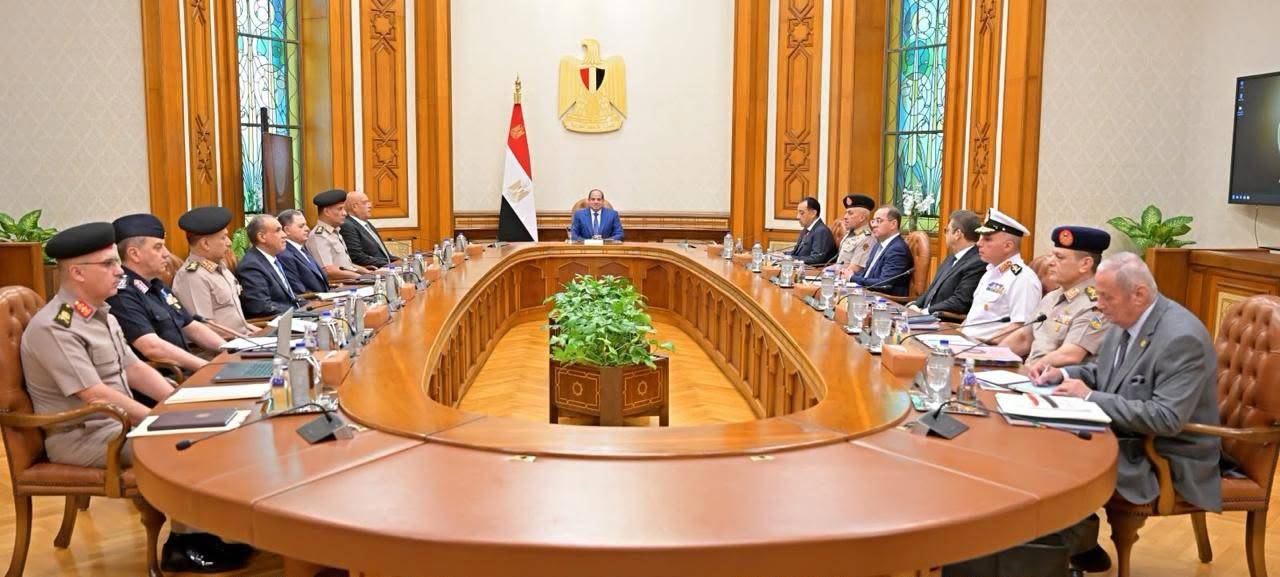
Egyptian President Abdel Fattah al-Sisi chairs a National Defense Council meeting at Ittihadiya Palace on Sunday. (Egyptian Presidency)

This was confirmed by Dr. Abdel Moneim Said, a former member of the Senate, who told Asharq Al-Awsat: "Given the importance of the subject, it was only natural that the discussions would be extended."

He added: "All aspects of the issue must be addressed, starting with the nature of the Egyptian action to defensively support the Kingdom, through to its implications and cost," noting that "the issue enjoys broad support; given its impact on Egyptian national security, which cannot be separated from Gulf security."

Article 152 of the Egyptian Constitution stipulates that "the President of the Republic is the Supreme Commander of the Armed Forces, and shall not declare war, nor send the Armed Forces on a combat mission outside the borders of the State, except after taking the opinion of the National Defense Council, and obtaining the approval of the parliament by a two-thirds majority of its members."

It adds that "if the parliament is dissolved, the opinion of the Supreme Council of the Armed Forces must be taken, alongside the approval of both the Cabinet and the National Defense Council."

Following a meeting chaired by Sisi on Sunday, the National Defense Council decided on "absolute alignment and complete solidarity with Saudi Arabia, and to provide all necessary and possible forms of support to the Kingdom to defend its security and stability, and to safeguard its capabilities, territorial integrity, and Islamic holy sites."

Political parties and MPs stressed their support for the Kingdom.

In a statement on Sunday, the Wafd Party announced its backing, stating that "the security of the Kingdom and Red Sea, and Arab countries bordering it, are closely linked to Egyptian and Arab national security."



Saudi Arabia Urges Unified Global Efforts Toward Two-State Solution

Saudi Arabia’s Permanent Representative to the League of Arab States Ambassador Abdulaziz Al-Matar delivered the remarks in the Kingdom’s address at a ceremony organized by the league to mark the International Day of Solidarity with the Palestinian People. SPA
TT

Saudi Arabia Urges Unified Global Efforts Toward Two-State Solution

Saudi Arabia’s Permanent Representative to the League of Arab States Ambassador Abdulaziz Al-Matar delivered the remarks in the Kingdom’s address at a ceremony organized by the league to mark the International Day of Solidarity with the Palestinian People. SPA

Saudi Arabia on Sunday reaffirmed its continued support for the Palestinian government to strengthen its ability to remain operational and fulfill its commitments to the Palestinian people.

The Kingdom also stressed that establishing an independent, sovereign, viable, and geographically contiguous Palestinian state along the June 4, 1967 borders, with East Jerusalem as its capital, constitutes the core of the two-state solution and represents a realistic path toward achieving a just and lasting peace in the region.

Saudi Arabia’s Permanent Representative to the League of Arab States Ambassador Abdulaziz Al-Matar delivered the remarks in the Kingdom’s address at a ceremony organized by the league to mark the International Day of Solidarity with the Palestinian People.

He stressed that solidarity with the Palestinian people must translate into an effective political stance, a shared international will, and practical steps to end the occupation and safeguard their rights.

He also reiterated Saudi Arabia’s firm and longstanding support for the Palestinian cause and the need for a solution that ensures justice for the Palestinian people and security and stability for all peoples of the region.

Al-Matar emphasized that the Arab Peace Initiative has established a clear and comprehensive framework for achieving peace in the region based on land for peace, the two-state solution, mutual security, and shared prosperity.

He added that the New York Declaration reflected a historic international consensus on the need to end the occupation and establish an independent Palestinian state.

He noted that Saudi Arabia, in partnership with the European Union and Norway, launched the Global Alliance for the Implementation of the Two-State Solution, underscoring the importance of mobilizing efforts and coordinating international action to achieve peace.

The ambassador said the New York Declaration, US President Donald Trump’s Comprehensive Plan, UN Security Council Resolution 2803, and the Global Alliance for the Implementation of the Two-State Solution represent complementary tracks.

He stressed that their success requires unified international efforts and follow-up on commitments to consolidate the ceasefire, ensure the unimpeded delivery of humanitarian aid, and link transitional arrangements in the Gaza Strip to the Palestinian Authority.

Al-Matar warned against the continued undermining of peace prospects through settlement expansion, annexation attempts, forced displacement, and escalating settler violence.

He stressed that the unity of the Palestinian territories is fundamental to establishing an independent and viable Palestinian state.

The ambassador underscored the need to protect the Palestinian Authority and preserve its legitimate institutions.

He reiterated Saudi Arabia’s call to halt measures that seek to weaken the authority or threaten the collapse of its institutions, pointing to the launch of the Emergency Coalition for the Financial Sustainability of the Palestinian Authority by Saudi Arabia in cooperation with its partners.

Al-Matar called on brotherly and friendly countries to join the initiative and provide sustained, coordinated financial support to strengthen institutional and financial stability and preserve the foundations of the envisioned Palestinian state.

The diplomat added that, in keeping with its responsibility and historic, steadfast positions, Saudi Arabia will continue working in coordination with brotherly countries and partners to end the suffering of the brotherly Palestinian people and enable them to secure their full legitimate rights, foremost among them the right to self-determination and the establishment of an independent, sovereign Palestinian state.


OIC Marks International Palestinian Solidarity Day, Urges Wider Recognition of State of Palestine

OIC Marks International Palestinian Solidarity Day, Urges Wider Recognition of State of Palestine
TT

OIC Marks International Palestinian Solidarity Day, Urges Wider Recognition of State of Palestine

OIC Marks International Palestinian Solidarity Day, Urges Wider Recognition of State of Palestine

The General Secretariat of the Organization of Islamic Cooperation (OIC) marked the United Nations-designated International Day of Solidarity with the Palestinian People on Sunday at its headquarters in Jeddah.

In this regard, OIC Secretary-General Ismail Ould Cheikh Ahmed praised the positions of countries that have stood on the side of truth, justice, and international legitimacy by recognizing the State of Palestine.

According to SPA, he called on other countries to follow suit, thereby reaffirming their commitment to international law and support for the Palestinian people's right to self-determination and to establish their independent, sovereign state within the borders of June 4, 1967, with Jerusalem as its capital.

He stressed the need to provide international protection for the Palestinian people in accordance with relevant UN resolutions and the Geneva Conventions, and to end Israel's impunity by activating legal accountability and justice mechanisms.

The Sec-Gen also underscored the importance of completing the implementation of the Gaza peace plan to ensure a permanent ceasefire and the opening of crossings to deliver humanitarian aid, while firmly rejecting any attempts to displace the Palestinian people from their land.

He further renewed the OIC's steadfast support for the Palestinian people's sovereignty over Jerusalem, warning of the dangers posed by repeated Israeli attacks on Al-Aqsa Mosque. He called on the international community to continue providing political, financial, and legal support to the United Nations Relief and Works Agency for Palestine Refugees in the Near East (UNRWA).


Coalition: Saudi Arabia Not Facing Depletion of Air Defense Interceptors, Aden is ‘Red Line’

Coalition Spokesperson Turki Al-Malki
TT

Coalition: Saudi Arabia Not Facing Depletion of Air Defense Interceptors, Aden is ‘Red Line’

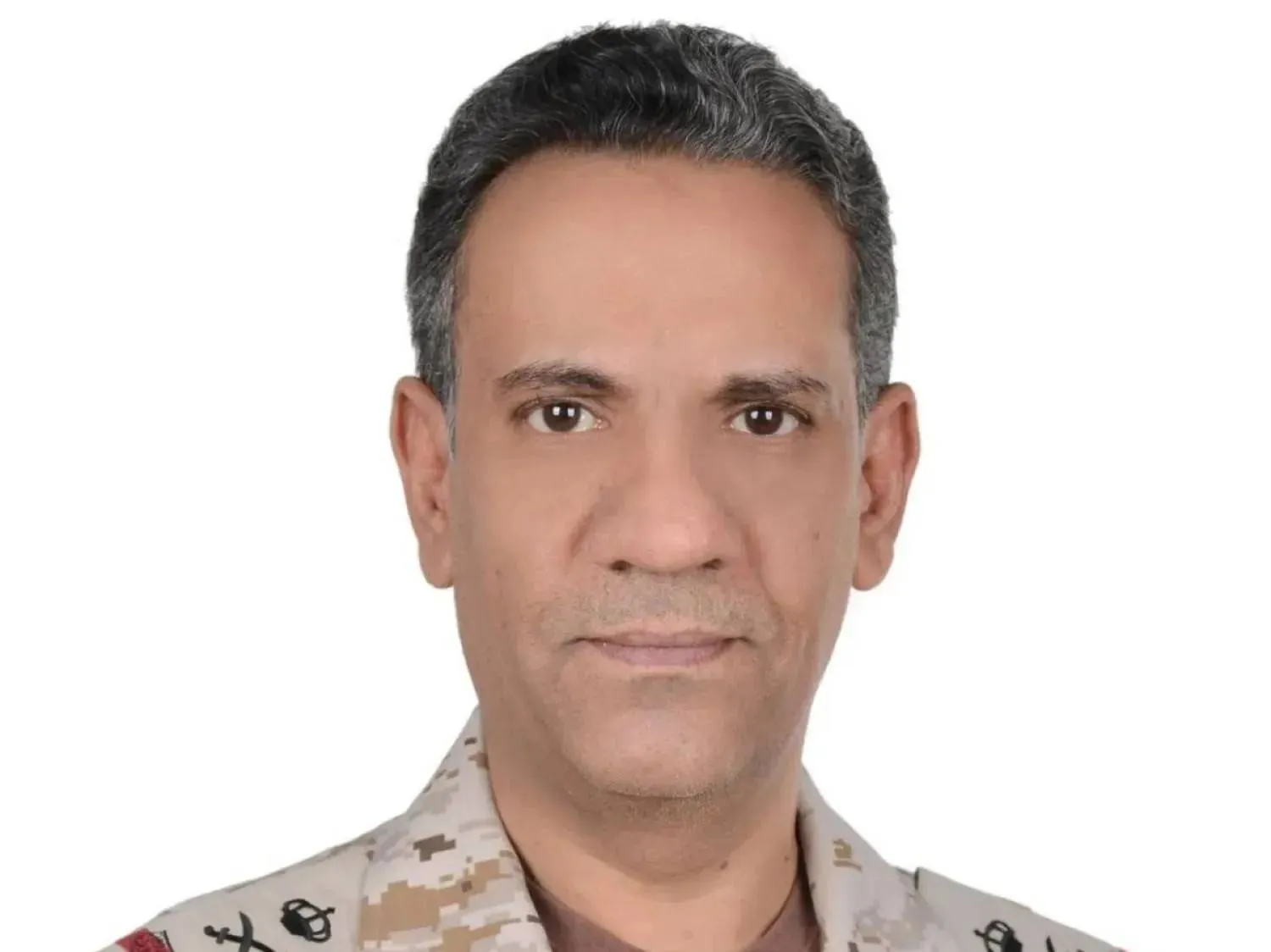
Coalition Spokesperson Turki Al-Malki

The war in Yemen could end "tomorrow" if the Houthi militias agree to a UN-backed peace plan, the Coalition to Restore Legitimacy in Yemen said Sunday, adding that Riyadh had drawn a "red line" around the Yemeni government's interim capital Aden.

Coalition Spokesperson Major General Turki Al-Malki said in an interview with Reuters that the Coalition would do "whatever it takes" to protect Aden.

"The best solution is the political solution. But we have to support the Yemeni government to achieve their objective," Al-Malki said.

"If the Houthis decided to go for the roadmap with the Yemeni government, the war can end... tomorrow," he said, referring to a UN-backed peace plan.

Until then, Al-Malki said, the Coalition will rely on military force to impose costs on the group and compel a change in behavior, providing continuous, 24-hour close air support to Yemeni units on the ground and degrading Houthi capabilities to menace Saudi cities, he said.

"We are achieving the objective to dismantle and to destroy the TBMs (theater ballistic missiles) and also the launchers and some of the components of the ballistic missiles and UAVs," he said.

Al-Malki stated that the Yemeni government forces possess the necessary numbers, tribal support, and military capability.

He also said the Yemeni government acknowledged "some gaps happened two times in the last three months" on the battlefield, expressing hope that the Yemeni army will "put things together."

Al-Malki told Reuters that Saudi Arabia was not facing a depletion of its air defense interceptor stockpiles.

"I assure (you) that we have the capability to defend our country."

"What the Houthi is doing is (not) a military operation. He's doing a terror act against, you know, civilians and civilian objects," Al-Malki added.