
Al-Jaber: Yemen Does Not Belong to the Houthis, Taiz Will Not Be Held Hostage to Their Project

Saudi Ambassador to Yemen Mohammed Al-Jaber. (Asharq Al-Awsat)
TT

Al-Jaber: Yemen Does Not Belong to the Houthis, Taiz Will Not Be Held Hostage to Their Project

Saudi Ambassador to Yemen Mohammed Al-Jaber. (Asharq Al-Awsat)

Saudi Ambassador to Yemen Mohammed Al-Jaber accused the Houthis on Tuesday of obstructing peace, exploiting Yemen’s resources to fund their military operations and prolonging the siege of Taiz.

“Yemen does not belong to the Houthis, and Taiz will not be held hostage to their agenda,” Al-Jaber declared in a post on X.

He expressed confidence that Yemen would prevail, saying its people deserved a stable state, functioning institutions, regular salaries, open roads and security forces capable of protecting their dignity.

In a post titled “If all you have is a hammer, everything looks like a nail,” the ambassador accused the terrorist Houthi militias of treating every crisis as an opportunity to escalate and every political commitment as an obstacle to its ambitions.

He maintained that the Houthis had abandoned the National Dialogue process and commitments under the peace roadmap, dragged Yemen into regional conflicts and then blamed others for blocking peace.

Al-Jaber challenged Houthi demands to reopen Sanaa airport, noting that flights had operated until the militia detained four Yemenia Airways aircraft in June 2024. The airport and the planes were subsequently destroyed in May 2025.

He added that proposals to resume services, including leasing aircraft under Yemenia’s supervision and a Jordanian initiative for flights between Amman and Sanaa, had been rejected or met with new conditions.

The ambassador also disputed Houthi claims of a blockade, pointing to daily shipments of food, medicine, fuel and commercial goods arriving at Hodeidah’s ports.

He accused the group of diverting port revenues, telecommunications income, taxes, customs duties and religious levies to finance attacks against Yemenis, Saudi Arabia and commercial shipping.

Meanwhile, he said, the Houthis refused to pay public sector salaries or provide basic services in areas under their control, using force against critics.

Citing the UN Panel of Experts on Yemen’s 2024 report, Al-Jaber said the group had exploited the telecommunications sector to finance drones and coastal forces through millions of text messages.

He cited figures of around 994 billion Yemeni rials collected in customs duties on fuel imports through Hodeidah between April 2022 and June 2024, alongside an estimated 1.34 trillion rials in telecommunications revenue and $2 billion annually from smuggled oil.

The envoy said the funds were being diverted to military purposes while ordinary Yemenis bore the cost.

Al-Jaber added: “The problem is that Houthi practices reveal a recurring pattern of utilizing crises as a tool for political pressure, only to later play the role of the victim while ignoring the responsibility of their decisions.”

“The result is an exhausted homeland and a people paying the price for a project that serves foreign agendas and endless extremist adventures,” he stressed.

Al-Jaber singled out Taiz, accusing the Houthis of besieging civilians, blocking roads and restricting access to food and medicine.

He questioned how the militia could claim to support peace while maintaining the siege, obstructing airport operations and involving Yemen in regional conflicts.

The ambassador reaffirmed Saudi Arabia’s “determination to protect its people, territory and vessels and to work with international partners to secure shipping routes through the Bab al-Mandeb Strait and the Red Sea.”

He pledged continued support for Yemen’s legitimate government and its people “in pursuit of peace, stability and economic recovery.”
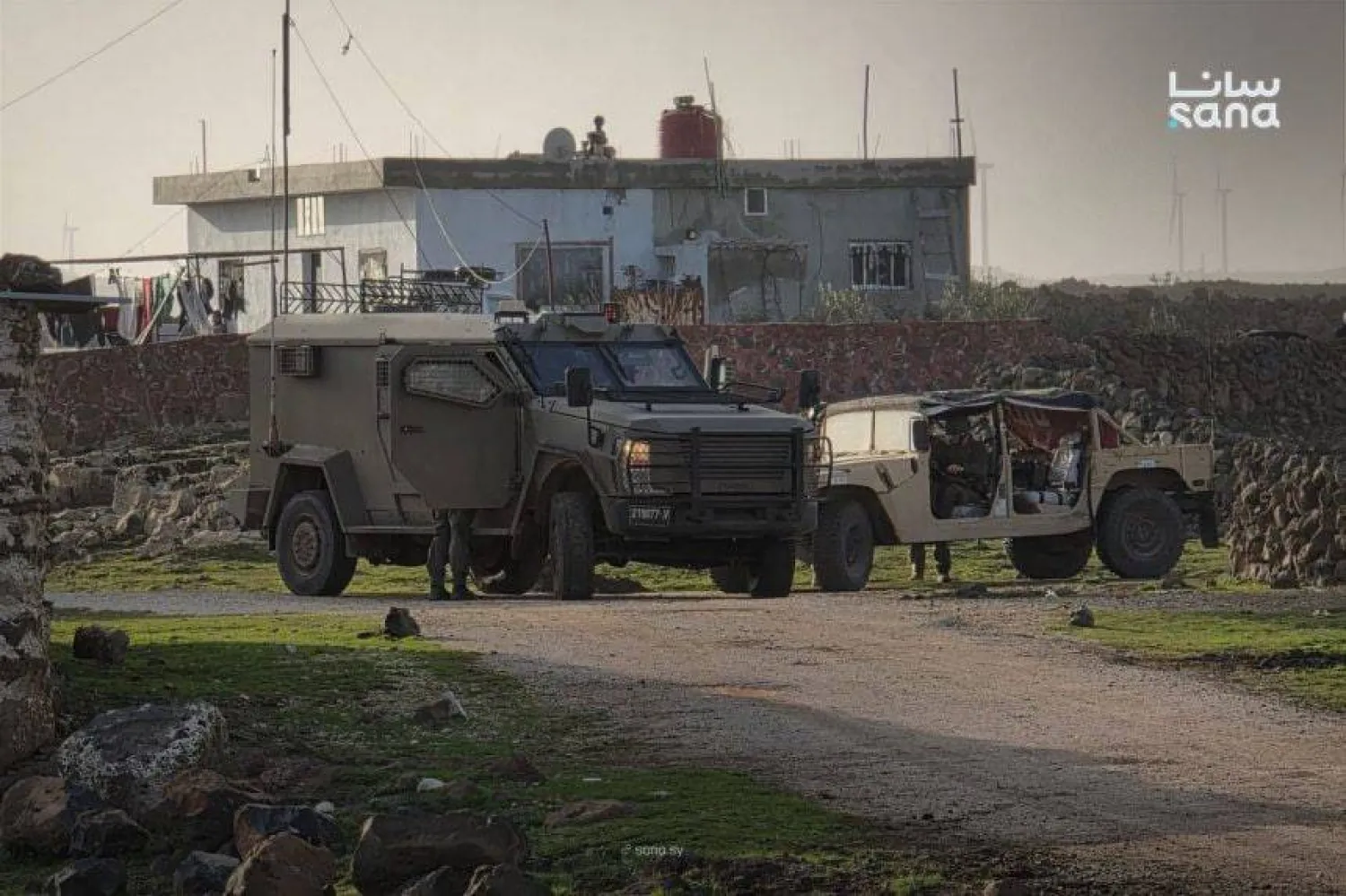


Saudi Arabia Condemns Israeli Violations in the Region

Israeli forces are seen during an incursion in Syria. (SANA file)
TT

Saudi Arabia Condemns Israeli Violations in the Region

Israeli forces are seen during an incursion in Syria. (SANA file)

Saudi Arabia condemned on Wednesday Israel's continued blatant violations in the region, most recently the incursions into the rural areas of Syria's Quneitra and Daraa governorates.

In a statement, the foreign ministry said: "Saudi Arabia expresses its categorical rejection of the Israeli forces' intimidation of peaceful civilians and violations of international laws and norms.”

“It stresses the importance of halting Israeli infringements on the sovereignty of Syrian territory and adhering to the 1974 Disengagement Agreement to preserve security and stability in the region,” it added.

The Kingdom reiterated its support for Syria's sovereignty and territorial integrity.


Saudi Arabia Condemns Iran Attacks on Bahrain, Kuwait, UAE Tanker

Vehicles move on a highway in Kuwait. (AFP)
TT

Saudi Arabia Condemns Iran Attacks on Bahrain, Kuwait, UAE Tanker

Vehicles move on a highway in Kuwait. (AFP)

Saudi Arabia strongly condemned on Wednesday Iran’s attacks on Bahrain, Kuwait and an oil tanker belonging to the United Arab Emirates.

A Foreign Ministry statement underlined Saudi Arabia’s “complete rejection of Iran’s continued aggression against brotherly countries and its threats to freedom of maritime navigation and trade routes.”

It reiterated its call “for an end to such acts of aggression, respect for international law and the principles of good neighborliness, and support for diplomatic efforts aimed at achieving peace and resolving the crisis through negotiations, to safeguard the security and stability of the region and its peoples.”

Secretary-General of the Gulf Cooperation Council (GCC) Jasem Albudaiwi also strongly condemned the attack on Kuwait.

He said Iran’s continuation of its attacks “reflects its persistence in undermining de-escalation efforts, as well as a flagrant disregard for the principles of good neighborliness, the rules of international law, and the United Nations Charter.”

He called on the international community “to assume its responsibilities toward these grave and repeated Iranian assaults and to take effective measures to halt them, ensuring respect for state sovereignty and preserving peace and security in the region.”

Albudaiwi reiterated the GCC states’ “full and steadfast solidarity with Kuwait, standing united by its side and backing all measures it takes to protect its security and stability, safeguard its sovereignty and assets, and ensure the safety of its citizens and residents on its territory.”


UAE State Oil Firm Says One Missing After Ship Hit in Hormuz

Vessels at the Strait of Hormuz, as seen from Musandam, Oman, November 17, 2026. (Reuters)
TT

UAE State Oil Firm Says One Missing After Ship Hit in Hormuz

Vessels at the Strait of Hormuz, as seen from Musandam, Oman, November 17, 2026. (Reuters)

UAE state oil firm ADNOC said Wednesday that a crew member was missing after a ship belonging to the company was struck in the Strait of Hormuz.

"All other crew members have been safely evacuated from the vessel. Eleven sustained injuries and where required are receiving medical care," ADNOC said, adding that search and rescue operations were continuing.

British maritime security agency, UKMTO, said on Wednesday that the tanker had been struck a day earlier by "an unknown projectile" in the Strait of Hormuz, about 13 nautical miles north of Khasab, an Omani town overlooking the strategic waterway.

The agency did not identify the vessel, but confirmed one crew member was missing.

"A fire occurred onboard, which has since been extinguished," UKMTO said, adding that the extent of the damage and any environmental impact remained unknown.

Before the Middle East war triggered by US-Israeli strikes on Iran on February 28, around one-fifth of the world's oil and liquefied natural gas supplies passed through the Strait of Hormuz.

Since the conflict began, Iran has tightened its grip on the Strait of Hormuz, with vessels transiting the strategic chokepoint coming under near-daily attack as Tehran insists they follow routes approved by its authorities.

The US has responded by imposing a blockade on Iranian ports, and its navy escorts tankers through the narrow passage.