


French Lawmaker to Asharq Al-Awsat: We Will Continue Supporting Saudi Arabia's Security

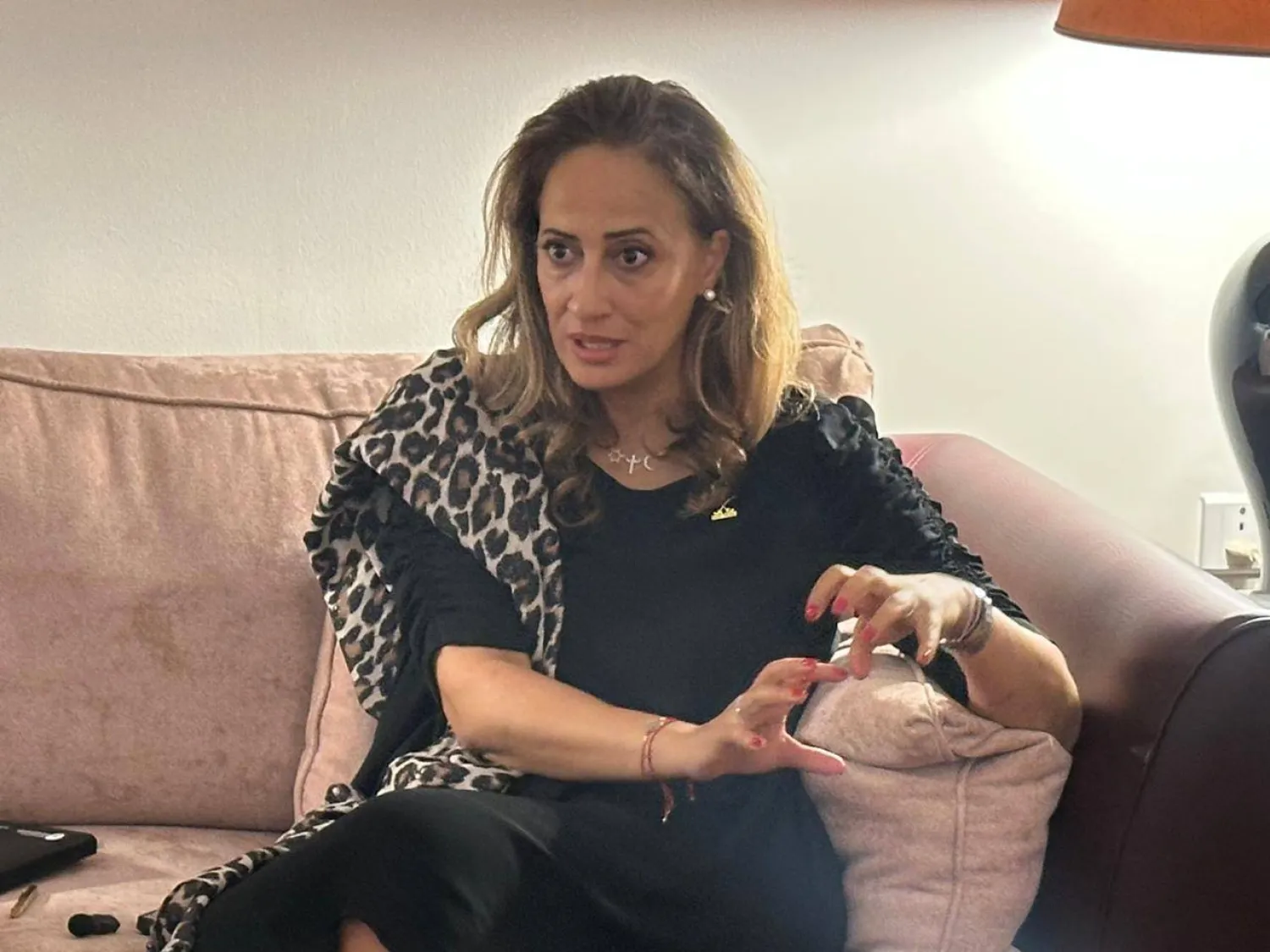
French lawmaker Amélia Lakrafi speaks to Asharq Al-Awsat (Asharq Al-Awsat)
TT

French Lawmaker to Asharq Al-Awsat: We Will Continue Supporting Saudi Arabia's Security

French lawmaker Amélia Lakrafi speaks to Asharq Al-Awsat (Asharq Al-Awsat)

French lawmaker Amélia Lakrafi affirmed that France will continue providing defensive support to Saudi Arabia, including deploying troops and equipment to help protect its critical infrastructure, stressing that Paris is not a party to the war and that its commitment to the Kingdom is strictly defensive.

She also revealed French and European efforts to explore the possibility of imposing sanctions on the Houthis and Iran, while noting that some of Saudi Arabia's traditional allies have not been as present as expected during the current crisis.

Speaking to Asharq Al-Awsat, Lakrafi said France prioritizes dialogue and diplomacy while remaining committed to supporting its Saudi partner and strengthening its defensive capabilities.

She said that the French troops and equipment that Paris is sending to the Kingdom, and will continue to send, are intended to ensure Saudi Arabia's security and defense, not to carry out offensive operations.

She explained that the extent of France's commitment depends primarily on its available personnel and material resources, emphasizing that as long as France has the necessary capabilities to contribute to protecting critical infrastructure, whether in Yanbu or elsewhere, it will continue providing this support.

She added that French President Emmanuel Macron guarantees the continuation of this commitment and follows through on his pledges.

Lakrafi said she found it striking that some of Saudi Arabia's traditional allies "have not been as present as expected during this crisis."

By contrast, she said, "France has demonstrated its presence and commitment to the Kingdom, as reflected in President Macron's visit to Saudi Arabia, which conveyed a clear message of solidarity."

She stressed that Paris does not confine itself to statements but takes action on both diplomatic and practical fronts by participating in initiatives aimed at resolving the crisis and supporting emergency meetings of the UN Security Council, while providing the equipment needed to strengthen Saudi Arabia's defense and security capabilities and protect its critical infrastructure.

She said this engagement reflects the nature of the Saudi-French partnership, emphasizing that France has proven itself a reliable partner to the Kingdom and Gulf countries.

"Saudi-French relations have developed significantly and are expected to strengthen further, particularly in the security field," she said.

Assessing regional developments, the French lawmaker warned of the consequences of renewed US and Israeli attacks on Iran, arguing that such escalation could prompt Tehran to retaliate more aggressively against neighboring countries.

She said the question troubling her, and many others, concerns "what the United States will decide and what steps Washington and Israel may take in the coming days and weeks."

She outlined two possible scenarios: continued economic pressure on Iran without further military escalation, which could gradually weaken its economy and force it to back down, or a renewed round of attacks.

Lakrafi expressed her belief that the economic pressures facing Iran could intensify and place additional burdens on its leadership, while maintaining that France and its Gulf allies are capable of withstanding the current challenges.

Regarding the crisis's impact on the global economy, she said she had observed international shipping traffic, particularly oil tankers, returning in recent days to prewar levels.

This, she said, gave her reason to believe that "bottlenecks and economic difficulties could gradually ease, although it will take some time."

She did not rule out the possibility that these developments could encourage more countries, including Pakistan and Türkiye, to play a greater role in efforts to overcome the crisis, particularly because disruptions to shipping through the Strait of Hormuz and other vital waterways affect the entire global economy.

On the future of the confrontation with the Houthis, Lakrafi acknowledged the difficulty of predicting how events would unfold.

She emphasized that efforts are continuing within the French Parliament, the European Parliament and international parliamentary organizations to promote peaceful solutions and strengthen international diplomacy, particularly through the United Nations, to condemn Houthi actions.

She explained that these efforts include examining all possible means of exerting pressure on the Houthis, including "the possibility of imposing sanctions that would prompt them and Iran to abandon practices threatening maritime security."

She added that the initiatives also involve identifying international partners capable of supporting these efforts, including the United States.

Expanding participation among countries and parliaments, she said, would improve the prospects of persuading additional partners to join, noting that past experience has demonstrated that this is achievable.

Lakrafi confirmed that diplomatic contacts and initiatives are underway to support Saudi Arabia and condemn Houthi actions as part of continuing parliamentary and international efforts to achieve a peaceful and lasting settlement to the Yemeni crisis.

On maritime security, the French lawmaker stressed that "maritime straits are shared international waterways. They do not belong to Iran or the Houthis but serve the entire world, and they must remain open to international navigation without restrictions or transit fees that obstruct freedom of passage."

She noted that the global economy "is directly affected by threats to these waterways, making it essential to coordinate international efforts to pressure the Houthis, bring them to the negotiating table and reach a peaceful and lasting resolution to the crisis."

Lakrafi said France is working on maritime security in cooperation with the European Union and the UN Security Council to find solutions to the crisis.

She stressed that international cooperation and diplomacy remain essential to overcoming the current challenges, despite the difficulty of predicting how the conflict will develop.



Coalition Steps Up Strikes to Weaken Houthi Military Capabilities

Smoke rises after an airstrike hit a Houthi position in Sanaa. (EPA)
TT

Coalition Steps Up Strikes to Weaken Houthi Military Capabilities

Smoke rises after an airstrike hit a Houthi position in Sanaa. (EPA)

The Coalition to Restore Legitimacy in Yemen has intensified strikes against Houthi military capabilities across Sanaa, Hodeidah, Saada, Taiz and Lahj, while intercepting drones launched by the group toward Riyadh and southern Saudi Arabia.

The escalation comes as Yemeni government forces press ahead with military operations on the Marib, Al-Jawf, Taiz and Lahj fronts.

The latest strikes came a day after the coalition announced a military operation that destroyed 50 Houthi military targets across Sanaa, Hodeidah and Saada provinces, according to coalition spokesman Major General Turki al-Maliki.

On Friday, Maliki announced the interception and destruction of a Houthi drone launched toward the Riyadh region and the interception of another targeting southern Saudi Arabia.

The interceptions come amid continued cross-border Houthi attacks and airstrikes aimed at degrading the group's military and logistical capabilities, including sources of missile and drone threats.

Local sources said the strikes hit Houthi positions and military targets in Saada, the group's main stronghold, as well as Hodeidah, Taiz, Lahj and Sanaa.

On the ground, the Yemeni armed forces carried out hundreds of operations in recent hours, using airstrikes, artillery, drones and rocket launchers to neutralize dozens of Houthi fighters and destroy dozens of combat vehicles.

The armed forces said troops backed by the Popular Resistance were pressing ahead with Operation Dawn of Yemen and countering Houthi infiltration attempts across multiple fronts.

Fighting and military operations continued in northern and western Marib, Al-Jawf, Taiz, Lahj, Shabwa and Midi in Hajjah province, the military said.

Mounting civilian toll

In Taiz, the provincial Office of Siege Affairs said Houthi shelling and sniper fire had killed or wounded 203 women and girls between Aug. 10 and Nov. 17, underscoring the continuing civilian toll of fighting and the siege imposed on the province.

In a statement marking the 16 Days of Activism Against Gender-Based Violence campaign, the office said 42 women and girls had been killed and 161 wounded, including children and elderly women. Tens of thousands of women have also been displaced.

The office said the figures laid bare the dangers women and girls face from direct shelling, sniper fire and killings, urging the international community to take notice of violations against civilians in the province.

The Yemeni army accused the Houthis of continuing to target civilians and civilian objects, particularly in Taiz and Shabwa, saying the shelling had killed and wounded civilians and damaged their property.

Heightened combat readiness

Taiz's security committee met under Governor Nabil Shamsan to review military and security developments, strengthen coordination between the military and security services, and bolster readiness to confront the Houthis.

Shamsan called for maximum combat readiness and the mobilization of resources to support frontline troops as the siege of Taiz city continued and Houthi shelling of residential neighborhoods intensified, according to local authorities.

Major General Khaled Fadel, commander of the Taiz Military Axis, reviewed the combat readiness of military units and brigades, efforts to sustain troop morale and challenges facing field operations.

Taiz police chief Brigadier General Mansour al-Akhali said security inside the besieged city remained stable, citing intensified surveillance and investigations, heightened vigilance and efforts to pursue criminal cases.


Makkah Alliance Nations Condemn Houthi Attacks, Vow Cooperation

Motorists ride past the national flags of Saudi Arabia, Pakistan, and Türkiye installed near the venue of a meeting between the three countries in Islamabad on November 27, 2026. (AFP)
TT

Makkah Alliance Nations Condemn Houthi Attacks, Vow Cooperation

Motorists ride past the national flags of Saudi Arabia, Pakistan, and Türkiye installed near the venue of a meeting between the three countries in Islamabad on November 27, 2026. (AFP)

The Makkah Alliance for Defense strongly condemned on Friday the “persistent and heinous attacks by the Houthis militia targeting civilians and civilian infrastructure in Saudi Arabia.”

It reaffirmed their collective resolve to continue exerting and accelerating efforts to support the Kingdom in safeguarding its security, in accordance with the collective defense provisions of the Agreement.

Alliance members - Saudi Arabia, Pakistan, and Türkiye - convened in Islamabad the Second Meeting of the Strategic Political and Defense Committee (S-PDC) of the Makkah Alliance for Defense.

The Committee reviewed the evolving regional security situation and “reaffirmed the determination of the three countries to continue working collectively towards regional peace, security and stability.”

The parties reiterated their commitment “to the principles and objectives of the Makkah Joint Defense Agreement, including collective defense, mutual solidarity, and respect for the sovereignty and territorial integrity of each party.”

The Committee recalled the outcomes of its inaugural meeting in Istanbul on August 31, and the emergency meeting held in Riyadh on October 5. It reviewed progress in implementing the decisions taken at these meetings, particularly those relating to the institutionalization of the Alliance and the practical implementation of collective defense commitments, in line with their national legislation.

The Committee “praised the pace of progress towards the establishment and operationalization of the Secretariat in Saudi Arabia and underscored its importance in supporting the institutional work and effective coordination of the Alliance.”

The Committee reviewed the outcomes of ongoing political and military consultations and “agreed to continue consultations aimed at enhancing cooperation and coordination on matters of mutual interest, supporting efforts towards de-escalation of regional tensions, and encouraging the peaceful resolution of disputes through dialogue and diplomacy.”

The Parties reaffirmed their commitment “to strengthening cooperation in defense industries, joint technological development, training and capacity-building, with a view to enhancing the collective capabilities and cohesion of their armed forces, in order to address mutual security concerns and contribute to peace and security in the region.”


Kuwait Says Summoned Iran Ambassador Over 'Continued Iranian Attacks'

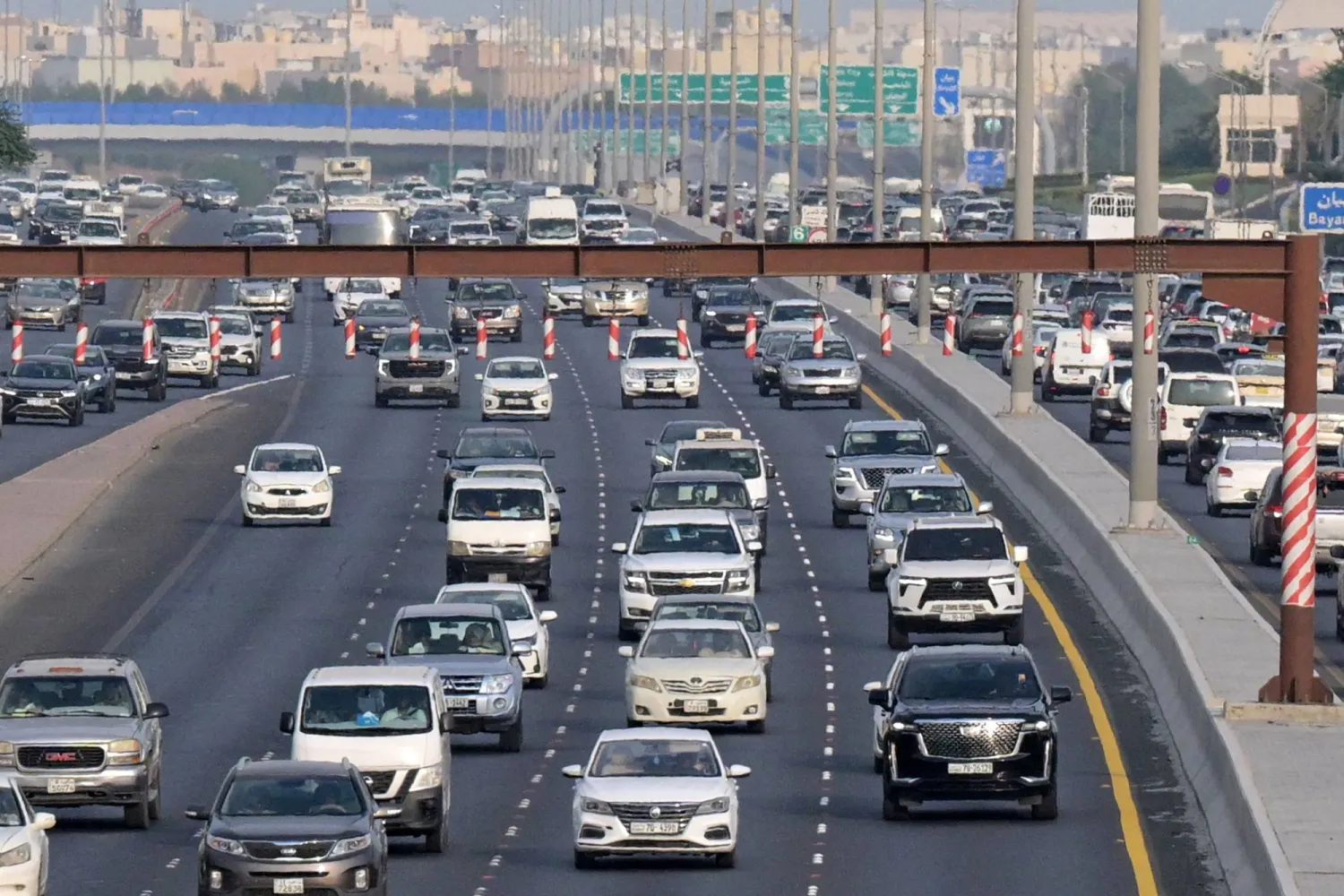
Vehicles move during heavy traffic at a main highway in Kuwait City on November 2, 2026. (AFP)
TT

Kuwait Says Summoned Iran Ambassador Over 'Continued Iranian Attacks'

Vehicles move during heavy traffic at a main highway in Kuwait City on November 2, 2026. (AFP)

Kuwait's foreign ministry on Friday said it summoned Iran's ambassador over "continued Iranian attacks" after a drone attack a day earlier killed two Italians in the first fatal strike in the Gulf state for months.

The ministry "summoned His Excellency Ambassador Mohammad Totonji, Ambassador of Iran to Kuwait, and handed him a note of protest over the continued Iranian attacks on the State of Kuwait, most recently the drone attack that yesterday, Thursday, targeted a vital site in the country, killing two Italian nationals," it wrote on X.

UN chief Antonio Guterres on Friday condemned the attack, calling on "all parties to exercise restraint."

The secretary-general expressed solidarity with Kuwait and offered his condolences to the families of the victims, his spokesman Stephane Dujarric said.

Guterres is "deeply concerned by the continued escalation in the region" and called on all parties to "refrain from any actions that could further undermine regional peace and security."

"Renewed hostilities would have devastating consequences for the region and beyond," his spokesman added.

Iran has in the last week ratcheted up attacks on Kuwait and Gulf neighbor Bahrain while it continues to contest control of the Strait of Hormuz with the United States.

But its top diplomat and military both denied any involvement in the attack.

Iranian Foreign Minister Abbas Araghchi held phone calls with both his Kuwaiti counterpart Jarrah Jaber Al-Ahmad Al-Sabah and Italian counterpart Antonio Tajani to deny Tehran's involvement, according to Iran's state TV and foreign ministry.

In his call with Tajani, "Araghchi stated that Iran had no role or involvement whatsoever in the occurrence of this event," the Iranian foreign ministry said in a statement.

Iran's top diplomat added that Tehran was prepared to cooperate with Kuwait and Italy to "determine the origin of the incident", the ministry said.